Predictive History Audit / Systematic Content Analysis
Civilization
Episode 22 · Posted 2024-12-10

The Literary Genesis of the Yahwist

This lecture examines the Hebrew Bible as a literary and political creation rather than a historical or purely religious document. The speaker argues that King David commissioned the Bible to establish legitimacy, national cohesion, and differentiation for the newly formed Israelite nation. The lecture introduces the 'Yahwist' — argued to be a female literary genius, possibly a daughter or granddaughter of David — as the author of Genesis, whose techniques of economy and irony gave the Bible its enduring power. Close readings of Adam and Eve and Jacob and Rachel are offered to demonstrate how these stories function as domestic comedies with infinite interpretive depth, presenting a fallible God who learns from mistakes alongside his human creations.

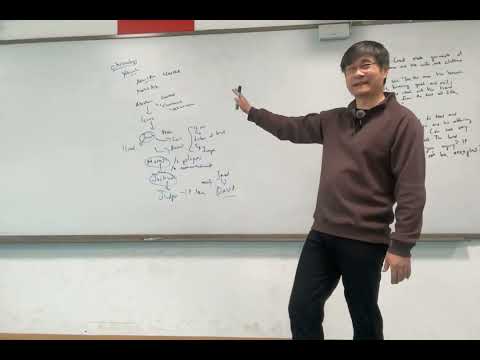
Video thumbnail
youtube.com/watch?v=GhLd_h1QsL4 ↗ Analyzed 2026-03-14 by claude-opus-4-6

Viewer Advisory

  • The thesis that the Yahwist was female is primarily associated with Harold Bloom's 'The Book of J'.
  • and is not mainstream scholarly consensus — most biblical scholars consider the Yahwist's gender unknowable.
  • The argument that David commissioned the Bible rests on one strand of dating the J source; other scholars date J to later periods (the Solomonic era, the 8th century, or even the Exilic period).
  • The claim that 'In the beginning there was the word' is from the Hebrew Bible is incorrect — it is from John 1:1 in the New Testament.
  • The interpretation of Adam and Eve as a 'domestic comedy' with a fallible God who lied is one valid literary reading, but characterizing the traditional interpretation as 'completely and utterly wrong' overstates the case.
  • The lecture presents a secular-literary interpretation as though it were the only intellectually serious approach, without engaging with theological scholarship or conservative biblical criticism.
  • Unlike the geopolitical lectures, this episode contains no falsifiable predictions and is primarily an exercise in literary interpretation, where disagreement is about framework rather than facts.
Central Thesis

The Hebrew Bible is best understood not as historical chronicle or pure fiction, but as a cosmology — a literary-political creation designed to unify diverse tribes under David's rule, whose enduring power derives from the Yahwist's genius use of economy and irony to explore universal human themes.

  • There is no archaeological evidence for any biblical events or figures before King David, making the Bible unreliable as a historical record.
  • Kings sponsored writing projects for three purposes: legitimacy, national cohesion, and differentiation from neighboring peoples.
  • David solved his legitimacy problem by presenting himself as a 'poet king' and Yahweh as a 'poet God' who creates through speech — a radical new conception of divinity.
  • The biblical genealogy of Abraham, Isaac, and Jacob represents the syncretization of three major tribes into one family history, a standard ancient practice for creating national identity.
  • Moses is an Egyptian name, and the Moses narrative serves to explain and legitimize the presence of Egyptian priests in Israel who controlled sacrifice and circumcision rituals.
  • The Yahwist was likely female, based on the focus on domestic themes (marriage, childbirth, love, family drama) rather than war and conflict.
  • The Yahwist must have been of very high birth — likely David's daughter or granddaughter — because her controversial, ironic treatment of God would not have been accepted into the Bible otherwise.
  • The story of Adam and Eve is not about original sin but a domestic comedy about a fallible God who lied to his children and showed remorse, representing a radical conception of divinity.
  • The Bible's literary power comes from the Yahwist's economy (maximum meaning from minimum words) and irony (making fun of the highest authority in Israelite faith).
  • The concept of 'knowledge of good and evil' means the capacity for self-reflection and learning from mistakes, not moral awareness of God and Satan.
Qualitative Scorecard 3.1 / 5.0 average across 7 axes
Historical Accuracy ▸ Expand
The lecture gets several broad claims right: there is indeed no archaeological evidence for biblical figures before David; the Documentary Hypothesis identifies multiple sources in the Pentateuch; Enheduanna is indeed considered the first named author; Moses is an Egyptian name (from 'mose' meaning 'born of'); circumcision was practiced in ancient Egypt; and the Bronze Age Collapse did cause upheaval in Canaan. However, there are notable errors: Sargon of Akkad is dated to '2000 BC' when he actually ruled c. 2334-2279 BC; the phrase 'In the beginning there was the word' is from the Gospel of John, not the Hebrew Bible; the claim that David 'built the Temple of Jerusalem' is incorrect — according to the Bible itself, Solomon built the Temple, not David; and the characterization of the Yahwist as certainly female is presented as near-consensus when it is actually a minority scholarly position most associated with Harold Bloom.
3
Argumentative Rigor ▸ Expand
The lecture presents a coherent interpretive framework for understanding the Bible as a political-literary creation, and the argument about syncretization and nation-building is well-structured and broadly supported by scholarship. The literary analysis of Adam and Eve and the Cain and Abel stories is genuinely insightful, offering a reading that challenges conventional interpretations with textual evidence. However, several leaps are insufficiently supported: the claim that the Yahwist 'must be' David's daughter or granddaughter relies on circular reasoning (her writing is controversial, therefore she must have been powerful enough to get away with it); the assertion that the Yahwist was female is presented with much more confidence than the evidence warrants; and the argument that Jewish literary achievement derives from the Bible's emphasis on words, while interesting, oversimplifies a complex cultural phenomenon.
3
Framing & Selectivity ▸ Expand
The lecture is selective but in a way typical of pedagogical presentations rather than propaganda. It presents the secular-literary interpretation of the Bible without engaging with theological or conservative scholarly perspectives, but this is appropriate for a 'Civilization' course focused on literary and historical analysis. The omission of Harold Bloom as the source for the Yahwist-as-woman thesis is a significant framing choice that makes the argument seem more established than it is. The lecture does acknowledge uncertainty ('honestly we'll never know and it's not important') regarding the Yahwist's identity, which shows some intellectual honesty. The presentation of the Garden of Eden as a memory of Ice Age egalitarianism is speculative but presented as plausible rather than certain.
3
Perspective Diversity ▸ Expand
The lecture presents a single interpretive lens — secular literary criticism in the tradition of Harold Bloom — without engaging with alternative perspectives. No space is given to: traditional Jewish exegetical approaches (Midrash, Talmudic commentary); Christian theological interpretations; conservative biblical scholars who defend Mosaic authorship; archaeologists who find more historicity in the Bible than the lecture acknowledges; or scholars who challenge the Documentary Hypothesis itself. The classroom setting features some student interaction but this is limited to questions that the speaker uses to advance his predetermined interpretation. The 'I guarantee you it's wrong' framing of the mainstream Adam and Eve understanding dismisses centuries of theological interpretation without engagement.
2
Normative Loading ▸ Expand
Compared to the geopolitical lectures in this series, this lecture is relatively measured in its normative language. The speaker is enthusiastic about the Yahwist's literary genius ('incredible literary genius,' 'radical new ideas') but this is evaluative rather than politically loaded. The analysis of biblical stories is presented with genuine pedagogical warmth rather than polemical intent. The characterization of the Bible as 'not historical' is stated matter-of-factly rather than dismissively. The main normative loading comes from the implicit framing that the secular-literary interpretation is simply correct while traditional readings are 'completely and utterly wrong,' which embeds a value judgment about what constitutes legitimate interpretation.
4
Determinism vs. Contingency ▸ Expand
The lecture presents a somewhat deterministic account of why the Bible exists (David needed legitimacy, cohesion, and differentiation, therefore the Bible was created to serve those functions) but acknowledges contingency in the form of the Yahwist's individual genius. The argument that the Bible's enduring power derives from how it was written, not just its political function, allows for the role of individual creative achievement. However, the framework of syncretization and nation-building is presented as essentially inevitable given the political conditions, without considering alternative paths the Israelite literary tradition might have taken or the contingent factors that preserved these particular texts.
3
Civilizational Framing ▸ Expand
This lecture, focused on biblical literature, avoids the civilizational comparisons and hierarchies that characterize the geopolitical lectures. The treatment of ancient Israelite, Egyptian, Mesopotamian, and Canaanite cultures is relatively balanced and presented without strong value judgments about civilizational superiority. The claim that Jewish people are 'so literary' because of the Bible's emphasis on words could be seen as essentializing, but it is presented appreciatively rather than critically. Ancient identity is explicitly described as 'extremely loose and fluid' rather than fixed, which is a nuanced and accurate characterization.
4
Overall Average
3.1
Civilizational Treatment
CHINA

China is not mentioned in this lecture.

Named Sources

primary_document
The Hebrew Bible / Genesis
The primary text under analysis. Specific passages from Genesis are read and interpreted, including the creation narrative, Adam and Eve, Cain and Abel, the Jacob-Rachel-Leah story, and the covenants. The speaker quotes directly from Genesis 3:21-22 regarding God clothing Adam and Eve and fearing they might eat from the Tree of Life.
✓ Accurate
scholar
Documentary Hypothesis (JEDP sources)
Referenced without naming specific scholars (Wellhausen, etc.). The speaker mentions 'at least four different sources in the Bible that have been splashed together randomly' and identifies the Yahwist (J source) by the convention of using 'Yahweh' as God's name. This broadly aligns with the Documentary Hypothesis tradition.
✓ Accurate
primary_document
Enheduanna / Sargon of Akkad
Cited as a historical precedent for kings appointing their daughters as official poets. Enheduanna is correctly identified as daughter of Sargon of Akkad and the first named author in human history, circa 2300 BC (the speaker says '2000 BC,' which is inaccurate — Sargon ruled c. 2334-2279 BC).
? Unverified
scholar
Harold Bloom (implied)
The argument that the Yahwist was female closely mirrors Harold Bloom's thesis in 'The Book of J' (1990), though Bloom is never cited by name. The speaker's characterization of the Yahwist as an aristocratic woman of David's court who wrote with irony and focused on domestic themes is essentially Bloom's argument.
? Unverified

Vague Appeals to Authority

  • 'We believe' and 'we're fairly certain' regarding the Yahwist being female — presented as scholarly consensus without naming which scholars hold this view (it is actually a minority position, most associated with Harold Bloom).
  • 'There are many who believe she is of the court of David' — no specific scholars named for this claim.
  • 'As we know' regarding lack of archaeological evidence for biblical figures before David — presented as established fact without citing specific archaeological studies.
  • 'People who took the Bible literally believe this was about 4,000 BC' — vague attribution of Young Earth Creationism without specifying which traditions or scholars.

Notable Omissions

  • Harold Bloom's 'The Book of J' (1990) is the obvious source for the Yahwist-as-woman thesis but is never credited, despite the lecture essentially summarizing Bloom's argument.
  • Richard Elliott Friedman's 'Who Wrote the Bible?' (1987) — the most accessible scholarly treatment of the Documentary Hypothesis — is not mentioned.
  • Julius Wellhausen and the history of the Documentary Hypothesis are not discussed, despite the lecture depending entirely on this framework.
  • No engagement with scholars who reject the Documentary Hypothesis or who date the Yahwist source differently (e.g., John Van Seters, who dates J to the Exilic period rather than David's court).
  • No mention of the substantial scholarly debate about whether the Yahwist source even exists as a coherent document, which has been a major controversy in biblical scholarship since the 1970s.
  • Israel Finkelstein and Neil Asher Silberman's 'The Bible Unearthed' (2001) — the most prominent archaeological challenge to biblical historicity — is not cited despite the lecture making similar claims.
  • No discussion of the Tel Dan Stele, the primary archaeological evidence for David's existence, which would strengthen the speaker's argument.
  • The claim that 'In the beginning there was the word' is attributed to the Hebrew Bible but actually comes from the Gospel of John (New Testament) — a significant error that goes uncorrected.
Dramatic reinterpretation 00:34:02
Frame at 00:34:02
The speaker declares 'you think you know the story of Adam and Eve but I guarantee you it's wrong' before presenting his alternative reading of the Garden of Eden narrative as a domestic comedy about a fallible God.
Creates anticipation and positions the speaker as someone with privileged interpretive insight, priming the audience to accept the reinterpretation that follows. The guarantee of wrongness dismisses centuries of theological interpretation in a single sentence.
Extended domestic analogy 00:42:51
Frame at 00:42:51
The speaker constructs a detailed analogy comparing God's prohibition of the fruit to a father telling his daughters that alcohol is 'poison,' complete with the uncle revealing the truth, the children breaking into the liquor cabinet, punishment, and a reconciliatory trip to McDonald's.
Makes the biblical narrative immediately relatable and accessible, reinforcing the 'domestic comedy' interpretation. The humor and familiarity of the scenario makes the reinterpretation feel natural and obvious, when it is actually a specific scholarly reading associated with Harold Bloom.
Paradigm shift framing 00:11:03
Frame at 00:11:03
The speaker introduces 'this is not a chronology, this is a cosmology' as the key to understanding the Bible, presenting it as a revelation that resolves all confusion about biblical narrative.
Positions the lecture as offering a fundamentally new way of seeing the Bible, creating an intellectual 'aha moment' that bonds the audience to the speaker's framework and makes alternative interpretations seem confused or naive.
Socratic leading questions 00:42:14
Frame at 00:42:14
After establishing that God punished Adam and Eve but then clothed them, the speaker asks 'what did God do wrong?' and pauses for students to consider before revealing 'God lied to Adam and Eve.'
Creates the illusion of student-driven discovery while guiding toward a predetermined conclusion. Students feel they arrived at the insight independently, making them more invested in the interpretation.
Appeal to radical novelty 00:13:48
Frame at 00:13:48
The speaker repeatedly characterizes ideas as 'radical' — 'radical conception of divinity,' 'radical new idea in human history,' 'radical idea,' 'radical new ideas in human history' — when describing the Yahwist's literary innovations.
Elevates the subject matter and by extension the lecture itself. By presenting the material as revolutionary, the speaker implies that understanding these ideas places the audience in an intellectually elite position.
Confidence beyond evidence 00:30:17
Frame at 00:30:17
The speaker states 'we're fairly certain she's a she' regarding the Yahwist, and 'I would make this argument that she has to be the daughter or the granddaughter of King David' — escalating from scholarly convention to personal certainty without additional evidence.
Transforms a speculative and contested scholarly hypothesis (associated primarily with Harold Bloom, who is never cited) into what sounds like established academic consensus. The graduated escalation from 'fairly certain' to 'has to be' naturalizes the claim.
Colloquial paraphrase of scripture 00:47:04
Frame at 00:47:04
God's rejection of Cain's offering is rendered as 'this food sucks man' and 'you suck man the problem isn't me the problem is you you just suck,' while the acceptance of Abel's is 'this mutton it's tasty awesome.'
Makes the biblical narrative vivid and emotionally immediate while reinforcing the 'God as bad parent' interpretation. The deliberately crude paraphrase emphasizes divine arbitrariness and primes the audience to sympathize with Cain, supporting the fallible-God thesis.
Implied causation from correlation 00:18:01
Frame at 00:18:01
The speaker argues that because the Bible emphasizes words and literary creation, 'that's why Jewish people are so literary' — citing that 'some of the most famous thinkers in the world are mainly Jewish.'
Establishes a causal chain from biblical theology to modern cultural achievement that flatters the tradition being analyzed, making the audience more receptive to the overall argument. The claim, while containing a kernel of truth about Jewish literary culture, oversimplifies a complex historical phenomenon.
Narrative gap-filling as analysis 00:54:39
Frame at 00:54:39
In the Jacob-Rachel-Leah story, the speaker constructs an elaborate backstory of Leah 'crying and screaming at her father' every night for seven years and Laban calculating that 'for the rest of my life I'm stuck with Leah screaming at me,' none of which appears in the biblical text.
Demonstrates the 'economy' principle by showing how much can be inferred from sparse text, but also blurs the line between textual analysis and creative interpretation. The vividness of the imagined scenes makes them feel textually grounded when they are actually the speaker's extrapolation.
Historical precedent as proof 00:32:08
Frame at 00:32:08
The example of Enheduanna, daughter of Sargon of Akkad, is cited as evidence that David would have appointed a daughter as official poet, establishing a 'precedent' for the Yahwist's identity.
A single historical parallel separated by nearly a thousand years and occurring in a different culture (Mesopotamia vs. Israel) is presented as a 'precedent' that validates the speaker's hypothesis. The existence of one case does not establish a pattern, but the rhetorical framing makes it seem confirmatory.
Frame at 00:10:24 ⏵ 00:10:24
If you see the Bible as a historical record you will only get confused. If you see this as a chronology this makes no sense. If you see this as a work of fiction... this doesn't make much sense either... What I will show you today is this is not a chronology, this is a cosmology.
Establishes the lecture's central interpretive framework. The tripartite dismissal of history, chronology, and fiction positions cosmology as the only coherent reading, foreclosing alternative interpretive approaches.
Frame at 00:13:48 ⏵ 00:13:48
God is the poet God. Yahweh is the poet God... this is a radical conception of divinity in the ancient world. Gods previously have been priests or Warriors and this is the first time in human history where God Yahweh is presented as a poet God.
Central to the lecture's argument about David's legitimacy strategy. By making God a poet, David (the poet king) becomes God's natural representative — an elegant literary-political analysis that may overstate the novelty of this conception.
Frame at 00:29:38 ⏵ 00:29:38
The person who wrote the Bible especially Genesis was a unique literary genius of the stature of Homer and Plato and Dante... and we call her the Yahwist.
Reveals the lecture's literary-critical framework and introduces the gendered identification of the Yahwist without attribution to Harold Bloom. Placing the Yahwist alongside Homer, Plato, and Dante is a strong evaluative claim that elevates the subject.
Frame at 00:35:17 ⏵ 00:35:17
The story is completely and utterly wrong. That's not what it says in the Bible.
Dismisses the mainstream Christian interpretation of the Fall as 'original sin' in absolutist terms. The speaker's confidence that his literary reading is what the Bible 'actually says' while traditional theology is 'completely wrong' reveals a strong interpretive bias.
Frame at 00:37:46 ⏵ 00:37:46
The Lord God made garments of skins for the man and his wife and clothed them... This is God showing remorse and regret.
The key textual observation that drives the lecture's reinterpretation of Adam and Eve. The close reading of this verse — often overlooked — to argue for divine fallibility is genuinely insightful literary analysis.
Frame at 00:42:37 ⏵ 00:42:37
God lied to Adam and Eve. God said to Adam and Eve do not eat from this tree because it's poisonous.
The lecture's most provocative theological claim. The reframing of God's prohibition as a parental lie rather than a divine command represents a specific interpretive tradition that challenges mainstream Jewish and Christian theology.
Frame at 00:49:42 ⏵ 00:49:42
Faith, love of God requires you to argue with God, because it's only through the process of argument that God who's fallible will learn and grow.
Articulates a genuinely important aspect of Jewish theological tradition — the concept of arguing with God (as exemplified by Abraham, Jacob/Israel, and Job). This is one of the lecture's strongest insights, though presented as the speaker's discovery rather than as a well-established tradition.
Frame at 00:51:45 ⏵ 00:51:45
She's making fun of Yahweh. She's making fun of the highest authority in the Israelite faith. And again that's why if she were not the daughter of David or granddaughter of David there's no way this story would have gone into the Bible.
Reveals the circular logic underlying the Yahwist's identification: the text is irreverent, therefore the author must have been powerful enough to be irreverent, therefore she was David's daughter. The argument assumes its conclusion.
Frame at 00:40:10 ⏵ 00:40:10
Knowing good and evil means you have the capacity to learn and to grow through a process of self-reflection... What makes humans unique from animals is our capacity to make mistakes and to learn from them.
A humanistic reinterpretation of the Fall narrative that transforms the 'knowledge of good and evil' from a theological concept into an epistemological one. This reading has genuine philosophical merit but is presented as the definitive meaning rather than one interpretation among many.
Frame at 00:27:38 ⏵ 00:27:38
The very idea of Israel, it's a literary creation. The idea of Israelite, it is a political creation.
Encapsulates the lecture's constructivist approach to national identity, which aligns with modern scholarship on ethnogenesis. This is one of the lecture's most academically sound claims, reflecting the work of scholars like Israel Finkelstein.
Verdict

Strengths

The lecture offers genuinely engaging literary analysis of biblical narratives, particularly the close reading of Genesis 3:21-22 (God clothing Adam and Eve after punishment) as evidence of divine remorse, and the interpretation of the Cain and Abel story as God being a 'bad parent.' The framework of the Bible as a nation-building cosmology rather than a chronology or fiction is well-articulated and broadly supported by modern scholarship. The discussion of syncretization, the fluid nature of ancient identity, and the political functions of religious texts is historically sound and pedagogically effective. The use of domestic analogies (the father-daughters-alcohol story) makes complex literary-theological concepts accessible. The emphasis on the Yahwist's literary techniques of economy and irony draws attention to genuinely distinctive features of biblical prose.

Weaknesses

The lecture's most significant weakness is its uncredited dependence on Harold Bloom's 'The Book of J' — the Yahwist-as-woman thesis, the emphasis on irony and comedy, the connection to David's court, and the comparison to Homer and Dante all come directly from Bloom but are presented as the speaker's own analysis or as scholarly consensus. The identification of the Yahwist as female is a minority position in biblical scholarship, yet is presented as 'fairly certain.' The argument that the Yahwist must have been David's daughter or granddaughter rests on circular reasoning. Several factual errors go uncorrected: Sargon of Akkad is misdated by ~300 years; 'In the beginning there was the word' is from John's Gospel, not the Hebrew Bible; David did not build the Temple (Solomon did). The claim that the Documentary Hypothesis identifies 'at least four different sources splashed together randomly' oversimplifies a sophisticated scholarly framework. The dismissal of the traditional Adam and Eve interpretation as 'completely and utterly wrong' is intellectually aggressive given that multiple valid interpretive traditions exist.

Cross-References

BUILDS ON

  • Civilization #21 (referenced as 'last class') — covered King David's creation of the Bible project, the court historian, the Bathsheba and Abner stories, and why kings sponsor writing projects.
  • Earlier Civilization lectures on the Bronze Age Collapse and the resulting chaos in Canaan, referenced when discussing the diverse groups that formed Israel.
  • Earlier Civilization lectures on the Ice Age and egalitarian societies, referenced in the claim that the Garden of Eden symbolizes nostalgia for Ice Age egalitarianism.
  • Earlier lectures on syncretization as a concept, which the speaker references as something 'we learned' previously.
This lecture represents a significant departure from the geopolitical analysis that characterizes the Geo-Strategy series. Within the Civilization series, the lecture builds a cumulative argument about how political power creates literary-religious traditions. The speaker's interpretive approach — presenting contested scholarly positions as established fact, using engaging analogies to make complex ideas accessible, and relying heavily on unnamed authorities — is consistent across both the Civilization and Geo-Strategy series. The lecture previews Civilization #23, which will cover Zoroastrianism and the Persian Empire's influence on biblical religion, suggesting a continuing narrative about how political power shapes religious development.