Predictive History Audit / Systematic Content Analysis
Civilization
Episode 28 · Posted 2025-01-02

Muhammad's Revolution of God

This lecture examines Muhammad and the rise of Islam, arguing that the early Islamic movement was fundamentally the world's first global revolution rather than a purely religious phenomenon. The speaker uses three historical analogues — the Taiping Rebellion, the War of Canudos, and the French Revolution — to argue that movements combining revolutionary zeal with religious devotion can overthrow established empires. The lecture contends that 7th-century Arabia was a cosmopolitan trade hub with religious diversity, producing warriors and thinkers who were well-positioned to defeat the declining Byzantine and Sassanid empires. The speaker concludes by arguing that the revolutionary origins of Islam were deliberately obscured by the later Islamic empire to prevent future revolts.

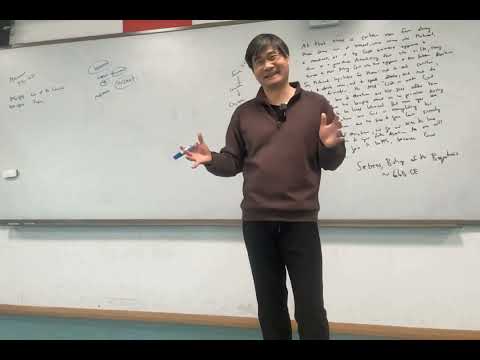
Video thumbnail
youtube.com/watch?v=C9rzPGJ0wm4 ↗ Analyzed 2026-03-14 by claude-opus-4-6

Viewer Advisory

  • The claim that the Arab conquests are an 'unsolved mystery' is false — there is extensive scholarship offering multiple explanations, none of which are engaged here.
  • The materialist/revolutionary interpretation has scholarly precedent but is one of many competing explanations, not the definitive answer it is presented as.
  • Several factual claims are incorrect (meaning of 'Muhammad,' Portuguese vs. Spanish colonization of Brazil, Taiping territorial extent).
  • The 'whitewashing' thesis is unfalsifiable — any evidence against it can be dismissed as proof of successful suppression.
  • The portrayal of early Islamic conquests as universally liberating omits well-documented practices of religious taxation and social hierarchy.
  • The comparison to Mao Zedong in Chinese education is factually wrong and appears designed to flatter the thesis rather than illuminate it.
  • This is a history lecture without geopolitical predictions, making it less susceptible to the calibration issues found in the Geo-Strategy series, but the same pattern of confident overstatement of novel theses applies.
Central Thesis

Muhammad was a revolutionary leader whose movement combined religious devotion with revolutionary social transformation — promising land redistribution, debt relief, religious tolerance, and meritocracy — making Islam the world's first global revolution and explaining how desert nomads defeated two world empires.

  • The Arabian Peninsula in 600 CE was a cosmopolitan trade hub with access to advanced technology, knowledge, and military doctrine from both the Byzantine and Sassanid empires.
  • Arab tribes served as mercenaries for both empires, learning advanced warfare, making them among the best soldiers in the world.
  • Religious dissenters — heretical Christians, Jews fleeing persecution, Zoroastrians — concentrated in Arabia because it lacked central religious authority, creating a hotbed of intellectual innovation.
  • Both the Byzantine and Sassanid empires were weakened by landlessness, debt, religious persecution, inter-imperial warfare, plague (Justinian Plague), and civil wars.
  • Muhammad united fractious Arab tribes through three messages: all Abrahamic peoples are one family, meritocracy over caste/class, and the promised land must be reclaimed through jihad.
  • Movements combining revolutionary zeal and religious devotion produce soldiers willing to die, as demonstrated by the Taiping Rebellion, War of Canudos, and French Revolution.
  • Early Muslim conquests succeeded because they liberated conquered peoples from debt, landlessness, and religious persecution.
  • The revolutionary origins of Islam were deliberately whitewashed by the later Islamic empire to prevent future revolts, explaining why so little is known about early Islamic history.
  • Muhammad fits a 'great leader' formula: so strategic he becomes visionary, so innovative he becomes revolutionary, so disciplined he becomes selfless — like Philip of Macedon and Julius Caesar.
Qualitative Scorecard 2.3 / 5.0 average across 7 axes
Historical Accuracy ▸ Expand
Several factual errors undermine credibility: (1) The speaker says 'Muhammad just means blessed one in Arabic' — it actually means 'praised one' or 'praiseworthy'; (2) Brazil was colonized by the Portuguese, not the 'predominantly Spanish' as stated; (3) The claim the Quran 'doesn't really mention' Muhammad is misleading — Muhammad is named 4 times and extensively referenced; (4) The Taiping Rebellion is described as conquering 'most of China,' which significantly overstates its territorial control; (5) The War of Canudos is initially placed 'in Europe' before self-correcting, and dates given (1896-1898) are slightly off (actually 1896-1897); (6) The claim that Arabia was 'the most cosmopolitan center in the world' in 600 CE is a major overstatement — cities like Constantinople, Chang'an, and Ctesiphon were far more cosmopolitan; (7) The statement that we 'probably know more about Jesus than about Muhammad' is highly debatable given the extensive hadith and sira traditions. The Sebeos reference is accurate and the broad outlines of Byzantine/Sassanid decline are correct.
2
Argumentative Rigor ▸ Expand
The central argument — that Islam was a revolutionary social movement — has merit and echoes serious scholarship, but the execution is weak. The argument relies heavily on analogy rather than evidence: three historical parallels (Taiping, Canudos, French Revolution) are asserted to be 'very similar' to the Islamic conquests without rigorous comparison of their differences. The leap from 'Arabia had traders' to 'Arabia was the most innovative place on earth' is unsupported. The 'whitewashing' thesis — that we know little about early Islam because the empire suppressed its revolutionary origins — is presented as self-evident when it is actually a contested historical claim requiring substantial evidence. The 'great leader formula' (visionary, revolutionary, selfless) is applied to Muhammad without any evidence from the historical record about Muhammad's actual leadership style. The argument is circular in places: we don't know much about Muhammad because history was whitewashed, and we know history was whitewashed because we don't know much about Muhammad.
2
Framing & Selectivity ▸ Expand
The lecture is highly selective in its presentation. Evidence supporting the 'revolution' thesis is emphasized while counterevidence is ignored: the Ridda Wars (showing tribal defections immediately after Muhammad's death), the early Sunni-Shia split, the continued class stratification under the Umayyad caliphate, and the adoption of Byzantine/Sassanid imperial structures all complicate the 'egalitarian revolution' narrative. The three historical analogues are chosen to support the thesis — cases where revolutionary religious movements failed to establish lasting states (Taiping, Canudos) or quickly devolved into autocracy (French Revolution → Napoleon) are not examined for what they might say about the Islamic case. The comparison with Mao Zedong being 'whitewashed' in Chinese education is misleading — Mao is extensively studied in Chinese schools, though in a curated way.
2
Perspective Diversity ▸ Expand
The lecture presents a single interpretive framework — Islam as social revolution — without engaging alternative explanations for the Arab conquests. No mention of: religious explanations (which Islamic tradition itself emphasizes), military-strategic explanations (superior cavalry tactics, mobility), administrative explanations (pragmatic governance of conquered territories), demographic explanations (population movements), or the 'believers movement' thesis (Fred Donner's argument that early Islam was an ecumenical monotheist movement, not initially distinct from Christianity/Judaism). The lecture format includes some student interaction but the questions are leading and guide toward predetermined conclusions.
2
Normative Loading ▸ Expand
The lecture is moderately normatively loaded. Muhammad is presented in highly positive terms as a champion of equality, tolerance, and meritocracy — a characterization that selectively draws from the tradition while omitting episodes (expulsion of Jewish tribes from Medina, military conquests) that complicate this portrayal. The Byzantine and Sassanid empires are characterized through exclusively negative language: 'corruption,' 'inequality,' 'religious persecution.' The Arabian Peninsula receives exclusively positive characterization: 'open-minded,' 'cosmopolitan,' 'innovative.' However, the normative loading is somewhat less aggressive than in the geopolitical lectures, as the speaker is engaging with historical material rather than contemporary politics.
3
Determinism vs. Contingency ▸ Expand
The lecture presents the Islamic conquests as essentially inevitable given the structural conditions: Arabia's trade position, military experience, religious diversity, and the decline of neighboring empires. The 'great leader formula' implies that someone like Muhammad was bound to emerge. No contingency is acknowledged: what if Muhammad had died earlier (as he nearly did several times)? What if the Byzantine-Sassanid war of 602-628 had ended differently? What if the plague had struck Arabia instead of the empires? The parallel with the Taiping Rebellion — which failed — is not explored for what it reveals about contingency. The whitewashing thesis adds another layer of determinism: the revolutionary origins were inevitably suppressed because empires inevitably suppress revolutionary histories.
2
Civilizational Framing ▸ Expand
The lecture frames civilizations in broad strokes but avoids the most problematic aspects of civilizational essentialism. Islam is presented as a revolutionary movement rather than an inherent civilizational trait. However, the characterization of pre-Islamic Arabs as uniformly 'open-minded and cosmopolitan' and the empires as uniformly corrupt represents an oversimplified civilizational framing. The comparison between Islamic and Chinese revolutionary history is interesting but superficial.
3
Overall Average
2.3
Civilizational Treatment
CHINA

China appears in two contexts: the Taiping Rebellion as a historical analogue for religiously-motivated revolution, and modern China's alleged whitewashing of Mao Zedong's revolutionary legacy. The Taiping comparison is substantive but the modern China claim ('do you learn about Mao in school? No') is inaccurate and dismissive.

THE WEST

Western civilization appears primarily through the lens of the Byzantine Empire, characterized as corrupt, unequal, and religiously persecutory. The Catholic Church is portrayed as demanding rigid orthodoxy and suppressing intellectual freedom. The British Empire is briefly mentioned as intervening to save the Qing Dynasty during the Taiping Rebellion. Overall, Western/Christian civilization is framed as the oppressive establishment that revolutionary Islam liberated people from.

Named Sources

primary_document
Sebeos (Armenian bishop, 7th century chronicle)
Quoted extensively as one of the earliest written sources about Muhammad, dating approximately 20-30 years after Muhammad's death in 632 CE. Used to support the claim that Muhammad presented himself as a messianic figure promising the Abrahamic promised land to Arab descendants of Ishmael.
✓ Accurate
primary_document
The Quran
Referenced as the holy book of Islam that 'doesn't really mention' Muhammad and doesn't tell us much about him, used to support the whitewashing thesis.
✗ Inaccurate
primary_document
The Hadith (oral tradition)
Mentioned as the oral tradition preserving stories about Muhammad passed from generation to generation.
✓ Accurate
primary_document
The Bible / Book of Genesis
Referenced for the Abrahamic covenant, the story of Sarah, Hagar, Ishmael, and the promised land extending from the Nile to the Tigris.
✓ Accurate

Vague Appeals to Authority

  • 'It is one of the greatest mysteries in world history how this happened' — presents the Islamic conquests as an unsolved mystery without engaging with the substantial scholarship that exists on this topic.
  • 'This mystery has never been solved' — dismisses existing scholarship to position the speaker's thesis as uniquely insightful.
  • 'What people don't understand, what they do not recognize' — implies the speaker possesses special insight that mainstream historians lack.
  • 'What I believe happened is the Muslims were the world's first global revolution' — presented as personal insight without citing any scholars who have made similar arguments.
  • 'The same is true in China today... do you learn about Mao Zedong in school? No you don't' — unsourced claim about Chinese education presented as established fact.

Notable Omissions

  • No engagement with major Islamic historiography: Fred Donner's 'Muhammad and the Believers,' Patricia Crone and Michael Cook's 'Hagarism,' or Tom Holland's 'In the Shadow of the Sword' — all of which address the very questions this lecture raises.
  • No mention of the extensive hadith literature and biographical tradition (sira) of Ibn Ishaq/Ibn Hisham, which provides substantial early Islamic historical material, undermining the claim that 'we know so little.'
  • No discussion of the Ridda Wars (Wars of Apostasy) after Muhammad's death, which complicate the narrative of united revolutionary fervor.
  • No engagement with the debate between 'revisionist' and 'traditional' approaches to early Islamic history (e.g., Crone, Cook, Wansbrough vs. traditional Islamic scholars).
  • No mention of the economic and administrative structures the early caliphate adopted from Byzantine and Sassanid predecessors, which complicates the 'pure revolution' narrative.
  • No discussion of the early splits within Islam (Sunni-Shia), which began almost immediately after Muhammad's death and challenge the unity narrative.
  • No engagement with military historians who have analyzed the specific tactical and strategic factors behind the Arab conquests (e.g., Hugh Kennedy's 'The Great Arab Conquests').
  • The Marxist/materialist interpretation of early Islam as class revolution is presented without attribution to scholars who have argued this (e.g., aspects of Maxime Rodinson's work).
Historical analogy as proof 00:14:14
Frame at 00:14:14
Three historical parallels — Taiping Rebellion, War of Canudos, French Revolution — are presented as evidence that religious revolutionary movements can defeat established empires, then applied directly to the Islamic conquests.
Creates an impression of a universal historical law (religion + revolution = military victory) that makes the Islamic conquests seem explicable through a single mechanism, when each case has unique causal factors.
Mystery framing 00:11:52
Frame at 00:11:52
'It is one of the greatest mysteries in world history how this happened... this mystery has never been solved. We will try in today's class to solve this mystery.'
Positions the speaker as solving an unsolved problem, creating excitement and priming the audience to accept the answer as revelatory, while ignoring the substantial existing scholarship on this topic.
Insider knowledge claim 00:22:19
Frame at 00:22:19
'What people don't understand, what they do not recognize, is in 600 CE the hotbed of innovation was actually here in the Arabian Peninsula. This was the most crazy, the most open and the most cosmopolitan center in the world.'
Positions the speaker as possessing unique insight that overturns conventional wisdom, making the audience feel they are receiving privileged knowledge unavailable in standard histories.
Suppressed history narrative 00:43:38
Frame at 00:43:38
'The answer is because the revolution worked out, because they won... if you're an empire you don't want people to revolt against you, so you have to whitewash this history.'
Explains away the lack of evidence for the thesis as proof of the thesis itself — a self-sealing argument. The absence of evidence becomes evidence of suppression, making the claim unfalsifiable.
Formula application 00:35:17
Frame at 00:35:17
The 'great leader formula' (strategic→visionary, innovative→revolutionary, disciplined→selfless) previously developed for Philip of Macedon and Julius Caesar is applied to Muhammad.
Creates an impression of systematic analytical rigor by fitting Muhammad into a pre-established framework, while actually applying a vague template that could fit almost any successful historical leader.
Contemporary parallel for emotional resonance 00:45:00
Frame at 00:45:00
'The same is true in China today, right? Who created the Chinese Revolution? Who enabled the Communist Party to control China? Mao Zedong. Do you learn about Mao Zedong in school? No you don't.'
Connects an ancient historical argument to students' lived experience in China, making the whitewashing thesis feel personally relevant and self-evidently true, despite the comparison being inaccurate.
Rhetorical question cascade 00:27:21
Frame at 00:27:21
'How does God suffer? How does God die? That makes no sense.' Used to highlight the logical problems with Christian Christology and explain why heretical Christians fled to Arabia.
Makes Christian theology appear self-evidently absurd through a series of unanswerable questions, reinforcing the narrative that the most intelligent people rejected orthodoxy and ended up in Arabia.
Reframing through economic materialism 00:42:37
Frame at 00:42:37
The entire Islamic conquest is reframed from a religious movement to an economic revolution addressing 'landlessness, debt, and religious persecution' — the three grievances of subject peoples under the empires.
Transforms a complex historical phenomenon into a simple materialist narrative that appeals to modern sensibilities about social justice, while sidestepping the religious content that Islamic sources themselves emphasize.
Scale emphasis for dramatic effect 00:11:39
Frame at 00:11:39
'In less than 100 years they conquer most of the world... their empire at their height would stretch from Spain in the west all the way to India.'
Emphasizes the extraordinary scale of the conquests to heighten the 'mystery' that the speaker then claims to solve, making the audience more receptive to dramatic explanatory claims.
Implicit class solidarity framing 00:38:00
Frame at 00:38:00
Muhammad's message is summarized as: 'We are all God's children, we're all equal in the eyes of God, therefore those who are most willing to work hard... should rise to the top regardless of your religion, regardless of your class, regardless of your caste.'
Translates Muhammad's message into modern progressive language about equality and meritocracy, making it appealing to a contemporary student audience while potentially anachronistically projecting modern values onto a 7th-century context.
Frame at 00:20:30 ⏵ 00:20:30
What I believe happened is the Muslims were the world's first global revolution.
This is the lecture's central thesis statement. The framing of Islam as 'revolution' rather than 'religion' is the core interpretive move, and the qualifier 'what I believe' is notable as one of the few moments the speaker acknowledges this is interpretation rather than established fact.
Frame at 00:11:52 ⏵ 00:11:52
It is one of the greatest mysteries in world history how this happened... this mystery has never been solved.
Reveals the speaker's rhetorical strategy of presenting well-studied historical questions as unsolved mysteries that only he can explain, dismissing an enormous body of scholarship on the Arab conquests.
Frame at 00:22:25 ⏵ 00:22:25
The hotbed of innovation was actually here in the Arabian Peninsula. This was the most crazy, the most open and the most cosmopolitan center in the world at this time.
A historically questionable claim that overstates Arabia's cosmopolitanism relative to Constantinople, Chang'an, or Ctesiphon. Reveals the speaker's tendency to make superlative claims to support his thesis.
Frame at 00:28:45 ⏵ 00:28:45
Often those who are the most heretical, those who want to practice your own faith, are the most innovative because they like to ask questions, they like to explore.
Reveals the speaker's broader philosophical framework: religious heterodoxy equals intellectual innovation. This is a recognizable Enlightenment-era argument applied anachronistically to late antiquity.
Frame at 00:43:54 ⏵ 00:43:54
If you're an empire you don't want people to revolt against you, so you have to whitewash this history.
The key claim of the whitewashing thesis. This is a self-sealing argument: the lack of evidence for the revolutionary thesis becomes evidence of suppression, making the argument unfalsifiable.
Frame at 00:16:41 ⏵ 00:16:41
When soldiers are infused with both religious devotion and revolutionary zeal, they're not afraid to die. They will fight to the death.
Encapsulates the speaker's explanatory mechanism for how inferior forces defeat superior ones. While containing a kernel of truth about morale, it oversimplifies military history and ignores logistics, tactics, and strategic context.
Frame at 00:39:33 ⏵ 00:39:33
Muhammad was a revolutionary who wanted to overthrow the social order in order to establish the Kingdom of Heaven.
The most concise statement of the speaker's interpretation of Muhammad. Notable for its confident assertion despite the acknowledged lack of historical sources — the speaker presents this as fact despite earlier admitting we know very little about Muhammad.
Frame at 00:45:10 ⏵ 00:45:10
Do you learn about Mao Zedong in school? No you don't. Same thing, you understand? So they're trying to whitewash their history.
Reveals the speaker's willingness to make factually inaccurate claims for rhetorical effect. Mao is extensively studied in Chinese schools (in a curated way). Also notable for directly addressing what appears to be a Chinese student audience.
Frame at 00:27:25 ⏵ 00:27:25
How does God suffer? How does God die? That makes no sense.
Shows the speaker's willingness to present complex theological debates (Christology) as obviously absurd logical contradictions, oversimplifying centuries of sophisticated theological argument.
Frame at 00:42:37 ⏵ 00:42:37
Wherever they went they freed the people from debt and landlessness and religious persecution. You are now allowed to practice any faith you want.
An idealized portrait of the early Islamic conquests that omits significant counterevidence: the jizya tax on non-Muslims, the dhimmi system, and the Ridda Wars against apostate tribes. Presents a selective reading as comprehensive history.
Verdict

Strengths

The lecture succeeds in making the Arab conquests intellectually engaging and presents a thesis — Islam as social revolution — that has genuine scholarly parallels (e.g., Maxime Rodinson's materialist approach). The use of the Sebeos chronicle is appropriate and the text is accurately quoted. The structural analysis of Byzantine and Sassanid decline (inter-imperial warfare, plague, civil wars, religious persecution, landlessness, debt) reflects genuine historical factors well-documented in the scholarship. The three historical analogues, while imperfect, productively challenge students to think about the role of ideology in military success. The lecture's emphasis on Arabia's position as a trade hub and the role of mercenary experience in developing military capability reflects legitimate historical arguments.

Weaknesses

The lecture contains several factual errors (Muhammad means 'praised,' not 'blessed'; Brazil was Portuguese, not Spanish; the Taiping Rebellion did not conquer 'most of China'; Mao is taught in Chinese schools). The central thesis is presented with far more confidence than the evidence warrants — the speaker acknowledges we have few sources about early Islam, then proceeds to make sweeping claims about Muhammad's revolutionary intentions. The 'whitewashing' argument is self-sealing and unfalsifiable. The characterization of pre-Islamic Arabia as 'the most cosmopolitan center in the world' is a significant overstatement. The lecture ignores substantial counterevidence to the egalitarian revolution thesis: the jizya tax, the dhimmi system, early Sunni-Shia split, the Ridda Wars, and the rapid development of imperial aristocracy under the Umayyads. No engagement with the extensive scholarly literature on this topic (Donner, Crone, Cook, Kennedy, Holland).

Cross-References

BUILDS ON

  • Earlier Civilization lectures on Augustine and the Catholic Church's intellectual blueprint (referenced as 'as we discussed last class').
  • Previous Civilization lectures on Homer and Greek civilization (referenced when discussing Dante as 'the second coming of Homer').
  • Earlier lectures on Philip of Macedon and Julius Caesar, where the 'great leader formula' was developed.
  • Previous lectures on the Christology debates and the nature of the godhead.
  • Lectures establishing the framework that trade connectivity drives civilizational development ('remember in this class what you taught is the world has always been connected through trade').
  • Previous lectures on the relationship between empire stability, inequality, and revolution.
This lecture follows the Civilization series pattern of presenting a single interpretive key to unlock a 'mystery' of history. The speaker consistently uses a materialist/revolutionary framework across different civilizations (Greek, Roman, Chinese, Islamic), suggesting a unified theory of history where revolutionary movements driven by inequality and led by exceptional individuals are the primary engine of civilizational change. The lecture also continues the pattern of claiming mainstream historians have failed to understand what the speaker presents as obvious — positioning the course as offering hidden knowledge unavailable in conventional education.