Predictive History Audit / Systematic Content Analysis
Civilization
Episode 32 · Posted 2025-02-20

Rome's Rise, Fall, and Legacy

This lecture examines Rome's rise, fall, and legacy through the lens of cultural identity and citizenship, drawing sustained parallels to modern America. The speaker argues that Rome's republican value system — emphasizing liberty, public virtue (res publica), and piety over Greek values of individual freedom, eudaimonia, and arete — gave Rome a flexible citizenship model that enabled military dominance. However, the contradiction between republic and empire generated perpetual civil wars, culminating in Caracalla's 212 AD universal citizenship edict which, the speaker argues, destroyed Roman identity and effectively ended Rome. The lecture concludes with three lessons applied to America: cultural identity requires controlled citizenship, aggression turns inward when external enemies are exhausted, and all empires fall.

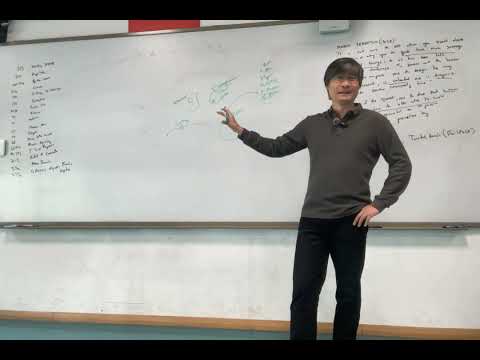
Video thumbnail
youtube.com/watch?v=_Io7-_RS8uE ↗ Analyzed 2026-03-14 by claude-opus-4-6

Viewer Advisory

  • The Rome-America analogy is selectively constructed — the speaker highlights parallels while ignoring differences that would weaken the comparison.
  • The claim that Caracalla's 212 AD edict effectively ended Rome is the speaker's own thesis, not scholarly consensus — it bypasses extensive academic debate about the edict's actual effects and significance.
  • The immigration segment slides from historical analysis into contemporary political commentary, presenting one-sided arguments with inaccurate statistics (Canada's population figures are wrong).
  • China is conspicuously exempt from the analytical framework applied to America and Rome — the speaker does not examine whether China's own restrictive citizenship, ethnic nationalism, or internal contradictions might subject it to similar dynamics of decline.
  • The prediction of American civil war rests on a simplistic 'aggression must go somewhere' premise that treats complex social dynamics as hydraulic systems.
  • The classroom setting lends institutional authority to what are often contested interpretations presented as established facts.
Central Thesis

Rome and America are fundamentally war machines whose republican values enabled external conquest, but whose inability to reconcile republican identity with imperial reality leads inevitably to internal conflict and decline.

  • Rome developed its cultural values (libertas, res publica, pietas) in deliberate opposition to Greek values (freedom, eudaimonia, arete), learning from Athens's decline after the Peloponnesian War.
  • The republican system's flexible citizenship model allowed Rome to replenish its military from conquered and allied peoples, giving it a decisive advantage over Greek city-states with exclusive citizenship.
  • The contradiction between Roman republican identity and imperial reality created cognitive dissonance and perpetual civil wars, as Romans refused to acknowledge they were an empire.
  • Caracalla's Edict of 212 AD, granting universal citizenship, destroyed Roman identity by making citizenship worthless, effectively ending Rome as a cultural entity long before the traditional 476 AD fall date.
  • America, modeled on Rome, faces the same trajectory: it is an empire that refuses to acknowledge itself as one, and its aggression will turn inward as it runs out of external enemies.
  • Immigration without cultural integration dilutes national identity and leads to civilizational collapse, as demonstrated by Rome and now occurring in Canada and the Western world.
  • America will start a war against Iran within five years and will experience a civil war characterized by political violence and assassinations.
Qualitative Scorecard 2.1 / 5.0 average across 7 axes
Historical Accuracy ▸ Expand
The broad historical facts are generally correct: the traditional founding of Rome (753 BCE), establishment of the Republic (509 BCE), the Pyrrhic Wars (280-272 BCE), the Social War (91-89 BCE), Caracalla's Edict (212 AD), Constantine's move to Byzantium (~330 AD), and the traditional fall date (476 AD) are all accurately cited. The characterization of Tacitus and his anti-imperial bias is well-founded. However, several claims are inaccurate or oversimplified: Canada's population did not go from 30 million to 40 million (it went from ~35M to ~41M); American football is not exclusively played in America (Canada has the CFL, and the sport has international leagues); the claim that all NFL players' 'brains are mush' after 5 years massively overstates CTE research; Augustus is called Julius Caesar's 'son' when he was actually his grandnephew and adopted heir; the list of post-Augustus emperors ('Tiberias, Caligula, and Nero') omits Claudius. The characterization of Rome 'losing' the Social War is an oversimplification — Rome won militarily but conceded citizenship.
3
Argumentative Rigor ▸ Expand
The central argument — that Rome's republican value system explains both its rise and fall — is an interesting thesis but is argued through assertion rather than rigorous demonstration. The speaker makes several logical leaps: the claim that Caracalla's edict 'effectively ended Rome' in 212 AD ignores that the Western Empire persisted for 264 more years and the Eastern Empire for over 1200 more years. The analogy between Rome and America is drawn selectively — similarities are emphasized while fundamental differences (nuclear deterrence, democratic institutions, global economy, technology) are ignored. The argument that immigration destroys national identity uses Rome as evidence but the causal chain is weak: Rome's fall had many causes, and the speaker's identity-based explanation is presented as the explanation when it is one among many competing scholarly views. The prediction of American civil war rests on a simplistic 'aggression must go somewhere' premise that lacks mechanistic detail.
2
Framing & Selectivity ▸ Expand
The lecture is highly selective in its evidence. The Rome-America analogy cherry-picks similarities (republic/empire tension, military aggression, immigration challenges) while ignoring critical differences. The characterization of American football as 'barbaric' and uniquely American ignores rugby, hockey, boxing, and combat sports popular worldwide. The immigration argument presents Canada's experience in the most negative possible light without acknowledging that immigration has historically been a source of Canadian strength, or that Canada's immigration system is points-based and selective. The speaker presents Caracalla's edict as the moment Rome 'died' — a highly controversial claim presented as established fact — while ignoring the centuries of continued Roman civilization that followed. Greece-Rome comparisons are schematized to the point of caricature: the contrast between democracy and republic, while containing genuine insight, flattens enormous complexity.
2
Perspective Diversity ▸ Expand
The lecture presents essentially one analytical framework throughout: civilizations rise through cultural cohesion and fall when that cohesion is diluted. Alternative explanations for Rome's fall (economic, environmental, military, epidemiological) are mentioned only to be dismissed in favor of the identity thesis. The 'transformation' school of late antiquity, which challenges the entire decline-and-fall narrative, is completely absent. No Roman voices that favored universal citizenship or imperial identity are presented — only the senatorial anti-imperial perspective of Tacitus. The immigration discussion presents only the restrictionist viewpoint without engaging with pro-immigration arguments or evidence. The classroom format involves student questions but these serve to clarify the speaker's points rather than introduce competing perspectives.
2
Normative Loading ▸ Expand
The lecture is heavily normatively loaded despite presenting itself as historical analysis. America is described as having 'no real adversaries' while 'trying to paint China as a new threat' — implying American threat perception is illegitimate. American football is called 'barbaric' and compared to gladiatorial combat. Americans who deny being an empire are described as engaging in 'cognitive dissonance' and believing 'the silliest things.' The description of 10 million Canadian immigrants as people who 'have no interest in being Canadian' and 'just want a better life for themselves' carries strong normative judgment. The prediction of American civil war and war against Iran is presented with an undertone of inevitability and even satisfaction. The framing of immigration as 'diluting cultural identity' employs value-laden language that presupposes cultural homogeneity as inherently desirable.
2
Determinism vs. Contingency ▸ Expand
The lecture is highly deterministic. The speaker explicitly invokes 'oceanic currents of history' — a metaphor for structural forces that make outcomes inevitable. Rome's rise and fall are presented as determined by its cultural system rather than contingent on particular events, leaders, or circumstances. The prediction framework assumes America must follow Rome's path because it shares Rome's cultural DNA. No room is given for contingency: diplomatic breakthroughs, institutional reform, cultural adaptation, or other factors that might alter the predicted trajectory. The 'aggression must go somewhere' thesis treats violence as a fixed quantity that must be expressed either externally or internally, with no possibility of sublimation, reduction, or transformation. The only acknowledgment of contingency is the opening note that Rome's rise was unpredictable — but this serves to validate the speaker's analytical framework rather than introduce genuine uncertainty.
2
Civilizational Framing ▸ Expand
The lecture employs a strong civilizational framework that treats cultural identity as the primary driver of historical outcomes. Civilizations are characterized as coherent entities with essential characters that can be corrupted or diluted. The Rome-America parallel implies a cyclical view of civilizational rise and fall. Immigration is framed as a threat to civilizational coherence rather than a potential source of renewal. The Greek-Roman contrast is schematized into a clash of value systems rather than a complex interaction between cultures. The lecture implicitly valorizes cultural homogeneity and strong national identity as prerequisites for civilizational strength.
2
Overall Average
2.1
Civilizational Treatment
CHINA

China is mentioned only briefly in two contexts: as an analogy (Japan developed its values in opposition to China, as Rome did to Greece) and as having only 'about two' military bases compared to America's 800. China is also referenced through its citizenship model — 'you're born here and both your parents are Chinese and that's it' — presented neutrally as a contrast to America's civic nationalism. Notably, China's restrictive citizenship model is not criticized despite the lecture arguing that overly restrictive citizenship (like Athens) leads to decline, while overly permissive citizenship (like Caracalla's Rome) also leads to decline. China appears to be implicitly positioned as having the 'correct' balance.

UNITED STATES

America is characterized as a war machine, an empire in denial, and a society that 'worships aggression.' It is presented as following Rome's trajectory toward internal collapse. Americans are described as engaging in cognitive dissonance about their imperial nature, believing 'silly things' about Israel and Europe controlling their foreign policy. American football is singled out as evidence of a barbaric culture. The prediction of war with Iran and civil war frames America's future as grim and largely self-inflicted. While the speaker acknowledges America as 'humanity's greatest empire,' this is framed as a diagnosis rather than a compliment.

THE WEST

The Western world broadly is characterized as facing civilizational decline due to immigration. Canada, Britain, and European nations are described as 'diluting their own cultural identity' through immigration, which will lead to 'massive civil wars' within 10-20 years. Western civilization is presented as fundamentally Roman in character — its political, legal, and cultural systems are Roman inheritances. The West is implicitly treated as a declining civilization that has lost the cultural cohesion necessary for survival.

Named Sources

primary_document
Tacitus / Annals
The speech of Marcus Terentius before the Senate (Annals 6.8) is quoted at length to illustrate how imperial power corrupted the Roman republican character. Tacitus is correctly identified as a senator writing from an anti-imperial perspective about 100 years after the events described.
✓ Accurate
scholar
Livy
Mentioned alongside Tacitus as one of the two primary Roman historians from whom our understanding of Rome derives. Not quoted or discussed in detail.
? Unverified
book
Edward Gibbon / History of the Decline and Fall of the Roman Empire
Referenced as providing the standard explanation of Rome's fall through corruption and decadence, which the speaker then argues against by offering his own identity-based explanation.
✓ Accurate
primary_document
Homer / The Iliad
Achilles is used as the exemplar of Greek eudaimonia — individual glory-seeking that could include treason (asking Thetis to have Zeus favor the Trojans). Used to contrast Greek individualism with Roman collective virtue.
✓ Accurate
other
Mucius Scaevola legend
The story of Mucius swimming across the Tiber to assassinate the Etruscan king and burning his hand in defiance is used to illustrate the early Roman republican character of hating kings and valuing courage. Correctly noted as a traditional legend.
✓ Accurate

Vague Appeals to Authority

  • 'No one could have predicted that in 300 years Rome would become the master of its world' — presented as universal scholarly consensus without specific citations.
  • 'It was common wisdom at that time that the democratic system caused the collapse of the Athenian Empire' — attributed to ancient conventional wisdom without sourcing specific ancient authors.
  • 'A lot of people are predicting massive civil wars in the Western world' due to immigration — no specific analysts, studies, or publications cited.
  • 'After 5 years of playing football these athletes their brains are mush and they commit suicide at age 30 or 35' — significant exaggeration of CTE research without citing specific studies or statistics.
  • 'We know' and 'remember' used frequently to present contested interpretations as established facts the class has already accepted.

Notable Omissions

  • No engagement with modern scholarly debate on Roman citizenship — particularly the work of Peter Garnsey, Mary Beard, or Greg Woolf on Roman identity and the Constitutio Antoniniana.
  • No mention of economic factors in Rome's decline: inflation, debasement of coinage, trade disruption, plague (Antonine Plague, Plague of Cyprian).
  • No discussion of the military reforms (Marian reforms, late Roman military transformation) that transformed Roman citizenship requirements and military composition.
  • The argument that Caracalla's edict 'destroyed' Roman identity ignores the robust continuation of Roman administrative, legal, and cultural systems for centuries afterward.
  • No engagement with the 'transformation' school of late antiquity (Peter Brown, Chris Wickham) that challenges the narrative of 'decline and fall.'
  • The Rome-America analogy omits crucial differences: nuclear weapons, democratic accountability, globalized economy, international institutions.
  • No discussion of Christianity's role in transforming Roman identity — a central theme in Gibbon's own work that the speaker cites.
  • China's own immigration restrictions and ethnic identity politics are not examined despite the speaker teaching in what appears to be a Chinese educational context.
Sustained historical analogy 00:01:43
The entire lecture is structured around the Rome-America parallel: both are 'war machines,' both refuse to acknowledge their imperial nature, both face the contradiction between republican identity and imperial reality, both will turn aggression inward.
Makes American decline seem historically inevitable by mapping it onto a completed historical arc. The audience is primed to see America's future in Rome's past, foreclosing alternative trajectories.
Accessible analogy for abstract concepts 00:20:11
The difference between democracy and republic is illustrated through a classroom lunch decision: in a democracy you debate and vote; in a republic you follow tradition ('every Thursday we go get dumplings').
Makes complex political philosophy accessible to students but oversimplifies the distinction. The lunch analogy makes the republic sound arbitrary and mindless, subtly undermining the system the speaker claims enabled Rome's greatness.
Counterfactual prediction exercise 00:07:00
The speaker asks students to predict which Mediterranean power in 500 BCE would dominate, ranking Persia, Athens, Sparta, Carthage, Macedonia, and Rome — then reveals Rome, the least likely candidate, won.
Establishes the speaker's analytical framework ('oceanic currents of history') by showing that conventional power assessments fail, implicitly arguing that structural/cultural factors matter more than visible power metrics.
Normative assertion disguised as analysis 00:32:40
'Israel is a vassal state of America... the Europeans are a vassal state of America' — presented as obvious facts that Americans are too cognitively dissonant to accept.
Frames a contested geopolitical interpretation as self-evident truth, positioning anyone who disagrees as suffering from psychological dysfunction (cognitive dissonance).
Dramatic primary source reading 00:43:00
The speech of Marcus Terentius from Tacitus's Annals is read and analyzed at length — 'It is not ours to ask whom you exalt above his fellow, or why you the gods have made sovereign arbiter of things.'
The primary source lends scholarly authority to the lecture while the speaker's interpretation (that this shows the corruption of Roman character by empire) channels the emotional impact toward his thesis about imperial decline.
Inflammatory comparison 01:04:08
American football is compared to Roman gladiatorial combat: 'It is barbaric... after 5 years of playing football these athletes their brains are mush and they commit suicide at age 30 or 35.'
Creates an emotional bridge between ancient Roman violence and modern American culture, reinforcing the thesis that America is Rome reborn. The exaggerated health claims add urgency and moral condemnation.
Socratic leading questions 00:20:11
Throughout the lecture, questions like 'What's the difference?' 'Does that make sense?' and 'Why?' guide students toward predetermined conclusions rather than genuine inquiry.
Creates the appearance of collaborative discovery while actually directing the audience to accept the speaker's framework as the natural conclusion of logical reasoning.
Reductio through cognitive dissonance framing 00:33:07
Americans who deny being an empire are diagnosed with 'cognitive dissonance' — 'it's impossible for your mind to hold in place two contradictory ideas: America cannot both be a republic and an empire, therefore it's a republic and don't ever mention the word empire.'
Pathologizes disagreement with the speaker's characterization of America as an empire. Anyone who holds a more nuanced view is implicitly suffering from a psychological condition rather than engaging in legitimate analysis.
Appeal to personal experience 01:00:56
The speaker invokes his Canadian citizenship to add authority to claims about immigration: 'I'm a Canadian citizen... over the past 10 years the population of Canada went from like 30 million to 40 million, these 10 million people are all foreigners.'
Personal testimony lends emotional weight and apparent authority to claims that are factually exaggerated (the population numbers are wrong) and analytically questionable (the characterization of all immigrants as having 'no interest in being Canadian').
Cascading predictions delivered with certainty 01:04:56
The speaker stacks predictions: war with Iran ('probably sooner' than 5 years), then American civil war, then massive civil wars across the Western world — each presented as a logical consequence of the Rome analogy.
Each prediction makes the next seem more plausible through accumulated momentum. The Rome framework makes these predictions appear as structural inevitabilities rather than speculative scenarios requiring their own evidence.
⏵ 00:01:50
Both of these societies, Rome and America, are really war machines. They're extremely aggressive, and if they cannot turn their aggression outwards, they turned their aggression inwards.
States the lecture's central thesis in its starkest form. Characterizing both Rome and America as 'war machines' reveals the speaker's deterministic framework — aggression is treated as a fixed quantity that must find an outlet.
China's own history includes massive internal conflicts when external expansion stalled: the Taiping Rebellion (20-30 million dead), the Cultural Revolution, and centuries of cyclical dynastic collapse marked by internal warfare. If 'war machines turning aggression inward' is a universal pattern, China exemplifies it at least as dramatically as Rome or America.
⏵ 00:02:38
America really has no adversaries... for the past 10 years America has been trying to paint China as a new threat.
Dismisses American concerns about China as manufactured threat perception, framing the US as an aggressor looking for enemies. This contradicts the speaker's own Geo-Strategy series which discusses China's military buildup, shipbuilding dominance, and strategic competition with the US.
China's own national narrative frames the US, Japan, and other nations as threats to justify military modernization and the South China Sea buildup. If America 'painting China as a threat' is illegitimate, China's extensive framing of American containment as an existential threat to Chinese rejuvenation deserves equal scrutiny.
⏵ 00:31:22
If you go to Americans and say you guys are an empire, you'll be shouted down. How dare you say we're an empire. There's nothing imperial about us. We're a republic, we're a democracy, we're not an empire.
Central to the cognitive dissonance argument. The speaker treats American resistance to the 'empire' label as psychological dysfunction rather than a legitimate political debate about the nature of American power.
China similarly rejects characterizations that challenge its self-image — insisting it has 'never been expansionist' despite incorporating Tibet, Xinjiang, and pressing territorial claims in the South China Sea, Taiwan Strait, and along the Indian border. The CCP's official position that China has 'never sought hegemony' mirrors the American denial the speaker mocks.
⏵ 00:32:45
Israel is a vassal state of America... the Europeans are a vassal state of America... and the reason why is Americans cannot understand that they're an empire because it goes against their idea of themselves.
Reveals the speaker's framework for understanding international relations: sovereignty is illusory for US allies, and American self-deception prevents Americans from recognizing their dominance. This dismisses the agency of European and Israeli policymakers.
⏵ 00:43:03
It is not ours to ask whom you exalt above his fellow, or why you the gods have made sovereign arbiter of things.
The Tacitus quotation (Annals 6.8, speech of Marcus Terentius) is the lecture's strongest scholarly moment — a genuine primary source used to illustrate how imperial power transforms political culture. This is effective pedagogy that grounds abstract arguments in historical evidence.
This description of unquestioning obedience to the emperor closely mirrors the political culture the CCP cultivates regarding Xi Jinping's leadership. The idea that questioning the leader's decisions is 'unlawful and dangerous' and that citizens should seek only 'the glory of obedience' has obvious parallels to China's current political environment, where questioning Xi's policies is increasingly treated as disloyalty.
⏵ 00:46:16
We Romans have sworn to kill all kings.
The Mucius Scaevola legend is used to establish the foundational Roman character: anti-monarchical, courageous to the point of self-mutilation. This idealizes early republican virtue to heighten the contrast with imperial corruption.
⏵ 00:50:52
In 212, the emperor Caracalla issued the Edict of Caracalla which made everyone in the Roman Empire a citizen. So he basically destroyed the idea of citizenship.
The speaker's most provocative historical claim — that the Constitutio Antoniniana effectively ended Rome 264 years before the traditional fall date. This identity-based explanation for Rome's decline is presented as the speaker's original argument, bypassing extensive scholarly debate about the edict's actual effects.
⏵ 01:01:23
40% of Canadians now were either foreign born or have a parent who is a foreign born. So there's no more identity.
Reveals the speaker's essentialist view of national identity — that immigration above a certain threshold destroys national cohesion by definition. The leap from demographic fact to 'no more identity' is asserted without evidence and ignores Canada's long history as an immigrant nation.
China's own history includes massive population movements and ethnic assimilation — the concept of being 'Chinese' (华人) has been continuously expanded to incorporate diverse ethnic groups over millennia. The Han Chinese identity itself is a product of centuries of assimilation of originally distinct peoples. The idea that immigration inherently destroys identity would undermine China's own narrative of multi-ethnic unity.
⏵ 01:04:08
American football... is barbaric. You literally have people trying to kill each other for the entertainment and pleasure of spectators. It's barbaric.
The comparison of NFL football to gladiatorial combat crystallizes the speaker's view of America as Rome reborn — a civilization that glorifies violence. The repetition of 'barbaric' signals moral judgment rather than analytical distance.
⏵ 01:04:51
I think within the next 10 years America will most likely start a war probably against Iran... and then America will start a civil war as well.
The lecture's key falsifiable predictions. The Iran war prediction was confirmed within months (Operation Midnight Hammer, June 2025). The civil war prediction remains untested but reflects the deterministic framework — violence is an inevitable output of the American system.
prediction America will start a war against Iran, probably within the next 5 years, probably sooner.
01:04:56 · Falsifiable
confirmed
Operation Midnight Hammer launched June 2025, approximately 4 months after this lecture. Full-scale US-Israeli campaign followed Feb 28, 2026. Prediction confirmed well within the 5-year window.
prediction America will start a civil war — meaning political killings, assassinations, and significant political violence — within the next 10 years.
01:05:07 · Falsifiable
untested
As of March 2026, while US political polarization remains extreme and political violence has occurred (e.g., assassination attempts on Trump), the US has not experienced anything resembling a civil war with systematic political killings. The 10-year window extends to ~2035.
prediction Massive civil wars will erupt in the Western world within 10-20 years due to the consequences of unlimited immigration.
01:02:31 · Falsifiable
untested
The 10-20 year window extends to 2035-2045. While immigration is a major political issue in the West, no civil wars have erupted as of March 2026.
prediction America has no real adversaries and no peer competitors.
02:33 · Falsifiable
partially confirmed
The US remains the sole military superpower, but China is widely recognized as a peer competitor in economic and shipbuilding capacity. The Pentagon's own assessments identify China as a pacing challenge. The claim that America 'has no adversaries' contradicts the speaker's own series content about US-China rivalry.
prediction 10 million new Canadians who are foreigners have no sense of Canadian identity and many would be happy to join the United States.
01:01:06 · Falsifiable
disconfirmed
Canada's population grew from ~35M to ~41M (not 30M to 40M as claimed). Polling consistently shows strong Canadian national identity even among immigrants, and Canadian opposition to US annexation is overwhelming (85%+ oppose in polls). Trump's annexation rhetoric has actually strengthened Canadian identity.
Verdict

Strengths

The lecture has genuine pedagogical merit in several areas: the distinction between Greek democracy and Roman republicanism, while schematized, captures a real and important difference in political philosophy; the use of Tacitus's account of Marcus Terentius's trial is excellent primary source analysis that introduces students to historiographical thinking; the observation that Rome's flexible citizenship model gave it a military advantage over exclusive Greek city-states is well-supported by classical scholarship; and the prediction of US-Iran conflict, confirmed within months, demonstrates genuine strategic foresight. The framing of the republic-empire contradiction as a persistent source of Roman internal conflict is historically sound and provides an interesting lens for understanding Roman political culture.

Weaknesses

The lecture suffers from significant analytical and factual shortcomings. The claim that Caracalla's edict effectively ended Rome in 212 AD is a provocative thesis stated as fact, ignoring centuries of continued Roman civilization and extensive scholarly debate. Several factual claims are wrong or exaggerated: Canada's population figures, the exclusivity of American football, the universal brain damage of football players. The Rome-America analogy is drawn selectively — similarities are highlighted while fundamental differences (nuclear weapons, democratic accountability, global institutions, technological civilization) are ignored. The immigration argument slides from historical analysis into contemporary political advocacy without acknowledging the complexity of immigration's effects on national identity. The deterministic framework — 'aggression must go somewhere' — lacks mechanistic specificity and ignores the many ways societies have managed, channeled, or reduced internal violence without civil war.

Cross-References

BUILDS ON

  • Civilization series 'first class' on 'oceanic currents of history' — the speaker references this framework explicitly for how empires energize their borderlands.
  • Previous semester lectures on Homer's Iliad and Greek civilization — Achilles and Greek values are referenced as previously covered material.
  • Previous semester lectures on the Peloponnesian War — Athens's rise and fall are referenced as background knowledge.
  • Geo-Strategy #8 ('The Iran Trap') — the prediction of US war with Iran is consistent with and builds on the detailed scenario constructed in that lecture.
  • Earlier Civilization lectures on Hannibal and the Punic Wars — referenced via 'remember' when discussing Hannibal's invasion of Italy.

CONTRADICTS

  • The claim that 'America really has no adversaries' contradicts the extensive analysis in the Geo-Strategy series of US-China strategic competition and the 232:1 shipbuilding ratio.
  • The argument that flexible citizenship was Rome's key advantage contradicts the later argument that Caracalla's extension of citizenship to everyone destroyed Rome — the speaker's own framework suggests citizenship must be both flexible enough to enable military recruitment and restrictive enough to preserve identity, but offers no principle for where the line should be drawn.
This lecture fits the series pattern of using historical case studies to draw lessons about American decline. The Rome-America parallel serves the same function as the Athens-America parallel in earlier lectures and the Iran trap scenario in Geo-Strategy: all roads lead to American overextension and collapse. The speaker consistently treats America as following a historically determined path toward decline, with different historical analogies selected to illuminate different aspects of this thesis. China is consistently absent from critical examination — it appears either as a neutral comparator or as a beneficiary of American decline, but never as a civilization subject to the same forces of hubris, overextension, and identity crisis that the speaker applies to America and Rome.