Predictive History Audit / Systematic Content Analysis
Civilization
Episode 36 · Posted 2025-03-06

Memory of the Norse

This lecture explores Viking/Norse culture through the lens of their worldview, mythology, and oral tradition, contrasting it with Greek and Roman civilizational frameworks. The speaker argues that Norse mythology is 'the greatest cosmological system' in human history, organized around three core values: courage, loyalty, and resourcefulness. Using Ibn Fadlan's 10th-century account of a Rus Viking funeral as primary evidence, the lecture reconstructs Norse attitudes toward memory, community, and death. The second half develops a broader argument about oral tradition versus literary and visual culture, contending that the transition from oral to written culture represented a loss of intimacy, creativity, and communal imagination — drawing a parallel to the biblical expulsion from Eden.

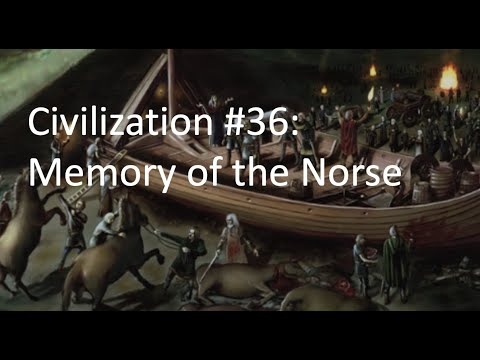
Video thumbnail
youtube.com/watch?v=tYMNsa83NHY ↗ Analyzed 2026-03-14 by claude-opus-4-6

Viewer Advisory

  • The lecture's central claim about Norse mythology's supremacy is an aesthetic judgment, not an established scholarly consensus.
  • The interpretation of the Viking funeral rituals involves significant speculation that the speaker acknowledges but then builds upon as established fact.
  • The oral-vs-literary culture argument, while thought-provoking, oversimplifies a complex scholarly field (orality studies) and ignores key scholars like Walter Ong, Milman Parry, and Albert Lord who have explored these questions with more nuance.
  • Several specific historical claims (Brutus as Caesar's biological son, no professional actors in Greek theater, Vikings as the only ship-burial culture) are inaccurate.
  • The Snorri Sturluson's Prose Edda and the Poetic Edda — the actual textual sources for nearly everything we know about Norse mythology — are never mentioned, which is a significant omission.
  • The anti-civilization, pro-primitivist undertone echoes Rousseau's noble savage concept without engaging with the extensive philosophical critiques of that position.
Central Thesis

Viking culture was built on a communal oral tradition of living stories that fostered creativity, intimacy, and imagination in ways that literary and visual cultures cannot replicate, and the transition away from oral tradition represents a fundamental loss in human creative capacity.

  • The Viking community was defined by shared stories (living memories) rather than by political debate (Greek model) or fixed tradition (Roman model), with individuals acting out these stories through ritual, adventure, and exploration.
  • Norse mythology is the greatest cosmological system in human history because it is grand (nine realms), complete (beginning to end in Ragnarok), and unified (gods and humans interconnected).
  • The three core Viking values expressed through Norse mythology are courage (exemplified by Odin sacrificing his eye), loyalty (exemplified by Tyr sacrificing his hand to bind Fenrir), and resourcefulness (exemplified by Loki's trickery).
  • Ibn Fadlan's account of a Viking funeral reveals a highly choreographed ritual designed to implant the deceased's memory into the community's collective consciousness.
  • Oral tradition is superior to literary and visual culture for fostering creativity and community because it requires participation, allows for co-creation, and produces unique, living versions of stories.
  • The transition from oral to literary culture parallels the story of Adam and Eve — the development of shame and self-consciousness that accompanies being watched by others across time and space.
  • Civilization may make us less creative by replacing the intimate, exploratory, shame-free space of oral tradition with hierarchical, judgment-laden literary and visual cultures.
Qualitative Scorecard 3.1 / 5.0 average across 7 axes
Historical Accuracy ▸ Expand
The broad historical framework is sound — Ibn Fadlan's account is a real and important primary source, the description of Norse mythology's structure (nine realms, Ragnarok, etc.) is largely accurate, and the characterizations of Greek and Roman worldviews are reasonable simplifications for a lecture setting. However, several specific claims are problematic: Marcus Brutus is called Caesar's 'biological son' when this is highly contested; the claim that Vikings were 'the only society to bury people in ships' ignores similar practices in Anglo-Saxon England (Sutton Hoo) and ancient Egypt; the statement that Greek theater had 'no professional actors' is inaccurate (actors were professionals who competed at festivals, though the chorus was civic); and the interpretation of the slave girl's 'volunteering' and the sexual rituals involves significant speculation presented as reasoned deduction. The Norse mythology retellings contain minor inaccuracies in names and details (e.g., Mjolnir called 'Moire').
3
Argumentative Rigor ▸ Expand
The lecture builds a coherent argument about Viking culture as story-centered and contrasts it effectively with Greek and Roman frameworks. The use of Ibn Fadlan as primary evidence is appropriate. However, the argument suffers from several logical issues: the claim that Norse mythology is 'the greatest cosmological system' is stated as though it can be demonstrated rather than being an aesthetic judgment; the interpretation of the funeral sexual rituals involves considerable speculation ('I'm going to use my imagination') that is then built upon as though established; the argument that oral tradition produces superior creativity is asserted rather than demonstrated, relying on the absence of recent literary masterpieces as evidence (a dubious claim that ignores many candidates); and the oral-vs-literary binary oversimplifies — many great literary works emerged from cultures with robust oral traditions alongside literacy.
3
Framing & Selectivity ▸ Expand
The lecture presents a romanticized view of Viking oral culture while treating literary and visual culture as diminishments. Evidence is selected to support this narrative: the intimacy and creativity of oral tradition are emphasized while its limitations (loss of accuracy, restricted transmission range, vulnerability to cultural disruption) are not discussed. The lecture acknowledges that 'we only have a fraction' of Norse mythology and that Christian sources altered it, but doesn't consider that the oral tradition's vulnerability to loss is itself an argument for literary preservation. The treatment of Christianity is somewhat one-sided — presented primarily as a force that suppressed Viking culture and imposed a rigid good/evil binary, without acknowledging Christianity's own rich literary and artistic traditions. However, the speaker does commendably acknowledge his own speculative interpretations and encourages students to be skeptical.
3
Perspective Diversity ▸ Expand
The lecture compares three civilizational frameworks (Greek, Roman, Viking), which provides some perspective diversity. The speaker thoughtfully notes Ibn Fadlan's cultural biases and limitations as an observer. However, the lecture ultimately privileges the Viking/oral tradition perspective as superior without seriously engaging counterarguments. No scholarly perspectives critical of romanticizing Viking culture are presented. The lecture does not address the perspective of those subjected to Viking violence (beyond noting that Christians viewed Vikings as barbarians). Greek theater is praised for empathy and multiple perspectives, but this standard is not applied to the speaker's own analysis.
3
Normative Loading ▸ Expand
The lecture carries moderate normative loading, primarily in its valorization of oral tradition and implicit critique of modern civilization. Phrases like 'the greatest mythology in human history,' 'the most imaginative civilization in human history' (about the Greeks), and the suggestion that civilization makes us 'less creative' and 'more ashamed' carry strong evaluative weight. The characterization of Christianity as 'extremely' focused on good and evil, and of hierarchical literary culture as 'the elite insisting on indoctrinating us and controlling how we think,' are normatively loaded. However, compared to the channel's geopolitical lectures, this cultural history lecture is considerably more balanced and exploratory in tone. The speaker frequently qualifies his claims ('I'm going to use my imagination,' 'take what I say with a grain of salt').
3
Determinism vs. Contingency ▸ Expand
The lecture presents the transition from oral to literary culture as a somewhat inevitable developmental trajectory, using the Adam and Eve metaphor to frame it as a fall from innocence. This framing implies determinism — civilization necessarily produces shame and lost creativity. However, the lecture does acknowledge contingency in specific cases: the Vikings 'chose' not to adopt literacy, Christian conversion was a gradual process, and the survival of Norse mythology was partly accidental (depending on which texts survived). The overall narrative arc — from oral freedom to literary constraint — is presented as a one-directional progression without much consideration of cultures that maintained oral traditions alongside literacy.
3
Civilizational Framing ▸ Expand
For a lecture in the 'Civilization' series, this episode handles civilizational categories with relative nuance. The speaker explicitly compares Greek, Roman, and Viking civilizational frameworks without crude hierarchical ranking (though he does claim Norse mythology is 'the greatest'). Vikings are rehabilitated from their stereotypical portrayal as barbarians, showing 'very complicated and nuanced understanding of themselves and the world.' The Greek civilization is praised for imagination and empathy. The lecture focuses on cultural-philosophical differences rather than civilizational superiority, though the oral tradition is clearly favored over literary culture. There is minimal engagement with non-Western civilizations beyond brief mentions.
4
Overall Average
3.1
Civilizational Treatment
CHINA

China is mentioned only in passing: Chinese filial piety (xiao) is contrasted with Roman piety — in China it means 'obedience to your father' while in Rome it means 'loyalty to tradition.' The speaker notes this is 'completely opposite.' This is a reasonable if simplified contrast. China also appears in the bedtime story (strawberries filling Beijing, then China), suggesting the speaker and his family live in Beijing. No civilizational judgment is applied to China.

RUSSIA

Russia/Russians are mentioned briefly — the speaker notes the Viking oral tradition 'will go on to influence major European civilizations, specifically the Germans and the British, but also the Russians.' This is historically sound given the Varangian/Rus connection and is presented neutrally.

THE WEST

Western civilization is discussed through its Greek and Roman foundations. The transition from pagan oral culture to Christian literary culture is presented as both a gain (permanence, universality) and a loss (intimacy, creativity, freedom). Christianity is characterized somewhat negatively as rigid and suppressive of pagan culture. The overall implication is that Western civilization's literary turn came at a cost to human creativity and communal imagination.

Named Sources

primary_document
Ahmad ibn Fadlan (Risala)
Ibn Fadlan's 10th-century account of a Volga Viking (Rus) chieftain's funeral is the primary evidentiary source for the lecture. The speaker quotes extensively from the text describing animal sacrifice, sexual rituals, human sacrifice, and the funeral pyre. The speaker also carefully contextualizes Ibn Fadlan's limitations as an observer — he didn't speak the language, had his own Muslim cultural biases, and wrote after the fact.
✓ Accurate
scholar
Neil Price
Cited as a Viking expert and archaeologist whose YouTube lectures (with over a million views) the speaker consulted in preparation. Price's framework of four forces shaping the Viking individual (hamr, hamingja, hugr, and fylgja) is presented and explained. The speaker recommends Price's YouTube videos to students.
✓ Accurate
primary_document
Homer / The Iliad
Used to illustrate the Greek worldview (Achilles seeking personal glory) and to draw a parallel between Agamemnon's attachment to his slave girl and the Viking chieftain's relationship with his slave/lover, arguing that in warrior cultures, great men conferred status on captured women through love.
✓ Accurate
primary_document
Herodotus / Histories
The story of Themistocles at the Battle of Salamis (480 BCE) is used to illustrate the Greek worldview where individual cunning (even if technically treasonous) was valued as eudaimonia/arete.
✓ Accurate
other
Paul Gauguin
Gauguin's painting 'Where Do We Come From? What Are We? Where Are We Going?' is referenced as capturing the three fundamental questions every culture grapples with, which Norse mythology also addresses. Gauguin is accurately described as a former stockbroker who went to Tahiti.
✓ Accurate
other
Richard Wagner / The Ring Cycle
Cited as the most famous opera in German history, built on Norse mythology (specifically the Sigurd/Brunhilde story), presented as evidence of Norse mythology's enduring cultural influence.
✓ Accurate
other
J.R.R. Tolkien / Lord of the Rings
Cited as inspired by Norse mythology, further evidence of its lasting cultural impact.
✓ Accurate
primary_document
Euripides / The Trojan Women
Referenced (as 'children women') as an example of Greek theater writing about war from the enemy's perspective, demonstrating Greek empathy and imagination.
✓ Accurate
primary_document
Aeschylus / The Persians
Referenced as an example of Greek theater writing about the Persian defeat from the Persian perspective, evidence that Greek civilization practiced empathy by celebrating multiple viewpoints.
✓ Accurate

Vague Appeals to Authority

  • 'What most actually anthropologists believe is to be human is to ask these three questions' — no specific anthropologists named.
  • 'The Greek civilization is considered the most imaginative in human history' — presented as consensus without attribution.
  • 'There's a concept in cultural theory called the aura' — likely referencing Walter Benjamin but not attributed.
  • 'We tend to think that it's just about telling a story' — vague appeal to conventional wisdom about oral traditions.

Notable Omissions

  • No engagement with the extensive scholarly debate about the reliability and interpretation of Ibn Fadlan's account (e.g., James Montgomery's critical edition, or debates about whether the account describes Scandinavian or Slavic practices).
  • No mention of the Poetic Edda or Prose Edda (Snorri Sturluson) as the actual textual sources through which Norse mythology survives — a significant omission for a lecture on Norse cultural memory.
  • No discussion of runic inscriptions, which represent a form of Viking literacy that complicates the 'purely oral tradition' narrative.
  • Walter Benjamin's 'The Work of Art in the Age of Mechanical Reproduction' (the concept of 'aura') is used without attribution.
  • No engagement with scholars of oral tradition like Milman Parry, Albert Lord, or Walter Ong, whose work on orality vs. literacy is directly relevant to the lecture's central argument.
  • The claim that Marcus Brutus was Julius Caesar's 'biological son' is stated as fact — this is a contested historical claim based on gossip reported by ancient sources; most historians consider it unlikely or unverifiable.
  • No mention of other well-documented oral traditions (Aboriginal Australian, West African griot tradition, Indian Vedic recitation) that could provide comparative evidence for the lecture's claims about oral culture's superiority.
Personal anecdote as illustration 00:10:32
The Georgetown 'useless competition' story — two students drove 24 hours to Canada just to urinate in a forest, creating a memorable story that would outlast academic achievements.
Makes the abstract concept of 'Viking story-culture' immediately relatable to a student audience. The humor and absurdity of the anecdote primes the audience to see memorability as more valuable than conventional achievement, aligning them with the lecture's thesis before the argument is explicitly made.
Superlative framing 00:12:53
'Norse mythology I would argue is the greatest mythology in human history' and 'the greatest cosmological system we have.'
Elevates the subject matter to the highest possible status, generating interest and investment from students while establishing the speaker's passionate advocacy for Norse culture as a guiding framework for the lecture.
Imaginative reconstruction presented as logical deduction 00:28:56
The speaker interprets the slave girl as the chieftain's lover and the sexual ritual as gift-giving, framing speculation as 'the logic' and 'the only way this makes sense,' while drawing parallels to Agamemnon in the Iliad.
Transforms what is acknowledged speculation ('I'm going to use my imagination') into something that feels logically demonstrated through the Homeric parallel. The audience is led through a chain of reasoning that makes the interpretation seem inevitable rather than one possibility among many.
Explicit epistemic humility 00:03:58
'Please take what I say with a grain of salt, be skeptical, be suspicious, ask questions, challenge me where you feel you need to.'
Inoculates the speaker against criticism by acknowledging limitations upfront, while paradoxically increasing credibility — a speaker who admits uncertainty appears more trustworthy. This makes the audience more receptive to the speculative interpretations that follow.
Tripartite comparative framework 00:04:15
Greeks (polis/individual glory) vs. Romans (tradition/piety) vs. Vikings (stories/memory) — each civilization gets a clear, simple label and exemplifying story.
Creates a clean analytical structure that makes complex civilizational differences appear orderly and comprehensible. The Viking model, introduced last and most extensively, benefits from being the culmination of the comparison, implicitly positioned as the most interesting framework.
Sensory evocation 00:56:55
Description of Norse storytelling in great halls — darkness, firelight, words bouncing off walls creating echo and resonance, cold and snow outside — connecting this to Ice Age cave paintings.
Transports the audience into the experiential world of Norse oral tradition, making the abstract argument about oral culture's power viscerally felt. The connection to Ice Age caves adds a sense of deep ancestral connection.
Experiential proof by analogy 00:59:35
The speaker tells students to compare their in-class experience with watching the same lecture on YouTube, arguing they'll find the YouTube version cannot capture the feeling — paralleling the oral vs. literary culture argument.
Makes the abstract thesis about oral tradition personally verifiable for the audience, turning each student's own experience into evidence for the argument. This is rhetorically powerful because it bypasses the need for external proof.
Extended personal narrative as demonstration 01:03:31
The bedtime story about his son Malu and the strawberries, told in full oral form and then 'translated' into written literary form to show how the story loses intimacy, playfulness, and power.
The speaker performs his own thesis — demonstrating the power of oral storytelling by telling a story — while simultaneously showing the audience how literary culture flattens and constrains the same material. This meta-rhetorical move makes the argument self-evident.
Biblical metaphor as interpretive frame 01:09:04
The transition from oral to literary culture is compared to Adam and Eve's expulsion from Eden — the development of shame through being watched.
Frames the loss of oral tradition in mythic, emotionally resonant terms. The Eden metaphor implies that literary culture is a 'fall' from a more natural state, adding moral weight to what could otherwise be a neutral cultural observation.
Provocative closing questions 01:11:08
'Does civilization make us less creative? Does being civilized make us more ashamed of exploring, of being curious, or playing?'
Leaves the audience with Rousseauian questions that implicitly argue for a 'yes' answer based on the lecture's framing. The questions feel open but are rhetorically loaded by everything that preceded them.
⏵ 00:12:53
Norse mythology I would argue is the greatest mythology in human history.
Reveals the speaker's strong valorization of Norse culture, which frames the entire lecture. This superlative claim sets up the lecture's implicit argument that Western civilization lost something valuable when it abandoned pagan oral traditions for Christian literary culture.
⏵ 00:09:18
For the Vikings... the community is a set of stories. Stories are memories that are living, that which a community tells about itself, and therefore there's a flexibility to these stories — they can be reimagined over and over.
Encapsulates the lecture's central thesis about Viking culture as story-centered. This definition — community as living stories rather than fixed traditions — is the key conceptual innovation the lecture offers.
⏵ 00:08:25
In China filial piety means obedience to your father — what your father says is right. But in Rome, piety means loyalty to the traditions of Rome.
One of the few direct references to China, offering a simplified but meaningful contrast between Chinese and Roman conceptions of duty. Notable for how bluntly Chinese filial piety is equated with obedience, without acknowledging the philosophical complexity of xiao in Confucian thought.
⏵ 01:02:50
We went from a guaran world where everyone can contribute to the story, to a hiero world where the top, the elite, insist on indoctrinating us and controlling how we think.
Reveals an anti-hierarchical, anti-establishment normative stance embedded in what is presented as cultural history. The transition from egalitarian oral culture to hierarchical literary culture is framed as a loss of freedom.
This critique of elite control over thought and narrative could apply to China's own system of ideological control, censorship, and state-managed historical narratives. The speaker, lecturing in what appears to be a Chinese educational institution, does not acknowledge the irony of lamenting hierarchical thought control while operating within one of the world's most controlled information environments.
⏵ 01:02:16
The problem with Christianity is it is extremely... it focuses on what is good and evil, whereas pagan culture — it's like whether it's interesting or not interesting, whether it's memorable or not memorable.
Reveals the speaker's preference for aesthetic/experiential values over moral/ethical frameworks. This romanticization of pagan culture as free from moral judgment, contrasted with Christianity's 'problem' of moral seriousness, reflects a broader Nietzschean sensibility.
⏵ 00:28:43
She's not a normal person. I would argue that she must be the lover of the deceased chieftain.
Illustrates the speaker's method throughout the lecture — using imagination and literary parallel (citing the Iliad) to fill gaps in the historical record. While transparent about the speculative nature, this interpretation is then built upon as foundational for understanding the entire funeral ritual.
⏵ 00:38:41
They are reliving mythologies... they are celebrating the man and implanting his memory into the community, because everyone participates in this funeral. The man, his memory, is now part of the community's collective consciousness.
The core interpretive framework of the lecture — Norse funerals as mechanisms for collective memory formation. This argument is the bridge between the archaeological/textual evidence and the broader thesis about oral tradition's power.
⏵ 01:08:43
In oral culture you can be intimate, therefore you can play, you can experiment, you can be curious, you can be adventurous... but in a literary culture everyone is watching you. 100 years from now people are still watching you.
The emotional core of the lecture's argument against literary culture — that permanence creates self-censorship. This echoes concerns about modern surveillance culture and social media's chilling effects, though the speaker does not draw these contemporary parallels explicitly.
The argument that being watched constrains creativity and authenticity resonates ironically in a Chinese educational context, where state surveillance, censorship of online speech, and the social credit system create exactly the kind of 'everyone is watching you' environment the speaker associates with the loss of creative freedom.
⏵ 01:11:08
Does civilization make us less creative? Does being civilized make us more ashamed of exploring, of being curious, or playing?
The lecture's final provocation, implicitly arguing that civilization's gains come at the cost of creative freedom. This Rousseauian question positions the entire Civilization lecture series in tension with the concept of civilizational progress.
⏵ 01:01:17
The Viking or tradition was extremely powerful, but it was so powerful that it cannot be remembered. It cannot be written down.
A paradoxical claim that the power of oral tradition lies precisely in its ephemerality. This is both the lecture's most poetic insight and its most problematic — if the tradition cannot be captured, then the speaker's own claims about its power are by definition unverifiable.
Verdict

Strengths

The lecture demonstrates genuine engagement with primary sources (Ibn Fadlan's account) and scholarly expertise (Neil Price's archaeological work). The comparative framework contrasting Greek, Roman, and Viking worldviews is pedagogically effective and offers students meaningful analytical tools. The speaker's interpretive readings of Norse mythology — Odin's courage, Tyr's loyalty, Loki's resourcefulness — are thoughtful and well-structured. The discussion of oral vs. literary culture raises genuinely important questions about how media shape thought and community. The speaker commendably acknowledges the speculative nature of his interpretations and encourages student skepticism. The personal stories (Georgetown competition, bedtime stories for his sons) are rhetorically effective and demonstrate the oral tradition's power through performance.

Weaknesses

The lecture contains several factual errors or contested claims presented as fact: Marcus Brutus as Caesar's 'biological son,' Vikings as 'the only society to bury people in ships,' and the absence of professional actors in Greek theater. The argument that Norse mythology is 'the greatest cosmological system' is stated as though demonstrable rather than being an aesthetic judgment. The interpretation of Ibn Fadlan's funeral account involves considerable speculation built upon as though logically demonstrated. The oral-vs-literary binary is oversimplified — it ignores cultures that maintained oral traditions alongside literacy, and the claim that no literary masterpiece has been produced in 50 years is easily disputed. The treatment of Christianity is one-sided, presented primarily as a repressive force without acknowledging its literary and artistic achievements. Walter Benjamin's concept of 'aura' is used without attribution.

Cross-References

BUILDS ON

  • Previous Civilization lectures on Ice Age cave paintings (referenced as 'last semester at the very beginning').
  • Previous Civilization lectures on Greek civilization, specifically the Iliad, Herodotus, the polis, eudaimonia, and arete.
  • Previous Civilization lectures on Roman civilization, including Julius Caesar and the concept of Roman piety.
  • Civilization #35 (presumably previous week's lecture on Vikings, referenced as 'last class' and 'as I mentioned last class').
  • Upcoming lectures on the Abbasid Caliphate ('next week we start the Abbasid Caliphate') and future lectures on Viking influence on German, British, and Russian civilizations.
This lecture is notably different in tone and content from the channel's geopolitical lectures (Geo-Strategy, Game Theory series). Here the speaker operates in a humanities/cultural studies mode, engaging with primary sources, archaeological evidence, and interpretive frameworks rather than making geopolitical predictions. The lecture demonstrates genuine intellectual curiosity and pedagogical skill, with effective use of personal stories, comparative analysis, and explicit acknowledgment of speculative reasoning. The anti-hierarchical, anti-establishment themes ('the elite insisting on indoctrinating us and controlling how we think') echo sentiments found in the geopolitical lectures but are expressed through cultural rather than political analysis. The Rousseauian nostalgia for pre-civilizational authenticity is a recurring pattern in the speaker's worldview across series.