Predictive History Audit / Systematic Content Analysis
Civilization
Episode 38 · Posted 2025-03-13

Twilight of the Middle Kingdom

This lecture surveys Chinese history from the Warring States period through the Qing Dynasty, framing it through the speaker's theory of 'open cooperative competition' as a driver of innovation. The central question posed is why China ceased to be innovative after the Song Dynasty (c. 1200 CE), despite having produced the four great inventions (paper, printing, compass, gunpowder). The speaker argues that the answer lies in the imperial bureaucracy's deliberate strategy of localizing elites through the keju (civil service examination) system, which prioritized political stability over innovation and economic growth. Drawing parallels to Rome's transition from republic to imperial bureaucracy, the lecture characterizes post-Song China as a society that deliberately chose internal stability at the cost of prosperity, creativity, and openness to the outside world.

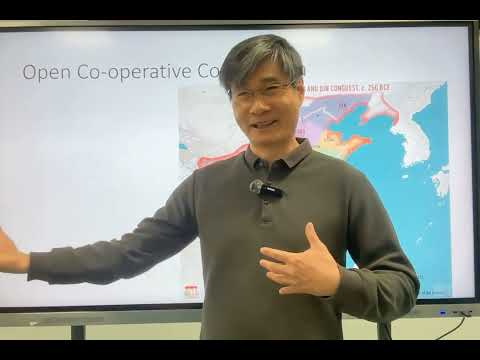
Video thumbnail
youtube.com/watch?v=A2LMJerHcKM ↗ Analyzed 2026-03-14 by claude-opus-4-6

Viewer Advisory

  • whether the Tang Dynasty founders were truly Xianbei rather than Han Chinese,.
  • whether the keju was 'never designed to be a meritocracy' (scholars like Benjamin Elman offer more nuanced views),.
  • whether China genuinely 'did nothing' with its four inventions (Song Dynasty commercial dynamism contradicts this), and.
  • whether Confucianism can fairly be reduced to 'bureaucratism.' Viewers should also consult Pomeranz, Elvin, Needham, and Elman for alternative perspectives on why Europe diverged from China. The lecture's implicit framework treats European development as normative, which is itself a perspective rather than an objective standard.
Central Thesis

China stopped innovating after the Song Dynasty because the imperial bureaucracy deliberately eliminated open cooperative competition by localizing elites through the keju system and Confucian cultural controls, prioritizing regime stability over economic growth and innovation.

  • The Warring States period produced China's foundational ideas and innovations because it was an environment of 'open cooperative competition' with no centralized authority.
  • The Qin state succeeded in unifying China because it was a revolutionary outsider willing to practice total warfare and adopt legalism, while other states tried to maintain the aristocratic status quo.
  • The Han Dynasty was the last 'ethnically Chinese' dynasty committed to Chinese culture; subsequent dynasties like the Tang were founded by non-Chinese peoples (the Xianbei).
  • The Tang Dynasty's reliance on powerful generals led to the An Lushan Rebellion, which killed between one-third and one-half of the population.
  • Starting with the Song Dynasty, the emperor developed a strategy of dividing and conquering localized elites, ending the possibility of coordinated elite challenges to central power.
  • The Huang Chao Rebellion eliminated the aristocracy in China, giving the Song Dynasty room to implement the keju system and prevent a new nobility from arising.
  • The keju examination was not a meritocracy but a quota-based system designed to create competition among local elites, channel elite energy away from rebellion, and maintain imperial control.
  • Literary Chinese (wenyan) was deliberately made more complex over time, the opposite of the trend in other civilizations, to maintain a bureaucratic monopoly on literacy.
  • Confucianism is essentially 'bureaucratism' — a philosophy designed to legitimize bureaucratic authority and maintain the status quo.
  • The Ming Dynasty's maritime trade ban was imposed because coastal wealth concentration threatened the emperor's divide-and-conquer strategy over provincial elites.
  • China's four great inventions had no transformative impact within China itself, demonstrating that culture matters more than technology.
Qualitative Scorecard 2.0 / 5.0 average across 7 axes
Historical Accuracy ▸ Expand
The lecture gets broad outlines correct but contains several specific errors and oversimplifications. The claim that the Tang Dynasty founders (Li family) were Xianbei is debated — the Li family's ethnicity is contested among historians, with many arguing they were Han Chinese with some Xianbei intermarriage. Calling the Manchus 'just another iteration of the Mongol people' is ethnographically incorrect; the Manchus were a distinct Tungusic people. The claim that the Xiongnu gave rise to the Huns (Attila) is a contested hypothesis, not established fact. The assertion that 'China did nothing whatsoever' with the four inventions is an exaggeration — Song China had a vibrant commercial economy, widespread use of paper money, and naval applications of the compass. The characterization of religion being 'outlawed for most of Chinese history' is inaccurate; Buddhism, Daoism, and folk religions flourished through much of imperial history despite periodic suppressions. The evolutionary account of Egyptian hieroglyphics to the alphabet oversimplifies a complex process involving Semitic peoples in the Sinai.
3
Argumentative Rigor ▸ Expand
The argument relies heavily on a single theoretical framework ('open cooperative competition') that is applied as a universal explanatory lens without adequate testing or acknowledgment of alternative explanations. The lecture commits the fallacy of monocausal explanation — China's post-Song trajectory is attributed almost entirely to deliberate elite manipulation by the imperial center, ignoring ecological, demographic, geographic, and contingent factors. The Rome-China parallel, while thought-provoking, is drawn too loosely — the situations differed enormously in scale, geography, culture, and chronology. The claim that the keju was 'never designed to be a meritocracy' is stated as definitive when it is actually a contested scholarly position. The argument that Confucianism is essentially 'bureaucratism' is reductive and ignores Confucianism's rich philosophical traditions regarding ethics, metaphysics, and human nature.
2
Framing & Selectivity ▸ Expand
The lecture is highly selective in its use of evidence, consistently choosing examples that support the 'open cooperative competition' framework while ignoring counterexamples. The Song Dynasty's own considerable economic and technological dynamism is downplayed to support the narrative of post-Song decline. The Ming Dynasty's Zheng He voyages — which represent significant maritime engagement — go unmentioned, which would complicate the narrative of immediate insularity. The Qing Dynasty's 'High Qing' period of prosperity and expansion is entirely omitted. Evidence is consistently marshaled to support a declinist narrative about Chinese civilization, while countervailing evidence is not acknowledged.
2
Perspective Diversity ▸ Expand
The lecture presents a single interpretive framework and one primary scholarly source (Wang Yuhua). No alternative scholarly perspectives are mentioned, debated, or refuted. The 'Needham Question' — the standard framing of the very question this lecture addresses — is not referenced, nor are any of the major competing answers (high-level equilibrium trap, great divergence thesis, institutional explanations). The lecture does not engage with Chinese historiographical traditions or perspectives from Chinese scholars writing in Chinese. The speaker presents his interpretation as the definitive answer rather than one perspective among many.
1
Normative Loading ▸ Expand
The lecture carries substantial normative judgments embedded in its descriptive language. China is repeatedly described as becoming 'insular, poor, and divided' — loaded terms that assume Western-style outward engagement and economic growth as the normative standard. Confucianism is dismissively reduced to 'bureaucratism.' The keju is framed almost entirely as a tool of political manipulation rather than a genuine intellectual tradition. The phrase 'China did nothing whatsoever with all four inventions' carries strong normative weight. The framing consistently implies that China's choices were pathological rather than rational responses to specific governing challenges. The term 'backward' is used without qualification to describe Ming Dynasty China.
2
Determinism vs. Contingency ▸ Expand
The lecture is heavily deterministic. Once 'open cooperative competition' ends, decline is presented as inevitable and mechanical. The speaker does not acknowledge contingent factors — individual decisions, environmental shocks, external pressures — that shaped Chinese history. The framework treats the post-Song trajectory as an almost automatic consequence of centralization, without considering that different emperors, different policies, or different external conditions could have produced different outcomes. The Rome-China parallel reinforces this determinism by suggesting that all centralized bureaucratic empires follow the same trajectory. The speaker explicitly states 'that's the answer' when explaining Chinese stagnation, leaving no room for complexity or alternative causation.
2
Civilizational Framing ▸ Expand
The lecture frames Chinese civilization through a consistently negative lens in the post-Song period, characterizing it as deliberately choosing stagnation, insularity, and poverty. While the speaker acknowledges early Chinese greatness (the four inventions, the Warring States intellectual ferment), this praise serves primarily to set up the narrative of decline. The implicit comparison throughout is with Europe, which is positioned as the civilization that properly utilized Chinese inventions. The lecture's framework treats European-style development (outward expansion, commercial capitalism, individual liberty) as the normative path, and China's divergence from this path as a failure rather than an alternative trajectory. The speaker is lecturing to what appears to be Chinese students, and at times adopts a tone of explaining to them why their civilization went wrong.
2
Overall Average
2.0
Civilizational Treatment
CHINA

Chinese civilization is praised for its early achievements (Warring States creativity, four inventions) but characterized as having deliberately chosen stagnation after the Song Dynasty. Post-Song China is repeatedly described as 'insular, poor, and divided' due to bureaucratic control. Confucianism is reduced to a tool of political control ('bureaucratism'). The keju is framed as a mechanism of elite suppression rather than meritocratic selection. The Ming Dynasty is called 'backward.' The overall framing is that China's governing class deliberately sacrificed prosperity and innovation for political stability, making China weak and vulnerable. While some sympathy exists for this as a rational political choice, the normative judgment is consistently negative.

UNITED STATES

The United States is mentioned briefly as inheriting the Roman republican model alongside Britain. The American Revolution is cited as a positive example of how gunpowder (via the musket) enabled citizen empowerment — farmers with muskets overthrowing the British Empire. This positions American civilization as the beneficiary and proper user of innovations that China failed to exploit.

THE WEST

The West (primarily Europe) is implicitly positioned as the civilization that successfully utilized Chinese inventions to create modernity. The printing press led to the Renaissance, Reformation, Scientific Revolution, and Enlightenment. The compass enabled the Age of Exploration. Gunpowder enabled democratic revolutions. The Roman Republic is praised for its patrician system providing will to fight, unity, and culture. The overall framing treats Western development as the normative path of civilization, against which China's trajectory is measured as deficient.

Named Sources

book
Wang Yuhua - 'The Rise and Fall of Imperial China'
Presented as the primary scholarly authority for the lecture's argument about elite localization, the keju system, and the paradox of strong emperors in weak states. The speaker draws on Wang's data about emperor deposition rates, tax collection decline, and network analysis of elite family connections across dynasties.
? Unverified
primary_document
Sun Tzu - 'The Art of War'
Mentioned briefly as one of the products of the Warring States period's creative ferment, used to illustrate the point about open cooperative competition generating innovation.
✓ Accurate
scholar
Voltaire
Cited as an example of a European Enlightenment thinker who was taken in by Chinese propaganda about the superiority of the scholar-official system, used to support the claim that Confucianism is effective ideological legitimation for bureaucratic rule.
? Unverified

Vague Appeals to Authority

  • References to 'the theories we've developed over the course of this year' and 'the oceanic currents of History' without explaining what these are or where they come from.
  • 'As we discussed' and 'as we know' used repeatedly to invoke prior lectures as established fact without re-establishing the evidence.
  • 'We know that for the longest time China really was the Civilized civilization par excellence in the world' — presented as uncontested fact.
  • 'China is the only culture in human history that has made literacy more difficult over time' — a strong claim presented without citation.
  • The claim that the Han Dynasty was 'the last ethnically Chinese dynasty' is stated as fact without sourcing.
  • 'No one thinks Confucianism is a religion' — dismisses the debate among scholars about Confucianism's religious dimensions.

Notable Omissions

  • Mark Elvin's 'The Pattern of the Chinese Past' (1973), which developed the 'high-level equilibrium trap' thesis — the most influential scholarly answer to the question of why China did not industrialize, directly relevant to the lecture's core question.
  • Kenneth Pomeranz's 'The Great Divergence' (2000), which challenged Eurocentric narratives about why Europe industrialized and China did not, arguing the divergence was late and contingent rather than deep-rooted.
  • Joseph Needham's 'Science and Civilisation in China' series, the foundational work on Chinese technological innovation and the 'Needham Question' that this lecture is essentially addressing.
  • Benjamin Elman's extensive work on the keju examination system, which provides a far more nuanced picture than the speaker's characterization of it as purely a political control mechanism.
  • Any Chinese-language scholarship on these topics, which is vast and offers perspectives not always aligned with English-language historiography.
  • The Song Dynasty's own significant innovations (movable type, advanced metallurgy, early industrialization in Kaifeng) are mentioned only to frame a narrative of decline, without acknowledging ongoing scholarly debate about Song economic dynamism.
  • The role of environmental factors, demographic pressures, and the specific challenges of governing a large agrarian empire — factors emphasized by historians like Philip Huang and R. Bin Wong.
  • The Qing Dynasty's own considerable accomplishments — territorial expansion, demographic growth, commercial development — are entirely omitted; the Qing is treated only as a period of decline.
False dichotomy 00:35:51
Frame at 00:35:51
The lecture presents China's choice as between 'internal stability' and 'wealth and prosperity,' as if these are necessarily mutually exclusive, and as if no middle path existed.
Simplifies China's complex policy decisions into a binary framework that makes the 'wrong choice' narrative more compelling.
Argument by analogy 00:37:02
Frame at 00:37:02
The extended parallel between Rome's transition from republic to imperial bureaucracy and China's transition from aristocratic to bureaucratic governance is presented as if it demonstrates a universal law rather than being an illustrative comparison.
Makes the Chinese case seem like an inevitable pattern rather than a specific historical development, reinforcing the deterministic framework.
Presentism / modern analogy 00:45:29
Frame at 00:45:29
Comparing the keju quota system to the modern gaokao and university admissions: 'I assure you that 90% of all the top students would come from Two Cities right Beijing and Shanghai' — used to make the ancient system relatable but also to suggest continuity of bureaucratic control.
Makes the argument feel immediately relevant to the student audience while implying that modern China still operates under the same logic of bureaucratic control.
Reductionism 01:03:39
Frame at 01:03:39
Confucianism is reduced to 'bureaucratism' — 'ultimately what it is is bureaucratism... it is something that's designed to make everyone believe that a bureaucratic Society is the best Society.'
Dismisses a rich philosophical and ethical tradition as mere ideological legitimation, making it easier to argue that Chinese culture was fundamentally a tool of political control.
Rhetorical question 00:23:40
Frame at 00:23:40
'Why is it that when China is wealthy the emperor is weak but when the emperor is strong China is poor?' — presented as a paradox that only the speaker's framework can resolve.
Creates intellectual tension that primes the audience to accept the speaker's explanation as the resolution.
Appeal to authority 00:21:42
Frame at 00:21:42
Repeated invocation of 'Professor Wang Yuhua, he is a professor of Chinese history at Harvard' and emphasis that 'he backs up with a lot of data.'
Leverages Harvard's institutional prestige to lend credibility to one scholar's interpretation, while not mentioning that many other scholars at comparable institutions hold different views.
Hyperbole 01:01:23
Frame at 01:01:23
'China did nothing whatsoever with all four inventions' — an absolute claim that overstates the case significantly.
Makes the contrast between China and Europe seem more dramatic than the historical evidence supports, reinforcing the narrative of Chinese cultural failure.
Narrative storytelling to anchor a thesis 01:05:09
Frame at 01:05:09
The closing anecdote about Zhu Yuanzhang and the keju scandal, where the emperor kills the officials who found no corruption, is used as a 'proof' that the keju was never intended to be meritocratic.
A vivid, dramatic story serves as memorable evidence for the thesis, but a single anecdote about one emperor's extreme behavior is used to characterize the entire system across centuries.
Definitional assertion 00:15:24
Frame at 00:15:24
The speaker states 'the Han Dynasty is really the last Chinese dynasty. It is the last ethnically Chinese dynasty' as a matter of definition rather than as a contested scholarly claim.
Positions all subsequent dynasties as in some sense non-Chinese, which supports the narrative of decline and loss of authentic Chinese civilization but is historically contested.
Implicit contrast (West as normative standard) 00:58:28
Frame at 00:58:28
Chinese inventions are evaluated entirely in terms of what Europeans did with them (capitalism, Renaissance, exploration, democratic revolutions) rather than what functions they served within Chinese society.
Makes European development the measure of success and Chinese development the measure of failure, embedding a Eurocentric evaluative framework.
Frame at 00:01:15 ⏵ 00:01:15
China really was the Civilized civilization par excellence in the world... it gave us all the great inventions that would make modernity possible including the compass paper print making gunpowder... but after Song Dynasty which is about the year 1200 China stopped being creative
Establishes the central question of the lecture. The framing of China 'stopping being creative' as a definitive fact rather than a contested interpretation reveals the lecture's declinist orientation from the outset.
Frame at 00:15:24 ⏵ 00:15:24
The Han Dynasty is really the last Chinese dynasty. It is the last ethnically Chinese dynasty committed to the protection and propagation of Chinese culture.
A striking and contested claim that frames the Tang Dynasty and all subsequent dynasties as fundamentally non-Chinese. This positions the majority of Chinese imperial history as a story of foreign or compromised rule, which is a minority scholarly position.
Frame at 00:23:40 ⏵ 00:23:40
Why is it that when China is wealthy the emperor is weak but when the emperor is strong China is poor? That's a paradox that Professor Wang Yuhua is trying to answer in his book.
The central paradox driving the lecture's analytical framework. This is an effective formulation but assumes that wealth and imperial strength are necessarily inversely correlated, which oversimplifies complex historical dynamics.
Frame at 00:44:27 ⏵ 00:44:27
There is a great misconception in China that the keju is a meritocracy but it is not a meritocracy. It was never designed to be a meritocracy. I know that in school you are taught that they have the keju in order for the emperor to select the best and brightest in China... that is not correct.
Reveals the speaker's didactic approach of telling Chinese students that their understanding of their own history is wrong. This is a bold pedagogical move that frames conventional Chinese self-understanding as propaganda.
Frame at 00:52:54 ⏵ 00:52:54
China is the only culture in human history that has made literacy more difficult over time.
A sweeping comparative claim presented without citation. While there is some truth to the complexity of literary Chinese (wenyan), this formulation ignores the fact that vernacular Chinese (baihua) also developed alongside literary Chinese, and that literacy rates are affected by many factors beyond script complexity.
Frame at 01:03:39 ⏵ 01:03:39
Confucianism ultimately what it is is bureaucratism... it is something that's designed to make everyone believe that a bureaucratic Society is the best Society.
The most reductive characterization in the lecture. Reduces one of the world's great philosophical traditions to a mere tool of political control, ignoring its genuine ethical, metaphysical, and social content.
Frame at 01:01:33 ⏵ 01:01:33
Technology does not matter. You can steal the technology. What matters is the culture.
A key theoretical claim that carries implications for contemporary debates about technology transfer and Chinese industrial policy. The absoluteness of 'technology does not matter' is an overstatement, but the emphasis on cultural/institutional context for innovation is a legitimate scholarly point.
Frame at 01:01:23 ⏵ 01:01:23
China did nothing whatsoever with all four inventions.
An extreme overstatement that ignores Song Dynasty paper money, compass-aided navigation, printed books, and military use of gunpowder — all of which occurred within China. Reveals the lecture's tendency toward hyperbolic framing to make its declinist argument more dramatic.
Frame at 00:35:46 ⏵ 00:35:46
For China the priority is internal stability rather than wealth and prosperity.
Presents the Chinese imperial system's core tradeoff in stark terms. While there is scholarly support for this general observation, the binary framing (stability OR prosperity) oversimplifies, and the normative loading implies this was a foolish choice.
prediction The lecture implicitly predicts that centralized bureaucratic systems will always suppress innovation in favor of stability, suggesting modern China faces similar structural constraints.
01:02:21 · Falsifiable
partially confirmed
prediction Technology transfer alone cannot produce societal transformation without a corresponding cultural framework that encourages its application.
01:01:33 · Falsifiable
partially confirmed
Verdict

Strengths

The lecture poses a genuinely important historical question (why did China not undergo an industrial revolution despite its technological lead?) and provides a coherent, if simplified, answer. The use of Wang Yuhua's recent scholarship on elite networks and emperor-elite dynamics brings genuine social science research into an accessible format. The comparison between the keju quota system and modern Chinese university admissions is pedagogically effective. The speaker demonstrates real engagement with Chinese history and a willingness to challenge conventional narratives about the keju as meritocracy. The closing anecdote about Zhu Yuanzhang and the keju scandal is a compelling illustration of the argument.

Weaknesses

The lecture suffers from monocausal explanation, reductionism, and significant factual errors. Confucianism is caricatured as mere 'bureaucratism.' The claim that China 'did nothing' with its inventions is demonstrably false. The assertion that the Han was the 'last ethnically Chinese dynasty' is contested. The Manchus are inaccurately described as 'just another iteration of the Mongol people.' The lecture relies on a single scholarly source while ignoring the vast literature on the 'Needham Question' and the Great Divergence. The 'open cooperative competition' framework is applied mechanistically without acknowledging its limitations or alternative explanations. The normative loading consistently treats European-style development as the standard against which China is found wanting.

Cross-References

BUILDS ON

  • Earlier lectures in the Civilization series that developed the 'open cooperative competition' framework (referenced repeatedly but not by specific episode number).
  • A previous lecture on the Islamic Golden Age and the Abbasid Caliphate's trade networks (referenced at approximately 00:33:43).
  • Previous lectures on the Peloponnesian War and Greek city-states (referenced at approximately 00:08:07).
  • Previous lectures on the Roman Republic and its patrician system (referenced at approximately 00:37:02).
  • A previous lecture on the Byzantine Empire and its imperial bureaucracy (referenced at approximately 00:43:30).
The lecture applies the same theoretical framework ('open cooperative competition') to Chinese civilization that appears to have been developed primarily through analysis of Western/Mediterranean civilizations. This cross-civilizational application is both the lecture's greatest strength (testing a theory's universality) and its greatest weakness (forcing a Western-derived framework onto Chinese history). The consistent pattern across this series appears to be using a single grand theory to explain all civilizational trajectories, which risks reductionism. The speaker's Rome-China parallel suggests a recurring pattern in the series of drawing structural analogies between civilizations to reinforce the theory's universality.