Predictive History Audit / Systematic Content Analysis
Civilization
Episode 45 · Posted 2025-04-10

The Gunpowder Revolution

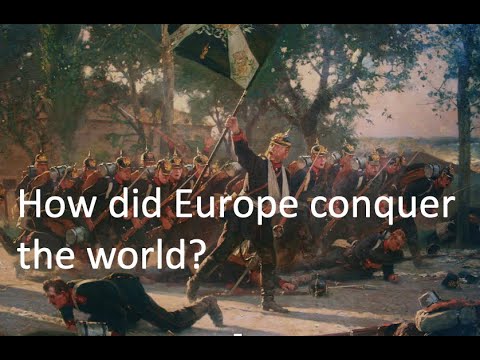
This lecture examines how Europe, despite being divided and poor after the fall of Rome, came to conquer the world starting around 1700 through the gunpowder revolution. The speaker argues that gunpowder technology required a 'whole society approach' involving centralized bureaucracy, industrialization, and scientific innovation — transformations that Europe's competitive multi-state system forced upon it but that the great gunpowder empires (Ottoman, Mughal, Safavid, Ming China) resisted because their elites prioritized maintaining social hierarchy over military innovation. The lecture traces European military history from hoplites through feudalism to the nation-state, showing how escalating warfare drove population growth, social mobility, and institutional change. China is presented as the key counter-example: it invented gunpowder but its Confucian bureaucracy suppressed its transformative potential to preserve its monopoly on power.

Video thumbnail
youtube.com/watch?v=DiRJyy-8V54 ↗ Analyzed 2026-03-14 by claude-opus-4-6

Viewer Advisory

  • The 'military determines politics' framework, while offering useful insights, is one of many possible analytical lenses — institutional economics, cultural analysis, geographic determinism, and contingency-based approaches offer complementary and sometimes contradictory explanations.
  • The characterization of Chinese civilization as a monolithic bureaucracy that suppressed innovation for 2,000 years is a significant oversimplification — China experienced periods of radical innovation, military modernization, and political transformation.
  • The theory of schooling as primarily a military institution designed to create anxious, obedient subjects is not mainstream educational history — the origins of universal education involve Enlightenment ideals, religious movements, and social reform as well as state-building.
  • The claim that peace causes social decline and that war provides 'meaning and purpose' is a provocative normative claim presented as analytical observation.
  • The lecture presents no specific scholarly sources despite engaging with questions that have generated vast academic literatures (the 'Great Divergence,' the 'Military Revolution,' the 'Needham Question').
  • The comparison between Europe and China, while illuminating, risks essentializing both civilizations and attributing modern outcomes to inherent civilizational characteristics rather than contingent historical processes.
Central Thesis

European nations surpassed the gunpowder empires because constant inter-state warfare forced them to adopt a 'whole society approach' — restructuring feudalism into nation-states, agriculture into industry, and religion into science — while centralized empires like China chose to preserve social hierarchy over military innovation.

  • The nature of the military determines the nature of the political system — demonstrated through Sparta (hoplites → oligarchy), Athens (navy → democracy), Macedonia (cavalry → monarchy), and Rome (allied legions → republic).
  • Gunpowder technology ended the military dominance of steppe peoples by requiring centralized organization, specialization, and industrial capacity that nomadic societies could not provide.
  • The four great gunpowder empires — Ottoman, Mughal, Safavid, and Ming China — initially led in gunpowder warfare but failed to transform their societies to fully exploit the technology.
  • Europe's division into competing states (open cooperative competition) was both its greatest weakness and greatest strength, forcing constant military innovation.
  • Three revolutions were required to fully exploit gunpowder: feudalism to nation-state, agriculture to industry, religion to science — and these revolutions overturned existing social hierarchies.
  • China invented gunpowder, the compass, paper, and printing centuries before Europe, but Confucian bureaucrats suppressed their transformative potential to maintain their monopoly on literacy and power.
  • Modern schooling originated in Prussia as a system to produce obedient soldiers by separating children from families at an early age, later adopted universally for industrial purposes.
  • War paradoxically promotes population growth and social mobility by creating opportunities through death and destruction, giving people meaning and hope for advancement.
  • The balance between external military threats and internal political pressures created contradictions that drove European innovation — without external threats, societies like China focused on internal control instead.
Qualitative Scorecard 2.7 / 5.0 average across 7 axes
Historical Accuracy ▸ Expand
The broad historical narrative is largely correct: Constantinople did fall in 1453 to Ottoman cannons; gunpowder did originate in China; the Janissary system existed; European inter-state competition did drive military innovation; and the transition from feudalism to centralized states did occur. However, several claims are inaccurate or oversimplified: (1) The claim that Chinese gunpowder was 'mainly used as bombs or fireworks' significantly understates Chinese military applications — fire lances, rockets, and proto-cannons were used by the Song and Ming dynasties. (2) The claim that wars over Italy were fought primarily because of sulfur for gunpowder is not supported by mainstream historiography. (3) The description of feudalism lasting '100 years' appears to be a verbal error (should be ~500+ years). (4) The characterization of the Seven Years' War as 'really the first world war' is a common popular claim but debatable. (5) The claim that universal literacy resulted from paper and printmaking in Europe oversimplifies a centuries-long process. (6) The Prussian schooling theory as presented — that schools exist to make children anxious and willing to kill — is a highly reductionist popular narrative, not mainstream educational history.
3
Argumentative Rigor ▸ Expand
The lecture presents a coherent thesis — that military technology shapes political systems and that Europe's competitive environment forced whole-society adaptation — which has genuine scholarly support (Parker's Military Revolution thesis, Tilly's war-makes-states argument). However, the argument suffers from several logical issues: (1) The military-determines-politics thesis is presented as a one-way causal arrow when the relationship is reciprocal. (2) The explanation for why China didn't innovate (bureaucrats didn't want to lose power) is circular — it assumes what it needs to prove about bureaucratic motivations. (3) The claim that European nations 'didn't have a choice' but to innovate while China chose not to ignores that China also faced existential military threats (Mongol invasions, Japanese piracy, Manchu conquest). (4) The 'whole society approach' is vaguely defined and selectively applied. (5) The war-promotes-population-growth argument is presented without addressing the many counterexamples (Thirty Years' War devastated German population for generations). The lecture works better as a pedagogical framework than a rigorous historical argument.
3
Framing & Selectivity ▸ Expand
The lecture is moderately selective. It presents a clear thesis and marshals evidence toward it, which is appropriate for a university lecture, but omits significant countervailing evidence: (1) The Ottoman Empire was actually quite sophisticated in firearms adoption and remained militarily competitive into the 18th century — the narrative of Ottoman stagnation is oversimplified. (2) China's Ming dynasty actually had large professional armies with gunpowder weapons — the implication that China simply ignored gunpowder's military potential is misleading. (3) The lecture doesn't discuss European failures or cases where the 'whole society approach' didn't work. (4) The role of geography, disease, and economic factors in European expansion is largely ignored in favor of military-technological determinism. However, the lecture does acknowledge some complexity — noting that China's geography reduced external pressure, that the transformation took centuries, and that the process was 'bloody.'
3
Perspective Diversity ▸ Expand
The lecture presents a single analytical perspective throughout — a materialist, military-determinist framework. Alternative explanations for the 'Great Divergence' are not considered: cultural factors (Weber's Protestant ethic), institutional economics (North, Acemoglu), geographic determinism (Diamond), contingency-based explanations, or post-colonial critiques that emphasize extraction and exploitation rather than European innovation. The Chinese perspective is reduced to 'bureaucrats protecting their power' without engaging with the sophisticated self-understanding of Chinese statecraft or the substantial internal debates about military modernization that occurred within Chinese dynasties. The Socratic dialogue with students creates an appearance of intellectual exploration but consistently guides toward predetermined conclusions.
2
Normative Loading ▸ Expand
The lecture is moderately normatively loaded but less so than many in the series. The speaker presents European warfare and innovation with a degree of detachment, neither celebrating nor condemning it. However, normative judgments appear in several places: (1) The characterization of schools as institutions designed to make children 'anxious,' 'stressed,' and 'less loved' carries strong negative normative freight. (2) The claim that war 'gives people meaning and purpose' romanticizes warfare. (3) The framing of peace (Pax Americana) as causing social stagnation and demographic decline implies that war is functionally necessary for healthy societies. (4) The characterization of Chinese bureaucrats as simply wanting to 'maintain their privileges' applies a cynical motivation without evidence. On the positive side, the lecture generally avoids the heavy emotional language and ideological loading seen in the Geo-Strategy lectures.
3
Determinism vs. Contingency ▸ Expand
The lecture is strongly deterministic. The central framework — that military technology determines political systems — is presented as a near-universal law operative across all civilizations and time periods. The argument that Europe 'didn't have a choice' but to innovate while China 'chose' to maintain hierarchy presents a structural determinism that leaves little room for contingency. The lecture implies that once gunpowder appeared, the trajectory from feudalism to nation-states to world conquest was essentially inevitable for whichever civilization happened to be in a competitive multi-state environment. No counterfactual alternatives are considered: what if the Ming had pursued maritime expansion after Zheng He? What if the Ottomans had adopted different reforms? What if the Black Death had depopulated Europe more severely? The one-directional causal chain (gunpowder → centralization → nation-state → world domination) is presented without acknowledging the many contingent factors that shaped this outcome.
2
Civilizational Framing ▸ Expand
The lecture uses civilizational categories extensively but with more analytical purpose than crude stereotyping. Europe is characterized as divided, violent, but innovative by necessity. China is characterized as centralized, inventive but conservative, with bureaucrats prioritizing hierarchy over innovation. The framing is relatively balanced — Europe is not presented as inherently superior, but as forced by circumstances into a path that happened to produce military dominance. However, the China analysis is reductionist, reducing thousands of years of complex statecraft to 'bureaucrats protecting their power.' The lecture does acknowledge China's inventive priority and notes that Europe 'forced' nations like China to adopt European frameworks, which implicitly acknowledges the violence of European expansion.
3
Overall Average
2.7
Civilizational Treatment
CHINA

China is characterized as inventive but conservative — the civilization that invented gunpowder, the compass, paper, and printing but failed to leverage them for societal transformation because Confucian bureaucrats prioritized maintaining their monopoly on literacy and power over innovation. The Chiang Kai-shek/CCP example is used to illustrate that Chinese elites historically prioritized internal hierarchy over external threats. China is presented as a rational actor making suboptimal choices due to institutional incentives, not as inherently inferior. However, the analysis is significantly oversimplified — it ignores periods of Chinese military innovation, the sophistication of the examination system, and the many internal reform movements within Chinese history.

UNITED STATES

America is mentioned briefly as a republic modeled on Rome, and as the inheritor of British naval dominance after World War II. The current era is described as the 'Pax Americana' — presented ambiguously as producing peace but also demographic decline and social stagnation among young people. The US is also cited alongside Prussia/Germany and Japan as a society that effectively implemented the 'whole society approach' to warfare.

RUSSIA

Russia is mentioned in passing as a rising European power that colonized the steppes and came into conflict with Britain through the 'Great Game,' which the speaker notes 'still goes on today.' No normative characterization is applied.

THE WEST

Europe/the West is characterized as violent, divided, and poor after Rome's fall, but driven by competitive necessity to innovate in ways that ultimately produced global dominance. The framing is neither celebratory nor condemnatory — European conquest is presented as a consequence of structural forces rather than moral superiority or moral failing. The bloody process of transformation (wars, revolutions) is acknowledged as the cost of innovation.

Named Sources

primary_document
Thucydides / The Peloponnesian War (implicit)
Referenced implicitly through discussion of Sparta, Athens, and Macedonian military systems and their relationship to political structures. The speaker draws on this material from earlier lectures in the Civilization series.
✓ Accurate
other
The Prussian education model
Cited as the origin of modern universal schooling, created to produce obedient soldiers. The speaker claims it was designed to separate children from families to make them anxious and more willing to accept authority.
? Unverified
other
The four great inventions of China
The compass, paper, printing, and gunpowder are cited as Chinese inventions that preceded European adoption by centuries but failed to transform Chinese society due to bureaucratic resistance.
? Unverified

Vague Appeals to Authority

  • 'Historians say that feudalism transitioned into an absolute monarchy' — no specific historians named (01:04:59).
  • 'As we discussed' and 'remember what we learned last semester' — frequent appeals to prior lectures without providing evidence for the claims themselves.
  • 'This is consistently true throughout history' — regarding the claim that fractured societies innovate more, presented as universal law without qualification (00:20:14).
  • 'Every country uses this system' — regarding the Prussian schooling model, presented as universally adopted fact (01:10:39).
  • The claim that wars over the Italian peninsula were fought primarily for sulfur access is presented without sourcing — most historians emphasize dynastic claims, trade routes, and papal politics as primary drivers.

Notable Omissions

  • No engagement with the 'Military Revolution' thesis of Michael Roberts (1956) or Geoffrey Parker's revision (1988), which are the foundational scholarly works on exactly this topic.
  • No discussion of Kenneth Chase's 'Firearms: A Global History to 1700' (2003), which directly addresses why gunpowder weapons developed differently in Europe vs. Asia.
  • Joseph Needham's 'Science and Civilisation in China' — the definitive work on Chinese invention and its relationship to social structures — is not referenced despite being directly relevant.
  • No mention of the 'Great Divergence' debate (Pomeranz, Goldstone, Mokyr) which examines precisely why Europe surpassed China.
  • The Ottoman military's sophisticated adoption of firearms (detailed in Gabor Agoston's 'Guns for the Sultan') contradicts the simplified narrative of Ottoman technological stagnation.
  • No discussion of the role of the Atlantic slave trade, colonial extraction, and New World silver in funding European military expansion.
  • The claim that Chinese gunpowder was only used as bombs/fireworks ignores substantial evidence of Chinese fire lance, rocket, and even early cannon development (documented in Needham's work).
  • No engagement with the role of the printing press in the Protestant Reformation specifically — the lecture vaguely connects paper/printing to 'universal literacy' and 'the renaissance.'
  • The Warring States period in China (475-221 BC) is mentioned as China's most creative period but the Qin-Han military revolution — which involved massive armies, crossbow technology, and bureaucratic innovation — is not discussed as a counter-example to the thesis.
Military-political determinism 00:00:56
The nature of the military determines the nature of the political system in societies — illustrated with four examples: Sparta (hoplites → oligarchy), Athens (navy → democracy), Macedonia (cavalry → monarchy), Rome (legions → republic).
Establishes a rigid causal framework at the outset that shapes all subsequent analysis. By presenting this as a consistent law across four societies, the audience accepts the framework before it is applied to the gunpowder revolution, making the thesis seem more inevitable.
Paradox framing 00:16:06
'So the paradox is this. It was China who invented the gunpowder... But at the end of the day, it is Europe that conquers the entire world.'
Framing the China-Europe divergence as a 'paradox' creates intellectual tension that the speaker then resolves with his thesis, making the explanation feel like a satisfying revelation rather than one of many possible interpretations.
Contemporary analogy to make abstract claims relatable 00:31:00
The concept of 'synchronicity' is illustrated by asking students to imagine German and Japanese subway stations where 'everyone stands in line perfectly' even when crowded.
Translates an abstract concept about societal discipline into a vivid everyday image that students can visualize, but also reinforces national stereotypes and implies that military-industrial discipline is an inherent cultural trait rather than a historically contingent outcome.
Provocative reframing 00:30:13
Schools are reframed not as institutions of learning but as systems designed 'to create as many soldiers as possible for your mass army' by separating children from families to make them 'anxious,' 'stressed,' and 'less loved.'
The shock value of reframing a familiar institution in unfamiliar terms makes the thesis memorable and gives students a sense of accessing hidden truth. However, it presents one theory of schooling's origins as the definitive explanation while ignoring the complex history of education.
False dichotomy 00:56:50
Europe 'didn't have a choice in the matter. It was a matter of life and death. You either innovate or you will get destroyed by your neighbor.'
Presents European innovation as structurally inevitable by eliminating alternative outcomes (partial innovation, alliance-based security, accommodation), making the thesis appear more deterministic and compelling than the historical evidence warrants.
Socratic leading questions 00:17:29
Throughout the lecture, the speaker asks 'does that make sense?' and 'okay?' after each claim, not as genuine questions but as rhetorical confirmations that guide students toward accepting each step of the argument.
Creates the illusion of collaborative reasoning while actually foreclosing dissent. Students are conditioned to nod along at each step, making it harder to question the overall argument once assembled.
Escalating casualty statistics 00:33:43
The speaker presents a sequence of European wars with rising death tolls: 200,000 → 31,000 → 75,000 → 4.5-8 million → 20 million, framing this as evidence of 'how fast the Europeans are innovating.'
The numerical escalation creates a visceral sense of accelerating violence that serves as empirical evidence for the thesis. However, equating rising death tolls with 'innovation' is a normatively loaded framing that the audience may not consciously register.
Counter-intuitive claim as insight 00:43:27
'War gives people meaning and purpose... it's like rooting for a sports team.' War also 'gives people hope in the future' because death creates social mobility.
Presenting a counter-intuitive claim — that war is functionally beneficial — as analytical insight positions the speaker as someone who sees past conventional morality. The sports team analogy domesticates a disturbing claim and makes it seem common-sensical.
Historical example as universal principle 01:02:44
The Chiang Kai-shek/CCP example during WWII is used to establish a universal principle about Chinese governance: 'maintain a social hierarchy. If foreigners want to come and conquer China, that's fine because we can work with them.'
A single historical episode is generalized into a timeless characteristic of Chinese civilization, creating an essentialist portrait that collapses thousands of years of varied statecraft into a single behavioral pattern.
Circular causal reasoning 01:05:54
Why didn't China innovate? Because bureaucrats wanted to maintain power. Why did they want to maintain power? Because the bureaucratic system put them on top. Why was the system bureaucratic? Because that's Chinese civilization.
The explanation for Chinese conservatism is tautological — China didn't innovate because it was a bureaucracy, and it was a bureaucracy because that's what Chinese civilization is. This circularity is obscured by the confidence of the presentation and the plausibility of each individual step.
⏵ 00:00:56
The nature of the military determines the nature of the political system in societies, in nations.
This is the foundational axiom of the entire Civilization series, stated explicitly as a recurring thesis. It reveals the speaker's strongly deterministic analytical framework where military technology is the independent variable that shapes all other social structures.
⏵ 00:10:02
It is China that invents gunpowder... But it is Europe that will perfect gunpowder as the ultimate military weapon and it will allow Europe to defeat everyone including the Ottoman Turks, including the Chinese.
Encapsulates the lecture's central paradox. Notable for the framing — Europe 'perfects' while China merely 'invents,' implying that application matters more than creation, which aligns with the speaker's emphasis on societal transformation over technological originality.
⏵ 00:30:18
If you don't know where schools come from, it comes from the need to create as many soldiers as possible for your mass army.
One of the lecture's most provocative claims. Reduces the entire institution of universal education to military necessity, ignoring Enlightenment ideals, religious education traditions, and the complex history of pedagogy. Reveals the speaker's tendency to find single-cause military explanations for complex social phenomena.
⏵ 01:10:10
If you are separated from your families, you feel more anxious, you feel more stressed, you're less loved. Therefore, you're much more willing to accept authority and you're much more willing to kill other people.
Extends the schools-as-military-training thesis to a psychological claim about the relationship between family separation, anxiety, and obedience. This is a striking claim to make to students who are themselves products of this system, potentially creating a sense of being 'in on the secret.'
The speaker presents this as a uniquely European/Prussian innovation, but China's own educational system — including the imperial examination system that separated scholars from families for years of intensive study — operated on similar principles of producing obedient officials, a parallel the lecture does not acknowledge.
⏵ 00:43:27
War gives people meaning and purpose... it's like rooting for a sports team. You want your sports team to win no matter what.
Reveals the speaker's functionalist view of warfare. The sports team analogy trivializes the moral dimensions of war while making the claim seem intuitive. This is a classic rhetorical move — domesticating a disturbing thesis through casual comparison.
⏵ 00:56:29
For China, it was much more important to maintain a social hierarchy than it is to innovate and to dominate the world.
This is the lecture's key claim about Chinese civilization — that it consciously chose stability over innovation. While partially supported by historical evidence, it attributes a unified rational calculation to a civilization spanning millennia and ignores periods of radical Chinese innovation and reform.
The speaker implies this is a uniquely Chinese pathology, but the same dynamic — elites resisting innovation to preserve power — is extensively documented in European history (aristocratic resistance to meritocracy, guild restrictions on new technologies, Church opposition to science). The lecture acknowledges this briefly with the French Revolution but treats it as a temporary obstacle rather than the same structural conservatism it attributes to China.
⏵ 00:56:50
Europe didn't have a choice in the matter. It was a matter of life and death. You either innovate or you will get destroyed by your neighbor.
Reveals the deterministic core of the argument — European innovation is presented not as a cultural achievement but as a structural inevitability. This framing implicitly argues against cultural explanations (Weber, etc.) in favor of structural/geographic ones.
China also faced existential military threats — the Mongol conquest, the Manchu invasion that destroyed the Ming dynasty, Japanese piracy, internal rebellions — yet the speaker doesn't apply the same 'innovate or die' logic to China. The Qing dynasty's military modernization efforts in the 19th century (Self-Strengthening Movement) show that external pressure did produce innovation attempts in China too.
⏵ 01:03:06
The Japanese are a much greater military threat, but they are not a threat to the social hierarchy. You can work with the Japanese... The communists represent an overturning of the social hierarchy. Therefore, they are a much greater threat.
Uses the Chiang Kai-shek example to argue that Chinese civilization prioritizes social hierarchy over national sovereignty. This is a provocative claim that generalizes from one historical episode to a civilizational characteristic.
This same logic — preferring a foreign overlord who maintains existing power structures over domestic revolutionaries — describes European aristocracies during the French Revolution equally well. European monarchies allied against revolutionary France precisely because the revolution threatened the social hierarchy across all of Europe. The Congress of Vienna was explicitly about restoring the pre-revolutionary social order.
⏵ 00:44:46
Because we live in a world of peace... that's why a lot of young people refuse to have children. They really don't see a future... Your old people aren't dying. They're not dying.
Connects the historical argument to contemporary demographic trends, implying that peace itself is the cause of social stagnation and declining birth rates. This is a strikingly illiberal argument — that society needs the creative destruction of war to remain vital.
China's declining birth rate (7.92M newborns in 2025, lowest since 1949) and aging population crisis are often attributed to the one-child policy and economic pressures, not to an excess of peace. The speaker's own framework — where China's problem is too much hierarchy, not too much peace — contradicts this peace-causes-decline thesis when applied to China specifically.
⏵ 01:05:03
The emperor doesn't really matter in the system. What matters is the bureaucracy. And that has been consistent for 2,000 years.
Reduces Chinese political history to a single unchanging variable — the bureaucracy. While the imperial examination system and Confucian officialdom were remarkably persistent, this claim ignores massive variations in state capacity, political structure, and the actual power of individual emperors across two millennia.
claim The Pax Americana (era of American peace) is causing young people to refuse to have children because they see no opportunities for social advancement in a stagnant peacetime hierarchy.
00:44:46 · Not falsifiable
unfalsifiable
This is a causal claim about demographic trends that cannot be cleanly tested, though declining birth rates globally are documented.
Verdict

Strengths

The lecture presents a genuinely interesting thesis — that gunpowder technology required whole-society transformation and that Europe's competitive environment forced this transformation — which has substantial scholarly support in the work of Geoffrey Parker, Charles Tilly, and others. The use of comparative analysis (Europe vs. China, vs. Ottoman Empire) is pedagogically effective and raises legitimate questions about differential development. The escalating casualty statistics provide concrete evidence for the argument about increasing military intensity. The lecture is well-structured as a teaching tool, building from familiar ancient examples to more complex early modern dynamics. The acknowledgment that European dominance came through bloody process rather than moral superiority shows some analytical balance.

Weaknesses

The lecture suffers from significant oversimplification and determinism. The 'military determines politics' thesis is presented as a near-universal law when the relationship between military organization and political systems is far more complex and reciprocal. China's failure to exploit its inventions is attributed entirely to bureaucratic conservatism without engaging with the substantial scholarly debate on this question (Needham Question, Great Divergence literature). The theory of schooling as purely a military/industrial mechanism for producing obedient subjects is a fringe view presented as established fact. The claim that Italian wars were fought primarily for sulfur is not supported by mainstream historiography. The argument that war promotes population growth and social meaning is presented without acknowledging the devastating counter-examples (Thirty Years' War, Mongol invasions, World War I's 'Lost Generation'). The lecture cites no specific scholars or works despite engaging with questions that have extensive academic literatures.

Cross-References

BUILDS ON

  • Earlier Civilization lectures on Sparta, Athens, Macedonia, and Rome — the speaker explicitly references these as establishing the 'military determines politics' thesis.
  • Previous Civilization lecture on the Byzantine Empire ('remember we talked about the Bison Empire').
  • Previous lecture on the Age of Exploration — referenced for discussion of how New World crops (potato, corn, tomatoes) enabled population growth.
  • Earlier lectures on the Vikings and steppe peoples (Yamnaya, Mongols, Turks) as borderlands civilizations.
  • Previous lecture on the Warring States period in China as an example of competitive innovation.
  • Game Theory lectures — game theory is invoked to explain European inter-state competition.

CONTRADICTS

  • The claim that China's bureaucracy suppressed innovation to maintain power potentially contradicts any earlier lectures that praised Chinese centralization as efficient or adaptive.
This lecture represents the Civilization series' pivot from ancient/classical history to early modern history, setting up future lectures on the Enlightenment, French Revolution, and American Revolution. The 'military determines politics' thesis serves as a through-line connecting all periods. The speaker consistently uses a framework of competitive pressure driving innovation, applied to both inter-state (European) and intra-state (Chinese) dynamics. The lecture is notably less polemical than the Geo-Strategy series — it treats historical processes with more analytical detachment and less contemporary political commentary. The speaker's educational background in education reform (he appears to be an educator) surfaces in the extended discussion of schooling origins, which receives disproportionate attention relative to other topics.