Predictive History Audit / Systematic Content Analysis
Civilization
Episode 47 · Posted 2025-04-24

The Passion of Robespierre

This lecture argues that Maximilien Robespierre deliberately modeled his downfall and death on the Passion of Christ, acting as a self-sacrificing prophet to energize the French Revolution. The speaker presents this as an original, controversial thesis, contending that when traditional authority (king, church) collapsed, the collective subconscious mythology of Christianity became the 'operating system' guiding revolutionary actors. The lecture reviews the class structure of pre-revolutionary France, the political factions within the National Assembly (Jacobins, Feuillants, Girondins, Cordeliers, Hébertists), the progression from constitutional monarchy to republic to Terror, and reads extensively from Robespierre's actual speeches and the Declaration of the Rights of Man. The speaker concludes by arguing that Robespierre's self-sacrifice purified the violent energy of the Terror and enabled Napoleon's subsequent military conquests, previewing the next lecture on Napoleon.

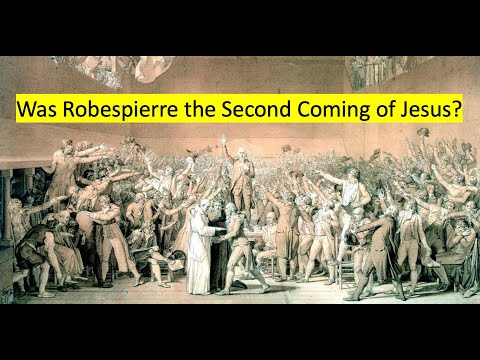
Video thumbnail
youtube.com/watch?v=ef-Ch2LGDDI ↗ Analyzed 2026-03-14 by claude-opus-4-6

Viewer Advisory

  • The Christ-parallel thesis is presented as established fact but is actually a speculative interpretation that most French Revolution scholars would contest.
  • The speaker's claim that 'no one has made this argument before' is misleading — the religious dimensions of the French Revolution have been extensively studied, even if this specific formulation is novel.
  • Robespierre is presented hagiographically; viewers should consult standard histories (e.g., Ruth Scurr's 'Fatal Purity,' Peter McPhee's 'Robespierre: A Revolutionary Life') for more balanced assessments.
  • The theoretical framework — mythology as deterministic subconscious force — is presented as self-evident but is actually one contested position in cultural theory, drawing on Jung and Durkheim without attribution.
  • The thesis is unfalsifiable as presented: the speaker explicitly says the process operates subconsciously and cannot be directly observed, which places it outside the realm of testable historical claims.
  • The death toll figure of 40,000 in Paris is significantly inflated.
  • The lecture contains no modern geopolitical content or predictions, making it purely a historical interpretation piece.
Central Thesis

Robespierre consciously or subconsciously enacted the Christ narrative — betrayal, isolation, submission, passion, and sacrificial death — in order to become a scapegoat, martyr, and paragon of virtue whose death would purify and energize the French Revolution for its ultimate victory.

  • Mythology is the 'subconscious operating system' of society; when traditional authority collapses in revolution, this mythology takes over and guides collective behavior.
  • The Christ narrative — persecution for truth, betrayal, submission to fate, public suffering, and redemptive death — was the dominant mythology known to all French people regardless of their rejection of organized religion.
  • Robespierre's death sequence (betrayal by allies, isolation, refusal to resist arrest, public procession to execution) parallels the Passion of Christ too precisely to be coincidental.
  • The Reign of Terror served three functions analogous to human sacrifice: unifying and energizing the people, terrorizing enemies, and breaking taboos to ensure irreversible commitment to the revolution.
  • Robespierre could have seized power and become dictator but chose self-sacrifice instead, because becoming king would have betrayed the revolution's principles.
  • By dying, Robespierre became a scapegoat (absorbing guilt for the Terror), a martyr (inspiring continued sacrifice), and a paragon (setting a moral standard for future revolutionaries).
  • Napoleon's initial military success depended on the revolutionary energy unleashed by Robespierre's self-sacrifice, which made French soldiers willing to die for the cause.
  • Napoleon's later downfall resulted from 'breaking the play' by declaring himself Emperor, violating the mythological role he was supposed to perform.
Qualitative Scorecard 2.1 / 5.0 average across 7 axes
Historical Accuracy ▸ Expand
The broad factual narrative of the French Revolution is mostly correct: the Estates General of 1789, the formation of the National Assembly, the storming of the Bastille (July 14, 1789), the Declaration of the Rights of Man (August 27, 1789), the execution of Louis XVI, and the Reign of Terror are accurately sequenced. The primary sources quoted (Robespierre's speeches, the Declaration) appear to be genuine. However, several errors appear: the speaker says the flight to Varennes was 'June 20 to 21, 1792' when it occurred in 1791; the claim that '40,000 people' were killed by the Terror 'within Paris alone' significantly overstates the Paris toll (approximately 2,600 executions in Paris; 16,000-40,000 total across France); the oral slip 'year 1990, 1991' when meaning 1790-1791 is a trivial error; the claim that Americans 'refused to pay back the debt they owe to the French' oversimplifies a complex diplomatic and financial situation; and the sans-culottes are described as 'without breeches' meaning silk stockings, when the term actually refers to long trousers vs. the knee-breeches (culottes) worn by the upper classes.
3
Argumentative Rigor ▸ Expand
The central thesis — that Robespierre deliberately enacted the Christ narrative — is presented through narrative parallelism rather than rigorous historical argument. The method is essentially: (1) describe the Passion of Christ, (2) describe Robespierre's fall, (3) note structural similarities, (4) conclude intentional reenactment. This commits the classic fallacy of post hoc pattern-matching: any leader who is betrayed, refuses to resist, and is publicly executed can be mapped onto the Christ narrative. The speaker acknowledges this is 'all happening subconsciously' and that 'Robespierre is not aware of it,' which makes the thesis essentially unfalsifiable — if Robespierre consciously enacted it, that's evidence; if he didn't know he was doing it, that's also evidence (collective subconscious). The leap from 'these stories line up' to 'Robespierre volunteered to play the part of Jesus' is not supported by any evidence beyond structural analogy. Concrete alternative explanations for Robespierre's passivity (political exhaustion, illness, strategic miscalculation, recognition that armed resistance would undermine his principles) are not considered.
2
Framing & Selectivity ▸ Expand
The lecture is highly selective in its evidence, choosing facts that support the Christ-parallel thesis while omitting those that complicate it. Robespierre's actual political maneuvering in his final weeks (his six-week withdrawal from the Committee, his allies' desperate attempts to organize armed resistance, the complex factional politics of Thermidor) is reduced to a simple narrative of prophetic self-sacrifice. The speaker presents Robespierre's final speech as evidence of messianic self-conception, but does not note that the speech was also a desperate political gamble — Robespierre was trying to turn the Convention against his enemies but failed tactically. The framing consistently romanticizes Robespierre as virtuous and selfless ('he comes to Paris with no money and he leaves Paris with no money') without engaging with the significant historical debate about his authoritarian tendencies, paranoia, and role in expanding the Terror beyond military necessity.
2
Perspective Diversity ▸ Expand
The lecture presents a single interpretive framework throughout — the mythology-as-operating-system thesis — without acknowledging any alternative perspectives on Robespierre's fall or the Terror. No opposing scholarly views are mentioned. The Marxist interpretation (the Terror as class warfare), the liberal interpretation (the Terror as tyranny born of ideological fanaticism), the revisionist interpretation (the Terror as contingent product of war and political crisis), and the psychological interpretation (Robespierre's deteriorating mental state) are all absent. The speaker claims 'no one has made this argument before' but does not engage with scholars like Mona Ozouf who have extensively analyzed the religious dimensions of revolutionary culture. The classroom setting reinforces the single-perspective problem, as students are asked leading questions that guide them toward accepting the thesis.
1
Normative Loading ▸ Expand
The lecture is heavily normatively loaded in its characterization of Robespierre. He is consistently described in hagiographic terms: 'the most virtuous,' 'champion of the oppressed,' 'works 18 hours a day,' 'comes to Paris with no money and leaves with no money,' 'incorruptible.' The Reign of Terror is framed as a necessary mechanism for revolutionary commitment rather than as political violence, with the 40,000 dead reduced to instrumental purposes (energize, terrorize, break taboo). The comparison of the Terror to 'human sacrifice' in other cultures normalizes political violence by placing it in an anthropological framework. The speaker's framing of Robespierre's death as 'the Passion' imports the Christian framework's moral valuation — suffering is redemptive, the martyr is holy, the persecutors are guilty — into what was fundamentally a political power struggle.
2
Determinism vs. Contingency ▸ Expand
The lecture presents an essentially deterministic framework in which the collective subconscious mythology drives historical events according to pre-scripted narratives. The revolution must follow the Christ story; leaders must play their assigned roles; if they deviate (as Napoleon does by declaring himself Emperor), the 'play dies.' This leaves no room for contingency, individual agency beyond role-fulfillment, or alternative outcomes. The speaker explicitly states that 'if he actually just became king... the French Revolution would have failed,' presenting this as certain rather than speculative. The argument that mythology 'takes over' when authority breaks down is presented as a universal law of human society rather than one possible interpretive lens. Political, economic, and military contingencies that shaped the actual course of events are subordinated to mythological determinism.
2
Civilizational Framing ▸ Expand
This lecture does not engage in modern civilizational comparisons. It treats the French Revolution within its own European context without drawing explicit parallels to contemporary geopolitics. The framing is primarily about Western European civilization's relationship to its Christian mythological heritage. The characterization of pre-modern societies as all practicing 'human sacrifice' (Romans, Vikings, Aztecs) is a broad civilizational claim that flattens important differences between cultures. The implicit argument — that even the Enlightenment's 'revolution of reason' remained governed by Christian mythology — is an interesting civilizational thesis but is presented without the nuance such a claim requires.
3
Overall Average
2.1
Civilizational Treatment
THE WEST

Western civilization is characterized through its relationship to Christian mythology. The French Revolution, ostensibly a triumph of Enlightenment reason over religious authority, is argued to have been secretly governed by the Christ narrative at a subconscious level. This frames Western modernity as unable to escape its religious foundations — a potentially interesting thesis but presented without scholarly rigor.

Named Sources

primary_document
Robespierre's speeches before the National Assembly
Multiple speeches are quoted at length: his proposed amendments to the Declaration of the Rights of Man on property rights, his speech justifying the Reign of Terror ('virtue and terror'), and his final speech of July 26, 1794 ('Death is the commencement of immortality'). These are the primary evidence for the thesis that Robespierre saw himself as a prophetic figure.
✓ Accurate
primary_document
Declaration of the Rights of Man and of the Citizen (1789)
Multiple articles are read aloud (Articles 1-6, 10-11, 17) to establish the revolutionary ideals and to show how Robespierre's proposed amendments on property reveal his more radical egalitarian vision.
✓ Accurate
scholar
Jean-Jacques Rousseau
Referenced as the philosophical inspiration for Robespierre and the revolution, specifically 'we are born free but we are all in chains.' Robespierre is described as a 'disciple' of Rousseau who wanted to implement a 'kingdom of reason.'
✓ Accurate
other
Georges Danton
Quoted at his execution: 'My home will soon be in oblivion and my name in a pantheon. Here is my head... My life is a burden to me.' Used to show that revolutionary leaders adopted prophetic self-sacrifice language.
? Unverified
primary_document
Abbé Sieyès - 'What is the Third Estate?'
Referenced as an influential pamphlet that helped catalyze the revolution by arguing the Third Estate was 'everything' but had been treated as 'nothing.'
✓ Accurate
primary_document
The Bible / Passion narrative
The Gospel narrative of Jesus's last days (Last Supper, betrayal by Judas, Garden of Gethsemane, submission to arrest, Peter cutting the servant's ear, trial before Pilate, Via Dolorosa, crucifixion) is presented in detail as the mythological template that Robespierre allegedly reenacted.
✓ Accurate

Vague Appeals to Authority

  • 'No one has made this argument before' — the speaker claims complete originality for his Robespierre-as-Christ thesis without engaging with existing scholarship on the religious dimensions of the French Revolution.
  • 'Historians have been debating for a long time if the Reign of Terror was necessary' — no specific historians or positions named.
  • 'This is a mystery, a paradox to historians — like why did Robespierre fall? Why didn't he resist?' — presented as an unsolved historical puzzle without citing specific scholarly debates.
  • 'All societies engaged in war in premodern times practice human sacrifice' — sweeping anthropological claim without sourcing.

Notable Omissions

  • No engagement with the extensive historiography on the religious dimensions of the French Revolution, particularly the work of scholars like Mona Ozouf ('Festivals and the French Revolution'), Michel Vovelle, or Dale Van Kley ('The Religious Origins of the French Revolution').
  • No mention of the Cult of the Supreme Being as Robespierre's own attempt to create a replacement religion, which directly bears on the thesis — discussed only briefly as 'a new religion' without exploring its implications for the Christ-figure argument.
  • No engagement with François Furet's influential revisionist interpretation of the Terror, or with Marxist historiography (Albert Soboul, Georges Lefebvre) that would provide the structural-economic analysis the speaker dismisses.
  • No discussion of the thermidorian reaction's political dynamics — why specific factions turned against Robespierre for concrete political reasons rather than mythological ones.
  • No consideration of psychological explanations for Robespierre's passivity (exhaustion, depression, illness) that historians have proposed as alternatives to deliberate self-sacrifice.
  • The role of the Committee of Public Safety's collective decision-making and Robespierre's actual degree of personal power is glossed over.
  • No mention of the concept of political religion (Emilio Gentile, Raymond Aron) which provides a more rigorous theoretical framework for exactly the phenomenon the speaker describes.
Structural parallelism 00:29:59
The speaker systematically maps Robespierre's fall onto the Passion narrative: betrayal by allies = betrayal by Judas, withdrawal to the town hall = Garden of Gethsemane, followers urging him to fight = Peter cutting the servant's ear, refusal to resist = Jesus's submission, procession to the guillotine = Via Dolorosa, execution = crucifixion.
The point-by-point parallelism creates a compelling structural argument through analogy, making the thesis feel intuitively correct even though structural similarity does not demonstrate causation or intentionality. The audience is primed to see correspondence rather than evaluate whether the parallel is genuinely meaningful.
Claim of originality 00:00:56
'I'm going to make a very strange argument today about Robespierre that no one has made before. So it's going to be very controversial.'
By framing the thesis as unprecedented and controversial, the speaker positions himself as a bold, original thinker and primes the audience to receive the argument as revelatory rather than evaluating it against existing scholarship. It also preemptively explains away the lack of scholarly support.
Pedagogical scaffolding with predetermined conclusion 00:05:05
The speaker builds the argument in stages: first establishing class dynamics, then the political factions, then the Terror as 'human sacrifice,' then the Christ mythology, then the parallel — each stage presented as if discovery but leading to a predetermined conclusion.
Students experience the conclusion as something they arrived at through guided reasoning rather than something asserted by the lecturer. This makes the thesis feel self-evident rather than speculative.
Unfalsifiable retreat 01:19:34
'This is all happening subconsciously. Robespierre is not aware of it. The people are not aware of it.' When asked how we can know this, the speaker says it's 'an act of faith.'
By placing the thesis in the realm of the subconscious, it becomes immune to falsification — no evidence of conscious intention is required, and absence of evidence becomes evidence of the subconscious nature of the phenomenon. The appeal to 'faith' conflates the historical method with the religious framework being analyzed.
Hagiographic character construction 00:16:00
'He comes to Paris with no money and he leaves Paris with no money. His entire career as a lawyer... he spent defending the poor and the weak against the powerful.'
By constructing Robespierre as a selfless saint before introducing the Christ-parallel thesis, the speaker makes the comparison feel natural. The audience already sees Robespierre as Christ-like before the explicit argument is made.
Dramatic reveal 00:33:00
'Guess what guys, this story becomes the death of Robespierre too.' After establishing the Passion narrative in detail, the speaker announces the parallel as a dramatic revelation.
Creates a moment of intellectual excitement in the classroom, making the pattern-matching feel like a genuine discovery rather than an imposed interpretation.
Anachronistic framing 01:06:19
'Guys, he's talking about communism' — characterizing Robespierre's vision of equality as communism, a concept that would not be theorized for another 50+ years.
Makes Robespierre's ideas feel more radical and forward-looking than they were in context, reinforcing the prophetic characterization. It also creates a false sense of continuity between 18th-century republicanism and 19th-century communism.
Metaphysical escalation 01:20:50
The argument escalates from historical analysis to claims about 'the subconscious operating system of society,' collective mythology as deterministic force, and leaders as 'actors' in mythological 'plays' that must be performed correctly or society collapses.
By embedding the historical claim within a grand theory of human society, the speaker makes it seem that accepting the Robespierre thesis also requires accepting a comprehensive worldview. Questioning the specific claim becomes questioning the entire framework.
Selective quotation 01:11:04
Robespierre's final speech is quoted extensively to highlight prophetic and messianic language ('I have seen the past, I foresee the future,' 'Death is the commencement of immortality') while political and tactical elements of the same speech are glossed over.
The selected quotes powerfully support the Christ-parallel thesis, but the speech in full context was also a political attack on specific enemies and a desperate attempt to rally support — dimensions that would complicate the 'willing sacrifice' narrative.
Anthropological normalization 00:19:18
The Reign of Terror is compared to human sacrifice practices by the Aztecs, Romans, and Vikings, framing political mass execution as a universal human practice rather than a specific political failure.
Normalizes the Terror by placing it in a broad anthropological category, reducing moral urgency and making it seem like a necessary stage in civilizational development rather than an avoidable atrocity.
⏵ 00:01:17
Robespierre saw himself as the second coming of Jesus. And because he did so, he sacrificed himself in order to save the French Revolution.
The thesis statement of the entire lecture, delivered at the outset. Reveals the speaker's willingness to make extraordinary claims ('no one has made this argument before') and his tendency to present speculative interpretation as established fact.
⏵ 01:15:24
Death is the commencement of immortality.
This is Robespierre's actual quote from his final speech (July 26, 1794), and it is the strongest piece of evidence for the speaker's thesis. The messianic language is genuinely present in the primary source, though whether it indicates a Christ-identification or simply Enlightenment rhetoric about historical legacy is debatable.
⏵ 01:13:27
My life, oh my life, I abandon without a regret. I have seen the past. I foresee the future.
Another genuine Robespierre quote that the speaker uses as evidence of prophetic self-conception. The language does echo biblical prophetic tradition, lending some credibility to the thesis even if the interpretation remains speculative.
⏵ 01:09:30
Terror is nothing but prompt, severe, inflexible justice. It is therefore an emanation of virtue.
Robespierre's most famous justification of the Terror, read aloud by the speaker. The equation of terror with virtue and justice is presented sympathetically as part of the revolutionary project rather than critically examined as the ideological justification for mass political violence.
The speaker presents this quote approvingly as revolutionary idealism. The same logic — that political violence is 'an emanation of virtue' when directed against enemies of the state — has been used by every authoritarian regime in history, including Mao's Cultural Revolution and the CCP's suppression of dissent. The speaker does not note this parallel.
⏵ 00:24:56
Mythology is the subconscious operating system of society.
The theoretical foundation of the lecture's argument. This is a Jungian-influenced claim presented as self-evident rather than as one contested theoretical position among many. It allows the speaker to interpret any historical parallel as evidence of subconscious mythological forces.
⏵ 00:24:30
In a time of revolution, when people reject authority... the question then is what takes charge? What guides society now? And the answer is mythologies.
Reveals the speaker's deterministic theory of history: when conscious authority collapses, subconscious mythology inevitably fills the void. This is asserted as a universal law rather than argued from evidence.
⏵ 00:53:57
I will not violate your treasures even though I know how unclean the source from which they come.
Robespierre's actual speech on property rights, which the speaker uses to establish his radical egalitarianism. The contempt for wealth and the moral framing of economic inequality as 'unclean' prefigures revolutionary socialist rhetoric.
⏵ 01:24:29
If you look at the traditional accounts of the French Revolution, it's always these economic, political, structural forces. I'm presenting a different idea here.
The speaker explicitly positions himself against mainstream historiography without engaging with it. This reveals a pattern across the Predictive History series: dismissing established scholarship as inadequate and presenting the speaker's own interpretations as superior insights that others cannot see.
⏵ 01:26:10
Blame me. Sacrifice me. I will take the guilt of the nation. I will cleanse you of your sins so that you may move on.
The speaker's paraphrase of what he claims Robespierre was communicating through his death. This is not a direct quote from Robespierre but is presented as if it captures his intentions, blurring the line between historical evidence and the speaker's interpretive projection.
⏵ 01:22:43
Napoleon... does something that he should not do and which breaks the play... He declares himself emperor and you're not supposed to do that.
Reveals the speaker's framework: history follows mythological 'scripts' and when leaders deviate from their assigned roles, the collective enterprise collapses. This is a deeply deterministic view that reduces complex political and military factors to mythological role-playing.
Verdict

Strengths

The lecture demonstrates genuine pedagogical skill and historical imagination. The speaker reads extensively from primary sources (Robespierre's actual speeches, the Declaration of the Rights of Man), giving students direct engagement with revolutionary rhetoric. The observation that Robespierre's final speech contains messianic and prophetic language is genuinely interesting and supported by the text. The framework of revolutionary class dynamics (bourgeoisie, petite bourgeoisie, proletariat/sans-culottes) and the factional politics (Jacobins, Feuillants, Girondins, Cordeliers, Hébertists) is competently presented. The question of why Robespierre did not resist his overthrow when he had the popular support to do so is a genuine historical puzzle that the speaker addresses creatively. The observation that the Reign of Terror served to make revolutionary commitment irreversible (by 'breaking taboo') has some basis in scholarly analysis of revolutionary dynamics.

Weaknesses

The central thesis suffers from fundamental methodological problems. Pattern-matching between two narratives does not demonstrate causation; any betrayed-and-executed leader can be mapped onto the Christ story. The thesis is rendered unfalsifiable by the retreat to 'subconscious' motivation — if Robespierre knew he was enacting Christ, that's evidence; if he didn't know, that's also evidence (collective subconscious). The claim of total originality ('no one has made this argument before') ignores extensive scholarship on the religious dimensions of the French Revolution (Mona Ozouf, Dale Van Kley, Michel Vovelle). The 40,000 dead 'within Paris alone' significantly overstates the actual toll. The claim that Robespierre 'deliberately' chose self-sacrifice ignores more parsimonious explanations (political exhaustion, tactical miscalculation, depression, principled refusal to use force). The characterization of Robespierre as selflessly virtuous is hagiographic and ignores the considerable historical debate about his paranoia, authoritarian tendencies, and the Terror's expansion beyond any plausible defensive necessity. The anachronistic labeling of Robespierre's egalitarianism as 'communism' is misleading.

Cross-References

BUILDS ON

  • Civilization #46 (implied) — the previous class on Jean-Jacques Rousseau, referenced multiple times as establishing the philosophical foundations for the revolution.
  • Earlier Civilization lectures on human sacrifice, mythology as collective subconscious, and the role of prophets in society — referenced as previously established concepts.
  • Earlier Civilization lectures on class structure and revolution — the bourgeoisie-as-counter-elite framework is presented as a previously discussed pattern.
This lecture is the second installment of a French Revolution trilogy within the Civilization series (Rousseau, Robespierre, Napoleon). The speaker's interpretive framework — mythology as subconscious operating system, leaders as actors in mythological plays, revolution as reenactment of sacred narratives — appears to be a recurring analytical tool across the Civilization series. The explicit claim of originality ('no one has made this argument before') is characteristic of the speaker's pedagogical style across series, where he frequently positions his interpretations as uniquely insightful compared to mainstream scholarship. The lecture is notably different from the Geo-Strategy series in that it contains no geopolitical predictions or modern policy analysis, focusing entirely on historical interpretation.