Predictive History Audit / Systematic Content Analysis
Civilization
Episode 48 · Posted 2025-04-29

Napoleon's Empire of Myth

This lecture concludes the French Revolution trilogy by examining Napoleon Bonaparte's rise and fall. The speaker argues that Robespierre, not Napoleon, was the greater figure because Robespierre created the meritocratic military system that made Napoleon's victories possible. The lecture covers the Battle of Austerlitz (1805), the destruction of the Prussian army (1806), and Napoleon's deliberate construction of a messianic mythology modeled on Alexander the Great and Julius Caesar. The speaker draws explicit parallels between Napoleon, Caesar, Hitler, and Trump as mythmaking figures who appear at the end of republics, arguing that all used the same pattern of political maneuvering and cult of personality to amass power. The lecture concludes with a discussion of Trump's mythmaking genius and the prediction that he may destroy the American Republic.

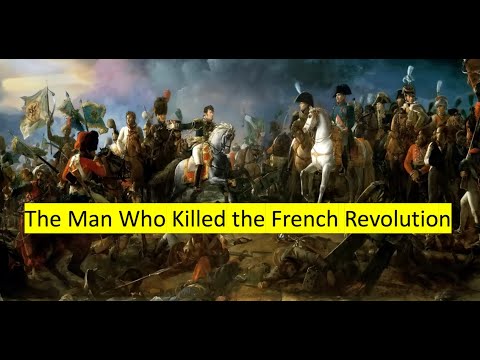
Video thumbnail
youtube.com/watch?v=enEET_0j_Y8 ↗ Analyzed 2026-03-14 by claude-opus-4-6

Viewer Advisory

  • The claim that Napoleon was 'not a great general' contradicts mainstream military historiography — this is a minority revisionist view presented as fact.
  • The Napoleon-Caesar-Hitler-Trump comparison cherry-picks similarities while ignoring crucial differences, particularly the vastly different institutional contexts.
  • Robespierre is presented as a saint-like figure, but the Terror he oversaw is not mentioned at all — a significant omission for a lecture about virtue vs. power.
  • The prediction about Trump destroying the American Republic within 10 years is based on pattern-matching from three historical cases, which is insufficient for reliable prediction.
  • The speaker's theoretical framework (mythology drives history, people prefer belief over reason) is itself a kind of mythology — an unfalsifiable narrative that can explain any outcome retroactively.
  • The lecture contains factual errors: '1856 during the Korean War' should be 'Crimean War,' and 'Hitler destroyed the Roman Republic' should be 'Weimar Republic.'.
  • The Cultural Revolution is briefly mentioned as a parallel but the speaker does not explore the more obvious parallel between Napoleon and Mao — both revolutionary figures who built cults of personality and caused massive suffering.
Central Thesis

Napoleon's success was built not on military genius alone but on Robespierre's meritocratic reforms and Napoleon's own mythmaking genius — his ability to cast himself as a messianic figure by acting out the mythologies of Alexander, Caesar, and Jesus — and this same pattern of mythmaking to destroy republics recurs with Caesar, Hitler, and now Trump.

  • Robespierre's meritocratic reforms — replacing 85% noble officers with revolutionary commoners — created the military talent pool (including Napoleon and Davout) that made French victories possible.
  • The levée en masse (universal conscription) gave France three decisive advantages over European rivals: tolerance of high casualties, superior speed and mobility, and strategic flexibility through the corps system.
  • Napoleon was not primarily a great general but a mythmaking political operator who identified patrons (Barras, Carnot), won their favor, then betrayed them to seize power.
  • Napoleon deliberately modeled his career on Alexander the Great and Julius Caesar — choosing Italy and Egypt as campaign destinations, crossing the Alps like Hannibal — to construct a messianic mythology.
  • Napoleon's need to maintain his mythology required constant warfare, which eventually exhausted France and triggered nationalist resistance across Europe.
  • The pattern of republic-destroying mythmakers — Caesar, Napoleon, Hitler — may be recurring with Trump, who uses the same techniques of mythology creation to capture popular imagination.
  • People are not attracted to reason or logic but to confidence, charisma, and mythology — explaining why Robespierre's rational approach failed while Napoleon's mythmaking succeeded.
Qualitative Scorecard 2.7 / 5.0 average across 7 axes
Historical Accuracy ▸ Expand
The broad historical framework is generally correct: Austerlitz in 1805, the levée en masse, Davout's forced march, the destruction of the Prussian army in 1806, Napoleon's coup of 18 Brumaire in 1799, his coronation in 1804, the Congress of Vienna. However, there are notable errors and distortions: the speaker refers to the Crimean War (1853-56) as the 'Korean War'; the claim that Napoleon 'was not a great general' and was inferior to Davout contradicts mainstream military historiography; calling the Junkers 'the force behind Hitler' oversimplifies the complex relationship between Prussian aristocracy and Nazism; attributing the revolutionary army's reforms primarily to Robespierre overstates his role — Carnot (whom the speaker does mention) and the Committee of Public Safety collectively drove these changes; the speaker confuses 'the Roman Republic' with 'the Weimar Republic' when discussing Hitler. Napoleon's St. Helena quote and letters to Josephine are accurately represented.
3
Argumentative Rigor ▸ Expand
The central argument — that Robespierre was more important than Napoleon — is interesting but poorly supported. The speaker asserts rather than demonstrates this claim, and the comparison rests on a false binary (the 'thought experiment' of person A vs. person B). The argument that Napoleon was 'not a great general' is stated as fact despite being a minority view. The Napoleon-Caesar-Hitler-Trump pattern is the weakest part of the argument: it relies on cherry-picking superficial similarities (all were charismatic, all rose to power) while ignoring fundamental differences (institutional context, military vs. media power, outcomes). The leap from 'Napoleon used mythology' to 'Trump uses mythology' to 'therefore Trump will destroy the American Republic' lacks any serious analytical scaffolding. The wine pricing analogy for Trump's trade war strategy is clever but doesn't constitute evidence.
2
Framing & Selectivity ▸ Expand
The lecture is moderately selective. It presents a revisionist view of Napoleon (not truly a great general, primarily a mythmaker) that has some scholarly support but is presented as more settled than it is. The comparison of Napoleon, Caesar, Hitler, and Trump selectively emphasizes similarities while ignoring crucial differences — for example, Caesar and Napoleon had genuine military achievements, while Trump has none; Hitler came to power through democratic elections in a fragile new democracy, while Trump operates within a 250-year-old constitutional system. The lecture does acknowledge some nuance: it credits Napoleon's strategic imagination at Austerlitz, notes that the Italian campaign record was 'mixed,' and acknowledges that Napoleon's empire-building betrayed the revolution. The discussion of Robespierre is relatively balanced, acknowledging both his virtue and his naivety.
3
Perspective Diversity ▸ Expand
The lecture presents a single interpretive framework throughout: history is driven by mythology and the masses' need for messianic figures. Alternative explanations for Napoleon's success (institutional factors, geopolitical context, genuine military innovation, economic factors) are subordinated to this mythological lens. No alternative scholarly perspectives on Napoleon are presented. The Trump comparison is offered without any counterarguments from political scientists who might distinguish between populist leaders and republic-destroying autocrats. Student questions are used to reinforce rather than challenge the thesis. The Q&A does provide some diversity — a student asks about ideological motivation vs. career opportunism in Napoleon's army — but the speaker channels the answer back to his thesis.
2
Normative Loading ▸ Expand
The lecture is moderately normatively loaded. Robespierre is consistently characterized in glowing terms ('virtuous,' 'dedicated,' 'selfless,' 'prophet of reason'), while Napoleon is characterized negatively ('narcissistic,' 'selfish,' 'megalomaniac,' 'merciless'). Trump is called 'an idiot' (qualified as 'maybe you and I think'), a 'failed business person,' and someone who 'doesn't understand economy.' However, the normative loading is somewhat balanced by analytical content — the speaker does explain the strategic logic behind Napoleon's and Trump's mythmaking rather than simply condemning them. The comparison of Trump to Napoleon, Caesar, and Hitler carries heavy implicit normative weight (guilt by association) even while the speaker frames it as pattern analysis.
3
Determinism vs. Contingency ▸ Expand
The lecture shows a mixed approach. On one hand, it acknowledges significant contingency in Napoleon's military career — Napoleon was 'really lucky' at Austerlitz, 'should have been destroyed' at Marengo, and his plan 'should not have worked.' This is a genuine engagement with contingency in military history. On the other hand, the broader argument is highly deterministic: republics inevitably produce mythmaking destroyers (Caesar, Napoleon, Hitler, Trump), mythologies inevitably drive history when authority breaks down, and people inevitably prefer mythology over reason. The pattern-based prediction about Trump destroying the American Republic is presented as near-inevitable once the pattern is identified, with the speaker saying 'it will probably take 10 years.'
3
Civilizational Framing ▸ Expand
Civilizational framing is present but relatively restrained in this lecture. Europe is discussed primarily in terms of its internal political and military dynamics rather than as a civilizational unit. The French Revolution is presented as a universally significant turning point — 'the most significant event in human history' — which reflects a Eurocentric framing. The comparison to China's Cultural Revolution is brief but apt. The main civilizational claim is implicit: that the West's political trajectory (republic → mythmaking autocrat → destruction) constitutes a repeating historical law.
3
Overall Average
2.7
Civilizational Treatment
CHINA

China is mentioned only briefly and tangentially: as a country with 1 billion people in the thought experiment about the good father, in a brief reference to the Cultural Revolution as an example of mythologies taking over when authority collapses, and as a trade war adversary of Trump. China is not given civilizational characterization. The trade war discussion implies China would suffer more than the US ('China goes down even more'), presented as part of Trump's strategy.

UNITED STATES

The United States is primarily discussed through Trump, who is presented as a mythmaking genius in the mold of Napoleon, Caesar, and Hitler — a failed businessman who understands that 'people don't care about reality.' The American Republic is cast as potentially following the trajectory of the Roman Republic and French Republic toward destruction. The American people are characterized as preferring mythology and 'TV shows' over reality. The framing is predominantly negative but couched in analytical rather than moralistic terms.

THE WEST

The West/Europe is presented as having a cyclical pattern of republic creation and destruction by charismatic mythmakers. European military history is discussed in detail with genuine engagement with the historical material. The French Revolution is presented as 'probably the most significant event in human history' — a claim that reflects Eurocentric periodization.

Named Sources

primary_document
Napoleon's letters to Josephine
Quoted to demonstrate Napoleon's narcissism and emotional instability — obsession with Josephine's infidelity while commanding armies, and his admission that 'power is my mistress.'
✓ Accurate
primary_document
Napoleon's memoirs from St. Helena
The famous quote about 'founding a religion' and marching into Asia 'mounted on an elephant' is used to demonstrate Napoleon understood his power derived from mythmaking, not military prowess.
✓ Accurate
other
Battle of Austerlitz (1805)
Presented as Napoleon's greatest battle to illustrate both his strategic genius and the crucial role of subordinates like Davout. Used to argue the French system, not Napoleon alone, won battles.
✓ Accurate
other
Battle of Jena-Auerstedt (1806)
Cited to show the French revolutionary army's superiority over the Prussian aristocratic military system. Davout's victory while outnumbered 2:1 at Auerstedt is used to argue Davout was superior to Napoleon.
✓ Accurate
media
The Apprentice (TV show)
Cited as the vehicle through which Trump created his mythology of business genius, drawing parallel to Napoleon's self-promotional paintings and stories.
✓ Accurate

Vague Appeals to Authority

  • 'If you study military history, you will see a lot of people argue that Davout was the far superior general to Napoleon' — no specific historians named for this contentious claim.
  • 'This is considered one of the greatest battles in human history' (Austerlitz) — attributed to general consensus without specific military historians.
  • 'Everyone's like, Trump is a terrible business person' — vague attribution of a viewpoint without sourcing.

Notable Omissions

  • No engagement with any specific Napoleon scholarship (e.g., Andrew Roberts, Adam Zamoyski, Philip Dwyer, or Charles Esdaile) — the analysis is entirely the speaker's own interpretation.
  • No discussion of the Napoleonic Code and its enduring legal legacy, which many historians consider Napoleon's greatest achievement.
  • No mention of the Haitian Revolution, which was occurring simultaneously and represents a major challenge to the French Revolution's universalist claims.
  • No engagement with the extensive historiographical debate about Napoleon's military abilities — the claim he was 'not a great general' contradicts the mainstream view of most military historians.
  • No discussion of economic factors in Napoleon's rise and fall — the Continental System, wartime economics, or the financial costs of empire.
  • No mention of Clausewitz, who specifically studied Napoleon's campaigns and whose work is foundational to military theory.
  • The comparison of Trump to Napoleon, Caesar, and Hitler lacks engagement with any political science scholarship on populism, authoritarianism, or democratic backsliding (e.g., Levitsky and Ziblatt, Timothy Snyder, Steven Levitsky).
  • No consideration of the significant differences between the Roman Republic, French Republic, Weimar Republic, and American Republic in terms of institutional resilience.
Thought experiment with predetermined answer 00:00:24
The speaker presents Person A (perfect memory, strategic imagination, battlefield awareness) vs Person B (promotes the talented), asks 'who is the greater genius?', then declares 'obviously it's a trick question. Obviously it's B.'
Creates the illusion of student discovery while directing them to the speaker's predetermined conclusion. The word 'obviously' frames a highly debatable claim (that Robespierre > Napoleon) as self-evident to anyone who thinks properly.
Historical analogy as identity 00:55:40
The speaker draws explicit equivalences between Caesar, Napoleon, Hitler, and Trump as identical personality types who appear at the end of republics and destroy them through mythmaking.
By equating Trump with Hitler, Caesar, and Napoleon, the speaker leverages the emotional weight of those associations (especially Hitler) to make a prediction about American political trajectory seem historically inevitable rather than speculative.
Debunking the myth to establish authority 00:32:14
The speaker repeatedly claims Napoleon 'was not a great general,' his Italian campaign record 'is mixed,' and he 'should have been destroyed' at Marengo — positioning himself as possessing superior insight to conventional wisdom.
By claiming the mainstream view of Napoleon is wrong, the speaker establishes himself as an iconoclastic thinker whose other unconventional claims (Trump = Napoleon = Hitler) should also be taken seriously.
Socratic leading questions 00:30:24
Throughout the lecture, the speaker asks questions like 'How did a nobody become emperor?' and 'Why is this important?' then immediately provides his own answers, guiding students toward predetermined conclusions.
Creates the appearance of collaborative inquiry while maintaining complete control over the argumentative direction. Students are positioned as discovering truths rather than receiving one interpretation.
Escalating contemporary parallel 00:56:54
After spending most of the lecture on Napoleon and historical material, the speaker gradually introduces Trump comparisons, first as illustration, then as direct parallel, then as prediction: 'I think Trump will be president for the next 10 years.'
The historical analysis creates intellectual credibility that is then transferred to the contemporary political prediction. By the time Trump is discussed, the audience has accepted the analytical framework and is primed to accept its application.
Appeal to psychological realism 00:59:29
The speaker argues 'People don't want to think. People want to believe. People want to obey' and supports this with the wine pricing analogy — people cannot judge wine quality objectively but defer to price labels.
Positions the speaker as a realist who understands human nature, while subtly flattering the audience (who are in the classroom learning to 'see through' myths) as members of an enlightened minority.
Moral contrast framing 00:54:00
Robespierre is consistently described with virtue language ('selfless,' 'dedicated,' '18 hours a day,' 'no girlfriend, no money') while Napoleon is described with vice language ('narcissistic,' 'selfish,' 'megalomaniac,' 'merciless').
Creates a moral binary that makes the historical argument feel like a values argument — audiences are positioned to admire Robespierre and distrust Napoleon (and by extension Trump), regardless of the historical evidence.
Relativist justification of Trump's strategy 01:06:38
The speaker argues Trump doesn't need to make America wealthy, just relatively better off than others: 'I don't have to make you rich. I just have to make everyone else poor and then you're happy.' Then adds: 'honestly, he's right. He's absolutely correct.'
By granting Trump's strategy a kind of cynical validity, the speaker appears balanced and analytical rather than merely anti-Trump, which makes his more damning comparisons (Trump = Hitler) seem more credible.
Cult of personality critique as cult of personality 00:54:00
While critiquing Napoleon's self-mythologizing, the speaker engages in hagiographic mythologizing of Robespierre — presenting him as a saint-like figure of perfect virtue who sacrificed himself for France.
The irony is unintentional: the speaker constructs a mythology of Robespierre (virtuous prophet of reason, betrayed by lesser men) while arguing that mythology is a tool of manipulation. This undermines the lecture's own analytical framework.
Pattern assertion as prediction 00:58:22
'If in fact in the next 10 years Trump actually destroys the American Republic, then a pattern emerges in history. And if this pattern is consistent, now we're able to control history because we're able to foresee and predict history.'
Elevates a speculative analogy to the status of a testable scientific law, implying that historical prediction is possible through pattern recognition — the foundational claim of the 'Predictive History' brand.
⏵ 00:02:47
Obviously it's a trick question. Obviously it's B. [...] B is Robespierre. All Robespierre cares about is promoting and rewarding those who are true and loyal to the revolution.
Establishes the lecture's central thesis and characteristic pedagogical method — presenting a counterintuitive claim as self-evident. The double 'obviously' forecloses debate on what is actually a highly contestable historical judgment.
⏵ 00:32:14
He was not a great general. That is one of the major misconceptions out there. He was not a great general, he was not as good as Davout was.
This is the lecture's most provocative historical claim. While some military historians have argued Davout was underrated, the assertion that Napoleon was 'not a great general' contradicts the overwhelming consensus of military historiography. The speaker presents this minority view as correcting a 'misconception.'
⏵ 00:34:02
I saw the way to achieve all my dreams. I would found a religion. I saw myself marching into Asia mounted on an elephant, a turban on my head, and in my hand a new Quran that I would have composed to suit my needs.
This authentic Napoleon quote from St. Helena is the keystone of the lecture's argument about mythmaking. The speaker uses it to prove Napoleon understood his power derived from religious-style mythology rather than military achievement.
⏵ 00:31:38
Mythologies are prophecies and prophecies are plans of action. Embedded in your subconscious are the mythologies of society.
Reveals the lecture series' theoretical framework — a quasi-Jungian view of collective mythologies as drivers of history. This is the intellectual foundation for the 'Predictive History' methodology: if myths drive history, understanding myths enables prediction.
⏵ 00:32:23
He understood that the underlying framework for society are mythologies. If you can control these mythologies, you can control people. You can become the emperor.
The speaker presents this as Napoleon's insight, but it also describes his own analytical method and pedagogical approach — using historical mythologies to 'predict' and implicitly 'control' understanding of current events.
The speaker critiques Napoleon for manipulating mythology to control people, while the lecture itself constructs a mythology (Robespierre as selfless saint, Napoleon/Trump as narcissistic destroyers) designed to shape students' political views. The framework for analyzing propaganda is itself a form of propaganda.
⏵ 00:58:07
Trump is similar to Napoleon, Caesar and Hitler — what's going to happen? I don't know. [...] But if Trump actually destroys the American Republic, then a pattern emerges in history.
This is the lecture's climactic prediction. The hedging ('I don't know') is immediately undermined by the confident assertion that follows. The formulation also reveals circular reasoning: the pattern only 'emerges' if Trump destroys the republic, meaning the pattern is unfalsifiable — if Trump doesn't destroy it, the pattern simply doesn't apply.
⏵ 00:59:29
People don't want to think. People want to believe. People want to obey. If I present myself as Messiah and I tell people, follow me and I will lead you to paradise, people want to follow me.
Attributed to Napoleon's worldview but clearly endorsed by the speaker as a universal truth about human nature. This pessimistic view of human rationality contradicts the Enlightenment values the speaker claims to champion through Robespierre.
The speaker endorses Napoleon's cynical view that people prefer belief over thinking, while simultaneously presenting his own lecture — a form of confident, charismatic storytelling about history — as rational analysis. If people truly prefer following charismatic storytellers over thinking independently, this applies to the speaker's own audience as well.
⏵ 00:59:53
Maybe you and I think Trump's an idiot. But if you're a normal person, you believe that Trump, he is a genius because he's so confident.
Reveals the speaker's in-group framing: 'you and I' (the educated classroom) versus 'normal people' (the masses susceptible to mythology). This creates an intellectual hierarchy that flatters the audience while reinforcing the speaker's authority.
The speaker criticizes ordinary people for being swayed by confident presentation rather than substance, while himself presenting highly contestable historical claims (Napoleon was not a great general, Trump = Hitler) with supreme confidence and minimal evidence. The classroom setting replicates the very dynamic being criticized.
⏵ 01:06:55
I don't have to make you rich. I just have to make everyone else poor and then you're happy. Make America great again.
The speaker's interpretation of Trump's trade war strategy reduces complex geopolitics to relative status competition. While the insight about relative vs. absolute welfare has psychological support (Kahneman's work on reference points), applying it to explain Trump's entire economic policy is reductive.
This analysis of Trump making others poorer to create relative advantage could equally describe China's mercantilist trade policies — currency manipulation, export subsidies, intellectual property appropriation — which created China's relative rise at the expense of competitors. The speaker applies this cynical framework only to Trump.
⏵ 00:47:22
Power is my mistress. I have worked too hard at her conquest to allow anyone to take her away from me.
This authentic Napoleon quote is used to establish his narcissism and power obsession. The speaker uses it effectively to contrast Napoleon's selfish ambition with Robespierre's selfless dedication.
The obsessive pursuit of power attributed to Napoleon as a personal failing could equally describe Mao Zedong's trajectory — from revolutionary idealist to emperor-like figure who destroyed millions through the Great Leap Forward and Cultural Revolution. The speaker mentions the Cultural Revolution briefly but does not draw the Napoleon-Mao parallel, which would be at least as apt as the Napoleon-Trump parallel.
prediction Trump will be president of the United States for the next 10 years.
01:04:12 · Falsifiable
partially confirmed
Trump won re-election in Nov 2024. H.J.Res.29 introduced for third term; Trump stated 'there are methods'; Bannon confirmed 'there is a plan.' However, a 10-year presidency (through ~2035) remains untested.
prediction Trump will actually destroy the American Republic within the next 10 years, following the pattern of Caesar, Napoleon, and Hitler.
00:58:22 · Falsifiable
untested
Trump has pursued unprecedented executive power expansion and third-term efforts, but the American Republic has not been formally destroyed as of March 2026.
claim A consistent historical pattern exists where mythmaking figures (Caesar, Napoleon, Hitler, Trump) appear at the end of republics and destroy them through the same mechanism.
00:55:40 · Not falsifiable
unfalsifiable
This is a historical pattern claim that selectively identifies similarities while ignoring differences. The pattern could be confirmed or denied depending on how loosely 'republic destruction' is defined.
Verdict

Strengths

The lecture contains genuine historical insight in several areas: the analysis of how Robespierre's meritocratic reforms created the institutional foundation for French military success is well-supported and pedagogically effective; the discussion of the levée en masse and its three strategic advantages (casualty tolerance, speed, flexibility) demonstrates real understanding of military history; Davout's forced march at Austerlitz and his victory at Auerstedt are accurately described and effectively used; the Napoleon-as-mythmaker thesis has genuine scholarly support (see Philip Dwyer's work on Napoleon's propaganda); the letters to Josephine and the St. Helena quote are used effectively as primary sources; and the acknowledgment that Napoleon's victories involved significant luck (Austerlitz, Marengo) adds welcome contingency to the analysis. The lecture is well-structured as a pedagogical experience.

Weaknesses

The lecture suffers from several significant analytical problems: the claim that Napoleon was 'not a great general' is a minority view presented as established fact; the Napoleon-Caesar-Hitler-Trump equivalence is historically superficial, ignoring fundamental differences in institutional context, military capability, and political systems; the prediction that Trump will be president for 10 years and may destroy the American Republic is based on pattern-matching rather than analysis of institutional resilience; the hagiographic treatment of Robespierre ignores his role in the Terror (which killed 16,000-40,000 people); the speaker says '1856 during the Korean War' when he means the Crimean War; the speaker says Hitler 'destroyed the Roman Republic' when he means the Weimar Republic; and the wine pricing analogy, while clever, does not constitute evidence for Trump's political strategy. The lecture's theoretical framework (mythology drives history) is unfalsifiable and can be applied retroactively to any situation.

Cross-References

BUILDS ON

  • Previous Civilization lectures on the French Revolution (explicitly described as concluding 'the French Revolution trilogy')
  • Earlier discussion of Robespierre's role in the revolution and his downfall (referenced as 'as I mentioned')
  • Previous lectures on the three classes/estates of the French Revolution
  • Earlier Civilization lectures comparing historical military systems and strategies
  • Geo-Strategy #8 ('The Iran Trap') — shares the pattern of comparing historical analogies to predict contemporary outcomes, and uses the same framework of mythmaking and confidence as political tools
This lecture demonstrates the series' core methodology: identify a historical pattern (republic → mythmaking autocrat → destruction), then apply it to contemporary politics (Trump as the next in the Caesar-Napoleon-Hitler sequence). This is the same approach used in the Geo-Strategy series (historical analogy → contemporary prediction). The lecture also reveals the speaker's consistent framework: history is driven by mythology and psychology rather than material/structural factors. Robespierre receives the same hagiographic treatment as other figures the speaker admires — presented as selfless, virtuous, and tragically misunderstood. The Trump analysis reprises themes from other lectures: Trump as mythmaker, American decline as historically inevitable, people as irrational myth-consumers rather than rational actors.