Named Sources
primary_document
? Unverified
Miguel de Cervantes / Don Quixote
Cited as the first great novel in human history, produced during the Spanish Golden Age. Used to illustrate how Spain's wealth enabled cultural production even as it was economically unsustainable.
other
✓ Accurate
Diego Velázquez / Las Meninas
Discussed as the most famous painting of the Spanish Golden Age, used to illustrate Catholic artistic conventions and the self-referential nature of royal portraiture.
other
✓ Accurate
Caravaggio
Referenced as an Italian Renaissance painter whose depiction of Madonna and baby Jesus exemplifies the Catholic artistic mentality, used as contrast with Dutch Calvinist painting.
scholar
? Unverified
Erasmus of Rotterdam
Cited as a contemporary of Martin Luther and primarily responsible for the Northern Renaissance, illustrating the Dutch tradition of intellectual openness.
scholar
✗ Inaccurate
Baruch Spinoza
Described as a formerly Jewish philosopher who 'created pantheism' — the idea that God exists within every living being. Used to illustrate the intellectual tolerance and innovation of the Dutch Republic.
other
? Unverified
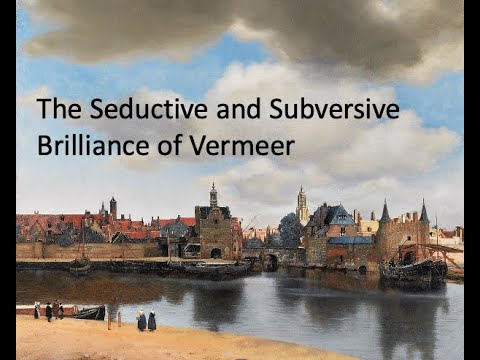
Johannes Vermeer
Presented as the greatest artist of the Dutch Golden Age, whose work subverts middle-class values by exposing their hypocrisy. Multiple paintings analyzed including View of Delft, Girl with a Pearl Earring, The Milkmaid, and The Art of Painting.
other
✓ Accurate
Jan Steen
Briefly mentioned as one of the most famous painters of the Dutch Golden Age period.
primary_document
✓ Accurate
Gustave Flaubert / Madame Bovary
Cited as a literary work that captures the hypocrisy of middle-class life, connecting Dutch Golden Age themes to later literature.
primary_document
✓ Accurate
Leo Tolstoy / Anna Karenina
Called 'the most famous novel of all time,' used to argue that the theme of middle-class hypocrisy, first expressed in Dutch painting, became the dominant theme of world literature.
scholar
? Unverified
Max Weber / The Protestant Ethic and the Spirit of Capitalism (uncredited)
The lecture's entire framework — that Calvinist theology (particularly predestination and anxiety about election) drove capitalist accumulation and middle-class identity — is essentially Weber's thesis from 1905, deployed without attribution.
Vague Appeals to Authority
- '5 to 10 million paintings will be sold' in the Dutch Republic between 1600-1700 — no source cited for this statistic.
- 'The Dutch actually don't really talk about this history' regarding VOC atrocities — presented as common knowledge without sourcing.
- 'A lot of their wealth is hidden' regarding modern Dutch wealth — asserted twice without evidence or explanation.
- 'For most of human history, the most profitable product that you could trade' was slaves — presented as fact without sourcing.
- 'One ship of these things [spices] was enough to make fortunes for entire families for generations' — no specific source or example.
- 'It's considered the first multinational corporation in the world' regarding the VOC — presented without attribution to specific historians.
Notable Omissions
- Max Weber's 'The Protestant Ethic and the Spirit of Capitalism' (1905) — the lecture's central argument about Calvinism driving capitalist accumulation is Weber's thesis, presented without attribution or engagement with the extensive scholarly debate surrounding it.
- R.H. Tawney's 'Religion and the Rise of Capitalism' and other critiques of the Weber thesis that complicate the Calvinism-capitalism link.
- Simon Schama's 'The Embarrassment of Riches' — the definitive study of Dutch Golden Age culture, anxiety, and materialism that covers the same themes as this lecture.
- No discussion of the role of the Dutch Republic's political institutions (States-General, stadtholders) in enabling economic growth beyond a brief mention of federation.
- No engagement with revisionist scholarship questioning the 'Spanish decline' narrative, which was more gradual and complex than presented.
- No mention of the Dutch Republic's own involvement in systematic colonial violence in Southeast Asia beyond a brief acknowledgment of ethnic cleansing.
- No discussion of Dutch involvement in the transatlantic slave trade beyond brief mentions — the WIC (West India Company) is not mentioned at all.
- No engagement with art historical scholarship on Dutch painting beyond personal interpretation — Svetlana Alpers, Mariët Westermann, and other major scholars are absent.