Predictive History Audit / Systematic Content Analysis
Civilization
Episode 51 · Posted 2025-05-14

Shakespeare's Language of Empire

This lecture positions Shakespeare as the founder of British imperial culture by transforming English into a flexible, memorable, and visually powerful language. The first portion introduces a framework of four great modern civilizations (Russian, German, British, American) differentiated by geography, religion, and cultural identity. The lecture then examines Shakespeare's linguistic innovations — diction, iambic pentameter, visual imagery, and rhetorical devices like antithesis and chiasmus — using examples from Hamlet and Julius Caesar. The speaker argues that Shakespeare created English as a 'linguistic internet' enabling cross-cultural exchange, but that this exchange is mediated through Anglo-American culture, which the speaker characterizes as utilitarian, skeptical, empirical, and ultimately 'mediocre' compared to Russian and German cultural achievements. The lecture concludes by arguing that Shakespeare's legacy was co-opted by British imperialists to justify colonialism.

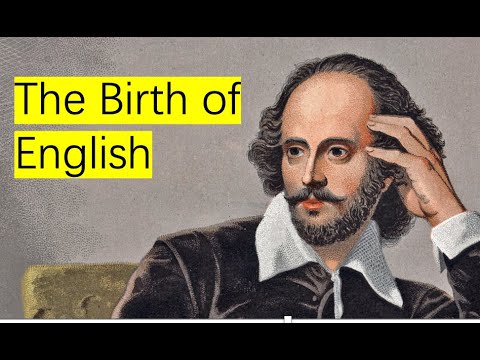
Video thumbnail
youtube.com/watch?v=Qms7trnKwqQ ↗ Analyzed 2026-03-14 by claude-opus-4-6

Viewer Advisory

  • The lecture presents subjective aesthetic judgments ('Russian culture is superior,' 'American culture is mediocre') as objective facts.
  • Russian civilization receives systematically favorable treatment — Stalin and Putin are praised as 'men of genius' with no mention of gulags, political repression, or democratic deficits.
  • The four-civilization framework excludes China, India, Japan, the Islamic world, and all of Africa and Latin America from 'civilizations that drive human modernity.'.
  • The speaker's own analysis of Shakespeare contradicts his evaluative conclusion about Shakespeare's depth.
  • Claims about Shakespeare's education are inaccurate — he received a solid classical education at Stratford's grammar school.
  • The anti-academic stance (dismissing elite universities, professional scholars) is deployed selectively: the speaker cites his own Yale education when it serves his authority but dismisses Yale when it serves his argument.
  • The lecture's treatment of British imperialism, while raising valid points about cultural power, ignores parallel dynamics in Russian, German, and Chinese imperial histories.
Central Thesis

Shakespeare transformed English into the language of empire by creating a flexible, beautiful, and memorable linguistic system that became the foundation of British cultural identity and soft power, but this language carries the inherently limited worldview of Anglo-American empiricism and utilitarianism.

  • Four great modern civilizations — Russian, German, British, and American — have fought for global dominance, each claiming descent from Rome and Christianity, but shaped by different geographies and philosophies.
  • Great art transforms the collective consciousness of a civilization by rewiring its neurological structure, creating new ways of being and seeing.
  • Shakespeare innovated in imagery, grammar, and vocabulary (diction) to expand English civilization's capacity to imagine, feel, and think.
  • Shakespeare's iambic pentameter made his plays musical, memorable, and accessible to ordinary people as mass entertainment.
  • Shakespeare's use of multiple layers of meaning, visual language, and rhetorical devices like chiasmus constituted a 'surgery on the imagination of civilization.'
  • English became a 'linguistic internet' through Shakespeare, but this exchange is mediated through Anglo-American culture which is utilitarian, skeptical, and empirical — and therefore narrow-minded and mediocre.
  • Shakespeare's legacy was co-opted by British imperialists to justify colonialism: 'We have Shakespeare. You don't. Therefore we're superior.'
  • Russian and German culture are 'far superior' to Anglo-American culture, which has produced no great art despite being the wealthiest and most powerful civilization in history.
  • Stalin was the greatest geopolitical leader of the 20th century, and Putin is the greatest geopolitical leader in the world today.
  • Shakespeare was not interested in race or imperialism; his genius lay in psychological realism and empathy born from lack of formal education.
Qualitative Scorecard 2.1 / 5.0 average across 7 axes
Historical Accuracy ▸ Expand
Basic facts about Shakespeare are mostly correct: he wrote approximately 37-41 plays, used 20,000+ words, introduced many new word usages, his plays were published posthumously in the First Folio (1623) by Heminges and Condell, theater was popular entertainment alongside bear-baiting, and the Puritans did ban theater (1642-1660). However, several claims are inaccurate or misleading: Shakespeare died at 52 (correct), but the claim he 'never published in his lifetime' is wrong — 18 plays appeared in quarto editions during his life. The claim that 'we don't have actually anything written specifically by Shakespeare' overstates the case; we have his signature and portions of the play 'Sir Thomas More' in his hand. Shakespeare attended the King's New School in Stratford, which provided a solid classical education — characterizing him as uneducated is misleading. The claim that Shakespeare 'purchased a noble title' is inaccurate; his father applied for a coat of arms (gentry status), not a noble title. The dating of Britain as 'not an advanced culture' during Shakespeare's time ignores the Elizabethan Renaissance.
3
Argumentative Rigor ▸ Expand
The central argument — that Shakespeare transformed English into the language of empire — is plausible but poorly supported. The mechanism proposed (language as 'surgery on synapses') is metaphorical pseudoscience dressed as neuroscience. The claim that Shakespeare's diction innovations created a more flexible English capable of absorbing new ideas is interesting but never rigorously demonstrated; the speaker's own dagger examples are admitted to be 'not Shakespeare's examples.' The comparison framework (Homer/Dante/Shakespeare) is productive but the evaluative conclusion — that Shakespeare lacks 'deep truth' — is subjective and contradicts the speaker's own detailed analysis of Hamlet's philosophical depth. The dismissal of Anglo-American culture as 'mediocre' directly contradicts the lecture's own demonstration of Shakespeare's genius. The civilizational framework (four civilizations drive all modernity) is reductive and ignores non-Western civilizations entirely.
2
Framing & Selectivity ▸ Expand
The lecture is highly selective in its evidence. Russian civilization is presented through its greatest cultural achievements (Tolstoy, Dostoevsky, Tchaikovsky) and 'greatest geopolitical leaders' (Stalin, Putin), with no mention of serfdom, gulags, or authoritarian repression. German civilization is presented through philosophy (Nietzsche, Hegel, Kant) with only a brief mention of Hitler, while British/American civilization is consistently characterized as 'lackluster,' 'narrow-minded,' and 'mediocre' despite being credited with Shakespeare himself. The framing of white man's burden and cultural imperialism is applied exclusively to Britain; no parallel analysis is offered for Russian imperial expansion, German Lebensraum (which is mentioned without moral commentary), or Chinese cultural imperialism. The lecture selectively omits American cultural achievements to support the 'mediocre' characterization.
2
Perspective Diversity ▸ Expand
The lecture presents a single perspective throughout — the speaker's own — with no engagement with alternative scholarly views. The characterization of Shakespeare as 'not that deep' compared to Dante would be contested by virtually every Shakespeare scholar. The dismissal of professional Shakespeare scholarship as 'overpaid English professors' arguing about 'silly things' forecloses engagement with the rich tradition of Shakespeare studies. The civilizational framework excludes all non-Western civilizations. No counter-arguments are considered for any major claim: not for the superiority of Russian/German culture, not for the characterization of Anglo-American culture as mediocre, and not for the claim that formal education inhibits understanding.
2
Normative Loading ▸ Expand
The lecture is heavily loaded with evaluative judgments presented as analytical observations. Anglo-American culture is 'lackluster,' 'narrow-minded,' 'mediocre,' and 'pretty nothingness.' Russian culture has a 'dark imagination' that 'produces men of genius.' Stalin is the 'greatest geopolitical leader' of the 20th century with no qualification. Putin is the 'greatest geopolitical leader in the world today.' Shakespeare is described as 'not as impressive as Homer and Dante.' Paradise Lost is 'very limited and narrow-minded.' Self-taught YouTube historians are superior to Harvard PhDs. These are strong normative judgments embedded in what is presented as civilizational analysis. The emotional loading consistently favors Russian/German culture and denigrates Anglo-American culture.
2
Determinism vs. Contingency ▸ Expand
The lecture is highly deterministic, presenting geographic determinism as the primary driver of civilizational character. Russia is 'huge, cold, and dark' — therefore Russians have a 'dark imagination.' Germany lacks natural boundaries — therefore Germans develop Lebensraum ideology. Britain is an island fortress — therefore British are practical empiricists. America is a continental fortress — therefore Americans believe in manifest destiny. No contingency, agency, or historical accident is considered. The framework treats civilizations as having fixed, geographically determined characters that persist across centuries. The claim that 'four great civilizations drive human modernity' excludes the possibility that other forces (technology, economics, individual agency, contingent events) shape historical outcomes.
2
Civilizational Framing ▸ Expand
The lecture employs a rigid civilizational framework that essentializes entire peoples based on geography and assigns them fixed cultural characters. This is classic geographic determinism crossed with civilizational essentialism. The hierarchy is clear: Russian and German civilizations produce 'superior' culture and 'men of genius,' while Anglo-American civilization is 'mediocre' despite its global dominance. The framework excludes all non-Western civilizations from the category of 'great modern civilizations that drive human modernity,' including China, India, Japan, and the Islamic world.
2
Overall Average
2.1
Civilizational Treatment
CHINA

China is mentioned only twice and dismissively: once to note that the Chinese 'invented gunpowder, compass, printing, paper' but it 'didn't really get us anywhere,' and once in passing when discussing the white man's burden ('civilize the dark people... in Africa and in China'). China is conspicuously absent from the framework of 'four great modern civilizations,' despite being a civilization with 5,000+ years of continuous history and current superpower status.

UNITED STATES

America is characterized as a 'continental fortress' with an ideology of manifest destiny driven by the belief it is 'God's will' to control the Western Hemisphere. American culture is dismissed as 'mediocre' — the speaker 'struggles to think about what great art the Americans have produced' despite America being 'the most wealthy most powerful country that has ever existed.' American education (Yale, Harvard) is portrayed as producing rigid, narrow thinking inferior to self-taught knowledge.

RUSSIA

Russia receives the most favorable treatment of any civilization. The 'Russian dark imagination' produces 'some of the greatest literature, music, philosophy.' Stalin is called 'the greatest geopolitical leader' of the 20th century, and Putin 'the greatest geopolitical leader in the world today.' Russia is presented as producing 'men of genius to lead their countries.' The cultural identity of 'Mother Russia' is described as 'divine.' No negative aspects of Russian civilization are mentioned.

THE WEST

The West as embodied in Anglo-American civilization is characterized as culturally mediocre, narrow-minded, practically-oriented but philosophically shallow, and imperialistic. British culture's core philosophies (utilitarianism, skepticism, empiricism) are presented as limitations rather than strengths. The British Empire is framed primarily as using Shakespeare to justify killing and stealing resources around the world.

Named Sources

primary_document
William Shakespeare — Hamlet
The 'To be or not to be' soliloquy is analyzed in detail to demonstrate Shakespeare's multiple layers of meaning, visual imagery, and iambic pentameter. Four possible interpretations are presented.
✓ Accurate
primary_document
William Shakespeare — Julius Caesar
The speeches of Brutus and Mark Antony are used to illustrate antithesis and chiasmus as rhetorical devices that perform 'surgery on the brain' by restructuring how audiences perceive relationships between concepts.
✓ Accurate
primary_document
John Keats — 'To Autumn'
Used to illustrate the concept of 'language as reality onto itself' — poetry that creates a new world through sensory imagery rather than conveying deep philosophical truths.
✓ Accurate
primary_document
John Milton — Paradise Lost
Cited as the greatest English epic but dismissed as 'very limited and narrow-minded' compared to Homer, Virgil, and Dante, supporting the argument that Anglo-American culture is mediocre.
? Unverified
primary_document
Homer — Iliad and Odyssey
Used as a comparative point: Homer saw language as 'a window into the human soul,' compared with Shakespeare's 'language as reality onto itself.' Also paralleled with Shakespeare as founders of civilizations through poetry.
✓ Accurate
primary_document
Dante — Divine Comedy
Presented as the pinnacle of literary achievement — 'you are in the mind of God' — against which Shakespeare is found wanting. Dante used language as 'a portal into the mind of God.'
? Unverified
primary_document
Rudyard Kipling — 'The White Man's Burden'
Referenced as encapsulating the ideology of British imperialism — the belief that British culture is inherently superior and that the British have a duty to 'civilize' others. Attributed correctly to the age of imperialism.
✓ Accurate
primary_document
Augustine — City of God
Briefly referenced to characterize Eastern Orthodoxy as 'mystical, metaphorical, collectivist,' connecting Russian religion to Augustine's thought.
? Unverified

Vague Appeals to Authority

  • 'Objectively speaking' Anglo-American culture is not the best in the world — presented as fact without criteria or evidence for comparing cultures.
  • 'The greatest geopolitical leader of the 20th century was actually Joseph Stalin' — stated as fact to be proven later, with no supporting argument given.
  • 'Putin is the greatest geopolitical leader in the world today' — asserted without criteria for evaluation.
  • 'There's something about the Russian dark imagination that produces men of genius to lead their countries' — essentialist claim presented as self-evident.
  • 'I struggle to think about what great art the Americans have produced' — subjective judgment presented as quasi-objective cultural assessment.
  • 'Self-taught historians know much more about history than academics at Yale, Cambridge, Oxford, Harvard' — sweeping generalization based on personal YouTube viewing.

Notable Omissions

  • No mention of Chinese civilization in the framework of 'four great modern civilizations' despite China being the world's second-largest economy and a major historical civilization — a striking omission given the speaker's focus on civilizational analysis.
  • No engagement with the extensive scholarly literature on Shakespeare's influence: Harold Bloom's 'The Invention of the Human,' Stephen Greenblatt's New Historicist work, or any professional Shakespeare scholarship.
  • No discussion of American literary achievements (Melville, Twain, Faulkner, Morrison, Whitman, Dickinson) to support the dismissal of American culture as 'mediocre.'
  • No mention of the British Enlightenment's massive contributions to science, philosophy, and political theory (Newton, Darwin, Adam Smith, John Stuart Mill) which complicate the 'narrow-minded' characterization.
  • No acknowledgment of the debate about whether Shakespeare 'invented' modern English or simply captured ongoing linguistic change — the Great Vowel Shift and other forces transforming English independently.
  • No discussion of Shakespeare's contemporaries (Marlowe, Jonson, Webster) in any analytical depth, despite claiming Shakespeare 'stole' from them.
  • Stalin's designation as 'greatest geopolitical leader' ignores the millions who died under his rule — a perspective that most historians would consider essential context.
  • No consideration of Japanese, Indian, Islamic, or other non-Western civilizations in the framework of 'civilizations that drive human modernity.'
Geographic determinism 00:01:00
Russia is huge, cold, and dark, therefore Russians have a 'dark imagination' that produces genius. Germany lacks natural boundaries, therefore Germans develop Lebensraum. Britain is an island fortress, therefore British are practical empiricists.
Establishes a framework where civilizational character is fixed by geography, making cultural outcomes appear inevitable rather than contingent, and naturalizing essentialist claims about entire peoples.
Assertion as axiom 00:04:14
'The greatest geopolitical leader of the 20th century was actually Joseph Stalin. And I will show you this is the case later on.' Putin is then declared 'the greatest geopolitical leader in the world today.'
By stating these extraordinary claims as facts to be proven later (but not now), the speaker plants them as premises that the audience absorbs before any evidence is presented. The deferred proof never needs to be as strong as the initial claim demands.
Selective civilizational comparison 00:51:57
Russian culture is represented by Tolstoy, Dostoevsky, Tchaikovsky; German by Kant, Nietzsche, Hegel; but American culture is represented by... nothing the speaker can think of. 'I struggle to think about what great art the Americans have produced.'
By comparing the greatest achievements of favored civilizations against an empty set for the disfavored one, the speaker creates an illusion of objective cultural hierarchy while simply omitting Melville, Twain, Faulkner, Morrison, jazz, film, and other American cultural contributions.
Anti-elitist credentialism 01:12:49
'I did go to Yale University. I studied English literature there... I was not impressed with the education I got.' Self-taught YouTube historians know more than Harvard PhDs.
The speaker uses his elite credentials to lend authority to his critique of elite institutions, creating a paradox where his Yale degree validates his dismissal of Yale education. This positions the speaker as uniquely qualified — elite-educated but free of elite limitations.
Rhetorical question as assertion 00:51:30
'What was the last great American novel you read?' — implying there are none, without considering candidates like Beloved, Blood Meridian, or Invisible Man.
The question format makes the audience mentally search and (if they can't immediately recall) accept the implied conclusion. The question is framed to exclude answers by not giving time to consider them.
Neuroscientific metaphor 00:17:09
Shakespeare understood that 'by manipulating language in a new way you can also perform a sort of surgery on the synapses.' Language as 'a portal into the neurological framework of our minds.'
Borrowing neuroscientific terminology ('synapses,' 'neurological structure') lends scientific authority to what is essentially a literary-philosophical claim about the power of art. Shakespeare could not have understood synapses (discovered centuries later).
Straw man dismissal of scholarship 00:59:44
Shakespeare scholars who debate textual variants in the First Folio are doing 'a really silly thing' because 'there's really no deep truth in Shakespeare' and changing a few words doesn't matter.
Dismisses an entire field of textual scholarship as pointless, preventing the audience from taking seriously any expert perspectives that might complicate the speaker's narrative about Shakespeare.
Imperial guilt transfer 01:03:23
Shakespeare's legacy was 'co-opted by British imperialists' to justify 'going out and killing so many people around the world and stealing resources.' 'We have Shakespeare. You don't. Therefore we're superior.'
Reduces the complex history of British imperialism to cultural supremacism based on Shakespeare, simplifying the causes of empire while constructing a narrative where Western cultural achievements are inherently tools of oppression.
False modesty / hedged assertion 00:52:36
'To be fair, it's been a long time since I actually read Shakespeare... So what I want to do later on, maybe a few years from now, is actually teach Shakespeare and see if I'm wrong. But right now Shakespeare is not as impressive as Homer and Dante.'
The speaker acknowledges his reading may be outdated, creating an appearance of intellectual humility, but then immediately reasserts his evaluative judgment. The hedge provides cover for a strong claim while not actually qualifying it.
Essentialist cultural ranking 00:51:14
'Anglo-American culture, even though it dominates the world, it's pretty lackluster. It's very narrow-minded. It's very practical. It's pretty mediocre.'
Assigns a fixed qualitative ranking to an entire civilization, treating subjective aesthetic judgments as objective cultural facts. The contrast between global dominance and cultural 'mediocrity' is used to suggest that power and quality are inversely correlated.
⏵ 00:04:14
The greatest geopolitical leader of the 20th century was actually Joseph Stalin. And I will show you this is the case. Today the greatest geopolitical leader in the world is Vladimir Putin.
Reveals the speaker's civilizational hierarchy: Russian leaders are 'men of genius' while American and British leaders are implicitly inferior. Calling Stalin — responsible for millions of deaths through famine, purges, and gulags — the 'greatest geopolitical leader' without any qualification is a deeply loaded normative claim presented as analytical fact.
The speaker praises Stalin and Putin as 'greatest geopolitical leaders' produced by Russia's 'dark imagination,' but would presumably not extend similar praise to Mao Zedong, who by the same realpolitik logic transformed China from a fragmented, impoverished nation into a nuclear power and unified state. The selective application of amoral 'greatness' to Russian but not Chinese leaders reveals civilizational bias.
⏵ 00:10:06
What's amazing about English is that it has really for soft power convinced everyone to believe that Anglo-American culture is really the best in the world when objectively speaking it is not.
Encapsulates the lecture's core normative position — English-language cultural dominance is an illusion sustained by soft power rather than genuine cultural superiority. The word 'objectively' doing heavy lifting for what is inherently a subjective aesthetic judgment.
China's current soft power campaign — Confucius Institutes, state media expansion, cultural exports — similarly aims to convince the world of Chinese cultural superiority. The criticism of Anglo-American soft power as deceptive would apply equally to any civilization's cultural projection, including China's claim to 5,000 years of continuous, superior civilization.
⏵ 00:51:14
Anglo-American culture, even though it dominates the world, it's pretty lackluster. It's very narrow-minded. It's very practical. It's pretty mediocre.
The most direct statement of the lecture's evaluative hierarchy. Dismisses the culture that produced Shakespeare (whom the lecture just spent an hour praising), Newton, Darwin, Adam Smith, the Enlightenment, jazz, cinema, and modern democracy as 'mediocre.'
⏵ 00:04:27
There's something about the Russian dark imagination that produces men of genius to lead their countries.
Essentializes Russian civilization as uniquely capable of producing great leaders through an innate 'dark imagination.' This is geographic-cultural determinism at its most explicit — character traits are attributed to an entire civilization as inherent, permanent features.
⏵ 00:52:06
Shakespeare is great... But Shakespeare compared with Dante, I mean I don't know. Dante is like you are in the mind of God... But with Shakespeare you're like this is beautiful but is it a pretty nothingness?
The speaker reduces the entire Shakespeare canon — which the lecture itself demonstrated contains profound philosophical content about existence, free will, fate, and human psychology — to 'a pretty nothingness.' This directly contradicts the lecture's own analysis of Hamlet's four layers of existential meaning.
⏵ 01:03:37
We have Shakespeare. You don't have Shakespeare. That means we're superior to you and therefore we will teach you Shakespeare. We will educate you in Shakespeare. We will civilize you.
Presents the speaker's reconstruction of British imperial logic. While this captures a real dynamic of cultural imperialism, it reduces the complex history of colonialism to a single mechanism and implies that any civilization's use of its cultural achievements to project influence is inherently imperialistic.
This logic mirrors China's historical tributary system, where surrounding nations were expected to adopt Chinese cultural practices, Confucian values, and the Chinese writing system as markers of civilization. The claim 'we have Confucius/Chinese characters, you don't, therefore we are civilized and you are barbarians' was the explicit logic of the Sinocentric world order for millennia.
⏵ 00:51:54
I struggle to think about what great art the Americans have produced even though they are the most wealthy most powerful country that has ever existed in human history.
Reveals either genuine unfamiliarity with American cultural achievements or willful omission. American literature (Melville, Twain, Faulkner, Morrison, Hemingway), music (jazz, blues, rock), visual art (Pollock, Rothko, Basquiat), film (the entire Hollywood tradition), and architecture represent enormous cultural output that is simply ignored.
⏵ 00:26:36
The Chinese invented gunpowder, compass, printing, paper. Didn't really get us anywhere.
A dismissive aside about Chinese civilization's four great inventions. The claim that these inventions 'didn't really get us anywhere' ignores that they revolutionized global warfare, navigation, knowledge dissemination, and communication — they just did so primarily after being adopted and developed by Europeans.
⏵ 01:13:45
You're much better off talking to an individual who has a passion for history and who spent his entire life asking himself what is history but never really got a formal education... as opposed to a Harvard PhD in history.
Extends the anti-elitist argument from Shakespeare's time to today. The speaker uses his own Yale credentials to validate the dismissal of elite credentials — a performative contradiction that positions self-taught YouTube historians above professional scholars.
⏵ 00:49:26
Shakespeare turns English into the world's linguistic internet, a platform in which all cultures, ideas, and worldviews can meet and crossbreed.
The lecture's most concise and compelling formulation. The 'linguistic internet' metaphor effectively captures how English became a global medium of exchange. However, the speaker then immediately undermines this by arguing this exchange is mediated through 'mediocre' Anglo-American values.
claim Trump's push to take over Canada and Greenland is part of America's 'manifest destiny' ideology that will continue to drive American expansionism.
00:07:31 · Not falsifiable
unfalsifiable
claim The conflict between the four great civilizations (Russia, Germany, Britain, America) will continue to drive history and human innovation.
00:08:23 · Not falsifiable
unfalsifiable
Verdict

Strengths

The lecture contains genuinely insightful literary analysis: the examination of Shakespeare's diction innovations (using familiar words in unfamiliar ways), the comparison of antithesis and chiasmus in Julius Caesar, the analysis of multiple interpretive layers in Hamlet's soliloquy, and the comparison of Homer/Dante/Shakespeare as civilization-founders are all pedagogically effective and intellectually substantive. The concept of English as a 'linguistic internet' is a powerful and original metaphor. The discussion of Shakespeare's plays as mass entertainment rather than high culture provides useful historical context. The observation that Shakespeare's psychological realism distinguishes him from contemporaries is well-supported by literary scholarship.

Weaknesses

The lecture suffers from fundamental contradictions and unsupported claims. The speaker demonstrates Shakespeare's philosophical depth in detail, then dismisses him as lacking 'deep truth.' Anglo-American culture is called 'mediocre' in a lecture that just proved Shakespeare's genius — Shakespeare being the supreme product of that culture. The civilizational framework is rigidly deterministic and excludes all non-Western civilizations. The claims about Stalin and Putin as 'greatest geopolitical leaders' are asserted without evidence and ignore the catastrophic human costs of their rule. The dismissal of professional Shakespeare scholarship as 'silly' while the speaker draws on decades of that same scholarship's insights is intellectually dishonest. The characterization of Shakespeare as uneducated is historically inaccurate. The neuroscientific language ('surgery on synapses') is pseudoscientific metaphor presented as mechanism.

Cross-References

BUILDS ON

  • Earlier Civilization lectures on Homer and the Iliad/Odyssey (referenced multiple times as foundation for comparing Shakespeare's linguistic innovations).
  • Previous Civilization lectures on Dante and the Divine Comedy (referenced as comparative benchmark for poetic achievement).
  • Last class discussion of British empiricism and utilitarianism (referenced as 'as we discussed last class').
  • Previous lecture on Augustine's City of God (referenced as basis for understanding Eastern Orthodoxy).
  • Earlier discussion of oral culture and the Bronze Age collapse (referenced in Homer/Shakespeare comparison).
  • Geo-Strategy series lectures on geopolitics (the framework of four competing civilizations connects to strategic analysis).

CONTRADICTS

  • The lecture's own analysis contradicts itself: the speaker spends 45 minutes demonstrating Shakespeare's profound philosophical insights (four layers of meaning in 'To be or not to be,' language as surgery on consciousness) and then concludes Shakespeare contains 'no deep truth' and is 'a pretty nothingness.'
This lecture reveals a consistent pattern across the Predictive History corpus: Russian and German civilizations receive favorable treatment (cultural genius, great leaders, deep philosophy) while Anglo-American civilization is systematically denigrated (mediocre, narrow-minded, imperialistic). China is conspicuously absent from civilizational frameworks despite the speaker's apparent Chinese background and the channel's focus on Chinese geopolitical interests. The pattern of praising authoritarian leaders (Stalin, Putin) while dismissing democratic cultures' achievements suggests a systematic normative bias rather than analytical neutrality. The anti-elite, anti-academic stance — dismissing Shakespeare scholarship, Yale education, Harvard PhDs — while simultaneously leveraging elite credentials for authority is a recurring rhetorical strategy.