Predictive History Audit / Systematic Content Analysis
Game Theory
Episode 6 · Posted 2026-01-22

The World's Bank

This lecture argues that the global financial system was constructed by the British Empire as a mechanism for extracting wealth from colonized nations, and that this system persists today through offshore financial centers, money laundering networks, and cultural imperialism via English-language education. Beginning with the observation that Chinese students prioritize learning English, acquiring US dollars, and emigrating to Western countries, the speaker traces the origins of the current system from the Spanish Empire's decline through the Glorious Revolution of 1688, the founding of the Bank of England in 1694, and the British colonization of India and China. The lecture concludes that the Western world is now in terminal decline due to 'over-financialization' — the same cycle of wealth leading to laziness, corruption, and arrogance that destroyed the Spanish Empire — and that the current global game is 'not sustainable' and approaching a reset.

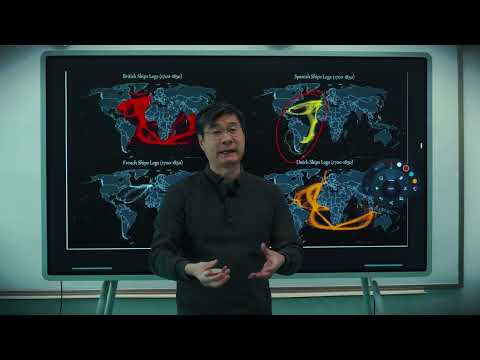
Video thumbnail
youtube.com/watch?v=CbamEcNuDXo ↗ Analyzed 2026-03-14 by claude-opus-4-6

Viewer Advisory

  • The lecture contains factual errors, including misrepresentation of Locke's philosophy, incorrect claims about Australia's largest industry, and characterization of the Rhodes Scholarship as a 'secret society.'.
  • The normative language is extreme — calling the global system 'demonic' and 'the work of Satan' is religious denunciation, not analysis.
  • The characterization of Hong Kong's people as 'disgusting' and 'depraved' is a sweeping moral condemnation of millions of people.
  • The lecture applies a severe double standard: Western systems are critically examined for corruption and exploitation, but China's own financial corruption, capital flight, and authoritarian education system are never mentioned.
  • The argument that Chinese students are 'brainwashed' into learning English ignores the many rational reasons for learning a global lingua franca.
  • Despite the 'Game Theory' series title, no actual game theory methodology is employed.
  • The lecture's implicit recommendation — that Chinese students should stay in China rather than pursue Western education — serves Chinese nationalist interests rather than students' individual welfare.
Central Thesis

The global financial system was designed by the British Empire to extract wealth from the rest of the world through offshore financial centers, money laundering, and cultural indoctrination, and this system — now inherited by America — is collapsing because it has corrupted and weakened the Western nations that created it.

  • Chinese students' obsession with English, US dollars, and Western immigration is irrational behavior explained by a game constructed by the British Empire that the entire world is forced to play.
  • The Spanish Empire's decline was caused by wealth-induced laziness, insularity, and arrogance (hubris), which allowed England, the Dutch Republic, and France to rise.
  • The Glorious Revolution of 1688 was primarily motivated by the need to protect transnational capital, not by religious or democratic principles.
  • The Bank of England (1694) transformed lending from personal loans to kings into sovereign debt guaranteed by the nation, creating the foundation of modern finance.
  • England became the world's first offshore financial center by offering to protect private property regardless of its origin, backed by Parliament, courts, and the Royal Navy.
  • The British Empire maintained control of India and China by incentivizing local elites to cooperate through money laundering, offshore wealth transfer, and educational indoctrination.
  • The Rhodes Scholarship and British schooling system were designed as indoctrination tools to recruit talented colonized subjects into serving the Empire.
  • The global drug trade and all forms of organized crime depend on the British-created offshore financial center system for money laundering.
  • Over-financialization has made Western nations (US, UK, Canada, Australia) lazy, corrupt, arrogant, and insular — the same pattern that destroyed the Spanish Empire.
  • The current global system is 'demonic' and 'the work of Satan' because it facilitates corruption, inequality, and moral degradation.
Qualitative Scorecard 1.3 / 5.0 average across 7 axes
Historical Accuracy ▸ Expand
The lecture gets broad strokes correct but consistently oversimplifies or distorts details. The Spanish Empire did decline partly due to overextension and wealth-induced problems, and the Glorious Revolution did involve William of Orange. However: (1) Locke's philosophy is misrepresented — he argued property comes from labor, not that stolen property is divinely sanctioned; his actual phrase was 'life, liberty, and estate/property,' not 'pursuit of property' (that's Jefferson's adaptation). (2) The Bank of England's founding is oversimplified — it was created primarily to fund William III's war against France, not as a general capital protection scheme. (3) The claim that the Dutch Republic was 'basically a colony of the Spanish' is misleading — by 1688, the Dutch had been independent for over a century (Peace of Westphalia, 1648). (4) The claim that Australia's biggest industry is banking is factually wrong — mining is Australia's largest industry. (5) The Rhodes Scholarship is not a 'secret society' — it is a publicly administered academic scholarship, though Cecil Rhodes did have imperialist motivations. (6) The characterization of the Thirty Years' War as the deadliest European war before WWI is roughly correct, though the Napoleonic Wars also had enormous casualties.
2
Argumentative Rigor ▸ Expand
The argument relies heavily on assertion rather than demonstration, and makes massive logical leaps. The central argument — that the entire global financial system is a British-designed extraction mechanism — conflates correlation with causation throughout. The fact that many offshore financial centers exist in former British territories does not prove the British Empire deliberately designed a global money laundering system. The argument that English-language education constitutes 'brainwashing' ignores the many practical benefits of lingua franca access. The leap from 'the British created the Bank of England' to 'the entire world system is demonic and the work of Satan' is not supported by any intermediate evidence. The game theory framing promised in the series title is barely employed — the lecture asserts that certain behaviors are 'weird' and then explains them through a single historical narrative without considering alternative explanations.
2
Framing & Selectivity ▸ Expand
The lecture is extraordinarily selective. Every fact about the British Empire is presented through the lens of theft, exploitation, and evil, while no countervailing evidence is considered. The British Empire also introduced rule of law, abolished the slave trade (after profiting from it), built infrastructure, and created institutions that many former colonies chose to retain post-independence. The financial system's role in enabling global trade, economic development, and poverty reduction is entirely ignored. The claim that the Western system is 'demonic' and 'the work of Satan' is presented as analytical conclusion rather than moral judgment. The lecture selectively presents offshore financial centers as uniquely Anglo-Saxon while ignoring Swiss, Liechtenstein, Luxembourgish, and Chinese offshore finance. Most egregiously, the lecture describes Chinese students' desire to study abroad as irrational 'brainwashing' while ignoring that many Chinese students rationally seek opportunities unavailable under China's own restrictive political and educational system.
1
Perspective Diversity ▸ Expand
The lecture presents a single, uncontested narrative throughout. No alternative perspectives are considered: no economists who might argue the financial system created genuine value; no historians who offer more nuanced views of the Glorious Revolution; no postcolonial scholars who critique both Western imperialism AND local complicity more carefully; no consideration of why millions of people voluntarily participate in the 'English-learning game' for rational reasons beyond brainwashing. The classroom format reinforces this — the leading questions ('Does that make sense?') brook no disagreement, and no student challenges are presented in the transcript.
1
Normative Loading ▸ Expand
This is one of the most normatively loaded lectures imaginable. The speaker calls the global financial system 'demonic,' 'the work of Satan,' and 'evil' — multiple times. Hong Kong's people are called 'disgusting,' 'depraved,' and 'unethical.' The entire Western world is characterized as 'lazy,' 'corrupt,' and 'arrogant.' Money laundering, drug trafficking, prostitution, and slavery are conflated as equivalent features of the British-created system. The speaker claims the system 'corrupts souls.' This is not analysis but moral denunciation using religious language. The evaluative language entirely replaces analytical examination of why financial systems function as they do, what alternatives exist, or how reform might work.
1
Determinism vs. Contingency ▸ Expand
The lecture presents an iron law of imperial rise and decline with zero room for contingency. Wealth inevitably leads to laziness, corruption, and arrogance. The British system inevitably corrupts all who participate. The Western world is inevitably declining. No alternative trajectories are considered — no possibility that institutions might reform, that democratic accountability might correct corruption, or that the system might evolve. The doping-in-sports analogy makes the game seem like an inescapable trap with no exit. The only acknowledged outcome is collapse and 'game reset,' with no agency for any actor to change the trajectory.
1
Civilizational Framing ▸ Expand
The lecture employs an extreme civilizational framing where the West (Britain/America) is characterized as fundamentally evil, demonic, and built on theft, while colonized nations are purely victims. The characterization of Hong Kong as 'disgusting' and 'depraved' is a remarkable moral judgment on an entire city's population. The implicit contrast is that non-Western civilizations (particularly China) are morally superior victims of a rigged game, though this is asserted rather than argued. The speaker's framework allows no moral complexity — the West is evil, its system is Satanic, and the rest of the world has been brainwashed into compliance.
1
Overall Average
1.3
Civilizational Treatment
CHINA

China is presented entirely as a victim — of the opium trade, of British financial imperialism, and of cultural brainwashing through English-language education. Chinese students are portrayed as unwitting participants in a game designed to exploit them. No agency, complicity, or internal dynamics of Chinese history are discussed. The speaker implies Chinese students should stay in China, master Chinese, and leverage their family connections rather than pursuing Western education — effectively arguing for insularity as an antidote to Western cultural imperialism.

UNITED STATES

The United States is mentioned briefly as the inheritor of the British system, with the American Empire characterized as having made the game 'universal' and 'easier to play' by adding US dollars. The US is treated as a continuation of British imperial extraction, not as a distinct entity. American society is characterized by worship of the rich (Musk, Bezos, Zuckerberg) and contempt for the poor.

THE WEST

The Western world collectively is characterized as evil, corrupt, lazy, arrogant, and in terminal decline. The British Empire is presented as having 'stolen all this money from the rest of the world,' creating a 'demonic' system that is 'the work of Satan.' Western nations (US, UK, Canada, Australia) are described as money laundering operations for third-world corruption. The entire Western financial and legal system is characterized as existing solely to facilitate theft from the developing world.

Named Sources

scholar
John Locke
Cited (as 'John Loach' in the transcript) for the idea that government exists to protect 'life, liberty, and the pursuit of property.' Used to argue that the British state was fundamentally designed to protect private property regardless of its origin.
✗ Inaccurate
primary_document
The Glorious Revolution (1688)
Presented as primarily a financial arrangement between British nobility and Dutch capital, where William of Orange brought Dutch wealth to England in exchange for parliamentary protection of capital. The religious dimension is dismissed as 'ostensible.'
? Unverified
primary_document
Bank of England (1694)
Presented as the foundational institution that transformed lending from personal loans to kings into sovereign debt guaranteed by the nation, creating the basis for the modern financial system.
? Unverified
other
British East India Company
Described as a private company based in Britain that colonized India, de-industrialized Indian textile manufacturing, and facilitated the extraction of resources from India to England.
? Unverified
other
Rhodes Scholarship
Described as 'basically a secret society' that selected the best students from across the British Empire to study at Oxford, where they would be indoctrinated to spread British imperial power. Characterized as part of a systematic indoctrination program.
✗ Inaccurate
scholar
Sir Francis Drake
Cited as the most famous pirate of the Elizabethan era who worked directly under Elizabeth I, used to illustrate state-sponsored piracy as a mechanism of English wealth accumulation.
✓ Accurate

Vague Appeals to Authority

  • 'As we discussed last class' — repeated references to previous lectures as established facts without re-establishing the evidence base.
  • 'What people don't appreciate is that the real reason why they want to do that is they want to protect capital' — presented as a hidden truth that the speaker uniquely understands.
  • 'Do you guys know what the biggest industry in Australia is? It's banking.' — stated as fact without source; Australia's largest industry by GDP contribution is actually mining, not banking.
  • 'This entire world it's based on stealing from the third world and transferring this money to the first world. That's all it is.' — sweeping claim presented as self-evident truth.
  • 'None of this would be possible without the British financial and legal system' — regarding the global drug trade, presented without evidence or sourcing.
  • 'We worship the rich... and we hate the poor' — presented as universal truth about the global system.

Notable Omissions

  • No engagement with economic historians who study the Bank of England's founding (e.g., P.G.M. Dickson's 'The Financial Revolution in England,' or Larry Neal's work on financial markets).
  • No discussion of the Dutch Republic's own sophisticated financial system (Amsterdam Exchange Bank, 1609) which preceded and influenced the Bank of England.
  • No mention of the Whig interpretation vs. revisionist historiography of the Glorious Revolution — reduces a complex event to a single economic motivation.
  • No engagement with Locke's actual political philosophy, which was far more nuanced than 'protect property regardless of origin.' Locke explicitly argued property rights derived from labor, not theft.
  • No discussion of how the Qing Dynasty's own internal corruption and political dysfunction contributed to China's vulnerability to the opium trade.
  • No mention of non-British offshore financial centers (e.g., Liechtenstein, Luxembourg, Delaware in the US) or the role of Chinese underground banking (fei-ch'ien) in capital flight.
  • No consideration of how the global financial system has also facilitated massive poverty reduction, economic development, and wealth creation in formerly colonized nations.
  • No discussion of the role of the Bretton Woods system, IMF, or World Bank in shaping the modern financial order.
  • No engagement with the large body of scholarship on the British Empire that offers more nuanced views (e.g., Niall Ferguson, John Darwin, or post-colonial scholars like Partha Chatterjee).
  • Complete omission of China's own historical imperial extraction systems (tribute system, salt monopoly, corvée labor) or contemporary offshore financial activities via Hong Kong and Macau.
Direct address to create complicity 00:00:00
The lecture opens by telling Chinese students that their behavior — learning English, wanting US dollars, wanting to emigrate — is 'weird' and 'strange,' positioning the speaker as someone who sees through a system the students are blind to.
Creates immediate engagement by making the audience feel their own lives are part of the analytical subject. Positions the speaker as possessing superior insight into the students' own motivations, establishing intellectual authority from the first sentence.
Cyclical historical determinism 00:06:40
The Spanish Empire's rise and fall is presented as an inevitable cycle: wealth leads to laziness, insularity, arrogance/hubris, overextension, and collapse. This cycle is then applied to the British Empire and the current Western world.
By establishing a 'law' of imperial decline through the Spanish example, the speaker makes Western decline seem historically inevitable. The audience is primed to see the pattern rather than question whether it actually applies.
Revelatory framing 00:16:52
'What people don't appreciate is that the real reason why they want to do that is they want to protect capital' — presenting the financial motivation behind the Glorious Revolution as a hidden truth only the speaker reveals.
Positions the speaker as revealing hidden truths that mainstream historians suppress, creating a sense of insider knowledge and making the audience feel they are receiving privileged information.
Moral escalation 00:36:43
The argument escalates from 'the British created offshore financial centers' to 'this system facilitates drug trafficking' to 'this is a demonic system' to 'it is the work of Satan' in rapid succession.
Each step builds on the previous one, so by the time the speaker declares the system 'Satanic,' the audience has been gradually conditioned to accept the escalating moral condemnation as logical progression rather than rhetorical hyperbole.
Ad hominem against an entire city 00:36:15
'The people there are disgusting. They're depraved. They're unethical. They're disgusting. There's actually no culture to the place. There's no morality to the place. It's actually disgusting.'
By characterizing an entire population as morally degenerate, the speaker makes the abstract argument about financial systems viscerally concrete. The repetition of 'disgusting' three times hammers the moral judgment into an emotional conviction rather than an analytical conclusion.
False equivalence 00:35:42
Money laundering is equated with gambling, prostitution, human trafficking, and slavery as equivalent moral evils that the British system facilitates, with no distinction in scale, nature, or culpability.
By listing these activities together, the speaker transfers the moral horror of slavery and human trafficking onto the entire financial system, making any participation in global finance seem morally equivalent to participating in slavery.
Rhetorical question cascade 00:19:04
Throughout the lecture, the speaker asks 'Does that make sense?' and 'Okay?' after each major claim, creating an implied agreement loop where silence equals assent.
These check-ins create a false sense of collaborative reasoning. Students who do not actively disagree are implicitly recorded as agreeing, and the conversational pace discourages pushback on individual claims.
Performance-enhancing drug analogy 00:42:52
The global financial system is compared to doping in Olympic sprinting — it gives short-term advantages but destroys your body long-term, and once one competitor uses it, everyone is forced to follow.
Makes the inevitability thesis viscerally relatable. The analogy implies there is no ethical way to participate in the system and that all participants are equally victims, absolving any particular actor of responsibility.
Selective historical parallelism 00:38:05
The Spanish Empire's decline through wealth → laziness → arrogance is directly paralleled to the current Western world, skipping over centuries of institutional development, democratic reform, and economic transformation.
By drawing a direct line from 16th-century Spain to 21st-century America, the speaker implies nothing fundamental has changed in 500 years of Western civilization, making decline seem predetermined.
Theological framing of economic analysis 00:36:46
Locke's property rights are described as coming 'from God,' and the entire financial system is later declared 'demonic' and 'the work of Satan,' creating a moral cosmology around economic institutions.
Elevates what could be a critique of specific financial practices into a cosmic moral struggle between good and evil, making nuanced analysis impossible and dissent equivalent to siding with Satan.
⏵ 00:36:15
The people there are disgusting. They're depraved. They're unethical. They're disgusting. There's actually no culture to the place. There's no morality to the place. It's actually disgusting.
This characterization of Hong Kong — one of the world's great cities — as populated by 'disgusting' and 'depraved' people with 'no culture' is remarkable for its sweeping moral condemnation of millions of people. It reveals the speaker's willingness to make extreme civilizational judgments while presenting them as analytical observations.
Hong Kong is part of China. The speaker is effectively calling Chinese people in a Chinese city 'disgusting' and 'depraved' while simultaneously arguing that Chinese students are victims of Western brainwashing. Moreover, Hong Kong's role as a financial center has been enthusiastically embraced by the PRC, which has used it as a conduit for capital flows and international finance. If Hong Kong is 'demonic,' China's government is a willing participant in the system.
⏵ 00:36:46
So this is almost you would say this is a demonic system. This system is not only evil but it facilitates evil. It is the work of Satan.
The speaker declares the entire global financial system to be literally Satanic. This is perhaps the most extreme normative claim in the lecture, revealing that the analysis is fundamentally a moral-theological critique rather than a game-theoretic or historical analysis.
⏵ 00:37:54
This entire world it's based on stealing from the third world and transferring this money to the first world. That's all it is.
Reduces the entire global economy to a single mechanism — theft from poor countries to rich ones. This sweeping claim ignores trade, technology transfer, development aid, foreign direct investment, and the fact that many formerly colonized nations have achieved rapid economic growth within the existing system.
China's Belt and Road Initiative has been criticized by numerous developing nations for debt-trap diplomacy — lending on unfavorable terms and seizing assets when countries default (e.g., Hambantota Port in Sri Lanka). China's extraction of natural resources from Africa and Southeast Asia mirrors the pattern the speaker attributes solely to the British/Western system.
⏵ 00:29:36
When you learn English what do you learn? You learn that British culture is superior to your local culture... And as a result, you slowly come to believe that the British are superior to us.
Characterizes all English-language education as brainwashing designed to instill cultural inferiority. This denies students any agency in choosing to learn a global lingua franca and reduces a complex educational decision to imperial manipulation.
China's own education system is far more ideologically controlled than any Western educational institution. Chinese students are required to study 'Xi Jinping Thought,' pass political ideology exams, and are restricted from accessing information about Tiananmen Square, Tibet, or the Cultural Revolution. If learning English constitutes 'brainwashing,' China's mandatory political education is a far more direct and coercive form of ideological indoctrination.
⏵ 00:21:40
If you're French and you killed a million people to steal a million gold, they don't care. It's yours. It's private. And they believe that this private property comes from God.
This is a significant distortion of Locke's philosophy. Locke explicitly argued that property rights derive from mixing labor with resources, and that there are natural law limits on property acquisition. The speaker inverts Locke's framework to make it seem like a justification for unlimited theft.
⏵ 00:34:50
The British Empire is still around today, but they transform from one that is overt and that uses military power in order to control the world to one that is covert, that is secret, and that uses financial and legal means in order to control the world.
Presents a conspiratorial view of continued British imperial power that ignores the UK's dramatically reduced global influence since 1945. The claim that the British Empire is 'still around' operating secretly through financial systems is an extraordinary assertion presented without evidence.
⏵ 00:01:23
You are much higher status in China. You're much more likely to get a good job. You're much more likely to marry a beautiful woman than you are in the United States where the game is rigged against you.
The speaker argues that Chinese students are irrational to seek opportunities in America because they have better prospects in China. This ignores the many rational reasons Chinese students study abroad: academic freedom, research opportunities, escape from gaokao pressure, air quality, food safety, and political freedoms unavailable in China.
The speaker is himself a Chinese person who studied and worked in Western countries (Columbia University, etc.) before returning to teach in China. His own career trajectory — gaining prestige through Western educational credentials — exemplifies the very pattern he calls 'weird' and irrational in his students.
⏵ 00:41:36
We worship the rich. And we hate the poor. So, if you're homeless, we think it's because you deserve it. Because you're lazy.
Characterizes the entire global attitude toward wealth and poverty as a monolithic worship of the rich and contempt for the poor, ignoring extensive welfare systems, charitable giving, and social justice movements in Western countries.
China's own society exhibits extreme status-consciousness around wealth. The Chinese concept of 'mianzi' (face) and the intense social pressure to demonstrate material success (housing, cars, luxury brands) reflects wealth worship at least as intense as anything in Western societies. China's hukou system creates a structural underclass of rural migrants denied urban services — a form of institutional contempt for the poor far more systematic than anything the speaker describes.
⏵ 00:30:28
So, a world scholar, it's basically a secret society... their mission will be to spread the power of the British Empire all around the world.
Characterizes the Rhodes Scholarship as a 'secret society' for imperial indoctrination. While Cecil Rhodes did have imperialist motivations, the scholarship is publicly administered, has included many recipients who became critics of Western imperialism, and is not remotely secret.
China's own Confucius Institutes — cultural and language programs embedded in universities worldwide — have been criticized for operating as influence operations, suppressing discussion of sensitive topics, and monitoring Chinese students abroad. If the Rhodes Scholarship constitutes imperial indoctrination, Confucius Institutes represent a far more contemporary and direct form of state-sponsored cultural influence.
⏵ 00:39:43
Yes, we can say that the western world it's evil because they've stolen all this money. But really what's happened is that they've corrupted and destroyed themselves because this model has been too successful for them.
The speaker briefly acknowledges then immediately moves past the claim that 'the western world is evil,' treating it as established fact before pivoting to the 'poetic justice' of self-destruction. The rhetorical structure embeds the moral condemnation as a premise rather than a conclusion.
claim The current Western-dominated global financial system is 'not sustainable' and approaching a 'game reset' where a new game will emerge.
00:39:57 · Not falsifiable
unfalsifiable
No timeline or specific mechanism given. The claim that any system will eventually change is trivially true and unfalsifiable without specifics.
claim The American Empire will be discussed in the next class, specifically how it added US dollars to the British-created financial game, making it universal.
00:43:47 · Not falsifiable
unfalsifiable
This is a statement about course content, not a geopolitical prediction.
Verdict

Strengths

The lecture raises genuine and important questions about the legacy of British imperialism on the modern financial system. The connection between the Glorious Revolution, the Bank of England, and the development of modern finance is a legitimate area of historical inquiry. The observation that offshore financial centers disproportionately cluster in former British territories is factually accurate and worth examining. The discussion of how colonial education systems served imperial interests draws on real scholarship (e.g., Macaulay's Minute on Indian Education). The cyclical theory of imperial decline, while oversimplified, echoes serious scholarship from Ibn Khaldun to Paul Kennedy. The lecture is engaging and accessible to students.

Weaknesses

The lecture suffers from severe analytical and factual problems. Historically, it misrepresents Locke's philosophy, the nature of the Bank of England's founding, and the Rhodes Scholarship. Analytically, it reduces the entire global economy to a single mechanism (theft) and declares the financial system 'Satanic' without considering its role in enabling trade, development, and poverty reduction. The sweeping moral condemnation of Hong Kong's population as 'disgusting' and 'depraved' is bigoted and analytically worthless. The lecture offers no alternative model — if the current system is evil, what should replace it? The game theory framing promised by the series title is entirely absent; no payoff matrices, no Nash equilibria, no formal strategic analysis appears. The argument that learning English constitutes 'brainwashing' denies students any rational agency. The deterministic cycle of wealth → corruption → decline is presented as an iron law with no possibility of institutional reform or adaptation.

Cross-References

BUILDS ON

  • Game Theory #5 (referenced as 'last class' — discussed the concept that empires become lazy, insular, and arrogant when too wealthy/powerful; also discussed local elites in conflict with each other).
  • Earlier Game Theory lectures (referenced repeatedly with 'as we discussed before' — covered topics including why Chinese students should prioritize Chinese language, the concept of status vs. wealth).
  • Implied connection to Geo-Strategy series on the American Empire, British colonialism, and the opium trade.

CONTRADICTS

  • The lecture's claim that Chinese students are irrational to study abroad potentially contradicts other lectures in the series that may discuss China's internal challenges, though this would need verification against other episode transcripts.
This lecture exemplifies the series' recurring pattern of using game theory language ('game,' 'players,' 'zero sum') as a framing device while not actually employing formal game-theoretic analysis. The real analytical framework is a cyclical theory of imperial rise and decline driven by moral corruption — wealth leads to laziness, arrogance, and insularity, which leads to collapse. This is closer to Ibn Khaldun's theory of civilizational cycles than to modern game theory. The lecture also continues a pattern seen across the corpus of characterizing Western civilization as fundamentally predatory while treating non-Western civilizations (particularly China) as victims with no agency or internal dysfunction.