Predictive History Audit / Systematic Content Analysis
Game Theory
Episode 9 · Posted 2026-03-03

The US-Iran War

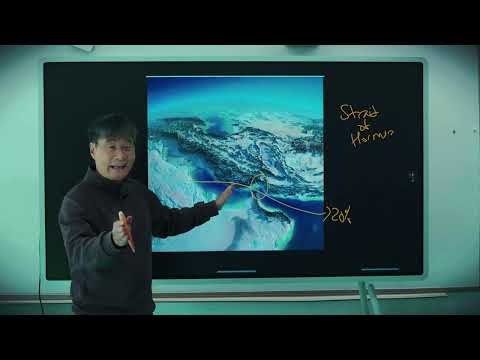
Delivered approximately four days after the US-Israeli strikes on Iran began (Feb 28, 2026), this lecture provides a real-time overview of the war's opening phase. The speaker covers the assassination of Ayatollah Khamenei, Iranian retaliatory strikes across GCC nations, the strategic importance of the Strait of Hormuz, and the vulnerability of Gulf states to Iranian drone and missile attacks. He frames the conflict as an asymmetric war in which Iran's mountainous terrain and cheap drone arsenal give it advantages against expensive American defense systems. The lecture outlines competing grand strategies: the US-Israeli plan to fragment Iran along ethnic lines and exploit water scarcity, versus Iran's plan to ignite a global Shia jihad and ultimately unify the Muslim world under Iranian leadership. The speaker characterizes GCC states as artificial constructs of American empire that are fatally vulnerable to Iranian attack.

Video thumbnail
youtube.com/watch?v=jIS2eB-rGv0 ↗ Analyzed 2026-03-14 by claude-opus-4-6

Viewer Advisory

  • The lecture adopts an Iranian perspective on several key events, including framing Khamenei's death as voluntary martyrdom and implying Israeli responsibility for the school strike without evidence.
  • Grand strategies attributed to both sides are the speaker's constructions, not documented plans.
  • The petrodollar theory, while containing elements of truth, is presented in a simplistic form that most economists would reject.
  • The characterization of the US military as purely corrupt and incapable ignores the operational success of the opening strikes.
  • The lecture declares Dubai 'dead' and the GCC doomed based on days of conflict, which represents premature certainty about highly uncertain outcomes.
  • The discussion of 'Pax Islamica' as Iran's strategic goal romanticizes what would effectively be Iranian imperial ambition.
  • China receives uniquely favorable treatment as 'neutral' and 'okay with either scenario,' continuing a pattern across the series.
Central Thesis

The US-Iran war is a mutually destructive conflict centered on the GCC, where Iran's strategy is to destroy the petrodollar system and ignite a pan-Islamic uprising, while the US-Israeli strategy is to fragment Iran along ethnic lines and exploit its water vulnerability -- and this conflict constitutes the beginning of World War III.

  • The assassination of Khamenei has transformed the war into a religious jihad for Iran's Shia population, making martyrdom a unifying force rather than a demoralizing blow.
  • The GCC is the lynchpin of the American empire through the petrodollar system, and its destruction would collapse both the US economy and the stock market.
  • GCC states are fatally vulnerable because they depend on imports for 80% of food, 60% of water comes from desalination plants, and their flat desert terrain offers no defensive advantages against Iranian drones and missiles.
  • American military bases in the Middle East are Cold War relics designed for deterrence and 'flexing,' not for actual war-fighting against asymmetric threats like drones.
  • The cost asymmetry between Iranian Shahed drones ($50,000) and American THAAD interceptors ($1 million) makes US defense economically unsustainable.
  • The US-Israeli grand strategy is to fragment Iran into ethnic enclaves that fight over water, destroying it as a coherent nation-state.
  • Iran's grand strategy is to ignite a global Shia jihad and ultimately unify the entire Muslim world under Iranian leadership in a 'Pax Islamica.'
  • The US shock-and-awe doctrine of decapitation strikes is ineffective against Iran's decentralized command structure.
  • Europe will be drawn into the war on America's side due to energy dependence on the GCC, while Russia cannot allow Iran to fall, potentially escalating to a world war.
Qualitative Scorecard 1.9 / 5.0 average across 7 axes
Historical Accuracy ▸ Expand
The lecture is delivered in real-time during the conflict, making some factual claims verifiable. The Khamenei assassination, Iranian strikes on GCC states, and Strait of Hormuz blockade are confirmed events. The water stress statistics and GCC dependency on food imports and desalination are broadly in the right range. However, several specific claims are unverifiable or questionable: the 500-drones-per-day production rate, the 80,000 drone inventory, and the claim that Khamenei 'chose to die' rather than flee to Moscow are presented without sourcing. The characterization of Khamenei dying with his daughter, son-in-law, and grandchildren needs independent verification. The claim about 150 schoolchildren killed in a school strike is presented as fact while acknowledging uncertainty about attribution.
3
Argumentative Rigor ▸ Expand
The lecture makes several logical leaps without adequate support. The central argument that destruction of the GCC equals destruction of the American empire rests on a simplistic petrodollar theory that most economists consider overstated. The claim that US military bases are purely for 'flexing' and cannot fight actual wars ignores significant US military operational history. The grand strategies attributed to both sides (ethnic fragmentation for US/Israel, Pax Islamica for Iran) are presented as known plans without citing any strategic documents, officials, or analysts. The argument that Iran's decentralized command makes decapitation ineffective is stated as obvious but not demonstrated. The cost-asymmetry argument (drones vs. THAAD) is valid but overly simplified, ignoring layered defense strategies and electronic warfare.
2
Framing & Selectivity ▸ Expand
The lecture is highly selective in presenting information that supports its thesis while omitting countervailing evidence. Iran is consistently portrayed as strategically rational and morally motivated, while the US is portrayed as corrupt, incompetent, and unable to adapt. The school strike is attributed to Israel with heavy implication of deliberate targeting based on Gaza precedent, while acknowledging there is no complete evidence. Saudi Arabia's actual refusal to cooperate with the US-Israeli strikes is not mentioned, which would complicate the narrative of GCC complicity. The lecture presents US military corruption as the reason for expensive weapons systems, ignoring legitimate defense procurement complexities. The 'Pax Islamica' concept is presented sympathetically while the US ethnic fragmentation plan is described as 'pretty evil.'
2
Perspective Diversity ▸ Expand
The lecture presents a single analytical perspective throughout. There is no engagement with: US or Israeli strategic reasoning beyond caricature; GCC states' own security calculations and agency; moderate Iranian voices who might not support total war; European perspectives on the conflict beyond energy dependence; military analysts who might disagree with the assessment of US military incompetence; economists who challenge the petrodollar thesis; or any perspective that frames the US-Israeli strikes as having legitimate security justifications. A student asks about other countries joining the war, and the answer provides only the speaker's predetermined framework.
1
Normative Loading ▸ Expand
The lecture is heavily normatively loaded. The GCC states are described as 'artificial constructs of empire' run by 'monarchies that were imposed on these nations.' The American military is characterized as 'corrupt,' designed for 'flexing,' and producing weapons that 'don't do anything.' The US-Israeli plan is called 'pretty evil.' Iranian motivation is framed sympathetically through martyrdom and jihad while American motivation is reduced to corruption and imperial control. The opening declaration 'welcome back to the end of the world' sets an apocalyptic tone. The framing of Khamenei's death as a deliberate martyrdom that will galvanize the nation carries strong normative weight.
2
Determinism vs. Contingency ▸ Expand
The lecture is among the most deterministic in the series. The speaker states the war's progression can be known 'just based on geography' from looking at a map. The GCC is declared 'dead' with certainty. The escalation to World War III is presented as structurally inevitable because 'everyone has to get involved at some point.' No space is given to contingency: diplomatic resolution, limited war scenarios, ceasefire possibilities, domestic political constraints on escalation, or the possibility that either side might choose restraint. The framing of Shia martyrdom as an unstoppable force and GCC vulnerability as absolute leaves no room for alternative outcomes.
1
Civilizational Framing ▸ Expand
The lecture employs strong civilizational framing throughout. Iran is characterized as a proud civilization with deep religious conviction and strategic rationality. The GCC states are dismissed as artificial, materialistic, and populated by foreigners who will flee at the first sign of trouble. The American empire is presented as corrupt, overextended, and built on illusion rather than substance. The Shia-Sunni divide is presented in essentialist terms: Shia believe in martyrdom and will fight to the death, while GCC Muslims 'love money.' The framing of a 'Pax Islamica' as Iran's end goal romanticizes Iranian imperial ambitions.
2
Overall Average
1.9
Civilizational Treatment
CHINA

China is briefly characterized as 'actually neutral' and 'okay with either scenario,' attributed to 'the way the Chinese system is set up.' This is a notably restrained and non-judgmental treatment compared to other actors.

UNITED STATES

The United States is consistently characterized as a corrupt empire whose military is designed for intimidation rather than actual combat. Its bases 'don't do anything,' its weapons are expensive and ineffective, and its military-industrial complex is driven by corruption rather than national defense. The shock-and-awe doctrine is presented as a symptom of institutional rigidity and hubris. The US is bombing urban Iranians who might support it while leaving rural militants untouched -- 'a really silly thing.'

RUSSIA

Russia receives minimal but favorable treatment. Russia 'cannot allow Iran to fall because if Iran falls then they'll come after Russia next' -- presented as a rational strategic calculation. Moscow is mentioned as a place Khamenei could have fled to, implying Russia as a protective ally. No criticism of Russia is offered.

THE WEST

Europe (Germany, France, Britain) is characterized as being dragged into the conflict by energy dependence -- passive followers of American empire rather than independent strategic actors. The GCC states, as Western-aligned entities, are portrayed as fundamentally illegitimate constructs that will inevitably collapse.

Named Sources

data
Water stress statistics for Middle Eastern countries
Presents specific water stress percentages: Egypt 6,420%, Saudi Arabia 883%, Bahrain ~4,000%, Dubai 17,000%, Iran 72%. Used to argue both sides are vulnerable to water-based warfare.
? Unverified
data
GCC food import statistics
Claims GCC imports 80% of its food from overseas. Used to argue the GCC cannot survive a Strait of Hormuz closure.
? Unverified
data
GCC desalination plant statistics
Claims 60% of GCC water supply comes from desalination plants. Used to argue GCC is fatally vulnerable to Iranian drone attacks.
? Unverified
data
Shahed drone cost estimates
Claims Shahed drones cost $35,000-$50,000 each and Iran produces 500 per day with 80,000 in inventory. Used to demonstrate cost asymmetry against US defense systems.
? Unverified
data
THAAD missile defense system
Claims each THAAD interceptor costs $1 million and often requires 2-3 missiles per target, creating unsustainable cost ratios against cheap drones.
? Unverified
other
Japanese Prime Minister Takaichi
Attributed the statement that Japan would run out of oil in 8-9 months if the Strait of Hormuz closed, and that the entire Japanese economy would collapse.
? Unverified
data
GCC sovereign wealth fund investments in US markets
Shows a chart of UAE, Saudi Arabia, and Kuwait investments in US financial markets from 2012 onward, arguing this is the financial backbone of the petrodollar system.
? Unverified

Vague Appeals to Authority

  • 'As you know, World War II has started' -- presented as established fact without defining what constitutes World War III or citing any official declarations.
  • 'The Americans and Israelis said that they had real intelligence about where the leader was' -- vague attribution without citing specific statements or officials.
  • 'There's been reporting that he had prostate cancer' -- no specific source cited for Khamenei's health condition.
  • 'Estimates are about 80,000 [drones] right now that the Iranians have' -- no source cited for Iranian drone inventory numbers.
  • 'They make about 500 a day' -- no source cited for Iranian drone production rate.
  • 'The Americans don't really care about winning a war. What they care about is spending as much money as possible because then they get a cut' -- sweeping corruption claim presented without evidence.

Notable Omissions

  • No discussion of US military capabilities or strategies that have proven effective in the conflict -- the lecture presents a one-sided picture of American military incompetence.
  • No mention of the actual terms or scope of the Feb 28 strikes (900+ strikes in 12 hours) and their specific military targets.
  • No engagement with defense analysts who argue US missile defense has performed reasonably well in past engagements (e.g., Saudi Aramco attack response, Israeli Iron Dome performance).
  • No consideration of diplomatic channels, ceasefire possibilities, or de-escalation mechanisms.
  • No discussion of Iran's actual military losses from the Feb 28 strikes or the impact of Khamenei's assassination on command structure.
  • No mention of Saudi Arabia's refusal to provide airspace for attacks on Iran, which complicates the narrative that GCC states are complicit participants.
  • No discussion of Iran's own internal political divisions or the succession crisis following Khamenei's death beyond noting Shia unity.
  • No mention of international institutions (UN, IAEA) or their potential role in the conflict.
  • No engagement with the actual petrodollar debate among economists -- many argue the petrodollar's importance is overstated.
Apocalyptic framing 00:00:03
Frame at 00:00:03
'Welcome back to the end of the world' -- opening line of the lecture, immediately establishing the conflict as a civilizational-level event.
Sets an emotionally charged frame that predisposes the audience to view every subsequent development as maximally significant, foreclosing more measured assessments of a limited air campaign.
Geographic determinism 00:10:55
Frame at 00:10:55
'We will know how this war develops just based on geography... this map will tell you exactly how this war will progress.'
Presents the war's outcome as knowable and predetermined from physical geography alone, eliminating contingency, human agency, and diplomatic possibilities from the analytical frame.
Cost-ratio shock 00:28:30
Frame at 00:28:30
Juxtaposing the $50,000 Shahed drone against the $1 million THAAD interceptor, then noting 'you have to throw two or three missiles at it. So you're spending two to $3 million on each $50,000.'
Creates an impression of absurd futility in US defense through simple arithmetic, while ignoring that cost ratios alone do not determine military outcomes and that the value of what is being defended far exceeds the interceptor cost.
Martyrdom narrative construction 00:02:06
Frame at 00:02:06
Framing Khamenei's death as a deliberate self-sacrifice: 'He could have gone to Moscow, but instead he chose to stay in Tehran and die for his people... along with his daughter, his son-in-law, his grandchildren.'
Transforms what may have been an intelligence failure (Khamenei's inability to escape) into a heroic narrative of voluntary martyrdom, lending moral weight to the Iranian cause and making their fight seem divinely ordained.
Reductionism of US military purpose 00:22:37
Frame at 00:22:37
'Empire is an aura of invincibility and inability... These weapon systems are designed to scare the crap out of you. They are designed to impress you and as a result, they cost a lot of money. They don't do anything.'
Reduces the entire US military to a hollow deterrence apparatus, delegitimizing American military power as performative rather than substantive, which supports the thesis that the US cannot win this war.
Strategic omniscience claim 00:35:25
Frame at 00:35:25
Presenting detailed grand strategies for both sides -- the US-Israeli plan to fragment Iran along ethnic lines and the Iranian plan for Pax Islamica -- as though the speaker has access to classified strategic planning documents.
Creates an impression that the speaker possesses insider knowledge of both sides' grand strategies, when these are speculative constructions. The audience receives speculation as revelation.
False equivalence of vulnerability 00:18:38
Frame at 00:18:38
Presenting the war as 'a game of chicken' where 'both sides have the potential to destroy each other,' then immediately undermining this by arguing Iran has more willpower due to religious motivation.
Appears to offer balanced analysis ('both sides can destroy each other') while actually arguing for Iranian advantage through the asymmetry of commitment -- a rhetorical bait-and-switch.
Delegitimization through etymology 00:13:37
Frame at 00:13:37
Describing GCC states as 'monarchies that were imposed on these nations by the Anglo-American Empire' and 'artificial constructs of empire' that do 'not exist naturally.'
Strips GCC states of political legitimacy by framing them as colonial impositions, making their destruction seem like a natural correction rather than a catastrophe affecting millions of people.
Implicit attribution of atrocities 00:05:35
Frame at 00:05:35
Regarding the school strike killing 150 children: 'We don't have complete evidence that it's the Israelis who did this but given past actions from the Israelis this is fairly consistent with what they've done.'
Attributes a mass atrocity to Israel through implication while maintaining plausible deniability ('we don't have complete evidence'). The Gaza reference primes the audience to accept Israeli responsibility without proof.
Escalation ladder as inevitability 00:20:26
Frame at 00:20:26
'If that happens, it is possible that Russia and China will also enter this war on the side of the Iranians. This is World War III, okay? Because of the importance of the Strait of Hormuz... everyone has to get involved at some point.'
Transforms a speculative possibility into an inevitability through the phrase 'has to get involved,' making World War III seem like a structural certainty rather than one of many possible outcomes.
Frame at 00:00:00 ⏵ 00:00:00
I hope everyone had a nice break and welcome back to the end of the world.
Opening line establishes the apocalyptic framing for the entire lecture. The casual juxtaposition of a school holiday greeting with 'the end of the world' normalizes catastrophist thinking.
Frame at 00:03:42 ⏵ 00:03:42
Think of the death of Khamenei as a sacrifice, a self-sacrifice in order to motivate their radiance in this war.
Reveals the speaker's sympathetic framing of Khamenei's death as voluntary martyrdom rather than a successful enemy operation, adopting the Iranian state media narrative.
Frame at 00:03:56 ⏵ 00:03:56
For the Iranians, this is not a biblical war. This is not an economic war. This is not a war of resistance. This is a jihad.
Essentializes Iranian motivation as purely religious, erasing the complex mix of national, strategic, and political motivations that drive any nation at war.
Frame at 00:08:13 ⏵ 00:08:13
Dubai as a city in the long term it is dead because you're a wealthy westerner. You're not going to move to a place where it could be attacked any time by the Iranians.
Presents a sweeping economic prediction with absolute certainty based on a few days of conflict, demonstrating the lecture's tendency toward definitive pronouncements about uncertain futures.
Frame at 00:22:37 ⏵ 00:22:37
Empire is an aura of invincibility and inability. If you fear it, then you obey it. But it's not really designed to fight a war.
Encapsulates the speaker's theory of American power as fundamentally illusory -- a central theme across the lecture series that frames any military engagement as exposing this illusion.
Frame at 00:30:43 ⏵ 00:30:43
The Americans don't really care about winning a war. What they care about is spending as much money as possible because then they get a cut.
Reduces US military-industrial complexity to simple corruption, presenting a conspiratorial explanation for weapons procurement decisions.
Frame at 00:21:18 ⏵ 00:21:18
These are monarchies that were imposed on these nations by the Anglo-American Empire... the American military was built during the Cold War... these bases aren't really meant to defend these nations from other enemies.
Delegitimizes both GCC states and US military presence simultaneously, framing the entire Middle Eastern order as an artificial imperial construction.
Frame at 00:36:05 ⏵ 00:36:05
As you can see, it's pretty evil plan. And that's why they have not announced it, right?
The speaker attributes a specific grand strategy (ethnic fragmentation of Iran) to the US and Israel, then uses its non-announcement as evidence of its existence -- a classic unfalsifiable reasoning pattern.
Frame at 00:17:42 ⏵ 00:17:42
Iran also has a water problem... the fortress it is a mountain fortress but it can also be a mountain prison as well.
A moment of genuine analytical balance acknowledging Iran's vulnerabilities, though this nuance is quickly subsumed by the overall narrative of Iranian strategic advantage.
Frame at 00:43:56 ⏵ 00:43:56
China is actually neutral. China's okay with either scenario. But that's just the way that the Chinese system is set up.
China receives notably favorable treatment as a rational, neutral actor -- 'okay with either scenario' -- contrasting sharply with the characterization of all other major actors as driven by ideology, corruption, or desperation.
prediction Bahrain will be 'the first to fall' due to its majority Shia population rising up against the Sunni government.
00:10:29 · Falsifiable
untested
Bahrain struck by Iranian drones (32+ injured, Bapco refinery hit) but no Shia uprising has occurred as of March 2026.
prediction Dubai will go bankrupt and is 'dead' as a city in the long term because wealthy westerners will not return after Iranian attacks.
00:08:11 · Falsifiable
untested
Dubai struck by Iranian missiles (airport, Palm Islands) and ADNOC refinery shut. Severe damage but too early to declare bankruptcy or death of the city.
prediction The entire GCC area including Saudi Arabia will eventually collapse.
00:10:41 · Falsifiable
partially confirmed
GCC states severely damaged by Iranian strikes: UAE ADNOC refinery shut, Qatar halted all gas production, Kuwait/Bahrain declared force majeure. But states have not collapsed — governments functioning, diplomacy active.
prediction The Iranians have closed the Strait of Hormuz, and the entire global economy will suffer greatly over the next few months.
00:12:32 · Falsifiable
confirmed
IRGC imposed effective blockade of Strait of Hormuz on Feb 28, 2026; tanker traffic dropped to near zero; Brent crude past $100/bbl.
prediction The US-Israeli strategy is to destroy Iran's water supply (dams, reservoirs, power plants) to make Iran uninhabitable.
00:17:56 · Falsifiable
disconfirmed
US-Israeli strikes targeted nuclear, military, and leadership targets — not water infrastructure. No strategy to make Iran "uninhabitable."
prediction The US and Israel plan to fragment Iran into ethnic enclaves that fight over water, destroying it as a coherent nation-state.
00:35:25 · Falsifiable
untested
No evidence of US-backed ethnic insurgencies in Iran as of March 2026. War is air/missile campaign only.
prediction A global Shia jihad is underway, with Shia attacking American embassies in Pakistan and Iraq.
00:37:50 · Falsifiable
partially confirmed
Iran did strike across 9 countries and Shia militia attacks on US assets have intensified. However, a coordinated global Shia uprising overthrowing governments has not materialized at this scale.
prediction Europe (Germany, France, Britain) will enter the war on America's side due to energy dependence.
00:20:20 · Falsifiable
untested
As of March 2026, European nations have not entered the US-Iran conflict militarily.
prediction Russia and China could enter the war on Iran's side, making this World War III.
00:20:30 · Falsifiable
disconfirmed
Neither Russia nor China has entered the Iran war militarily. Russia delivered weapons but did not intervene. China has maintained strategic ambiguity.
prediction America will send ground troops (half a million to 2 million soldiers) to topple the Iranian government.
00:19:43 · Falsifiable
disconfirmed
As of March 2026, the US-Iran war remains an air/missile campaign. No ground troops have been deployed to Iran.
prediction The destruction of GCC investment flows will collapse the US stock market and lead to economic depression in America.
00:41:17 · Falsifiable
partially confirmed
GCC states severely damaged by Iranian strikes: UAE ADNOC refinery shut, Qatar halted all gas production, Kuwait/Bahrain declared force majeure. But states have not collapsed — governments functioning, diplomacy active.
Verdict

Strengths

The lecture correctly identifies several genuinely important strategic dynamics: the asymmetric cost ratio between cheap drones and expensive missile defense systems; the GCC's extreme dependence on desalination, food imports, and the Strait of Hormuz; Iran's geographic advantages as a mountainous country; and the potential for the conflict to disrupt global energy markets. The Strait of Hormuz blockade prediction (from Geo-Strategy #8) has been confirmed. The discussion of water stress in the Middle East introduces a genuinely underappreciated dimension of regional vulnerability. The analysis of why shock-and-awe decapitation may be ineffective against a decentralized, religiously motivated adversary contains valid strategic reasoning.

Weaknesses

The lecture suffers from several significant analytical problems. First, grand strategies are attributed to both sides (ethnic fragmentation for US/Israel, Pax Islamica for Iran) without any sourcing -- these are the speaker's speculative constructions presented as known plans. Second, the characterization of the entire US military as corrupt and incapable of fighting ignores significant operational capabilities demonstrated in the opening strikes (900+ strikes in 12 hours). Third, the petrodollar theory is presented as the foundation of American power, but most economists consider this a significant oversimplification. Fourth, the lecture adopts the Iranian state media framing of Khamenei's death as voluntary martyrdom without critical examination. Fifth, the claim that attacking Tehran destroys the most pro-Western Iranians while leaving militants untouched, while containing a kernel of truth, ignores that military and nuclear infrastructure targeted in Tehran is not synonymous with the civilian population. Sixth, labeling this 'World War III' based on four days of conflict is premature. Seventh, Saudi Arabia's actual position (refusing airspace, condemning strikes) directly contradicts the lecture's framing of GCC states as complicit in the attack.

Cross-References

BUILDS ON

  • Geo-Strategy #8: The Iran Trap -- this lecture is the real-time realization of the scenario hypothesized in that earlier lecture, including the decapitation strike, GCC vulnerability, asymmetric warfare, and petrodollar analysis.
  • Earlier Game Theory lectures -- the speaker references teaching students 'the ideas, the theories, the techniques' from previous sessions and promises to apply game theory analysis in subsequent lectures.
  • Previous lectures on Shia Islam, the GCC, and American empire -- the speaker assumes students already understand concepts like the petrodollar, shock and awe doctrine, and the Shia-Sunni divide.
  • Geo-Strategy lectures on the Russia-Ukraine war -- the speaker notes the Middle East war is 'connected to the Ukraine war' and promises to show how they connect.

CONTRADICTS

  • The lecture's framing of Saudi Arabia as part of the GCC that will collapse contradicts the calibration reference showing Saudi Arabia refused airspace for strikes and condemned the attacks on Iran -- suggesting Saudi Arabia is not as aligned with the US-Israeli position as the lecture implies.
This lecture represents a significant shift in the series: the speaker is now analyzing a real-time conflict rather than making predictions. Many claims from Geo-Strategy #8 (US-Iran war is coming, Iran will use asymmetric warfare, GCC is vulnerable) have been partially vindicated by events, though the specific form (air campaign vs. predicted ground invasion) differs significantly. The speaker's confidence level appears even higher than in predictive lectures, as he can point to unfolding events as validation. The analytical framework remains consistent: American empire as hollow, corrupt, and overextended; Iran as strategically rational and religiously motivated; GCC as artificial and doomed. The civilizational framing is now applied to an active war, making normative judgments about combatants more consequential.