Predictive History Audit / Systematic Content Analysis
Geo-Strategy
Episode 10 · Posted 2024-06-05

Putin's Strategic Imagination

This lecture argues that Putin has a deliberate strategic plan to destroy the American Empire by exploiting three structural weaknesses: imperial overextension, unsustainable debt, and internal civil discord. The speaker outlines Putin's multi-front strategy — dragging out the Ukraine war as a resource drain, encouraging Iran to provoke the US into another war, leveraging North Korea as a distraction, expanding BRICS to undermine the dollar, and maintaining the Russia-China relationship. The second half presents an extended revisionist analysis of Stalin's WWII strategy, arguing that Stalin deliberately allowed Hitler to invade the Soviet Union because game theory shows this was the optimal scenario for Soviet survival and superpower emergence. The lecture concludes with a philosophical comparison between British (narrow, empiricist, logical) and Russian (broad, mystical, intuitive) thinking traditions, arguing that the Russian 'strategic imagination' enables leaders like Stalin and Putin to outmaneuver the West.

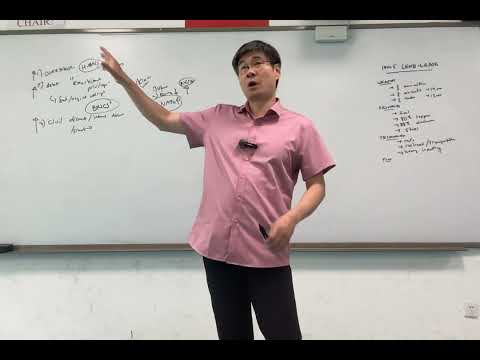
Video thumbnail
youtube.com/watch?v=B_al2wgk49Y ↗ Analyzed 2026-03-14 by claude-opus-4-6

Viewer Advisory

  • The Stalin-as-genius thesis is a fringe revisionist position (drawing on Suvorov's 'Icebreaker' thesis without attribution) that is rejected by mainstream WWII historians for good reason — the evidence of Stalin's genuine miscalculations is overwhelming and well-documented.
  • The lecture attributes near-omniscient planning abilities to Putin, treating all geopolitical developments as elements of a single master plan, which is an unfalsifiable conspiratorial framework.
  • The philosophical comparison between British and Russian traditions is a caricature that no philosopher in either tradition would recognize.
  • The lecture presents contested claims as established facts (US bombing Nord Stream, Putin orchestrating Hamas attack) without evidence.
  • Russia's own failures and weaknesses — the botched Kyiv offensive, massive casualties, Prigozhin mutiny, brain drain, demographic decline — are entirely absent.
  • The 'nuclear umbrella' prediction has been clearly falsified by subsequent events.
  • The speaker's self-acknowledged inability to present this argument in Western academic settings should prompt critical evaluation rather than being accepted as evidence of Western intellectual limitation.
Central Thesis

Putin possesses a uniquely Russian 'strategic imagination' — rooted in intuition, mysticism, and the ability to embody multiple personalities — that enables him to systematically exploit the structural weaknesses of the American Empire across multiple fronts, just as Stalin manipulated Hitler and the Western powers to transform the Soviet Union from a vulnerable agricultural state into a global superpower.

  • Empires die when three conditions converge: overextension due to hubris, unsustainable debt, and internal civil discord — and America is experiencing all three simultaneously.
  • The Ukraine war has been a 'tremendous success' for Putin because it has drained NATO resources, exposed US military limitations, failed to destroy Russia's economy, and divided NATO internally.
  • Putin will deliberately drag out the Ukraine war without expanding it, because Ukraine serves as a 'black hole' that increases American debt and creates NATO discord.
  • Putin needs America to fight another war in Iran to further overextend the empire, and will provide Russia's nuclear umbrella to embolden Iran.
  • North Korea will become more belligerent to force America to divert resources to East Asia.
  • BRICS expansion will undermine confidence in the US dollar, threatening America's 'exorbitant privilege.'
  • Putin needs China to remain neutral rather than ally with the US, because US-China rapprochement would force Russia onto the defensive.
  • Stalin deliberately engineered the outcome of Operation Barbarossa — allowing Germany to attack first was the optimal game theory scenario, as it united the Soviet people, brought American Lend-Lease aid, and prevented a global anti-Soviet coalition.
  • Russian strategic thinking is superior to Western (British-derived) thinking because it embraces breadth, mysticism, and intuition rather than narrowness, empiricism, and logic.
  • The Western intellectual tradition — narrow, empiricist, logical — creates bureaucratic thinkers incapable of producing visionary leaders like Putin or Stalin.
Qualitative Scorecard 1.4 / 5.0 average across 7 axes
Historical Accuracy ▸ Expand
The lecture contains numerous historical inaccuracies and distortions. The claim that Hitler's ambition was only to 'reunite Germany' directly contradicts Mein Kampf and extensive documentation of Lebensraum ideology. The assertion that '45 million Soviet troops' were at the border is wildly inaccurate — the Red Army's total strength was roughly 5 million, with about 2.9 million deployed in western military districts. The characterization of America being 'on the brink of revolution' in the 1930s significantly overstates Communist Party influence. The claim that Stalin deliberately engineered Barbarossa as an optimal outcome is a fringe revisionist theory presented as self-evident game theory. The Lend-Lease figures, while broadly in the right range, are presented without nuance. The characterization of David Hume and British empiricism is philosophically inaccurate — Hume did not argue that 'you can never understand mathematics.' The Nord Stream pipeline bombing is attributed to the US as established fact, despite ongoing investigations pointing toward Ukrainian operatives.
2
Argumentative Rigor ▸ Expand
The argument suffers from fundamental logical flaws. The core claim — that Stalin deliberately let Hitler invade as an optimal strategy — commits the outcome bias fallacy: because the Soviet Union eventually won, Stalin must have planned it. The game theory analysis is not actual game theory but informal post-hoc rationalization that assigns intentions based on outcomes. The argument that letting 26 million people die was 'the best possible outcome' ignores that Stalin could have prepared proper defenses AND received Lend-Lease aid once Germany attacked (as actually happened — the aid came because Germany attacked, not because the Soviets initially lost). The lecture repeatedly uses cui bono reasoning (who benefits = who planned it) to assert Putin orchestrated the Hamas attack without evidence. The philosophical comparison between British and Russian thinking is a crude caricature that would not survive basic scrutiny in any philosophy department.
1
Framing & Selectivity ▸ Expand
The lecture is extraordinarily selective. Every piece of evidence is cherry-picked to support the thesis that Putin is a strategic genius executing a master plan. Russia's failures are completely omitted: the botched initial invasion of Ukraine, massive casualties, the Kharkiv counteroffensive, the Prigozhin mutiny, brain drain, demographic collapse. The US is presented only through its weaknesses while Russia is presented only through strengths. The Lend-Lease statistics are presented to show American aid built the Soviet Union, but the enormous human cost and near-destruction of the USSR are reframed as strategic benefits. The comparison of British vs. Russian philosophy selectively uses caricatures of each tradition to arrive at a predetermined conclusion about Russian superiority.
1
Perspective Diversity ▸ Expand
The lecture presents a single perspective throughout with no engagement with alternative viewpoints. There is no consideration that: Putin may have made strategic errors; the Ukraine invasion may not have gone according to plan; Russia faces serious structural weaknesses; the US has institutional resilience; Stalin's WWII performance involved genuine catastrophic blunders alongside later recovery; Western analytical traditions have produced successful strategic thinking; or that Russian 'mystical intuition' has also led to spectacular failures (e.g., the Soviet collapse, the Russo-Japanese War). The classroom format uses leading questions that guide students to predetermined conclusions.
1
Normative Loading ▸ Expand
The lecture is heavily normatively loaded. Putin is characterized as a 'genius' executing a brilliant plan. Stalin is elevated from historical consensus (deeply flawed leader who made catastrophic mistakes) to strategic mastermind. America is consistently described through derogatory language: 'fat, lazy, and corrupt,' 'paper tiger,' addicted to 'printing money.' The characterization of Western thinking as 'bureaucratization of the imagination' carries strong normative judgment. The description of Israel 'committing genocide in Gaza' is stated as undisputed fact. The framing of Russian mysticism as superior to Western empiricism is a value judgment presented as analytical insight.
2
Determinism vs. Contingency ▸ Expand
The lecture is rigidly deterministic throughout. Putin's plan is presented as inexorable — all five elements (Ukraine, Iran, North Korea, BRICS, China) will unfold as predicted. Stalin's WWII outcome is presented as the inevitable result of genius planning rather than contingent events, luck, German errors, and allied contributions. The decline of the American Empire is presented as structurally determined with no room for adaptation, reform, diplomatic solutions, or contingent events that might alter the trajectory. The philosophical section makes this explicit: Russian leaders can 'predict the future' through intuition, making outcomes deterministic rather than contingent.
1
Civilizational Framing ▸ Expand
The lecture employs a stark civilizational hierarchy. Russian civilization is characterized as possessing unique strategic genius rooted in mysticism, breadth of vision, and intuition — enabling great leaders like Stalin and Putin. Western (specifically British-derived) civilization is characterized as narrow, bureaucratic, and imagination-killing. This is essentialist framing that reduces complex intellectual traditions to caricatures and assigns inherent strategic superiority to Russian culture.
2
Overall Average
1.4
Civilizational Treatment
CHINA

China is portrayed as extremely vulnerable — economy collapsed, demographics collapsed, completely dependent on imports, surrounded by US military bases. China is presented as having 'no choice' but to befriend Russia, essentially as a junior partner forced into alignment by American hostility. The speaker acknowledges China has legitimate reasons to prefer US friendship but argues American aggression makes this impossible.

UNITED STATES

The United States is consistently portrayed as a declining empire driven by hubris, addiction to money-printing, and the military-industrial complex's need for enemies. America is described as 'fat, lazy, and corrupt,' a 'paper tiger,' with young people turning against its founding myths. American strategic thinking is bureaucratic and imagination-less. The US is presented as incapable of producing great strategic leaders.

RUSSIA

Russia receives overwhelmingly positive treatment. Putin is a strategic genius with a master plan to destroy the American Empire. Stalin was a misunderstood genius who deliberately engineered the optimal WWII outcome. Russian culture produces visionary leaders because it embraces mysticism and intuition. Russia's military success in Ukraine is emphasized while failures are ignored. The Russian philosophical tradition is presented as more 'natural' and 'human' than the Western tradition.

THE WEST

The West is characterized through its British intellectual roots as narrow, empiricist, and logically constrained — ultimately producing bureaucratic thinking that kills imagination. 'No great man could ever arise from Western society.' The West is presented as intellectually inferior for strategic thinking, suitable only for building bureaucracies. NATO is portrayed as divided and failing.

Named Sources

data
Lend-Lease statistics (WWII)
Detailed statistics on US aid to the Soviet Union are presented — one-third of ammunition, one-half of aircraft (14,000 planes), one-half of tanks (13,000), 80% of copper, 55% of aluminum — to argue that America effectively industrialized the Soviet Union. The $200 billion figure is cited.
? Unverified
primary_document
Molotov-Ribbentrop Pact
Presented as evidence of Stalin's strategic genius — the pact enabled Hitler to invade Poland, which triggered war with Britain and France, while the Soviet Union avoided being targeted. The speaker argues this was a deliberate manipulation rather than a naive alliance.
✓ Accurate
other
Operation Barbarossa
The conventional interpretation (Stalin's blunder due to trusting Hitler) is presented and then systematically rejected in favor of a game-theory analysis arguing the German invasion was actually the optimal outcome for the Soviet Union.
✗ Inaccurate
other
Rudolf Hess flight to Scotland
Referenced as evidence that Hitler tried to negotiate peace with Churchill seven times and was rebuffed. Hess's flight to Scotland is described as a peace mission.
? Unverified
book
Leo Tolstoy — War and Peace, Anna Karenina
Cited as examples of the breadth of Russian literary and intellectual tradition, contrasted with the narrower focus of British literature (Jane Austen, Thomas Hardy).
✓ Accurate
scholar
David Hume
Cited as the exemplar of British empiricist philosophy, which the speaker argues limits imagination and creates bureaucratic thinking.
✗ Inaccurate
primary_document
Bretton Woods agreement (1945)
Referenced as the origin of the US dollar as global reserve currency and 'exorbitant privilege.' Described as giving America the right to 'manufacture gold from nothing.'
? Unverified

Vague Appeals to Authority

  • 'This is what you're taught in history class when you go to the United States' — dismisses mainstream WWII scholarship without engaging specific historians or arguments.
  • 'People say that Israel now controls America' — unsourced claim presented as common knowledge.
  • 'There's this amazing statistic that one quarter of young Americans now believe that Osama bin Laden was a good guy' — no source cited for this polling data.
  • 'What historians will tell you is that Stalin trusted Hitler' — unnamed historians used as foil for the speaker's contrarian argument.
  • 'America was on the brink of revolution — the Communists could have at any time took over America' — significant overstatement of 1930s Communist strength in the US, presented without source.
  • 'Anyone will tell you that Operation Barbarossa was a tremendous success for Germany and a strategic failure for the Soviet Union' — unnamed consensus used as strawman.

Notable Omissions

  • Viktor Suvorov's 'Icebreaker' thesis — the argument that Stalin planned a preemptive invasion of Germany is a well-known (and highly contested) revisionist claim that the speaker appears to draw on without attribution or engagement with its critics.
  • No engagement with mainstream WWII historians (David Glantz, Richard Overy, John Erickson) who have extensively analyzed Stalin's failures and decision-making in 1941.
  • No mention of the 26-27 million Soviet deaths as a catastrophic cost rather than a strategic benefit — the human cost is mentioned but framed positively as creating 'national unity.'
  • No discussion of Putin's actual strategic miscalculations in Ukraine — the failed rapid assault on Kyiv in Feb 2022, massive personnel losses, economic costs of the war economy.
  • No engagement with international relations scholarship on Russian grand strategy (e.g., Bobo Lo, Angela Stent, Fiona Hill).
  • No consideration that US-China tensions arise from genuine security concerns (IP theft, military modernization, South China Sea) rather than purely manufactured pretexts.
  • No discussion of Russia's own economic vulnerabilities — demographic decline, brain drain, technology sanctions, dependence on energy exports.
  • The claim that Germany's sole ambition was to 'reunite Greater Germany' ignores Hitler's explicit Lebensraum ideology and plans for eastern colonization as laid out in Mein Kampf.
Historical revisionism as contrarian insight 00:42:37
Frame at 00:42:37
The speaker presents the mainstream view of Stalin's WWII blunders ('this is what you're taught in history class'), then dramatically declares 'this analysis is completely wrong' and substitutes his own game theory analysis proving Stalin was a genius.
Positions the speaker as possessing deeper analytical insight than the entire field of WWII historiography. The audience is invited to feel they are receiving forbidden knowledge that mainstream scholarship cannot grasp.
Outcome bias presented as game theory 00:42:52
Frame at 00:42:52
The four-scenario analysis of Operation Barbarossa retroactively identifies the actual outcome (German invasion reaching Moscow) as the 'best possible outcome' for the Soviet Union, reasoning backward from the end result.
By labeling post-hoc rationalization as 'game theory,' the speaker gives an informal argument the appearance of rigorous analytical methodology. The audience is not equipped to distinguish this from actual game-theoretic analysis.
Dramatic narrative construction 00:54:38
Frame at 00:54:38
The speaker constructs an imagined scene of Hitler and Stalin 'having drinks on the porch, staring at the mountains and the moon,' where Stalin says 'I trust you' — three words that allegedly convinced Hitler to invade.
Transforms a complex geopolitical analysis into a compelling personal drama, making the thesis memorable and emotionally resonant while bypassing the need for evidence.
Socratic leading questions 00:15:51
Frame at 00:15:51
Throughout the lecture, the speaker asks questions ('Why would he drag it on?', 'Who does everyone hate?', 'What are the three words?') and then provides the predetermined answer, creating an illusion of collaborative discovery.
Makes students feel they are arriving at conclusions independently when they are being led to the speaker's predetermined answers. Dissent is structurally discouraged.
Cui bono as proof of causation 00:14:35
Frame at 00:14:35
'You can make the argument that either Putin knew about the Hamas attack or even encouraged the attack because the main winner of this Hamas attack is obviously Vladimir Putin.'
Conflates benefit with intent and causation. The logical structure 'X benefited, therefore X caused it' is a well-known fallacy, but the conversational framing ('you can make the argument') makes it seem reasonable.
False equivalence via philosophical caricature 00:57:16
Frame at 00:57:16
British philosophy is reduced to 'narrow, empiricist, logical' while Russian philosophy is characterized as 'broad, mystical, intuitive,' then this is used to explain strategic outcomes.
Creates a binary civilizational framework where complex intellectual traditions are reduced to three-word caricatures, making the conclusion (Russian strategic superiority) appear to follow from deep philosophical differences rather than cherry-picked characterizations.
Preemptive dismissal of criticism 01:01:10
Frame at 01:01:10
'I could never give this talk in America or Britain because they all think I'm crazy... What's your evidence for this? Wait, are you refuting decades of scholarship about World War II?'
Frames potential criticism as evidence of the West's narrow thinking rather than legitimate scholarly objection. Any critic is pre-categorized as a prisoner of British empiricist tradition, making the argument unfalsifiable.
Assertion as established fact 00:11:07
Frame at 00:11:07
'The United States blew up the Nord Stream pipeline' — stated as uncontested fact without any qualification, evidence, or acknowledgment of ongoing investigations.
By stating contested claims as established facts within a rapid-fire lecture format, the speaker bypasses the audience's critical evaluation. Each assertion builds on the previous ones, creating a cascading structure where questioning any single claim feels like rejecting the entire analysis.
Great Man theory as analytical framework 00:51:46
Frame at 00:51:46
The entire lecture attributes geopolitical outcomes to the personal genius of individual leaders (Stalin, Putin) rather than structural forces, institutions, or contingent events. Putin 'senses the mood of the world' and can 'prophesy and predict.'
Makes the analysis compelling as narrative while obscuring the complex institutional, economic, and social forces that actually shape geopolitical outcomes. The audience is invited to admire individual brilliance rather than analyze systemic dynamics.
Motte-and-bailey argumentation 00:07:08
Frame at 00:07:08
The lecture oscillates between defensible claims ('America is overextended') and extreme claims ('Putin has a master plan to destroy the American Empire' / 'Stalin deliberately let Hitler invade'). When challenged, the speaker could retreat to the defensible version.
Allows the speaker to present radical claims while maintaining plausible deniability. The reasonable observations about American overextension provide cover for the unfounded claims about Putin's and Stalin's genius.
Frame at 00:00:01 ⏵ 00:00:01
Today we will discuss Putin's plan to destroy the American Empire.
The opening line immediately frames the lecture's core assumption — that Putin has a deliberate, coherent plan to destroy the American Empire — as a given rather than a hypothesis to be tested.
Frame at 00:03:23 ⏵ 00:03:23
When money just falls off the sky, you're just used to borrowing money. So all America does right now is print money and not make money.
Encapsulates the speaker's reductionist view of the US economy — a complex $25+ trillion economy reduced to 'printing money.' Reveals the normative framework that characterizes America as fundamentally parasitic.
Frame at 00:06:08 ⏵ 00:06:08
One quarter of young Americans now believe that Osama bin Laden was a good guy.
An unsourced statistic deployed to support the claim that American national myths are collapsing. Whether accurate or not, it reveals the speaker's approach to evidence — dramatic claims stated without attribution.
Frame at 00:14:35 ⏵ 00:14:35
You can make the argument that either Putin knew about the Hamas attack or even encouraged the attack, because the main winner of this Hamas attack is obviously Vladimir Putin.
A textbook example of cui bono fallacy — equating benefit with causation. The hedging language ('you can make the argument') provides deniability while the confident conclusion ('obviously') pushes students toward acceptance.
Frame at 00:42:40 ⏵ 00:42:40
This analysis is completely wrong. We're going to use game theory to understand why this is wrong.
The speaker dismisses the entire field of WWII scholarship on Stalin's strategic failures with a single sentence, then substitutes 'game theory' (actually informal post-hoc rationalization) as the corrective. Reveals extraordinary confidence in contrarian analysis over established scholarship.
Frame at 00:51:14 ⏵ 00:51:14
Stalin is a genius. He turned a losing war into a winning war.
The culmination of the revisionist WWII argument — the leader responsible for catastrophic failures that cost 26 million Soviet lives is rebranded as a genius. This reframing is essential to the lecture's parallel argument about Putin's genius.
Frame at 00:56:47 ⏵ 00:56:47
The problem isn't Russia, the problem is us, the West.
Explicitly locates the analytical problem in Western thinking rather than Russian actions. This inversion — the West's inability to understand Russia is the real issue, not Russia's behavior — is the philosophical foundation of the lecture.
Frame at 01:01:10 ⏵ 01:01:10
I could never give this talk in America or Britain because they all think I'm crazy.
A revealing moment of self-awareness that simultaneously immunizes the argument from criticism. Western rejection of the thesis is pre-framed as evidence of Western intellectual narrowness rather than legitimate scholarly objection.
Frame at 01:00:54 ⏵ 01:00:54
No great man could ever arise from Western society.
Perhaps the lecture's most sweeping civilizational claim — an entire intellectual tradition spanning centuries is dismissed as incapable of producing visionary leadership. Reveals the depth of the speaker's anti-Western civilizational framing.
Frame at 00:52:04 ⏵ 00:52:04
Putin knows that the American Empire is about to die and so he feels emboldened to act.
Attributes prophetic knowledge to Putin — he doesn't merely calculate, he 'knows' the future. This elevates Putin from strategic actor to quasi-mystical figure, consistent with the lecture's valorization of Russian 'mysticism' over Western 'empiricism.'
prediction Putin will drag out the Ukraine war without expanding it — he will not seek peace or negotiate but will maintain the status quo.
00:15:35 · Falsifiable
partially confirmed
The war has indeed continued without direct expansion to NATO countries. However, Russia has been actively advancing rather than maintaining status quo, and there have been periods of negotiation talk (Trump-brokered ceasefire discussions). The war continues as of March 2026 with 128 combat engagements on a single day (March 12, 2026).
prediction Iran will take the initiative and provoke America into a wider war, enabled by Putin's nuclear umbrella guarantee.
00:17:32 · Falsifiable
partially confirmed
Iran-linked forces did escalate — Hezbollah attacked Israel, Houthis disrupted Red Sea shipping, and Iran expanded its nuclear program. The US-Iran conflict escalated through Operation Midnight Hammer (June 2025) and the Feb 2026 campaign. However, the 'nuclear umbrella' claim is disconfirmed: Russia-Iran treaty (Jan 2025) lacks mutual defense clause, and Russia did not prevent US strikes on Iran.
prediction North Korea will become much more belligerent against South Korea and Japan, forcing America to focus more attention in East Asia.
00:18:48 · Falsifiable
partially confirmed
North Korea deployed 12,000 troops to Russia and profited from arms sales ($20B+), increasing its geopolitical assertiveness. However, North Korea has not significantly threatened South Korea or Japan in ways that forced major US resource diversion to East Asia.
prediction BRICS will continue to expand and may formally announce a new currency or trading system to counteract the US-led financial system.
00:19:43 · Falsifiable
partially confirmed
BRICS has continued to expand with new members. However, no formal new currency has been announced. De-dollarization efforts remain incremental rather than systemic.
prediction The Putin-Xi relationship will continue to blossom; Putin will visit China more often.
00:20:39 · Falsifiable
confirmed
Putin visited China in May 2024 and the Russia-China strategic partnership has deepened. Trade, energy cooperation, and diplomatic coordination have all expanded.
prediction America's most likely outcome is descent into civil war.
00:06:55 · Falsifiable
untested
Political polarization has continued but no civil war has materialized. The prediction is vague on timeline.
prediction Russia will provide Iran with nuclear umbrella protection, meaning America cannot use nuclear weapons if it invades Iran because Putin will respond with nuclear weapons.
00:17:56 · Falsifiable
disconfirmed
Russia-Iran Comprehensive Strategic Partnership Treaty (Jan 2025) notably lacks mutual defense clause. Russia did not prevent US-Israeli strikes on Iran in June 2025 or Feb 2026. Russia delivered Su-35s but did not serve as nuclear guarantor.
prediction College protests in America against Israel will expand in the fall.
00:13:40 · Falsifiable
partially confirmed
Campus protests did continue into fall 2024 but were generally smaller in scale than the spring 2024 wave, partly due to administrative crackdowns and policy changes.
prediction China is extremely vulnerable — if America declares China an enemy, China has no choice but to ally with Russia as its only friend.
00:26:20 · Falsifiable
partially confirmed
US-China trade war escalated to 145%/125% tariffs, and China has deepened ties with Russia. However, China maintains extensive global trade relationships and is not as isolated as described. China is not solely dependent on Russia.
prediction The United States blew up the Nord Stream pipeline.
00:11:07 · Falsifiable
untested
German prosecutors issued arrest warrant for Ukrainian national Volodymyr Zhuravlov (June 2024). Investigation points toward Ukrainian operatives rather than the US. Presented as established fact without evidence.
prediction Putin either knew about or encouraged the October 7th Hamas attack because he was the main winner.
00:14:35 · Falsifiable
untested
No evidence has emerged linking Russia to the planning or encouragement of the October 7 attack. Presented speculatively but with strong implication of likelihood.
Verdict

Strengths

The lecture raises legitimate observations about American imperial overextension, the costs of the Ukraine war to NATO, and the structural vulnerabilities of dollar hegemony. The identification of multiple pressure points on American power (Ukraine, Iran, North Korea, BRICS, China) reflects genuine geopolitical dynamics that serious analysts discuss. The Lend-Lease discussion, while deployed to support a dubious thesis, introduces students to an important and often underappreciated aspect of WWII history. The prediction that the Ukraine war would drag on, that Iran would escalate, and that Putin-Xi ties would deepen have all proved broadly directionally correct.

Weaknesses

The lecture's central arguments are fundamentally flawed. The Stalin-as-genius thesis commits outcome bias — reasoning backward from the Soviet Union's eventual victory to conclude that all prior events were deliberately planned. This ignores extensive evidence of Stalin's genuine strategic failures, including the purge of military leadership, the no-provocation order, and the near-destruction of the Soviet state. The claim of '45 million Soviet troops' at the border is off by an order of magnitude. Hitler's ambitions are misrepresented as merely 'reuniting Germany' when his Lebensraum ideology explicitly demanded eastern conquest. The philosophical comparison between British and Russian thinking is a crude caricature — David Hume did not argue mathematics is unknowable, and the entire British philosophical tradition cannot be reduced to three negative traits. The Great Man theory of history that underpins the lecture has been thoroughly critiqued across multiple disciplines. The nuclear umbrella prediction has been clearly disconfirmed by events. The framing of 26 million Soviet dead as a strategic benefit rather than a catastrophic cost is morally troubling.

Cross-References

BUILDS ON

  • Geo-Strategy #9: Putin's War for the Soul of Russia — directly referenced as 'last class' discussing Putin's love for Russia and belief that Western consumerism corrupted the nation.
  • Geo-Strategy #8: The Iran Trap — referenced as 'past few classes' discussing how America wants to attack Iran and Iran wants revenge; the nuclear umbrella argument is repeated.
  • Geo-Strategy #4: Saudi Arabia's Trump Card Against Iran — the Iran conflict framework builds on earlier lectures about Middle East dynamics.
  • Geo-Strategy #3: How Empire is Destroying America — the 'three ways empires die' framework appears to be an ongoing theme from earlier lectures.
  • Geo-Strategy #11: The Second American Civil War — explicitly previewed as 'next class we do the American Civil War.'
  • Previous semester's Civilization lectures — referenced as covering Greek civilization, Thucydides, and Christianity.

CONTRADICTS

  • Geo-Strategy #8: The Iran Trap — that lecture presented the US-Iran war as driven primarily by domestic lobbies (AIPAC, Wall Street, Saudi Arabia) pushing the US. This lecture reframes it as primarily part of Putin's grand strategy, with the US being manipulated by Russia rather than by domestic interest groups. The two framings are in tension.
  • The claim that 'there's no evidence' China threatens the US contradicts the broader series' emphasis on the 232:1 shipbuilding ratio and China's manufacturing dominance as existential threats to American power.
This lecture represents a significant escalation in the series' valorization of Russia and Putin. While Geo-Strategy #8 presented multiple actors with converging interests, this lecture centralizes agency in Putin as a singular strategic genius orchestrating global events. The pattern across the series shows increasing determinism and decreasing engagement with alternative explanations. The Stalin-as-genius argument provides historical foundation for the Putin-as-genius thesis, suggesting these are not independent analyses but a single narrative about Russian civilizational superiority in strategic thinking. The speaker's self-referential comment about being unable to give this talk in the West reveals awareness that his arguments exist outside mainstream scholarship, which he reframes as a feature rather than a bug.