Named Sources
data
✓ Accurate
2020 US election turnout and vote data
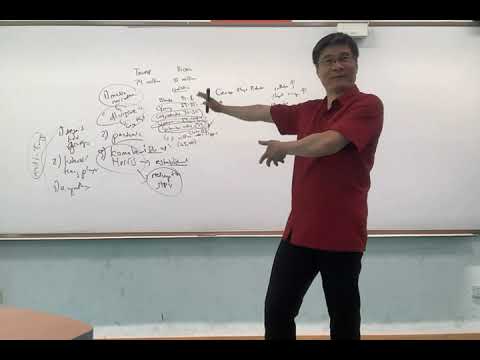
Cites 74 million votes for Trump, 81 million for Biden, two-thirds adult turnout, largest since 1900. Also cites 91% Black vote for Biden, 70% college-educated for Biden, 54% women for Biden, 54% suburban vote for Biden.
data
? Unverified
2020 Electoral College margin (65,000 votes)
Claims Biden's margin of victory was only 65,000 votes in key battleground states despite the popular vote lead, used to argue the race was closer than it appeared.
other
✓ Accurate
Kamala Harris
Biographical details (Jamaican father, Indian mother, sister, Stanford education, California AG, US senator) used to explain her suburban appeal. Her 2019 debate confrontation with Biden is described to illustrate the 'redemption narrative.'
other
? Unverified
Nikki Haley
Biographical and financial details: Indian immigrant parents, South Carolina governor, UN Ambassador under Trump 2016-2018, claimed zero bank balance in 2018 vs. $1 million and $5 million mansion later, Boeing board member at $300,000, paid by United Against a Nuclear Iran. Primary results: still getting 25-33% of Republican votes even after dropping out; raised $12 million vs Trump's $11 million in January 2019 [speaker likely means January 2024].
other
? Unverified
United Against a Nuclear Iran (UANI)
Described as an anti-Iranian organization that hired Haley and paid her significant money, with Sheldon Adelson as a main donor. Used to argue Haley is financially beholden to anti-Iran interests.
other
✓ Accurate
Sheldon Adelson
Described as a pro-Israel billionaire casino owner who was the main political patron and financial donor to Benjamin Netanyahu, and who supported United Against a Nuclear Iran. The speaker notes Adelson is deceased.
other
? Unverified
Christians United for Israel (CUFI)
Cited as a 7-million-member evangelical Christian organization that supports war in the Middle East based on dispensationalist premillennialism. Haley gave speeches there.
other
? Unverified
Boeing
Described as primarily a weapons manufacturer. Haley sat on its board for $300,000. Used to argue she has ties to the military-industrial complex.
media
? Unverified
WWE / Vince McMahon
Referenced from a previous class discussion about Trump's personality, used as analogy to argue that politics is theater and the Trump-Haley feud is performative.
Vague Appeals to Authority
- 'Everyone says that the two got along really well' -- regarding Trump and Haley during the first administration, no specific source cited.
- 'Recent polls show that actually Biden's lead with black people is not as much as it was in 2020' -- no specific polls named.
- 'The polls suggest that either the race is tied between the two or Trump has slight advantage' -- no specific polls cited.
- 'The only explanation for this is these donors knew that Haley would not become president' -- assumes donor intent without evidence.
- 'As you know right now throughout America on college campuses young people are protesting the war in Gaza' -- presented as common knowledge.
Notable Omissions
- No consideration of the possibility that Biden might withdraw from the race (which he did in July 2024), a major contingency that would invalidate much of the analysis.
- No discussion of Trump's legal troubles (multiple indictments in 2023-2024) and their potential impact on the election.
- No engagement with professional political science or polling analysis (e.g., FiveThirtyEight, Cook Political Report, Larry Sabato's Crystal Ball).
- No discussion of the role of the economy (GDP growth, unemployment rate, stock market) as predictors of election outcomes, despite mentioning inflation.
- No analysis of the Electoral College map or specific swing state dynamics beyond the general claim about 65,000 votes.
- No consideration of third-party candidates (Robert F. Kennedy Jr. was polling significantly at the time of recording).
- The characterization of Sheldon Adelson as the 'main patron' of UANI conflates multiple organizations; Adelson's primary political vehicle was the Republican Jewish Coalition and direct campaign contributions.
- No engagement with the substantial literature on VP selection effects on election outcomes, which generally finds minimal impact.


