Predictive History Audit / Systematic Content Analysis
Geo-Strategy
Episode 6 · Posted 2024-05-22

America's Imperial Hubris

This lecture argues that the US military will go along with a war against Iran due to institutional hubris bred by the 2003 Iraq War's apparent success. The speaker traces how the 'shock and awe' doctrine — built on air supremacy, technological omniscience, and special forces — replaced traditional military principles of mass forces, avoiding encirclement, and protecting supply lines. He argues shock and awe emerged as a response to the Vietnam War's political failures, allowing the US to wage imperial wars without democratic consent. The lecture contrasts two 'theories of empire': the 1991 model (limited goals, coalition warfare, UN authority) versus the post-2003 model (unilateral, unlimited objectives, hubris-driven), arguing the latter has left America overcommitted, strategically unfocused, and dangerously arrogant — conditions that will lead the military to agree to a disastrous war with Iran.

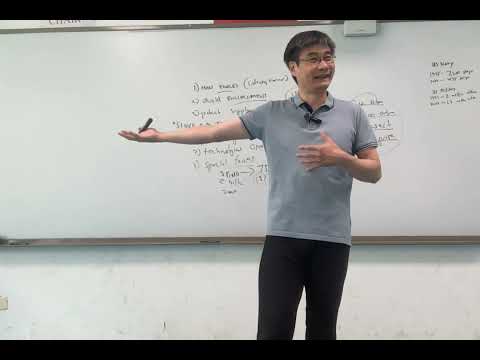
Video thumbnail
youtube.com/watch?v=JieFC4Yww4o ↗ Analyzed 2026-03-14 by claude-opus-4-6

Viewer Advisory

  • The lecture omits the most relevant military figure — General Shinseki — whose opposition to insufficient troop numbers in Iraq directly supports the speaker's thesis but also shows institutional pushback against hubris.
  • The characterization of shock and awe as purely a 'theory of empire' ignores its roots in actual military doctrine (Ullman and Wade, 1996) and the genuine attempt to reduce casualties.
  • The claim that the 2003 invasion was a unique one-off is correct but the conclusion that the military learned nothing from it ignores the extensive doctrinal evolution that followed.
  • Statistics are consistently inflated or wrong — verify any specific numbers cited.
  • The speaker's claim that the 'real intention' was to destroy Iraq rather than bring democracy assumes malicious intent without evidence, ignoring the possibility of incompetence, poor planning, or conflicting objectives.
  • The lecture presents no scholarly sources, alternative viewpoints, or engagement with the vast academic literature on American foreign policy, military doctrine, or imperial theory.
  • China's military capabilities are cited only as evidence of American decline, never examined critically on their own terms.
Central Thesis

The US military will agree to wage war against Iran because the 2003 Iraq War's success instilled a doctrine of 'shock and awe' that replaced strategic prudence with imperial hubris, leaving America overcommitted, strategically unfocused, and blind to the limits of its military power.

  • The 2003 Iraq invasion succeeded in three weeks with only ~200 US casualties because of three unique, non-replicable conditions: Iraq had no air defense, the terrain was flat desert ideal for air power, and the doctrine of shock and awe was a complete surprise.
  • Shock and awe replaced traditional military principles (mass forces, avoiding encirclement, protecting supply lines) with a new doctrine relying on air supremacy, technological omniscience, and special forces.
  • Shock and awe was developed as a response to Vietnam, where democratic opposition and media coverage forced withdrawal, leading the military to seek wars that bypass the need for democratic consent.
  • Shock and awe is fundamentally a theory of empire rather than a theory of war — it allows America to maintain global dominance through covert and rapid military action without public accountability.
  • America shifted from a restrained 1991-era theory of empire (limited goals, coalitions, UN authority, rules-based order) to an arrogant post-2003 theory (unilateral, unlimited objectives) because the new generation of leaders lacked experience with the true horrors of war.
  • The US military is now plagued by three fundamental problems: overcommitment, lack of strategic focus, and hubris — which will cause it to agree to a war in Iran despite lacking the capacity to win.
  • America has lost its manufacturing capacity, with China able to build 300 ships for every one American ship, meaning the US cannot sustain a prolonged war.
  • The real intention of shock and awe in Iraq, Libya, and Syria was not to bring democracy but to destroy countries and prevent any Middle Eastern power from challenging American supremacy.
Qualitative Scorecard 2.0 / 5.0 average across 7 axes
Historical Accuracy ▸ Expand
Core historical facts are broadly correct: the 2003 Iraq invasion did use about 130,000 troops against Pentagon recommendations for more; shock and awe doctrine was real; the Pentagon Papers did reveal government deception about Vietnam; the 1991 Gulf War was a coalition effort under UN authority. However, several specific claims are inaccurate or misleading: the speaker says 'only 200 soldiers' died in the Iraq invasion (approximately correct at ~139 during major combat), but later contradicts himself claiming 'only 20 people died' which is clearly wrong. The US Navy figure of 7,600 ships in 1945 is inflated (actual peak ~6,768). The claim of 475 ships today is also wrong (the battle force was ~290-300 around 2024). The 300:1 shipbuilding ratio is inflated from the already-dramatic ONI figure of 232:1 by tonnage. The special forces budget claim ('probably 10 times possibly 100 times more') is pure speculation presented as plausible fact. The description of cluster bombs as containing '40 bombs equipped with GPS' that individually 'find a tank' conflates several different munition types.
3
Argumentative Rigor ▸ Expand
The lecture's central argument — that the military will agree to war with Iran because of hubris from 2003 — contains a significant logical gap. The speaker correctly identifies that the 2003 success was due to unique conditions, but then argues the military ignored this lesson. In reality, the US military extensively studied the failures of the Iraq occupation (FM 3-24 counterinsurgency manual, Petraeus doctrine, etc.). The argument that shock and awe was designed as 'a theory of empire' to 'escape the shackles of democracy' imputes a conspiratorial intent to what was actually a doctrinal evolution with public debate. The billionaire father/son analogy is entertaining but logically weak — it argues that generational transfer inevitably produces incompetence, which is an assertion, not a demonstration. The claim that shock and awe's 'real intention' was to destroy countries rather than replace regimes is unfalsifiable and presented without evidence. The lecture also conflates the political decision to go to war with the military's agreement to execute it.
2
Framing & Selectivity ▸ Expand
The lecture is highly selective in its evidence. It presents the 2003 Iraq invasion only as a success that bred hubris, omitting the subsequent 8-year occupation, the Surge, and the extensive institutional learning within the US military. It presents the 1991 Gulf War as a model of restraint without noting that many critics at the time argued the US should have removed Saddam. The Vietnam discussion omits the strategic context of the Cold War and containment doctrine. The special forces discussion focuses entirely on their psychological extremity and imperial role while ignoring their actual operational achievements (counter-terrorism, hostage rescue, training allied forces). The de-Ba'athification discussion omits the complex bureaucratic and political dynamics (Paul Bremer's CPA decisions vs. military preferences) in favor of a simple 'America wanted to destroy Iraq' narrative. No countervailing perspectives — pro-intervention voices, liberal internationalists, or realist scholars — are presented.
2
Perspective Diversity ▸ Expand
The lecture presents a single analytical framework throughout: the United States as a hubristic empire whose military actions are driven by arrogance and the desire to dominate rather than any legitimate security concerns. No alternative perspectives are considered: no discussion of the genuine threat assessments that motivated the Iraq War (WMD intelligence, however flawed); no mention of liberal interventionists who supported action for humanitarian reasons; no consideration that shock and awe represented a genuine attempt to reduce casualties on all sides; no engagement with military professionals who might defend their institutional learning; no acknowledgment that the 1991 restraint was partly strategic (fear of Iranian empowerment, not just noble humility). The classroom format reinforces this through leading questions that guide students to predetermined conclusions.
1
Normative Loading ▸ Expand
The lecture is heavily normatively loaded while presenting itself as strategic analysis. America is consistently characterized through language of moral failing: 'hubris,' 'arrogance,' maintaining empire 'without the guilt,' wanting to 'blow things up for no reason,' 'pissing the entire world off.' The billionaire analogy explicitly characterizes US leadership as spoiled heirs who want to 'have fun' with inherited power. The description of special forces as people 'addicted to risk and violence' who would otherwise 'rob banks' embeds a strong moral judgment. The characterization of the Iraq War as designed to 'destroy countries' rather than any stated objective is a normative claim presented as analytical insight. The phrase 'Empire and democracy do not get along' carries heavy normative weight. The sarcastic 'What a Wonderful World' after describing the first theory of empire reveals the speaker's contempt for American claims of benevolence.
2
Determinism vs. Contingency ▸ Expand
The lecture presents American military evolution as a deterministic narrative: the 2003 success inevitably bred hubris, which inevitably led to a shift in imperial doctrine, which will inevitably lead to disaster in Iran. No contingency is acknowledged — no possibility that the military might have learned from its failures, that political constraints might prevent escalation, that diplomatic alternatives might succeed, or that technological developments might change the calculus. The generational determinism (WWII generation wise, post-2003 generation reckless) leaves no room for individual agency or institutional adaptation. The closing guarantee — 'I guarantee you that shock and awe is not going to work in Iran' — presents the outcome as predetermined.
2
Civilizational Framing ▸ Expand
The lecture frames the United States almost exclusively through the lens of imperial hubris and moral failing, while other civilizations are either absent or implicitly superior. The framing is not balanced analysis but a prosecutorial case against American power.
2
Overall Average
2.0
Civilizational Treatment
CHINA

China is mentioned only as possessing superior manufacturing capacity ('for every ship America makes China can make 300 ships'), presented as evidence of American decline. No critical examination of China's own military ambitions, territorial claims, or imperial tendencies. China functions purely as a measuring stick for American inadequacy.

UNITED STATES

The United States is characterized as a hubristic empire driven by arrogance, addiction to power, and generational incompetence. Its military is portrayed as populated by violence-addicted special forces operating outside democratic control. Its leaders are spoiled heirs who want to 'have fun' blowing things up. Its stated values (democracy, freedom, rules-based order) are treated as cynical cover for imperial domination. No positive or even neutral characterization is offered.

THE WEST

The West is not discussed as a separate concept, but Britain is mentioned through the SAS example. The broader Western alliance system is implicitly dismissed — the 1991 coalition is presented as having been abandoned in favor of unilateralism, with no discussion of why allies might have supported or opposed subsequent interventions.

Named Sources

other
2003 Iraq War / Operation Iraqi Freedom
Central case study for the lecture. Used to illustrate how shock and awe doctrine was validated by the rapid three-week victory, breeding institutional hubris. Troop numbers (130,000 US vs 370,000 Iraqi), casualty figures (~200 US deaths), and tactical details (thunder runs, cluster bombs) are cited.
? Unverified
primary_document
Pentagon Papers / Daniel Ellsberg
Referenced as revealing three key truths about the Vietnam War: the government secretly expanded the war, leadership knew it was unwinnable, and the US stayed only to maintain credibility. Used to argue that the military felt betrayed by democracy.
✓ Accurate
other
Shock and Awe doctrine (Ullman and Wade)
The doctrine is discussed extensively as the core of the lecture's argument, though its originators (Harlan Ullman and James Wade) are never named. Presented as Rumsfeld and Wolfowitz's innovation rather than a pre-existing strategic concept.
? Unverified
other
Donald Rumsfeld and Paul Wolfowitz
Presented as the civilian architects who overruled Pentagon generals to impose the shock and awe doctrine with only 130,000 troops. Described as having 'never really fought a war before.'
? Unverified
other
My Lai Massacre
Cited as the most famous atrocity of the Vietnam War, where American soldiers killed 300-400 people in a Vietnamese village, illustrating why the war became unpopular domestically.
✓ Accurate
other
SAS (British Special Air Service) and Delta Force
Used to illustrate the extreme physical and psychological profile of special forces personnel, with details about SAS selection (six marathons in five days carrying bricks on a mountain, torture resistance tests).
? Unverified
other
1991 Persian Gulf War / Operation Desert Storm
Presented as embodying the 'first theory of empire' — limited strategic goals, coalition warfare, and UN authority. Contrasted favorably with the post-2003 approach.
✓ Accurate

Vague Appeals to Authority

  • 'The Pentagon said to Rumsfeld and Wolfowitz this is insane' — no specific generals or documents cited for this internal opposition.
  • 'People don't really ask what did Saddam Hussein do wrong' — implies a consensus that shock and awe was uniquely suited to Iraq without citing any military analysts.
  • 'The actual budget is probably 10 times possibly 100 times more than the official budget' for special forces — extraordinary claim with no source.
  • 'An argument can be made that the real intention was not to bring democracy to Iraq it was just to destroy Iraq' — attributed to no specific analyst or school of thought.
  • 'For every ship that America makes China can make 300 ships' — no source cited; the ONI figure is 232:1 by tonnage capacity, not ship count, and the speaker inflated it from his own previous lectures.

Notable Omissions

  • No mention of General Eric Shinseki, who famously told Congress that 'several hundred thousand' troops would be needed for Iraq and was publicly rebuked by Wolfowitz — the most prominent example of the very military opposition the speaker describes.
  • No engagement with the actual 'Shock and Awe' concept paper by Ullman and Wade (1996), which had a more nuanced doctrine than the speaker presents.
  • No discussion of the Iraq insurgency's actual course (2003-2011), the Surge strategy under Petraeus, or how the military adapted — which complicates the claim that the military learned nothing.
  • No mention of the Weinberger Doctrine or Powell Doctrine, which were the actual institutional military responses to Vietnam and directly relevant to the lecture's thesis.
  • No consideration that many in the current US military leadership served in Iraq and Afghanistan and are deeply skeptical of Middle Eastern interventions — undermining the 'hubris' thesis.
  • No discussion of China's own military modernization as a separate strategic concern driving US force structure decisions, rather than pure imperial hubris.
  • The 2011 Libya intervention is attributed solely to US special forces with no mention of the NATO coalition, French and British leadership, or UN Security Council Resolution 1973.
Narrative simplification 00:01:03
The entire 2003 Iraq War decision is reduced to a confrontation between wise Pentagon generals and reckless civilians (Rumsfeld and Wolfowitz), omitting the complex institutional dynamics, intelligence failures, and political pressures involved.
Creates a simple hero/villain dynamic that makes the 'hubris' thesis seem self-evident while obscuring the actual complexity of wartime decision-making.
Extended analogy replacing analysis 00:47:22
The billionaire father/son analogy is used to explain why America shifted from the first theory of empire to the second — essentially arguing that inherited power inevitably produces recklessness, replacing structural analysis with a parable.
Makes a complex geopolitical transition seem as simple and inevitable as a rich kid squandering an inheritance, bypassing the need to analyze actual policy debates, institutional dynamics, and strategic calculations.
Rhetorical inflation 00:17:33
Special forces budget is claimed to be 'probably 10 times possibly 100 times more than the official budget' — a range from $137 billion to $1.37 trillion — stated without any evidence.
The casual escalation from '10 times' to '100 times' creates an impression of vast, unaccountable military spending while the enormous range signals this is pure speculation rather than informed analysis.
Characterization as pathology 00:22:00
Special forces personnel are characterized as individuals 'addicted to risk and violence' who would otherwise 'rob banks,' implying the entire program attracts sociopaths.
Delegitimizes special operations forces by reducing them to psychological aberrations, making the audience view the expansion of these forces as inherently dangerous rather than a strategic choice.
False dilemma via reframing 00:42:06
The Iraq War's purpose is reframed as either 'bring democracy' (which clearly failed) or 'destroy countries' (the speaker's thesis), with no middle ground such as regime change, regional deterrence, or counterproliferation.
By presenting only two possible interpretations and discrediting one, the audience is steered toward accepting the more conspiratorial reading as the only rational conclusion.
Sarcastic dismissal 00:46:24
'What a Wonderful World' — the speaker's response to describing the 1991 theory of empire based on humility, restraint, and rules-based order.
Pre-emptively dismisses the possibility that the 1991 approach reflected genuine American values or strategic wisdom, priming the audience to view all American foreign policy claims as cynical.
Socratic leading questions 00:49:20
The speaker asks students what the 'first thing Jack will do' after inheriting the empire, then provides the answer himself: 'fire everyone.' The students are led to the predetermined conclusion that inherited power always produces recklessness.
Creates an illusion of student-driven discovery while actually directing the class toward a predetermined conclusion about American imperial behavior.
Statistical cherry-picking 00:52:34
US Navy ship count is compared from 1945 peak (claimed 7,600) to today (claimed 475), without noting that individual modern ships are vastly more capable, or that the 1945 fleet included thousands of small landing craft and patrol boats.
Creates an impression of dramatic military decline by comparing raw numbers across 80 years without adjusting for capability, technology, or mission requirements.
Casual conspiracy framing 00:42:08
'The real intention was not to bring democracy to Iraq it was just to destroy Iraq to maintain American Supremacy as well as to teach others a lesson' — presented as a reasonable 'argument' rather than a conspiracy theory.
Normalizes a conspiratorial interpretation of US foreign policy by presenting it as one of several analytical perspectives, rather than acknowledging it requires extraordinary evidence.
Appeal to visceral imagery 00:55:17
Detailed description of Vietnam War horrors — soldiers losing arms, crying, 2 million innocent civilians killed — contrasted with 2003 war footage that 'looks like a video game.'
Creates an emotional framework where opposition to war is identified with moral sensitivity and support for modern military doctrine is identified with detachment from human suffering.
⏵ 00:36:01
Empire and democracy do not get along. If we want to win a war our greatest enemy is not the enemy but Democracy in America.
Encapsulates the lecture's core thesis about the tension between American imperial ambitions and democratic governance. The speaker presents this as the military's own conclusion after Vietnam, implicitly endorsing the view that democracy is an obstacle to American power projection.
China's one-party system eliminates this supposed tension entirely — the CCP can pursue military buildups, territorial claims in the South China Sea, and suppression of domestic dissent without democratic 'interference.' If empire-without-democracy is presented as dangerous when America does it covertly, it is far more concerning when China does it openly and by design.
⏵ 00:51:14
What is the point of having an Empire if you cannot blow things up for no reason?
Reveals the speaker's reductive characterization of American foreign policy motivations — reducing complex strategic calculations to childish destructiveness. This is presented semi-seriously as an explanation for the shift from the first to second theory of empire.
⏵ 00:23:49
Shock and awe is really a theory of Empire as opposed to a theory of War... it allows America to be an Empire without the guilt of being an Empire.
The speaker's key analytical reframing — transforming a military doctrine into an imperial strategy. This interpretive move shapes the entire lecture's argument but is presented as self-evident rather than as one possible reading among many.
China's military modernization — including the world's largest navy, militarized artificial islands, and anti-access/area-denial capabilities — could equally be described as a 'theory of empire' that allows territorial expansion without traditional conquest. China's approach of building military installations on disputed reefs and using coast guard harassment achieves imperial goals 'without the guilt' in a far more literal sense.
⏵ 00:22:00
Special forces are individuals who are addicted to risk and violence. And guys, in America there's 73,000 of them running around the world trying to protect the American Empire.
Characterizes the entire US special operations community as pathological thrill-seekers, dehumanizing tens of thousands of soldiers while reinforcing the 'empire' framing. The casual 'running around the world' minimizes the actual missions and contexts of these operations.
⏵ 00:35:15
The Pentagon felt betrayed by democracy. The politicians were more concerned about winning elections than about winning wars.
The speaker presents the military's resentment of democratic accountability sympathetically, framing democratic processes (elections, public opinion, media scrutiny) as obstacles to military effectiveness rather than essential checks on power.
In China, the PLA's complete subordination to the CCP means there is no tension between military and democratic oversight — because there is no democratic oversight. The speaker implicitly treats the absence of democratic constraints as advantageous for empire maintenance, yet never examines what this means for China's own military adventurism.
⏵ 00:36:40
America no longer has to make any sacrifices. You no longer need the consent of the people to fight the war. You don't even need Congressional approval. You can now escape the shackles of democracy.
Presents the bypassing of democratic processes in military action as a deliberate design feature of shock and awe, not an incidental effect. The word 'shackles' reveals the speaker's view that democracy is presented by the military as a constraint to be escaped.
This criticism of covert military action without democratic consent mirrors China's own opacity about military operations — from the construction of artificial islands to cyber operations to the deployment of maritime militia. China never requires 'consent of the people' for any military action, yet this is not treated as problematic in the speaker's framework.
⏵ 00:53:23
For every ship that America makes China can make 300 ships.
An inflated version of the ONI's 232:1 tonnage capacity figure (which the speaker cited more accurately in a later lecture). The casual inflation from 232 to 300 illustrates how statistics become more dramatic with each retelling in this lecture series.
⏵ 00:55:47
Unfortunately America has headed towards disaster because the people in charge have no experience. They don't know what war is.
The lecture's concluding verdict — American decline is driven by generational incompetence. This deterministic framing leaves no room for institutional learning, professional military education, or the extensive combat experience gained in Iraq and Afghanistan by current military leadership.
China's PLA has not fought a major war since the 1979 Sino-Vietnamese War — over 45 years ago. By the speaker's own logic about experiential knowledge of war, Chinese military leadership should be even more susceptible to hubris and miscalculation than American leaders who at least have recent combat experience.
⏵ 00:42:08
The real intention was not to bring democracy to Iraq it was just to destroy Iraq to maintain American Supremacy as well as to teach others a lesson — don't mess with us, we'll come and destroy you.
Presents the most conspiratorial interpretation of US foreign policy as the obvious conclusion, reducing complex motivations (counter-terrorism, WMD concerns, regional stability, democratic idealism) to pure destructive imperialism.
⏵ 00:55:04
If you actually look at videos from 2003 the war actually looks like a video game... you don't actually see the people dying.
Connects the sanitization of modern warfare through media presentation to the moral detachment that enables imperial hubris. A genuinely insightful observation about how technology mediates the experience of war for both soldiers and the public.
prediction The US military will agree to go along with a war against Iran despite its strategic irrationality.
00:00:57 · Falsifiable
confirmed
The US launched Operation Midnight Hammer (June 2025) and a full-scale air campaign with Israel (Feb 2026). The military did execute strikes against Iran.
prediction Shock and awe will not work in Iran because Iran is mountainous, not desert terrain.
00:38:43 · Falsifiable
partially confirmed
The US used air/missile strikes (a form of shock and awe) rather than ground invasion. Iran struck back across 9 countries and blockaded the Strait of Hormuz, demonstrating the limitations of air power alone. However, the strikes did set back Iran's nuclear program ~2 years, so the doctrine was not entirely ineffective.
prediction If America fights a major war, it will have serious problems due to overcommitment and lack of manufacturing capacity.
00:53:04 · Falsifiable
partially confirmed
The Iran campaign triggered Strait of Hormuz blockade, Brent past $100/bbl, and Iran retaliated with 550+ ballistic missiles and 1000+ drones in June 2025. The US has not been able to decisively end the conflict.
claim America is headed towards disaster because the people in charge have no experience with real war.
00:55:47 · Not falsifiable
unfalsifiable
Verdict

Strengths

The lecture contains several genuinely insightful observations: the analysis of why the 2003 Iraq invasion's success was non-replicable (no air defense, desert terrain, surprise) demonstrates real strategic thinking; the connection between Vietnam-era political trauma and the development of low-visibility military doctrines reflects actual institutional dynamics; the tension between empire and democracy is a legitimate theme in political theory (explored by scholars from Thucydides to Chalmers Johnson); and the observation that modern warfare's sanitized media presentation distances the public from its consequences is well-taken. The lecture's pedagogical structure — building from historical case study to doctrinal analysis to structural critique — is effective for a classroom setting.

Weaknesses

The lecture suffers from significant analytical shortcomings. Most critically, it omits General Shinseki's testimony to Congress — the single most prominent example of military opposition to insufficient troop levels in Iraq — which would have strengthened the speaker's own argument but also complicated it by showing the military was not uniformly hubristic. The characterization of special forces as violence-addicted sociopaths is reductive and demeaning. The 'billionaire heir' analogy substitutes parable for analysis of actual geopolitical dynamics. Statistical claims are frequently wrong or inflated (Navy ship counts, casualty figures, shipbuilding ratios). The claim that shock and awe's 'real intention' was to destroy countries is a conspiracy theory presented as analysis. The lecture ignores extensive military institutional learning from Iraq and Afghanistan (counterinsurgency doctrine, lessons learned programs). The 1991 Gulf War is idealized as a model of restraint when it was actually driven by many of the same interests (oil, regional power, credibility) the speaker attributes to later wars. No alternative perspectives or scholarly sources are engaged.

Cross-References

BUILDS ON

  • Geo-Strategy #5 (referenced as 'last week') — discussed the possibility of Trump becoming president and the likelihood of war with Iran.
  • Earlier Geo-Strategy lectures on the Middle East, implied by the speaker's references to prior discussions of Iraq, Iran, and regional dynamics.
This lecture functions as the middle chapter of a multi-part argument: Geo-Strategy #5 established the political drivers for war with Iran (Trump, lobbies, interest groups), this episode (#6) explains why the US military will go along despite strategic irrationality, and the next class (referenced multiple times) will analyze why shock and awe will specifically fail in Iran's mountainous terrain. The lecture continues the series' pattern of building toward an overarching thesis of inevitable American imperial decline. The shipbuilding ratio claim inflates from 232:1 (cited in Geo-Strategy #8) to 300:1 here, suggesting the speaker's statistics drift toward more dramatic figures over time — or the earlier lecture used the more accurate number after fact-checking. The special forces discussion and empire-vs-democracy theme set up the 'Iran Trap' argument in Geo-Strategy #8.