Predictive History Audit / Systematic Content Analysis
Geo-Strategy
Episode 9 · Posted 2024-05-31

Putin's War for the Soul of Russia

This lecture argues that Putin's call for Total War is not primarily about conquering Ukraine or defending against NATO, but about using war as a mechanism to rejuvenate Russian civilization. The speaker traces an intellectual history from Hegel's dialectic through Fukuyama's 'End of History' to argue that Western liberal democracy, rooted in consumerism, represents the 'perfection of slavery' -- a system that keeps people docile by making them willing participants in their own subjugation. Putin, the speaker argues, sees Russia's social pathologies (corruption, alcoholism, demographic decline) as symptoms of Western consumerism corrupting the Russian soul, and has introduced 'Putinism' -- continuous small-scale war as a mechanism to transform Russians from passive consumers into disciplined warriors. The lecture predicts this warrior ideology will become the dominant global paradigm for the next 50 years, replacing liberal democracy, though it acknowledges Putin's succession problem may ultimately destroy Russia.

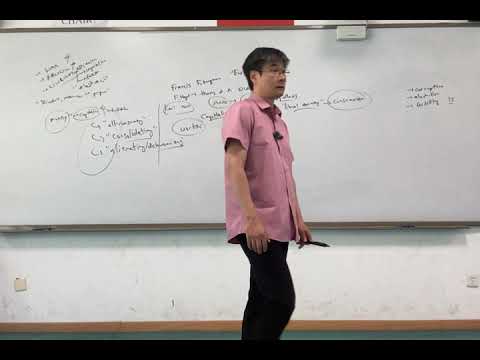
Video thumbnail
youtube.com/watch?v=AEPSUC-UQ5k ↗ Analyzed 2026-03-14 by claude-opus-4-6

Viewer Advisory

  • Presents Putin's war propaganda (defending civilization, saving the Russian soul) as a sophisticated philosophical position rather than examining it critically as authoritarian self-justification.
  • Uses the framework of Hegelian dialectic to lend intellectual weight to what is essentially a sympathetic restatement of Kremlin talking points about Western civilizational corruption.
  • Romanticizes war while omitting its devastating human costs -- the 'gym workout' metaphor sanitizes mass killing.
  • Employs civilizational essentialism (warrior vs. non-warrior cultures) that most historians and social scientists reject as stereotypical and analytically useless.
  • Significantly misrepresents Fukuyama's actual argument to serve the lecture's anti-liberal-democracy thesis.
  • The speaker tells students they have been 'brainwashed' by consumerism while presenting his own ideological framework as liberation -- a classic technique of counter-hegemonic indoctrination.
  • The praise of Putin as a 'strategic genius' with irreplaceable 'genius, authority, and ruthlessness' reveals an analytical perspective that admires authoritarian effectiveness, which should inform how viewers evaluate the lecture's other claims.
Central Thesis

Putin views the Ukraine war not as territorial conquest but as a civilizational project to save the Russian soul from Western consumerism by transforming Russians from passive consumers into disciplined warriors through the mechanism of continuous small-scale war.

  • Russia suffers from three interconnected social pathologies -- corruption, alcoholism (1 in 6 males), and below-replacement fertility (1.5) -- that threaten its existence as a nation.
  • The Western explanation (lack of democracy) is rejected in favor of Putin's explanation: Western consumerism has corrupted the Russian soul.
  • Fukuyama's 'End of History' thesis, built on Hegel's dialectic, argues liberal democracy/consumerism is the final stage of ideological evolution because it is the 'perfection of slavery' -- people voluntarily submit without recognizing their subjugation.
  • The 1980s 'Revolt of the Elite' (Reagan/Thatcher) shifted Western societies from worker-centered to consumer-centered organizing principles, destroying working-class solidarity and political consciousness.
  • Putin's answer to consumerism is the concept of the 'warrior' -- an individual who finds structure, meaning, and purpose through collective action and self-sacrifice rather than individual consumption.
  • War serves as a 'gym workout' for society -- it creates unity, reduces corruption and alcoholism, increases employment and fertility by giving citizens structure, meaning, and purpose.
  • Russia is a 'warrior culture' that is energized rather than exhausted by war, unlike China which is not a warrior culture.
  • 'Putinism' -- defined as continuous small-scale war to discipline and unify society -- will become the dominant global ideology for the next 50 years, replacing liberal democracy.
  • Putin's fatal weakness is the succession problem: warrior cultures require a king, and when Putin dies, Russia will likely descend into civil war among competing generals.
Qualitative Scorecard 2.1 / 5.0 average across 7 axes
Historical Accuracy ▸ Expand
Several factual claims are approximately correct: Russia's fertility rate (~1.5), high alcoholism rates, below-replacement demographics, CEO pay ratio changes from the 1970s to present, and the broad outlines of Fukuyama's thesis and Marx's critique of capitalism. However, significant errors include: the claim that Russia's population has been declining 'since the year 2000' (it actually recovered somewhat between 2009-2019 before declining again); the claim the US produces only 2,000 artillery shells per month (actual production was 24,000-30,000/month by late 2024); the assertion that one in three Russian deaths is alcohol-related (WHO estimates are closer to one in five for males); the comparison of South Korea and Texas GDP to Russia depends heavily on whether one uses nominal or PPP measures; and the attribution of thesis-antithesis-synthesis to Hegel rather than Fichte. The intellectual history connecting Hegel to Fukuyama is recognizable but significantly simplified.
3
Argumentative Rigor ▸ Expand
The lecture constructs an elaborate but logically fragile argument. The central claim -- that Putin views war as a mechanism for civilizational renewal -- is presented as though it were self-evidently correct, but rests on several unsubstantiated leaps: that consumerism is the primary cause of Russia's social problems (rather than institutional factors, resource curse, post-Soviet chaos); that war creates lasting social improvement rather than temporary rally-round-the-flag effects; that entire civilizations can be categorized as 'warrior' or 'non-warrior' cultures; and that Putin's actual strategic thinking matches this philosophical framework. The speaker acknowledges contradictions (the pyramid scheme problem, the succession crisis) but treats them as minor caveats rather than fundamental challenges to the thesis. The thought experiments (million dollars, flesh-eating monkeys) are pedagogically engaging but logically misleading -- they dramatically oversimplify complex social phenomena.
2
Framing & Selectivity ▸ Expand
The lecture is highly selective in its evidence. Positive effects of Russia's war economy (employment, production) are emphasized while devastating costs (casualties, brain drain, inflation, international isolation) are entirely omitted. The claim that Russians are 'happier' and 'more unified' since the war ignores poll methodology problems in authoritarian states, suppression of dissent, and the enormous personal costs of mobilization. Western liberal democracy is framed exclusively through the lens of consumerism-as-slavery, ignoring its genuine achievements in human rights, rule of law, and quality of life. The speaker presents Putin's self-serving justification for war (defending civilization) at face value without critical examination. China is selectively treated as 'not a warrior culture' by ignoring its extensive military history.
2
Perspective Diversity ▸ Expand
The lecture presents Putin's worldview with substantial sympathy and only superficially engages with alternatives. The 'Western explanation' (lack of democracy) is mentioned in one sentence and immediately dismissed. No Russian opposition voices, anti-war perspectives, or independent Russian analysts are cited. No Western strategic analysts or Russia scholars are engaged with. The student questions introduce some challenge (is warrior culture just another form of slavery? won't people get exhausted?) but the speaker has ready answers that steer back to the predetermined thesis. The only meaningful counterpoint the speaker himself raises -- that Putinism has a fatal succession problem -- is presented as a future concern rather than a present analytical challenge.
2
Normative Loading ▸ Expand
The lecture is heavily normatively loaded despite its analytical pretensions. Consumerism is called the 'perfection of slavery' -- an intensely evaluative characterization. Students are told 'you've been brainwashed' into consumerist thinking. Liberal democracy is reduced to a mechanism of elite control. Putin is called 'a strategic genius' and 'a great leader' with 'genius and authority and ruthlessness.' War is romantically described as giving 'structure, meaning, and purpose' while its destructive reality is sanitized through the flesh-eating monkeys analogy. The speaker tells students 'I think they are' happier when asked if Russians are happier since the war, embedding his normative judgment as factual assessment.
2
Determinism vs. Contingency ▸ Expand
The lecture presents a rigidly deterministic view of history driven by Hegelian dialectic: capitalism necessarily produces communism, which necessarily produces liberal democracy, which necessarily produces consumerism-slavery, which necessarily provokes warrior-culture rebellion. This leaves no room for contingency, individual agency (beyond 'great leaders' like Putin), institutional variation, or alternative pathways. The prediction that Putinism will dominate for 50 years treats an uncertain future as foreordained. The claim that 'warrior culture beats consumer culture easily' is presented as a structural law rather than a contingent observation. Even the speaker's acknowledgment that Russia may fall apart after Putin is framed deterministically -- warrior cultures without kings necessarily collapse.
2
Civilizational Framing ▸ Expand
The lecture relies heavily on civilizational essentialism -- the idea that entire civilizations have inherent, fixed characteristics. Russians are a 'warrior culture' that 'enjoys War' and is 'good at fighting Wars.' Chinese are 'not a warrior culture' and 'would probably lose most wars.' Germans and Japanese are warrior cultures. These sweeping characterizations ignore internal diversity, historical change, and the complex relationship between cultural narratives and actual behavior. The framework treats civilizational identity as biological-like essence rather than contingent historical construction.
2
Overall Average
2.1
Civilizational Treatment
CHINA

China is characterized as 'not a warrior culture' that would 'probably lose most wars.' The speaker attributes this to geographic security (surrounded by natural defenses) and historical hegemonic status. This characterization ignores China's extensive military history, current massive military buildup, and aggressive territorial posture. The speaker says 'I hate to say but China would probably lose most wars' -- framing this as reluctant honesty while actually reinforcing a flattering narrative of Chinese civilization as peaceful and non-aggressive. This conveniently aligns with Chinese state narratives about being a 'peaceful rising power.'

UNITED STATES

The United States is characterized primarily through the lens of elite manipulation -- the Reagan Revolution as a 'Revolt of the Elite' that destroyed worker-centered society and imposed consumer slavery. America is presented as the source of the consumerist ideology that corrupts other civilizations, including Russia. US military capacity is diminished (2,000 shells/month vs Russia's 150,000). The US is predicted to retreat into isolationism after a failed Iran war.

RUSSIA

Russia receives the most sympathetic and complex treatment. Putin is called 'a strategic genius' and 'a great leader' whose war serves the noble purpose of saving Russian civilization from Western corruption. Russia's social problems are attributed not to domestic governance failures but to Western ideological contamination. The Russian people's resistance to consumerism is framed as a civilizational virtue -- they 'intrinsically rebel against slavery.' Even Russia's predicted post-Putin collapse is framed tragically (the loss of a great leader) rather than as a structural failure of authoritarianism.

THE WEST

Western civilization is characterized as fundamentally deceptive -- it 'preaches the gospel of liberal democracy, of freedom, of human rights, of consumerism, and these are all lies, they're hypocrisies.' The West is cast as the source of spiritual corruption that is destroying other civilizations. NATO expansion is presented uncritically as aggressive encroachment rather than as a response to Russian behavior. The 1980s neoliberal turn is framed as a deliberate elite conspiracy to re-enslave the working class.

Named Sources

scholar
Francis Fukuyama / 'The End of History?'
Fukuyama's 1989 essay is used as the intellectual framework for understanding Western liberal democracy as the supposed final stage of ideological evolution. The speaker reinterprets Fukuyama's thesis not as celebrating liberal democracy but as identifying consumerism as the 'perfection of slavery.' This is a significant and creative misreading -- Fukuyama was genuinely celebratory about liberal democracy, not covertly critiquing it.
✗ Inaccurate
scholar
Georg Wilhelm Friedrich Hegel / Dialectic
Hegel's dialectic (thesis-antithesis-synthesis) is presented as the framework for understanding ideological evolution: capitalism → communism → liberal democracy. The speaker uses the terminology 'symphysis' rather than the standard 'synthesis.' The thesis-antithesis-synthesis triad is commonly attributed to Hegel but was actually formulated by Johann Fichte; Hegel himself did not use this terminology.
? Unverified
scholar
Karl Marx / Communist Manifesto
Marx's critique of capitalism (alienation, dehumanization, wealth consolidation) is presented as the foundation for understanding why worker-centered societies emerged post-WWII. The speaker argues Marx was 'right' because post-war Western societies adopted socialist principles. Marx's theory of political consciousness, solidarity, and revolution is accurately summarized in simplified form.
✓ Accurate
other
Vladimir Putin (speeches and statements)
Putin's recent speech calling for Total War preparation is the lecture's framing device. A specific Putin statement about soldiers dying honorably vs. drinking themselves to death is cited. The speaker constructs an elaborate philosophical framework that he attributes to Putin's worldview, though it is unclear how much is Putin's actual thinking vs. the speaker's interpretive construction.
? Unverified
other
Emmanuel Macron
Cited as having publicly stated he is considering sending French troops to Ukraine, used to support the claim that NATO is escalating.
✓ Accurate

Vague Appeals to Authority

  • 'There are many analysts who believe that Putin is preparing Russia for Total War' -- no specific analysts named.
  • 'Some people believe it's because Russia is not doing so well in Ukraine' -- unattributed Western analysis.
  • 'The Western explanation is that this is happening because Russia is not Democratic' -- attributed to no specific scholars or institutions.
  • 'The British themselves are thinking of conscription' -- no specific policy proposals or politicians cited.
  • 'American politicians have said that they're considering a new law that would give citizenship to illegal immigrants who join the Army' -- no specific legislation or politicians named.
  • 'There are Warrior cultures out there around the world' -- presented as anthropological fact without any scholarly citation.
  • 'People still celebrate that war' -- referring to Russian commemoration of WWII, presented as evidence of warrior culture without nuance.

Notable Omissions

  • No engagement with actual political science scholarship on authoritarian mobilization or war economies (e.g., Mancur Olson, Charles Tilly's 'war makes states').
  • No discussion of the extensive literature on Russia's democratic backsliding, civil society suppression, or media control under Putin.
  • No mention of the human costs of the Ukraine war for Russia: estimates of 200,000+ casualties, 200,000 soldiers AWOL, 2 million men avoiding the draft, 1 million conscripted.
  • No engagement with Fukuyama's actual argument or his subsequent revisions (Fukuyama himself later acknowledged the thesis was premature).
  • No discussion of the extensive scholarship on why 'warrior culture' theories of national character are considered pseudoscientific by most social scientists and historians.
  • No mention of Russia's brain drain -- hundreds of thousands of educated Russians fleeing since 2022.
  • No discussion of whether Russia's war economy is sustainable or is creating long-term structural damage through labor shortages, inflation, and resource misallocation.
  • No acknowledgment of China's extensive military history (Warring States period, Mongol wars, Korean War, Sino-Vietnamese War) when claiming China is 'not a warrior culture.'
  • No engagement with alternative explanations for Russia's social problems: post-Soviet institutional collapse, resource curse economics, or the specific effects of shock therapy privatization in the 1990s.
Extended metaphor 00:02:57
War is compared to a gym workout: 'you're fat and you're like okay how do I get fit how do I get trim right you go to the gym and you work out and for Putin that's what war is war is a workout for your society.'
Sanitizes the violence and destruction of war by recasting it as healthy exercise. The metaphor makes war sound like a positive, voluntary, self-improvement activity rather than a catastrophe that kills, maims, and traumatizes millions.
Thought experiment as persuasion 00:28:36
The 'million dollars' thought experiment where students are given hypothetical money, compete through social media, go into debt, and end up hating each other -- used to demonstrate that consumerism inevitably destroys social bonds.
Creates an experiential sense of consumerism's destructiveness by having students emotionally engage with a simplified scenario. The thought experiment pre-loads the conclusion by designing the scenario to produce only one outcome, excluding the possibility that people might use wealth for community building, philanthropy, or collective projects.
Provocative reframing 00:34:05
Consumerism is called 'the perfection of slavery' because 'you don't know you're a slave and you like this, you choose this, then you will never rebel.'
Transforms a contested political-economic critique into an apparently self-evident truth through dramatic language. By calling consumerism 'slavery,' the speaker makes any defense of liberal democracy sound like defending slavery, shutting down nuanced discussion.
Thought experiment as persuasion (second instance) 00:37:56
The 'flesh-eating monkeys on an island' scenario where students must cooperate to survive, used to demonstrate that war creates unity, purpose, and happiness.
Makes war's unifying effects seem natural and desirable by abstracting away real casualties, trauma, and moral complexity. The absurdist framing (flesh-eating monkeys) keeps the scenario playful and engaging while smuggling in the deeply serious claim that war is good for society.
Attributed argument 00:36:01
The speaker constructs an elaborate philosophical framework (consumerism as slavery, warrior as antidote) and attributes it to Putin's thinking, prefacing it with 'that is Putin's argument' and 'Putin is going to introduce a new concept called the warrior.'
Allows the speaker to present his own analytical framework as reportage of Putin's worldview. This creates plausible deniability -- the speaker can claim to be merely explaining rather than endorsing -- while the sympathetic framing makes clear he finds the argument compelling.
Civilizational essentialism 00:51:52
'China is not a warrior culture. It's very hard to get Chinese to fight wars... I hate to say but China would probably lose most wars.' Contrasted with 'Russians are a warrior culture, Russians enjoy War, Russians are good at War.'
Reduces complex nations with diverse histories to single civilizational traits, making sweeping predictions about national behavior seem analytically grounded rather than stereotypical. The 'I hate to say' qualifier creates an air of reluctant objectivity.
Socratic leading questions 00:38:55
Throughout the lecture, the speaker asks questions ('What happens now?', 'How do you feel?', 'What does death do?') and steers students toward predetermined conclusions about war's benefits and consumerism's harms.
Creates the illusion of student-driven discovery while directing the class toward the speaker's conclusions. Students experience arriving at insights independently, which makes them more likely to internalize the framework.
Selective statistical comparison 00:42:08
Russia produces 150,000 ammunition shells per month vs. the US at 2,000 -- a ratio used to demonstrate Russia's superior war mobilization capacity.
The dramatically low US figure (actual production was 24,000-30,000/month) creates a shocking contrast that makes Russia's war economy appear overwhelmingly superior. The comparison reinforces the thesis that warrior cultures outperform consumer cultures in war production.
Neologism creation 00:44:56
The speaker coins 'Putinism' as a new global ideology defined as 'continuous war' to discipline and unify society, positioned as the successor to liberal democracy in the Hegelian dialectic.
By naming the concept, the speaker elevates a speculative interpretation of Putin's strategy to the level of a coherent ideology comparable to capitalism, communism, and liberal democracy. The academic packaging lends intellectual weight to what is essentially the speaker's personal theoretical construction.
Direct audience interpellation 00:33:06
'You've been brainwashed into thinking that this is the only way to behave and to think. Why are you in school? So you can get a good job. Why? To make money and so you can buy things.'
By directly telling students they have been 'brainwashed,' the speaker creates an urgency to adopt his critical framework as a form of intellectual liberation. Students who accept the critique feel enlightened; those who resist risk being positioned as still-brainwashed consumers.
⏵ 00:34:05
Consumerism is the perfection of slavery... you don't know you're a slave and you like this, you choose this, then you will never rebel.
Encapsulates the lecture's core philosophical claim -- that liberal democracy's greatest achievement is making subjugation invisible and voluntary. This reframing positions all defenses of liberal democracy as unwitting defenses of slavery.
China's social credit system, internet censorship (Great Firewall), and state-controlled media represent a far more literal and coercive form of social control than Western consumerism. Chinese citizens face tangible punishment for dissent, not merely the 'soft slavery' of consumer choice. If consumerism is 'perfection of slavery,' China's surveillance state is slavery with fewer steps.
⏵ 00:57:54
Putin right now is a strategic genius. He's the king, everyone admires him, so he unites everyone. He can direct all society into Total War.
Reveals the speaker's deeply sympathetic framing of Putin. Calling an authoritarian leader waging an aggressive war a 'strategic genius' and 'king' goes well beyond analytical description into admiration. The claim that 'everyone admires him' ignores massive internal opposition, emigration, and draft resistance.
⏵ 00:43:28
When they die on the battlefield, we honor them... but if we just let them do whatever they want, all they're going to do is drink themselves to death.
This attributed Putin quote reveals a chilling calculus: that soldiers' lives are better spent dying in war than wasted to alcoholism. The speaker presents this without moral critique, allowing the utilitarian logic to stand as reasonable analysis.
⏵ 00:51:52
China is not a warrior culture. It's very hard to get Chinese to fight wars... I hate to say but China would probably lose most wars.
Demonstrates the lecture's civilizational essentialism. The claim that an entire civilization of 1.4 billion people is inherently non-martial ignores China's extensive military history, the Korean War (where Chinese forces fought the US to a standstill), and China's current status as having the world's largest military by personnel.
The speaker's claim that China is not a warrior culture and would 'lose most wars' contradicts China's actual military history: the Warring States period, Qin unification wars, Han expansion, Tang military conquests, the Sino-Japanese War, the Korean War (where China fought the US to a standstill), and China's current massive military buildup including the world's largest navy by hull count. The characterization serves to flatter China as inherently peaceful -- a narrative the CCP itself promotes -- while ignoring both historical and contemporary military aggression.
⏵ 00:33:06
You've been brainwashed into thinking that this is the only way to behave and to think.
Directed at Chinese students in the classroom, this is a remarkable claim -- that consumerism has brainwashed them. The irony of a teacher telling students they've been brainwashed while presenting his own ideological framework as liberating truth is a classic example of counter-hegemonic rhetoric that replaces one framework with another while claiming to free the mind.
Telling Chinese students they've been 'brainwashed' by consumerism while ignoring the Chinese state's own extensive propaganda apparatus, censorship regime, and ideological education system (including mandatory 'Xi Jinping Thought' courses in universities) represents a striking blind spot. Chinese students arguably face far more systematic ideological conditioning from their own government than from Western consumerism.
⏵ 00:35:12
There are certain civilizations that rebel against slavery intrinsically. It is in their nature to rebel against slavery. And one of the civilizations is the Russian civilization.
Attributes an essential, almost biological quality to Russian civilization -- an intrinsic rebelliousness against slavery. This romanticized view of Russian national character serves to legitimize Putin's war as a natural expression of civilizational identity rather than an authoritarian's strategic calculation.
The claim that Russians 'intrinsically rebel against slavery' is difficult to square with Russia's actual history of autocracy: serfdom until 1861, Tsarist absolutism, Stalinist totalitarianism, and Putin's own suppression of press freedom, political opposition, and civil society. Russia has one of the longest continuous histories of authoritarian rule of any major civilization.
⏵ 00:44:16
For Putin, this war is not really about conquering Ukraine or defending against NATO. It's really about saving Russian civilization. It's really about saving the Russian soul.
This is the lecture's thesis statement, presented not as one possible interpretation but as the definitive explanation. By framing a war of territorial aggression as civilizational self-defense, the speaker adopts Putin's own self-justifying narrative wholesale.
⏵ 00:53:43
So the world we call -- when this happens we call this world multipolar... over the next 10-20 years we expect a multipolar world where each region has different hegemons.
Reveals the speaker's broader geopolitical framework: the decline of US hegemony and rise of regional powers, with 'Putinism' as the engine of this transformation. The prediction of multipolarity aligns with mainstream international relations analysis but the mechanism (warrior culture replacing consumer culture) is idiosyncratic.
⏵ 00:36:26
What Vladimir Putin must do is free his people, even though they may enjoy prison.
A deeply paternalistic framing that casts Putin as a liberator who must impose freedom on people too corrupted to want it. This is the logic of authoritarian 'liberation' throughout history -- the leader knows what's best for the people even when they disagree. Presented without irony or critique.
This paternalistic framing -- a leader must 'free' people who don't know they need freeing -- precisely mirrors CCP rhetoric about 'liberating' Tibet, about the necessity of the Great Firewall to protect citizens from harmful information, and about the party knowing what's best for the people. The speaker critiques Western consumerism as slavery while endorsing Putin's version of the same paternalistic logic.
⏵ 00:58:22
When you have a great leader like Putin, it's impossible to replace him. No one would have his genius and authority and ruthlessness.
The speaker praises Putin's 'genius, authority, and ruthlessness' in a tone of admiration. 'Ruthlessness' -- a quality involving willingness to cause suffering -- is presented as a positive leadership attribute. This reveals the lecture's normative orientation: effective authoritarianism is admirable even if personally destructive.
claim Putinism (continuous small-scale war as societal organizing principle) will become the dominant ideology for the next 50 years.
00:53:24 · Not falsifiable
unfalsifiable
Timeframe too long and concept too loosely defined to be meaningfully testable.
prediction Russia will not triumph in a multipolar world and will probably fall apart after Putin dies due to civil war among competing generals.
00:56:59 · Falsifiable
untested
Putin remains in power as of March 2026. Prediction is contingent on his death.
prediction The world will become multipolar over the next 10-20 years with different regional hegemons.
00:53:54 · Falsifiable
partially confirmed
Multipolarity is an ongoing trend. Germany's massive rearmament, Japan's record defense budgets, and regional power assertions support this direction, though the US remains the dominant global power.
prediction If the United States fights the war in Iran, it will have to retreat back to its borders and become isolationist.
00:54:20 · Falsifiable
untested
US-Iran conflict has occurred (June 2025, Feb 2026) but as air/missile campaigns, not ground invasion. US has not retreated to isolationism as a result.
prediction After Ukraine, Putin will need to conquer more territory for resources, making war a pyramid scheme.
00:50:20 · Falsifiable
untested
Ukraine war is ongoing as of March 2026. Russia has not expanded beyond Ukraine.
prediction Russia will eventually directly threaten Germany, France, and Britain, forcing them to transition into war cultures.
00:53:10 · Falsifiable
partially confirmed
Germany has undertaken massive rearmament (83-108B EUR budget, 650B over 5 years, 3.5% GDP target). UK/France have committed to potential peacekeeping deployments. Europe is rearming in response to perceived Russian threat, though this is defensive rearmament, not 'warrior culture' transformation.
prediction Japan and Germany can adopt Putinism as warrior cultures.
00:53:29 · Falsifiable
partially confirmed
Both Japan (9.04T yen record defense budget) and Germany (650B EUR rearmament) are significantly militarizing, though framed as defensive measures rather than adopting a 'warrior culture' ideology.
prediction Russian war economy is producing 150,000 ammunition shells per month while the US produces only 2,000.
00:42:08 · Falsifiable
partially confirmed
Russia's shell production was indeed vastly higher than the US. However, US production was approximately 24,000-30,000/month by late 2024 (ramped up from ~14,000), not 2,000. The 2,000 figure significantly understates US production capacity. The directional comparison (Russia vastly outproducing the US) is correct.
Verdict

Strengths

The lecture is pedagogically engaging -- the thought experiments (million dollars, flesh-eating monkeys) are memorable and effective at making abstract concepts tangible for students. The intellectual history from Hegel through Marx to Fukuyama, while simplified, provides students with a genuine philosophical framework for thinking about political economy. The identification of real problems in consumer society (alienation, inequality, loss of community) draws on legitimate social criticism. The acknowledgment that Putinism has a fatal succession flaw shows some analytical honesty. The discussion of how the 1980s neoliberal turn increased inequality is well-supported by economic data (CEO pay ratios). The prediction of European rearmament and a trend toward multipolarity has proven directionally correct.

Weaknesses

The lecture suffers from deep analytical problems: (1) It treats Putin's self-serving justification for aggressive war as a profound philosophical insight rather than propaganda. (2) The concept of 'warrior culture' vs. 'consumer culture' is civilizational essentialism that most social scientists would reject as pseudoscientific. (3) War's costs -- hundreds of thousands of casualties, massive brain drain, economic distortion, international isolation -- are entirely omitted in favor of romanticized benefits. (4) The Fukuyama thesis is creatively misread: Fukuyama celebrated liberal democracy, he didn't covertly critique it as slavery. (5) The US ammunition production figure (2,000/month) is significantly wrong. (6) China's extensive military history is ignored to maintain the 'non-warrior culture' characterization. (7) The claim that 'no one' agrees with Putin ignores his genuine popular support while the claim that Russians are 'happier' ignores the impossibility of free polling in wartime authoritarian states. (8) Putin is called a 'strategic genius' and 'great leader' without critical examination of his strategic failures (failed initial invasion, economic isolation, demographic catastrophe accelerated by war casualties).

Cross-References

BUILDS ON

  • Geo-Strategy #8 ('The Iran Trap') -- directly referenced when discussing how the US would pick Iran as a 'small contained conflict' and the prediction that the US will retreat to isolationism after the Iran war.
  • Earlier Geo-Strategy lectures on NATO expansion, the Israel Lobby, and US foreign policy -- referenced through 'remember that' callbacks about Ukraine's manpower crisis and NATO escalation.
  • Civilization series lectures on Hegel, Marx, and Fukuyama -- the intellectual history framework (dialectic, End of History) appears to draw on previously taught material.
  • Game Theory lectures -- the concept of rational actors pursuing strategic interests is referenced implicitly when discussing Putin's calculated use of war.

CONTRADICTS

  • Geo-Strategy #8 -- In episode 8, Putin was positioned as a rational actor who would serve as 'nuclear guarantor' preventing nuclear weapons use in a US-Iran conflict. In episode 9, Putin is repositioned as an ideological visionary pursuing civilizational transformation through war. The two framings are in tension: one presents Putin as a calculating realist, the other as a civilizational ideologue.
This lecture continues the series pattern of presenting non-Western leaders (Putin) as strategically rational while characterizing Western/US behavior as driven by hubris, manipulation, or structural forces beyond its control. The series consistently frames Western institutions (NATO, liberal democracy, consumerism) as fundamentally deceptive or destructive while treating Russian and Chinese civilizational narratives with considerably less critical scrutiny. The speaker's approach reveals an emerging pattern: each lecture introduces a new conceptual framework (game theory, historical analogy, Hegelian dialectic) to lend academic weight to what are fundamentally sympathetic interpretations of anti-Western geopolitical actors.