Predictive History Audit / Systematic Content Analysis
Great Books
Episode 9 · Posted 2026-04-08

Dante (Re-Upload with Audio Fixed)

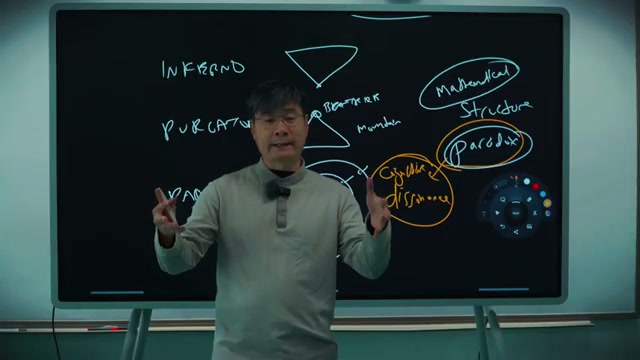
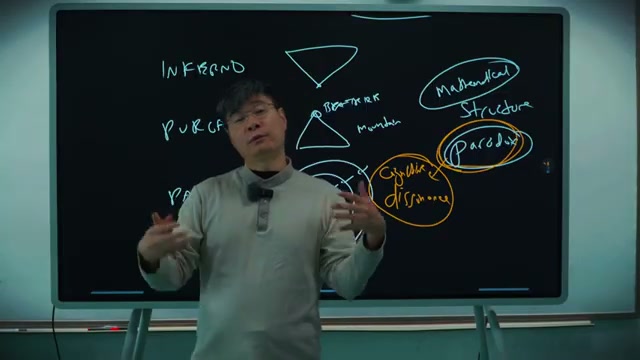
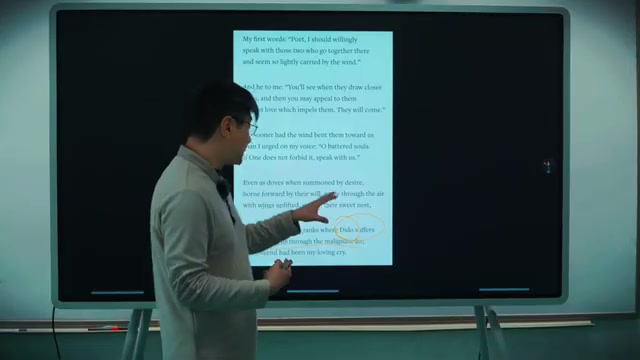
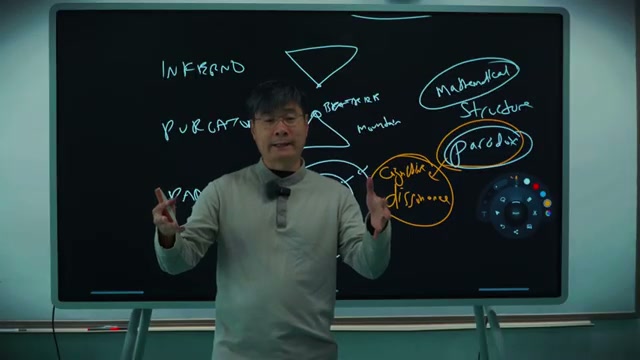
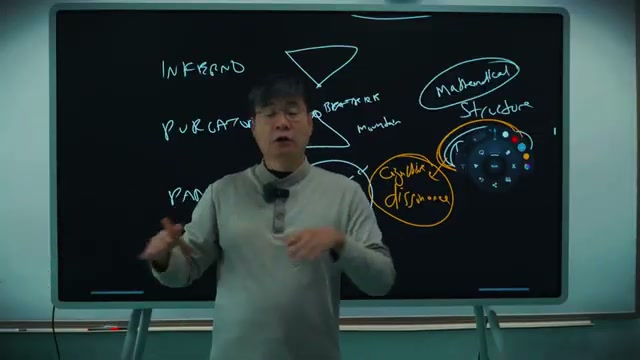
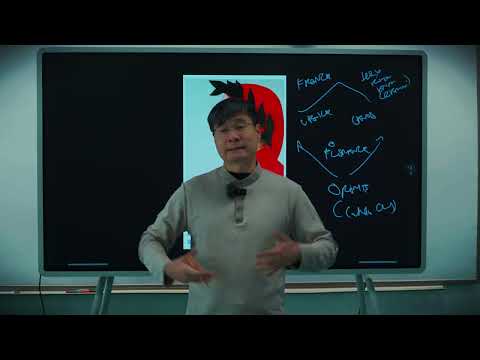
This lecture presents a literary analysis of Dante's Divine Comedy, focusing on its structure, biographical context, and the first five cantos of Inferno. The speaker argues that the Comedy is fundamentally a polemic against Virgil's Aeneid and the Catholic Church it supposedly spawned, with Virgil cast as an unreliable narrator and 'master of hell' rather than a benign guide. Key passages are read aloud by students and interpreted through this anti-Aeneid lens, emphasizing paradox, cognitive dissonance, and Dante's rebellion against institutional authority. The lecture covers Dante's biography (his Guelph faction involvement, exile from Florence, unrequited love for Beatrice), the structural symmetry of the Comedy (inverted triangle, mountain, solar system), and specific encounters in Inferno including Charon, Limbo, and the Second Circle of Lust, culminating in an analysis of Virgil's refusal to name Dido as evidence of his guilt and unreliability.

Video thumbnail
youtube.com/watch?v=4EZUrGPgAos ↗ Read time: ~9 min
Analyzed 2026-04-08 by claude-opus-4-6

Viewer Advisory

  • This lecture presents one highly unusual interpretation of the Divine Comedy as though it were the established reading -- in fact, the 'Virgil as unreliable narrator' thesis is a minority position, and the claim that the Catholic Church is 'based on the Aeneid' is not accepted by any major Dante scholar or church historian.
  • No Dante scholarship is cited; the interpretation is presented ex nihilo. Viewers interested in engaging with the scholarly tradition should consult Charles Singleton, John Freccero, Robert Hollander, or Giuseppe Mazzotta.
  • The claim that Dante was 'a great believer in democracy' is contradicted by Dante's own political treatise De Monarchia, which advocates universal monarchy.
  • The speculation about Virgil's personal life and romantic rejection has no historical basis.
  • The lecture's interpretive method -- treating authority figures as deceptive, surface narratives as false, and institutional frameworks as corrupt -- is consistent with the speaker's approach to geopolitical analysis in other series, suggesting that the literary interpretation serves a broader ideological project.
  • Despite these limitations, many of the specific textual observations about paradox and structure in the Comedy are genuinely interesting and worth considering alongside more established interpretations.
Central Thesis

The Divine Comedy is a systematic deconstruction of Virgil's Aeneid and the Catholic Church built upon it, in which Virgil serves as an unreliable narrator and 'master of hell' whose emphasis on duty, obedience, and empire created the very conditions of damnation that Dante must overcome through love and free will.

  • Homer, Dante, and Shakespeare are the three greatest poets in history because they shared a 'democratic spirit' -- writing in the vernacular to make poetry accessible to ordinary people rather than elites.
  • The Aeneid was the dominant literary work in Europe for 1,000 years before Dante and served as the ideological foundation of the Catholic Church, emphasizing duty, piety, and obedience over love.
  • The Catholic Church is 'not based on the Bible' but 'based on the Aeneid,' which led to massive corruption, wars, and the denial of people's direct access to God.
  • Dante wrote the Comedy so people could 'access God and bypass the Catholic Church' -- it is simultaneously a literary masterpiece and an act of spiritual liberation.
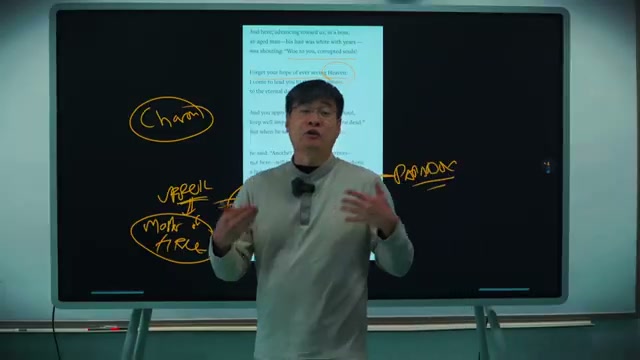
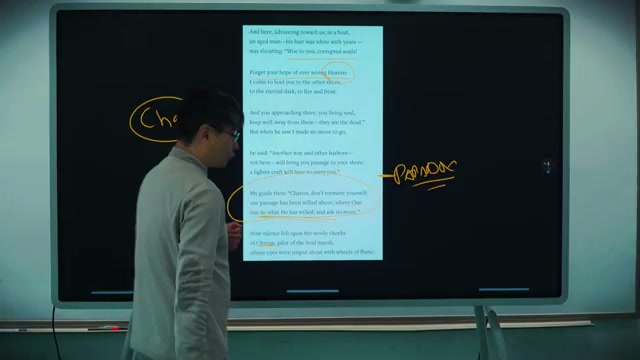
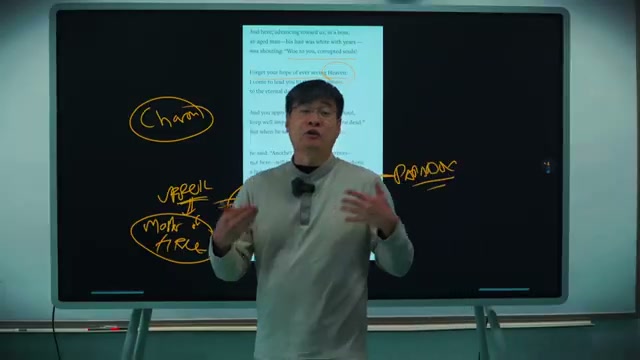
  • Virgil is an 'unreliable narrator' throughout the Comedy -- Charon obeys him not because of God's authority but because Virgil is 'the master of hell' who created the conditions for damnation through the Aeneid.
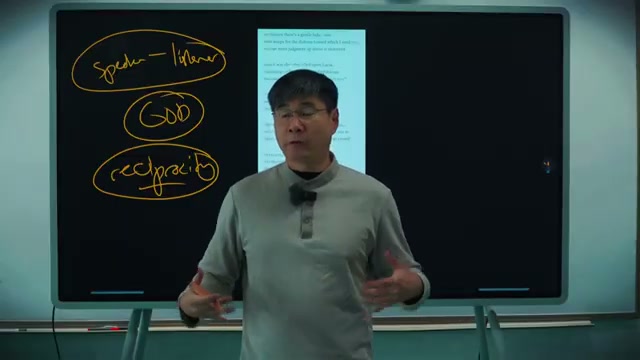
  • Free will and reciprocity are contradictions: if God is perfection and love, God would never require anything of you, making the Church's transactional model of salvation false.
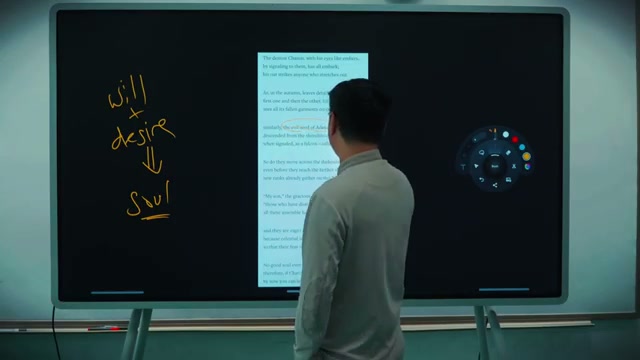
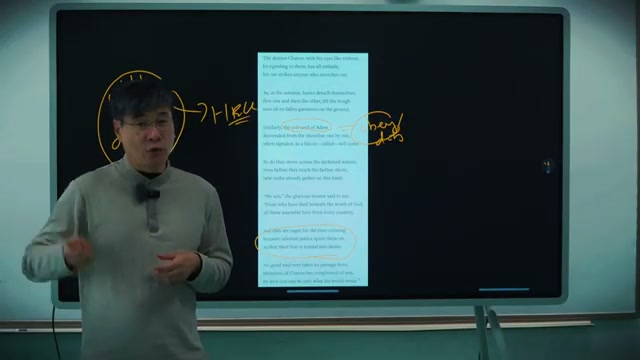
  • People are in hell not because they did bad things but because they desire to be there -- 'their fear is turned into desire' and they are content in damnation.
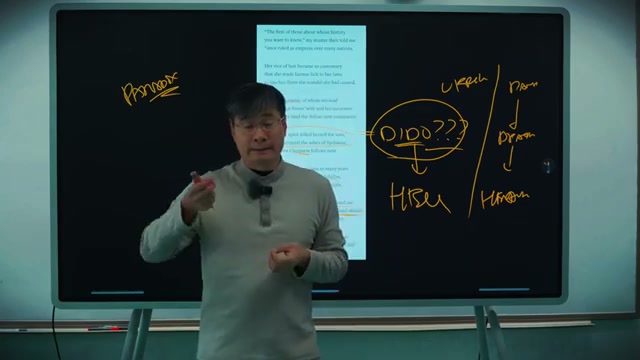
  • Virgil refuses to name Dido in the Second Circle because he feels guilty about condemning her in the Aeneid, and Dante naming her himself constitutes an act of rebellion against Virgil's authority.
  • The Aeneid 'created emotions in human beings that allow for the creation of hell itself' through its emphasis on piety, obedience, hatred, and empire.
  • 'People are evil because people obey' -- obedience without questioning is the root of moral failure.
Qualitative Scorecard 2.4 / 5.0 average across 7 axes
Historical Accuracy ▸ Expand
Basic biographical facts about Dante are mostly correct: he was born in Florence, involved in Guelph politics, exiled from Florence, fell in love with Beatrice who died young. The Guelph/Ghibelline conflict is accurately described at a high level. However, several claims are inaccurate or misleading: (1) Dante is called 'a great believer in democracy,' which is anachronistic -- he advocated universal monarchy in De Monarchia; (2) the Aeneid is called 'the foundation of the Catholic Church,' a massive overstatement that ignores Biblical texts, Church Fathers, and ecumenical councils; (3) the claim that Beatrice died 'giving birth' is presented as fact when the cause of death is uncertain; (4) the speculation that Dido was based on a real woman Virgil loved has no scholarly basis whatsoever; (5) characterizing the Aeneid as 'dominant literature' for '1,000 years' oversimplifies a complex literary landscape. The structural description of the Comedy (inverted triangle, mountain, solar system) is a reasonable simplification.
3
Argumentative Rigor ▸ Expand
The lecture presents a coherent and internally consistent interpretive framework -- Virgil as unreliable narrator, the Comedy as anti-Aeneid polemic, love vs. obedience as the central tension. The analysis of specific paradoxes (Charon obeying Virgil, Virgil refusing to name Dido, the damned desiring their punishment) is creative and thought-provoking. However, rigor is undermined by: (1) presenting one interpretive lens as the definitive reading without acknowledging alternatives; (2) making the enormous leap from 'the Aeneid influenced medieval culture' to 'the Catholic Church is based on the Aeneid'; (3) asserting that 'free will and reciprocity are contradictions' without engaging with the philosophical tradition on this question (Aquinas, Augustine); (4) the completely unfounded speculation about Virgil's personal motivation for creating Dido; (5) treating literary interpretation as though it were empirical demonstration rather than argument among competing readings.
3
Framing & Selectivity ▸ Expand
The lecture presents a single interpretive framework and selects only evidence that supports it. The traditional reading of Virgil as representing human reason -- the most widely held interpretation in Dante scholarship for centuries -- is never mentioned, let alone engaged with. Evidence of Dante's deep Catholicism (his Thomistic theology, orthodox eschatology, reverence for many Church figures placed in Paradise) is omitted. The speaker ignores De Monarchia, which would complicate the 'democracy' claim, and Convivio, which shows Dante's complex relationship with classical philosophy. The characterization of the Aeneid as purely promoting 'hatred' and 'empire' ignores its themes of loss, exile, pity, and the costs of destiny -- themes that would actually complicate the speaker's thesis. The selective reading of passages guides students toward predetermined conclusions while creating the impression of textual discovery.
2
Perspective Diversity ▸ Expand
The lecture presents exclusively the speaker's own interpretive framework with no engagement whatsoever with alternative readings. In 700 years of Dante scholarship, the reading of Virgil as 'master of hell' and the Aeneid as the foundation of the Catholic Church represents an extreme minority position, yet no other perspectives are mentioned. The traditional allegorical reading, the theological reading, modern historicist readings, feminist approaches, postcolonial interpretations -- none are referenced. No Dante scholars are cited. The classroom format reinforces this through leading questions that guide students toward the speaker's conclusions. A student hearing this lecture would come away believing there is essentially one correct way to read the Comedy.
1
Normative Loading ▸ Expand
The lecture is heavily normatively loaded while presenting itself as textual analysis. The Catholic Church is consistently characterized through language of corruption, oppression, and deception. Obedience is flatly equated with evil ('People are evil because people obey'). The Aeneid is reduced to a handbook for empire and hatred. Love and free will are unconditionally celebrated as virtues, while duty, piety, and institutional authority are dismissed as tools of oppression. Poetry is valued explicitly as 'subversive' -- infiltrating and remaking people. These are normative positions presented as insights discovered through close reading rather than as the speaker's own philosophical commitments. The framing transforms literary analysis into a moral argument against institutional authority and obedience.
2
Determinism vs. Contingency ▸ Expand
The lecture contains a genuine tension. On one hand, it strongly emphasizes free will -- people choose to be in hell, salvation is available to all who choose it, God does not coerce. This is a contingent view of moral agency. On the other hand, the broader historical claims are deterministic: the Aeneid inevitably corrupted the Catholic Church, the Church inevitably became tyrannical, Virgil is deterministically bound to hell by his nature as the Aeneid's creator. The speaker allows no contingency in the historical narrative -- there is no acknowledgment that the relationship between classical literature and medieval Christianity was complex, multidirectional, and debated. The individual soul has free will, but civilizational-literary forces apparently operate mechanistically.
3
Civilizational Framing ▸ Expand
This lecture deals primarily with medieval European literary history rather than modern geopolitics, so civilizational framing operates differently than in the Geo-Strategy series. Medieval Catholic Europe is consistently portrayed negatively: corrupt, warlike, oppressive, denying people access to God. Ancient Rome (via Virgil) is cast as the origin of these pathologies through the Aeneid's promotion of empire, obedience, and hatred. The Italian Renaissance/vernacular movement is implicitly celebrated as liberating. There is no discussion of non-European civilizations. The framing is Eurocentric by subject matter but carries an implicit anti-institutional, anti-Western-establishment valence consistent with the speaker's treatment of Western civilization across the broader lecture series.
3
Overall Average
2.4
Civilizational Treatment
THE WEST

Medieval Western civilization, specifically the Catholic Church and its Roman literary foundations, is portrayed as fundamentally corrupt and oppressive. The Aeneid is cast as having created 'hell itself' through its promotion of duty, obedience, and empire. The Catholic Church is characterized as denying people access to God, causing wars, and concentrating power corruptly. Western literary tradition before Dante is portrayed as elitist (Latin) and oppressive. The positive figures (Dante, Homer, Shakespeare) are praised specifically for resisting or subverting this establishment.

Named Sources

primary_document
Dante Alighieri, The Divine Comedy (La Commedia)
The primary text under analysis. Passages from Inferno Cantos I, II, III, IV, and V are read aloud and interpreted.
? Unverified
scholar
Allen Mandelbaum (translator)
The English translation used for all readings. The speaker explicitly chooses Mandelbaum because 'he's just the easiest to read' and notes interest is in ideas rather than language.
✓ Accurate
primary_document
Virgil, The Aeneid
Presented as the antagonist text that the Comedy deconstructs. Characterized as emphasizing 'piety, obedience, how love is a disease, the importance of hatred, empire.' The Aeneid is claimed to be the ideological foundation of the Catholic Church and the creator of 'hell itself.'
✗ Inaccurate
primary_document
Homer (The Iliad / The Odyssey)
Referenced as a prior subject in the Great Books series. Homer is grouped with Dante and Shakespeare as the three greatest poets. Homer is said to have positioned 'love first and foremost,' which Dante emulates.
? Unverified
other
Wikipedia
Explicitly cited as the source for biographical information about Dante's political context -- the Guelph/Ghibelline factions. The speaker says 'this is Wikipedia by the way' while discussing Italian city-state politics.
✓ Accurate
primary_document
The Bible
Referenced in contrast to the Aeneid. The speaker claims the Catholic Church is based on the Aeneid rather than the Bible, and references Jesus's harrowing of hell (Apostles' Creed tradition).
? Unverified
scholar
Shakespeare
Mentioned briefly as one of the three greatest poets alongside Homer and Dante, sharing a 'democratic spirit' of writing for the people.
? Unverified

Vague Appeals to Authority

  • 'The Divine Comedy is the greatest literary masterpiece in human history' -- presented as self-evident fact without citing any literary critics or scholarly consensus.
  • 'At this time in history, Virgil is the most influential poet' -- while broadly true for medieval Latin education, presented without nuance or sourcing.
  • 'For the past 1,000 years, the Aeneid was the dominant literature in Europe' -- significant overclaim presented without historical evidence.
  • 'Also, Lacommedia was written in response to the Aeneid' -- while the Comedy engages extensively with Virgil, characterizing the entire work as a 'response to the Aeneid' is one interpretive lens presented as established fact.
  • 'It is entirely possible for people who were not Christians, who were born before the time of Jesus to ascend to heaven because they choose to' -- theological claim presented as Dante's view but actually debated in Dante scholarship (see Paradiso cantos XIX-XX for the nuanced treatment).

Notable Omissions

  • No engagement with any Dante scholars -- Charles Singleton, John Freccero, Robert Hollander, Erich Auerbach, Giuseppe Mazzotta, or any other commentator from 700 years of Dante scholarship.
  • No mention of Dante's Vita Nuova, which provides the biographical and literary context for the Beatrice narrative and is essential for understanding the Comedy.
  • No discussion of Dante's De Vulgari Eloquentia, which is directly relevant to the lecture's claims about Dante's vernacular philosophy.
  • No mention of Dante's De Monarchia, which contradicts the claim that Dante was 'a great believer in democracy' -- Dante advocated universal monarchy.
  • No engagement with Thomas Aquinas and Scholastic philosophy, which profoundly shaped Dante's theological framework in the Comedy.
  • No discussion of the traditional allegorical reading where Virgil represents human reason guiding the soul as far as reason can go, before divine grace (Beatrice) takes over.
  • No mention of the extensive scholarly debate about Virgil's role in the Comedy -- whether he is a positive or negative figure, and in what ways.
  • No acknowledgment of the deeply Catholic elements of the Comedy -- its Thomistic theology, its endorsement of papal authority in spiritual matters, its orthodox eschatology.
  • No reference to Convivio, Dante's philosophical treatise that discusses his intellectual development and relationship to classical learning.
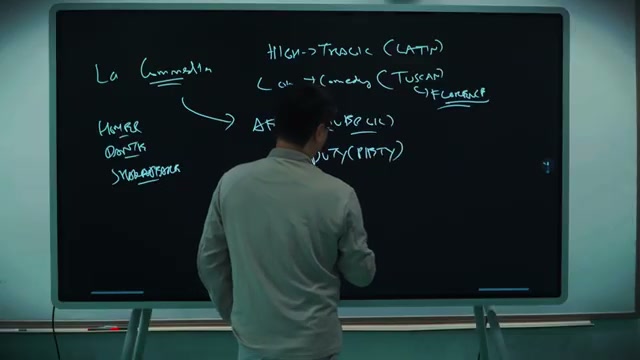
Anachronistic projection 00:01:21
Frame at 00:01:21
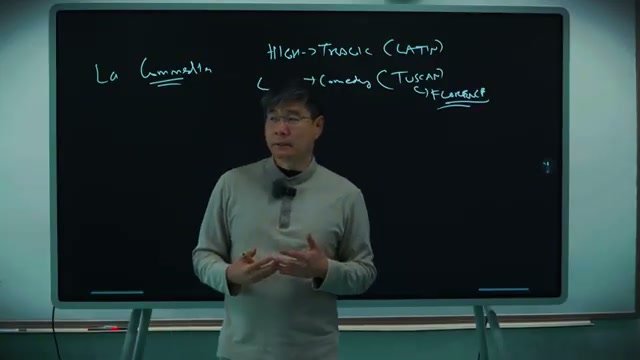
Dante is called 'a great believer in democracy' because he wrote in Tuscan rather than Latin. The speaker projects modern democratic ideology onto a 14th-century aristocrat who actually advocated for universal monarchy in De Monarchia.
Makes Dante appear as a progressive political thinker aligned with modern liberal values, creating an emotional identification between the audience and the historical figure while obscuring Dante's actual political philosophy.
Sweeping generalization presented as fact 00:28:38
Frame at 00:28:38
'The Catholic Church is not based on the Bible. It's based on the Aeneid.' This reduces 2,000 years of complex theological, institutional, and literary history to a single provocative sentence.
Creates a dramatic revelation moment that reframes the audience's understanding of Western religious history. The boldness of the claim makes it memorable and difficult to challenge in a classroom setting, while its simplicity makes the speaker's interpretive framework appear to have extraordinary explanatory power.
Metaphor as analytical framework 00:07:02
Frame at 00:07:02
'Think of poetry as almost like a virus. And what it's trying to do is it's trying to infiltrate you. It's trying to subvert you. And it's trying to remake you.'
The virus metaphor transforms poetry from an aesthetic experience into an agent with its own will and agenda. This primes the audience to accept the idea that the Aeneid and the Comedy are not just texts but active forces that reshape civilizations -- a necessary premise for the claim that the Aeneid 'created hell itself.'
Unfounded biographical speculation 00:42:39
Frame at 00:42:39
The speaker speculates that Dido was based on a real woman Virgil knew and loved who rejected him 'probably because he was ugly,' and that Virgil condemned her in the Aeneid out of romantic spite.
Transforms a literary character with well-documented mythological origins into a vehicle for the speaker's thesis about Virgil's personal guilt. By grounding the interpretation in imagined biography, it makes the 'unreliable Virgil' reading feel psychologically plausible even though it has no evidentiary basis.
Socratic leading questions 00:27:10
Frame at 00:27:10
Throughout the lecture, the speaker asks questions ('Why would Charon obey Virgil?', 'Why won't Virgil name Dido?') and then provides his own answers, creating the appearance of collaborative discovery while guiding students toward predetermined conclusions.
Students experience the speaker's interpretive conclusions as insights they arrived at through their own reasoning, making the framework more persuasive and harder to question. The classroom authority of the speaker makes alternative answers socially costly to propose.
False dichotomy 00:02:30
Frame at 00:02:30
Love and obedience/duty are presented as fundamentally opposed: the Aeneid is about duty and obedience (bad), while the Comedy is about love and free will (good). No space is allowed for a synthesis, which is actually what Dante achieves in Paradiso through Thomistic theology.
Creates a clean moral binary that makes the speaker's thesis compelling and easy to follow, but at the cost of flattening both the Aeneid (which contains deep explorations of loss and love) and the Comedy (which includes extensive treatment of duty and justice).
Appeal to temporal depth 00:07:44
Frame at 00:07:44
'The more you read the divine comedy over decades, the more it will reveal itself to you. It is a universe that comes into you and then it remakes you.'
Positions the speaker as someone who has achieved a decades-deep understanding that the audience has not yet reached, establishing epistemic authority. It also immunizes the interpretation against objection -- if you disagree, you simply haven't read it enough times yet.
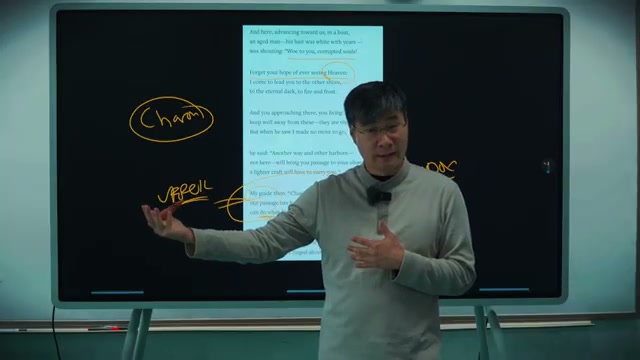
Structural revelation 00:27:47
Frame at 00:27:47
The speaker presents Charon's obedience to Virgil as a paradox that reveals Virgil is 'the master of hell' -- the one who created hell through the Aeneid. A textual detail is elevated into a civilization-scale revelation.
Transforms a minor narrative detail (a ferryman yielding to an authority figure) into apparently decisive evidence for the lecture's central thesis. The 'hidden meaning' framing makes the audience feel they are accessing secret knowledge unavailable to casual readers.
Moral absolutism through aphorism 00:30:44
Frame at 00:30:44
'People are evil because people obey.' This sweeping moral claim is delivered as a pithy truth derived from the text, equating obedience with evil categorically.
The aphoristic form makes the claim feel like a universal moral truth rather than a debatable philosophical position. It primes the audience to view all forms of institutional obedience -- religious, political, social -- as morally suspect, reinforcing the anti-authority framework.
Narrative climax construction 00:44:52
Frame at 00:44:52
The lecture builds toward the Dido passage as a dramatic climax: Virgil refuses to name her, the speaker reveals this is because of Virgil's guilt, and then Dante naming Dido becomes 'an act of rebellion.' The literary analysis is structured like a thriller.
Transforms close reading into dramatic storytelling, keeping students emotionally engaged while making the interpretive framework feel like an unfolding revelation rather than an imposed reading. The dramatic structure makes the conclusion feel inevitable.
Frame at 00:00:00 ⏵ 00:00:00
The Divine Comedy is the greatest literary masterpiece in human history.
Opening declaration that establishes the speaker's evaluative framework from the first sentence. Presented as fact rather than opinion, setting the tone for a lecture that consistently treats subjective interpretations as established truths.
Frame at 00:07:02 ⏵ 00:07:02
Think of poetry as almost like a virus. And what it's trying to do is it's trying to infiltrate you. It's trying to subvert you. And it's trying to remake you.
Reveals the speaker's view of literature as a tool of ideological transformation rather than merely an aesthetic or intellectual experience. This framework is essential for the later claim that the Aeneid 'created hell itself' by reshaping human psychology.
The speaker celebrates literature's power to 'infiltrate' and 'subvert' audiences when Dante does it, but in the Geo-Strategy and Civilization series, Western media influence on populations is treated as sinister propaganda. The distinction appears to rest on whether the speaker approves of the message, not on the mechanism itself.
Frame at 00:08:52 ⏵ 00:08:52
Good is not the absence of evil. Good is a confrontation and the defeat of evil.
A genuinely powerful philosophical insight that reflects mainstream Christian theology (Augustine's felix culpa). One of the lecture's strongest moments, offering a substantive idea the audience can engage with independently.
Frame at 00:19:44 ⏵ 00:19:44
If God is perfection, if God is love, if God is beauty, God would never require anything of you. God will always give you free will.
Articulates the speaker's theological framework: God as purely generous, rejecting all transactional religion. While this has precedent in mystical traditions, it contradicts both the Thomistic theology Dante actually drew on and the covenant theology central to both Judaism and Christianity.
Frame at 00:30:44 ⏵ 00:30:44
People are evil because people obey.
The lecture's most provocative moral claim, delivered as an aphorism derived from Dante's text. Echoes Hannah Arendt's 'banality of evil' thesis but is stated far more categorically, equating all obedience with moral failure.
This principle, if applied consistently, would constitute a devastating critique of Chinese state culture, which places high value on social harmony, deference to authority, and obedience to the Party. The speaker emphasizes this principle when critiquing the medieval Catholic Church but does not apply it to modern authoritarian states the speaker treats favorably in other lecture series.
Frame at 00:31:46 ⏵ 00:31:46
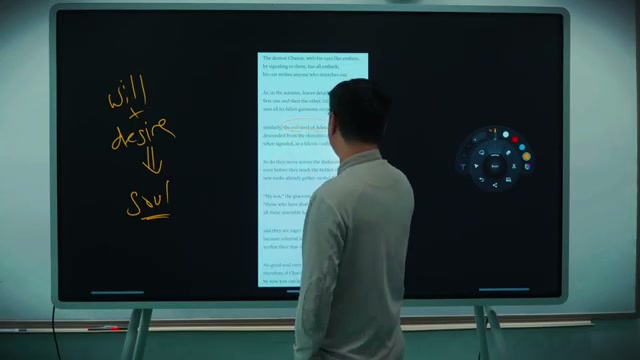
You're in hell not because you did bad things. You are in hell because you think that hell is the best place for you. You're happy in hell.
A striking interpretation of Dante's Inferno that shifts moral responsibility from action to desire. This is actually a sophisticated reading with echoes of C.S. Lewis's The Great Divorce, though the speaker does not acknowledge the interpretive tradition.
Frame at 00:28:38 ⏵ 00:28:38
The Catholic Church is not based on the Bible. It's based on the Aeneid.
The lecture's most audacious historical claim, delivered with absolute certainty. While the Aeneid did influence medieval political theology and Virgil held a privileged place in Christian literary culture, this claim inverts the actual historical relationship -- the Bible, Church Fathers, and ecumenical councils are overwhelmingly the foundation of Catholic doctrine and practice.
Frame at 00:38:41 ⏵ 00:38:41
The person that we most trust, Virgil, is the person we should probably least trust.
Encapsulates the lecture's central hermeneutic strategy: the authority figure is the deceiver. This interpretive principle recurs throughout the speaker's broader lecture series, where established narratives (Western history, US foreign policy, mainstream scholarship) are consistently treated as deceptions concealing deeper truths accessible only to the initiated.
The principle that 'the person we most trust is the person we should probably least trust' is presented as wisdom when applied to Virgil and, by extension, Western authority figures. However, the speaker consistently treats certain authority figures and narratives favorably (Putin as potential 'hero,' China's strategic rationality) without applying the same hermeneutic of suspicion.
Frame at 00:45:48 ⏵ 00:45:48
None of what we're seeing in inferno is what it seems. That's why it's hell because it's all an illusion. It's all deception.
Reveals the speaker's epistemological framework: surface appearances are systematically deceptive, and truth requires penetrating behind the facade. This is consistent with the speaker's approach across the entire Predictive History channel, where mainstream narratives are treated as concealing hidden realities.
Frame at 00:46:45 ⏵ 00:46:45
The divine comedy is a journey really into your own heart and your faith.
The lecture's closing statement, which is arguably the most balanced and universally applicable insight offered. It correctly identifies the personal-spiritual dimension of the Comedy, even if the lecture's overall interpretive framework is highly partisan.
claim The Divine Comedy is the greatest literary masterpiece in human history.
00:00:00 · Not falsifiable
unfalsifiable
Subjective aesthetic judgment. While the Comedy is widely considered among the greatest works of literature, 'greatest' is not empirically testable.
claim The Catholic Church is based on the Aeneid, not the Bible.
00:28:38 · Falsifiable
disconfirmed
While the Aeneid influenced medieval Christian thought and Virgil was widely read as a proto-Christian figure, Catholic theology, liturgy, canon law, and institutional structure are overwhelmingly derived from Biblical texts, Church Fathers (Augustine, Jerome, Ambrose), and ecumenical councils. The Aeneid influenced literary and political culture but did not serve as the Church's doctrinal foundation.
claim Dante was 'a great believer in democracy' who wrote in Tuscan to make poetry accessible to ordinary people.
00:01:21 · Falsifiable
partially confirmed
Dante did champion the vernacular in both the Comedy and De Vulgari Eloquentia, and this was a democratizing literary act. However, calling Dante 'a great believer in democracy' is anachronistic -- Dante advocated for universal monarchy in De Monarchia, not democratic governance. His choice of vernacular was about linguistic dignity and accessibility, not political democracy.
claim Homer, Dante, and Shakespeare are the three greatest poets in history because they believed in a 'democratic spirit' of poetry.
00:01:28 · Not falsifiable
unfalsifiable
Subjective ranking. The 'democratic spirit' claim is debatable: Homer composed in a highly formalized oral tradition for aristocratic audiences; Shakespeare wrote for commercial theater but also for court patronage.
claim The Aeneid was the dominant literature in Europe for 1,000 years before Dante.
00:02:09 · Falsifiable
partially confirmed
Virgil was indeed the most widely read and studied classical author throughout the medieval period, and the Aeneid was central to Latin education. However, calling it 'the dominant literature' overstates the case -- the Bible, hagiographies, liturgical texts, and other works (Ovid, Boethius, Augustine) were at least equally influential across different domains.
claim Virgil deliberately refuses to name Dido in the Second Circle because of personal guilt over condemning her in the Aeneid.
00:40:26 · Not falsifiable
unfalsifiable
Literary interpretation with no way to test authorial intent. The text does not explicitly state Virgil's motivation for the omission. Alternative readings include: Virgil's silence as literary restraint, or as Dante-the-author's device to create dramatic tension.
claim Dido was based on a real person Virgil knew and loved, who rejected him 'probably because he was ugly.'
00:42:39 · Falsifiable
disconfirmed
No ancient or modern source supports this claim. Dido originates in Phoenician-Carthaginian founding myths predating Virgil by centuries. Virgil adapted existing legends about Dido/Elissa for his narrative purposes. Ancient biographies of Virgil describe him as shy and retiring but do not link his personal life to the Dido character.
claim Beatrice died in her mid-20s giving birth.
00:13:05 · Falsifiable
partially confirmed
Beatrice Portinari died on June 8, 1290 at approximately age 24 -- the mid-20s part is correct. However, the cause of death is uncertain. Some historians suggest complications of childbirth, others suggest plague or other illness. The speaker states it as fact when it is disputed.
Verdict

Strengths

The lecture offers a genuinely creative and thought-provoking reading of the Divine Comedy that will engage students intellectually. The analysis of paradoxes -- Charon obeying Virgil, the damned desiring their punishment, Virgil's refusal to name Dido -- is the work of someone who has read the text carefully and thought deeply about it. The concept of poetry creating 'cognitive dissonance' that unfolds over decades of re-reading captures something real about how great literature works. The discussion of free will, the relationship between good and evil, and the idea that hell is a state of desire rather than mere punishment are philosophically rich ideas that students can productively wrestle with. The speaker's passion for the text is evident and contagious, and the decision to have students read passages aloud is pedagogically sound.

Weaknesses

The lecture's greatest weakness is presenting one highly idiosyncratic interpretation as the interpretation. The reading of Virgil as 'master of hell' and the Aeneid as the foundation of the Catholic Church represents an extreme minority position in Dante scholarship, yet no alternative readings are mentioned. Not a single Dante scholar is cited. The claim about the Catholic Church being 'based on the Aeneid, not the Bible' is historically indefensible. The speculation about Virgil loving a real woman who rejected him has zero evidentiary basis. The anachronistic claim that Dante was 'a great believer in democracy' ignores De Monarchia entirely. The flat equation of obedience with evil ('People are evil because people obey') is philosophically naive and ignores the complex treatment of justice, law, and authority in the Comedy itself. The lecture treats the Comedy as an anti-institutional manifesto while ignoring its deeply Catholic theological framework -- Dante places Thomas Aquinas in Paradise and condemns specific corrupt churchmen, not the institution of the Church itself.

Cross-References

BUILDS ON

  • Great Books lectures on the Aeneid (referenced explicitly at 00:02:23: 'remember when we read the Aeneid' -- likely Great Books #7 or #8 in the series).
  • Great Books lectures on Homer/The Iliad/Odyssey (Homer is discussed as a prior subject and grouped with Dante and Shakespeare).
  • Prior class discussions of God, love, and free will (referenced at 00:19:11: 'something that we discuss a lot is the idea of God').
  • The broader 'Great Books' series curriculum, which appears to follow a chronological arc from Homer through Virgil to Dante.

CONTRADICTS

  • The celebration of anti-obedience ('People are evil because people obey') sits in tension with the Geo-Strategy series, where the speaker expects audiences to trust his own interpretive authority without question and presents his analytical framework as the 'obvious' correct reading.
This lecture confirms that the Great Books series operates as the intellectual/philosophical foundation for the Geo-Strategy and Civilization series. The same hermeneutic principles applied here -- distrust authority, look behind surface narratives, recognize that the powerful create ideological frameworks to maintain control -- are the same principles the speaker uses in geopolitical analysis. The anti-Catholic Church argument (institutional authority as corrupt, obedience as evil, official narratives as deception) maps directly onto the anti-Western-establishment arguments in the Geo-Strategy lectures. The Great Books series appears to train the audience in the speaker's method of interpretation before that method is applied to current events.