Predictive History Audit / Systematic Content Analysis
Interview
Posted 2014-06-19

China's Super Schools? - Jiang Xueqin. OTL14014

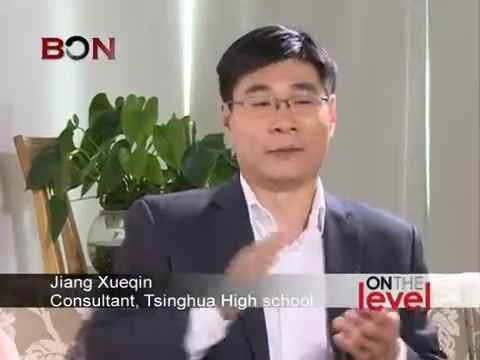
In this 2014 interview on 'On the Level' in Beijing, Jiang Xueqin — a Yale-educated Canadian-Chinese educator who consults for Tsinghua University High School — discusses the state of Chinese education in light of Shanghai's top PISA rankings in 2009 and 2012. He argues that while the rankings generated alarm in the West, the Chinese education system is deeply flawed: elitist, high-pressure, and destructive of childhood creativity. He describes how the gaokao exam system creates a pipeline that sorts children from age six, kills curiosity by grade two or three, and produces graduates ill-equipped for creative or cross-cultural work. The conversation covers why Chinese parents increasingly send children abroad, the dysfunctional dynamics of US-China student recruitment, Finland's equity-based education model as a superior alternative, and the critical importance of teaching empathy for China's future global engagement.

Video thumbnail
youtube.com/watch?v=IRnhBw6w7WE ↗ Analyzed 2026-03-24 by claude-opus-4-6

Viewer Advisory

  • This is a 2014 interview, and many dynamics have shifted — China implemented the radical 'double reduction' policy in 2021, and the US has tightened Chinese student access since 2020.
  • The speaker later created the Predictive History YouTube channel focusing on geopolitics, where his framing of China shifts dramatically from the critical insider perspective shown here to a more celebratory civilizational narrative — this interview provides essential context for evaluating that later shift.
  • The claim that Chinese has 'no word for empathy' is factually wrong; Chinese has multiple terms (同理心, 共情) and Confucian philosophy contains rich empathy-adjacent concepts.
  • The Finland comparison should be taken with significant caveats about demographic scale and governance context.
  • While Jiang's classroom observations are compelling, they are anecdotal and should not be taken as representative of China's enormous and diverse education system.
Central Thesis

China's education system, despite producing impressive test scores, is fundamentally flawed because it prioritizes exam performance over creativity, empathy, and independent thinking, which will ultimately hinder China's economic development and global engagement.

  • Shanghai's top PISA ranking is not representative of China as a whole due to Shanghai being one of China's richest and most cosmopolitan cities.
  • The gaokao exam system creates a high-pressure environment from early childhood that kills curiosity, creativity, and imagination within one to two years of entering school.
  • Chinese parents increasingly send children abroad because they recognize the domestic system is harming their children, creating a paradox where the 'world's best' system drives capital flight in education.
  • Chinese students educated in the domestic system struggle in American academic environments because they were taught not to ask questions, not to think independently, and not to stand out.
  • American universities recruit Chinese students primarily for revenue rather than genuine educational mission, creating dysfunction on both sides.
  • Finland's education model — emphasizing equity, early childhood investment, and empathy — offers a superior approach that China could learn from.
  • China has a fundamental empathy deficit, rooted in its education system, that hampers both domestic social cohesion and international relations.
  • The gaokao, while seen as fair by many Chinese because it provides upward mobility for the poor, actually perpetuates an elitist system that sorts children too early based on flawed assumptions about linear development.
Qualitative Scorecard 3.3 / 5.0 average across 7 axes
Historical Accuracy ▸ Expand
The factual claims are largely accurate: Shanghai did top PISA in 2009 and 2012; Wen Jiabao did launch education reform plans in 2010; the Yueyue incident occurred in 2011 in Foshan; Finland does emphasize equity and early childhood education; US student debt was indeed approaching $1 trillion in 2014; college dropout examples (Jobs, Zuckerberg, Gates) are accurate. Minor inaccuracies: the Yueyue victim's age is misstated (she says 'six years old' but the girl was two); some imprecision around PISA timeline (results announced in 2010 for the 2009 assessment). The speaker's professional experience lends credibility to observational claims about Chinese classrooms, though these are anecdotal.
4
Argumentative Rigor ▸ Expand
The argument is internally consistent and draws on genuine professional experience, but relies heavily on anecdote over data. Key logical leaps include: equating PISA-driven media panic with genuine structural concerns without distinguishing the two; assuming Finnish educational approaches are transferable to China without addressing scale and governance differences; using the college dropout examples (Jobs, Zuckerberg, Gates) as evidence against the value of academic performance — a classic survivorship bias. The empathy argument, while compelling, conflates a complex set of social problems with a single causal factor (education) without considering other variables (rapid urbanization, social dislocation, legal liability concerns in the Yueyue case). The argument that education reform is resisted at grassroots level is well-observed but the analysis of why is somewhat superficial.
3
Framing & Selectivity ▸ Expand
The interview presents a nuanced insider critique of Chinese education that avoids simple narratives — Jiang acknowledges the gaokao is seen as fair by many Chinese, notes that the issue is 'overblown' in Western media, and recognizes valid parental concerns about reform. However, evidence is selectively marshaled: positive aspects of the Chinese system (discipline, mathematical fluency, respect for learning) are acknowledged but quickly subordinated to the critique. Finland is presented as an idealized model without any of its own limitations mentioned. The American system is criticized from both sides (too lax for students, too profit-driven in universities) but there's no engagement with what American education does well. The framing overall serves Jiang's professional agenda as an education reformer.
3
Perspective Diversity ▸ Expand
For an interview format, the conversation covers a reasonable range of perspectives: Chinese parents (both reform-minded wealthy and gaokao-dependent poor), Chinese teachers (caught between reform mandates and practical constraints), American universities (revenue-driven recruitment), Chinese students abroad (struggling with cultural adjustment), and the Finnish model. However, student voices are absent, employer perspectives are mentioned but not explored, and no education scholars or researchers with alternative viewpoints are engaged. The interviewer asks useful counterpoints (Shanghai vs. all of China; Finland's wealth vs. China's scale) but these are dispatched rather than explored.
3
Normative Loading ▸ Expand
The language is generally measured and professional, appropriate for an interview format. Emotionally loaded passages include the vivid description of children's eyes going 'blank' and 'lifeless' by grade two or three, and the characterization of the system as producing a 'death of childhood.' These are effective rhetorical moments but carry strong normative weight. The empathy discussion frames China's social problems in moral terms ('heartbreaking') rather than analytical ones. However, the speaker frequently qualifies claims ('this is my personal opinion,' 'the issue is overblown') and avoids the polemical tone common in the later Predictive History lectures. The overall tone is that of a concerned practitioner rather than an ideologue.
3
Determinism vs. Contingency ▸ Expand
The interview largely avoids deterministic framing. Jiang presents education reform as possible but difficult, acknowledges multiple stakeholders with conflicting interests, and frames China's challenges as contingent on policy choices rather than civilizational destiny. The discussion of parental resistance to reform reflects awareness of genuine contingency — reform could go either way depending on how competing interests are managed. The one deterministic note is the implied inevitability of globalization requiring cross-cultural skills, which is presented as settled rather than contingent.
4
Civilizational Framing ▸ Expand
The interview uses civilizational categories sparingly and in an educational context rather than a geopolitical one. East Asian culture is characterized as utilitarian and test-focused ('Asians love tests'), which is a broad cultural generalization. Finland serves as the idealized Western model. China is portrayed as a society with genuine strengths (discipline, respect for education) but fundamental deficits (empathy, creativity, independent thinking). The framing is notably less ideological than the later Predictive History lectures — China is criticized from within by someone who cares about its success, not from a geopolitical competition framework.
3
Overall Average
3.3
Civilizational Treatment
CHINA

China is portrayed as a civilization with enormous potential hampered by a dysfunctional education system. The critique is delivered from a position of care and insider knowledge rather than external judgment. Key characterization: elitist, high-pressure, kills creativity, lacks empathy, but capable of reform. The speaker explicitly says China's rise should be 'smooth and peaceful' — he wants China to succeed. This stands in striking contrast to the later Predictive History lectures where China is framed as a strategic actor in geopolitical competition.

UNITED STATES

The United States is presented as dysfunctional in its own way: education system in decline, universities abandoning public mission for profit, recruiting Chinese students as cash cows without supporting them. However, American education is also implicitly valued as a system that encourages questions, independent thinking, and creativity — qualities the Chinese system suppresses. The US is a flawed model, not an adversary.

THE WEST

The West is represented primarily through Finland (idealized equity model) and Canada (praised for fairness in education). Western education is characterized as valuing creativity, independence, and questioning — positive qualities China should adopt. No geopolitical framing of 'the West' as a concept.
Named Sources

data
PISA (Programme for International Student Assessment) / OECD
Shanghai's #1 PISA rankings in 2009 and 2012 are the central data point motivating the entire discussion. Jiang correctly notes Shanghai placed first in math, science, and reading, and that Asian countries dominated the top positions.
✓ Accurate
primary_document
Wen Jiabao's 2010 education reform blueprint
Cited as evidence that the Chinese government officially recognized the need for education reform, calling for more individuality, creativity, and freedom in schools.
✓ Accurate
book
Creative China (book by Jiang Xueqin)
Referenced by the interviewer as Jiang's own work on creativity, innovation, and education in China. Not directly quoted but serves as the basis for Jiang's authority on the topic.
? Unverified
other
Finnish education system (personal visits)
Jiang draws on personal visits to Finnish schools to contrast their empathy-based, equity-focused approach with China's test-driven system. Used as the primary positive model for education reform.
? Unverified
media
Yueyue incident (toddler hit-and-run in Foshan, 2011)
Referenced (without naming the victim or city) as evidence of China's empathy deficit — a young girl run over twice while bystanders did nothing. Used to illustrate broader social consequences of an education system that doesn't teach empathy.
✓ Accurate
other
Steve Jobs, Mark Zuckerberg, Bill Gates
Cited as examples of college dropouts who achieved extraordinary success, used to argue that academic performance in school is not a reliable predictor of life success.
✓ Accurate

Vague Appeals to Authority

  • 'Everyone in China recognizes there has to be education reform' — presented as universal consensus without sourcing.
  • 'A lot of research tells us that the most formative years in a kid's life is from age one to age six' — broadly accurate but no specific studies cited.
  • 'In America everyone agrees that the American school system is dysfunctional' — overgeneralized claim presented as consensus.
  • 'We're finding that these students adapt better to America' — based on unspecified professional observation rather than systematic data.
  • 'There's a real problem in China right now in recruiting good managers and good entrepreneurs' — no data or employer surveys cited.

Notable Omissions

  • No discussion of the role of Confucian cultural traditions in shaping educational values — the cultural explanation for test-focused education is mentioned but not explored with any scholarly depth.
  • No engagement with education economists or researchers who study the gaokao system's social mobility effects (e.g., the significant body of research on whether gaokao is genuinely meritocratic vs. favoring urban elites through hukou restrictions).
  • No mention of the hukou (household registration) system's role in creating educational inequality — a far more structural barrier than the cultural factors discussed.
  • No discussion of Japan and South Korea's own struggles with similar exam-pressure cultures and their reform attempts, which would provide relevant comparative cases.
  • No engagement with critics who argue that 'creativity' and 'empathy' rhetoric in education reform can serve as cover for reducing access to rigorous academic pathways for disadvantaged students.
  • No mention of the political dimensions of education reform in China — the tension between fostering critical thinking and maintaining party control over ideology.
  • No acknowledgment that Finland's model exists in a radically different demographic, economic, and governance context (5.5 million homogeneous population vs. 1.3 billion diverse population) beyond a brief interviewer question.
Vivid anecdote as evidence 00:11:29
Frame at 00:11:29
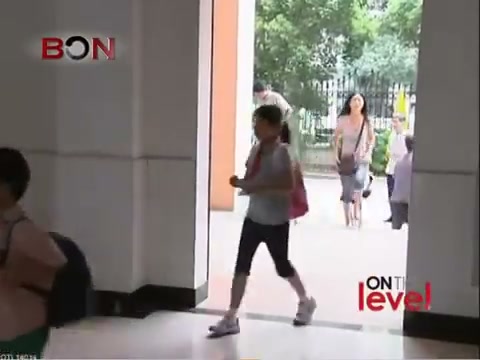
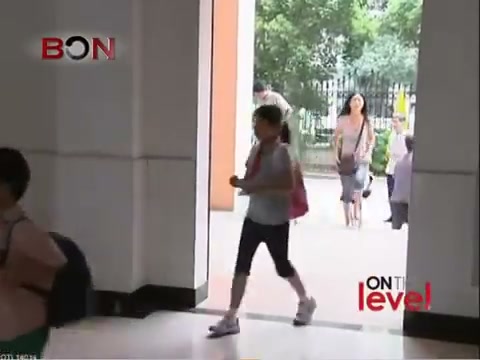
Describes visiting elementary schools and observing that grade one children have 'shiny' eyes and are 'curious,' but by grade two or three 'their eyes are kind of blank, kind of lifeless' — used as evidence that the system kills childhood curiosity.
Transforms a systemic critique into visceral, emotionally compelling imagery that bypasses analytical scrutiny. The anecdote is powerful but unfalsifiable — a single observer's subjective impression is presented as representative of the entire system.
Survivorship bias example 00:07:29
Frame at 00:07:29
Cites Steve Jobs, Mark Zuckerberg, and Bill Gates as college dropouts to argue that 'there's no real indicator of future success based on one's performance in school.'
Uses the most extreme outliers in human success to undermine the statistical relationship between education and outcomes. The argument ignores that for the vast majority of people, educational attainment strongly predicts economic outcomes.
Paradox framing 00:09:44
Frame at 00:09:44
Frames the Chinese education situation as a 'paradox' — Shanghai is #1 on PISA yet Chinese parents are fleeing the system to send children abroad.
The paradox framing makes the argument more intellectually engaging and positions the speaker as someone who can see contradictions that surface-level analysis misses. It also implicitly delegitimizes the PISA rankings as a measure of educational quality.

Heaven/Hell antithesis 00:18:43
Frame at 00:18:43
'A lot of people believe that this is a marriage made in heaven, but if you actually look at what's happening it's a marriage made in hell.'
The dramatic reversal captures attention and positions the speaker as a truth-teller who pierces comfortable illusions. The binary framing leaves no room for a 'marriage with problems but also benefits' middle ground.
Appeal to authority via personal experience 00:06:15
Frame at 00:06:15
Throughout the interview, Jiang draws on his dual positioning — Yale graduate, Canadian-raised, working inside China's elite schools — to establish credibility as someone who has seen both systems from the inside.
His bicultural biography functions as a credential that makes his critique of both systems seem balanced and authoritative, even when claims are based on personal observation rather than systematic evidence.

Emotional escalation 00:10:38
Frame at 00:10:38
Describes how children's curiosity, creativity, imagination, and empathy are 'killed within one or two years' of entering school, then says 'it was really heartbreaking for me to see when I visit these schools.'
Escalates the language from critique to moral outrage, making disagreement with the speaker's position feel like indifference to children's suffering.

Shock anecdote 00:27:47
Frame at 00:27:47
References the Yueyue incident — a toddler run over twice while bystanders did nothing — as evidence of China's empathy deficit.
Uses an extreme outlier event to characterize an entire society's emotional capacity. The incident was genuinely shocking but its use as evidence of systemic empathy failure conflates individual bystander psychology (well-documented globally as the 'bystander effect') with cultural deficiency.
False dichotomy between testing and creativity 00:23:18
Frame at 00:23:18
'It's not about real learning, it's not about creativity, it's not about giving students space to make mistakes, it's all about doing well on tests.'
Presents test performance and genuine learning as mutually exclusive, when educational research suggests they can coexist. This framing makes the Chinese system appear wholly negative while idealizing systems that de-emphasize testing.

Strategic concession 00:04:38
Frame at 00:04:38
'The issue is overblown. The Chinese school system isn't that much better than the American school system.' Followed immediately by: 'But at the same time the trend is that China is moving towards a better school system.'
The initial concession establishes reasonableness and credibility before pivoting to the preferred argument. The audience perceives the speaker as balanced even as the subsequent argument is strongly directional.
Structural blame displacement 00:21:56
Frame at 00:21:56
American universities are criticized for 'forsaking their public school mission and moving towards a corporatist mentality' in their recruitment of Chinese students.
Shifts responsibility for poor outcomes of Chinese students abroad from the students or their preparation to the institutional failures of American universities, maintaining a sympathetic framing of Chinese families while criticizing American institutional greed.
Frame at 00:10:33 ⏵ 00:10:33
Whatever curiosity, whatever creativity, whatever imagination, whatever empathy the child has before he or she enters the school system is killed within one or two years.
The most emotionally powerful claim in the interview — frames the Chinese education system as actively destructive rather than merely ineffective. The word 'killed' is deliberately chosen for maximum impact.
Frame at 00:11:29 ⏵ 00:11:29
You look at grade one kids, their eyes are shiny, they're smiling, they're curious. By grade two or three, their eyes are kind of blank, kind of lifeless.
Provides the interview's most vivid image — the light going out of children's eyes. This anecdote has likely been shared widely (the video has 216K+ views) and encapsulates the critique in a single memorable observation.
Frame at 00:09:23 ⏵ 00:09:23
There is, because of the gaokao, a death of childhood in China.
Frames the gaokao system in existential terms — not merely stressful but lethal to the concept of childhood itself. This kind of dramatic framing is characteristic of Jiang's later Predictive History rhetorical style.
Frame at 00:16:41 ⏵ 00:16:41
The Chinese school system does not allow you to ask questions, doesn't want you to think for yourself, doesn't want you to stand out.
A direct critique that connects educational methodology to political culture. The suppression of questioning and independent thought in schools mirrors the political system's suppression of dissent — a parallel Jiang leaves implicit but unmistakable.
Frame at 00:11:05 ⏵ 00:11:05
If you raise your hand, if you ask questions, you're a troublemaker.
Reveals how Chinese schools explicitly socialize compliance. The labeling of curiosity as 'troublemaking' demonstrates how the educational system serves political and social control functions beyond academic instruction.
Frame at 00:18:43 ⏵ 00:18:43
A lot of people believe that this is a marriage made in heaven, but if you actually look at what's happening, it's a marriage made in hell.
Captures Jiang's rhetorical style — dramatic binary contrasts that leave no middle ground. Also reveals his critical view of the US-China educational exchange industry, which he sees as dysfunctional for both sides.
Frame at 00:27:09 ⏵ 00:27:09
Empathy is something that I discovered that was really emphasized in the Finnish school system... there's no word for empathy in Chinese.
A remarkable claim — that Chinese lacks a word for empathy — that links linguistic capacity to educational and social outcomes. This is actually inaccurate: Chinese has several terms for empathy (同理心, 共情), though they may be less culturally central. The claim reveals more about Jiang's rhetorical approach than about Chinese linguistics.
Jiang's claim that there is 'no word for empathy in Chinese' is linguistically incorrect (同理心/tónglǐxīn and 共情/gòngqíng both mean empathy). The broader claim that empathy is absent from Chinese culture ignores Confucian concepts like 仁 (rén, benevolence) and 恕 (shù, reciprocity/consideration), which are foundational to Chinese ethical philosophy and closely related to empathy. Jiang, educated in Canada, may be projecting Western conceptual frameworks onto Chinese culture while overlooking indigenous moral concepts.
Frame at 00:18:58 ⏵ 00:18:58
These are not the best students going to America. These are probably students who failed out of the Chinese school system.
A blunt assessment that contradicts the narrative American universities promote about their international students. If accurate, it undermines the 'best and brightest' framing of Chinese students abroad and suggests American universities are accepting students they shouldn't be.
Frame at 00:26:38 ⏵ 00:26:38
In China it's basically the rich looking out for themselves and basically ignoring the rest of society.
A sweeping indictment of Chinese social solidarity that goes well beyond education. Notably frank for a public interview in Beijing in 2014. This critique of Chinese class dynamics and social atomization foreshadows themes in Jiang's later geopolitical analysis.
This critique of China's elite class selfishness could equally apply to American society, where educational inequality along class lines is well-documented, private school attendance correlates strongly with wealth, and school funding tied to property taxes perpetuates inequality. Jiang implicitly treats American education as more equitable while its class stratification is equally severe.
Frame at 00:21:56 ⏵ 00:21:56
They've basically forsaken their public school mission and moving towards more a corporatist mentality.
Jiang critiques American public universities for abandoning their democratic mission in pursuit of Chinese tuition money. This is a genuinely insightful observation about how financial pressures can corrupt institutional missions — a theme that has only intensified in the decade since.
prediction China's trend is moving toward a better school system while the United States is stagnating due to political hand-wringing.
00:04:45 · Falsifiable
partially confirmed
China did implement significant education reforms (including the 2021 'double reduction' policy cutting homework and tutoring), but these were top-down and authoritarian rather than the organic improvement suggested. US education debates continue with no resolution. However, China's subsequent crackdown on the private tutoring industry and tightening ideological control over education complicates the 'moving toward better' framing.
claim Education reform in China is urgent, necessary, and will determine China's future.
00:12:15 · Not falsifiable
unfalsifiable
claim Chinese students who go abroad for high school adapt better to American education than those who go for college.
00:17:36 · Falsifiable
untested
Plausible claim based on the speaker's professional experience, but no systematic data cited. Subsequent research has generally supported this directionally.
prediction There has to be a real restructuring of American higher education and Chinese education long-term.
00:20:28 · Falsifiable
partially confirmed
China implemented sweeping 'double reduction' reforms in 2021 (banning for-profit tutoring, limiting homework). US higher education continues facing cost/debt crises. Neither system has undergone the fundamental restructuring envisioned.
prediction China needs to produce students with empathy and cross-cultural understanding to ensure China's rise is smooth and peaceful.
00:29:00 · Falsifiable
partially confirmed
China's international relations have become more confrontational ('wolf warrior diplomacy'), and cross-cultural misunderstanding has arguably increased, consistent with the speaker's warning. However, the implied prediction that empathy education would smooth China's rise remains untested as China moved in the opposite direction — tightening ideological control and nationalist education.
claim Future economies will be global, requiring workers who can engage and manage across cultures.
00:28:44 · Not falsifiable
unfalsifiable
claim If the Chinese government invested more in early childhood daycare, the downstream results would be better than current expenditure on retraining college graduates.
00:26:22 · Falsifiable
untested
Supported by general early childhood education research, but China has not implemented Finnish-style universal daycare to test this specific claim.
Verdict

Strengths

The interview provides a genuinely informed insider perspective on Chinese education from someone with dual cultural competency. Jiang's observations about classroom dynamics (curiosity being suppressed, the blank-eyed conformity of older students) are vivid and ring true to anyone who has visited Chinese schools. His identification of the paradox between PISA success and capital flight in education is a real and important insight. The analysis of why gaokao reform faces grassroots resistance — because ordinary families see it as their only path to social mobility — demonstrates sophisticated understanding of Chinese social dynamics. The discussion of American universities' mercenary recruitment practices was ahead of its time and has been validated by subsequent reporting. The interview is notably more balanced and self-aware than Jiang's later Predictive History lectures.

Weaknesses

The argument relies heavily on anecdote and personal observation rather than systematic evidence. The claim that Chinese lacks a word for empathy is factually incorrect and reveals a tendency to make sweeping cultural claims that serve the argument. The Finland comparison is idealized — Finland's model operates in a fundamentally different demographic and governance context, and its PISA scores have actually declined since 2012. The survivorship bias in citing Jobs/Zuckerberg/Gates undermines analytical credibility. The empathy argument oversimplifies complex social dynamics — the Yueyue bystander incident has more to do with well-documented universal bystander psychology and specific Chinese legal liability fears than with civilizational empathy deficits. No scholarly sources are cited despite the academic subject matter.

Cross-References

CONTRADICTS

  • Later Predictive History lectures where Jiang frames China as a rising civilization with inherent strengths, contrasted with this interview where he delivers a sustained critique of Chinese education, culture, and social cohesion. The speaker's evolution from education reformer to geopolitical commentator who celebrates Chinese civilizational strength represents a significant shift in framing.
This 2014 interview is invaluable context for the Predictive History channel because it reveals Jiang Xueqin's earlier professional identity and perspective. In 2014, he was a Yale-educated education consultant delivering a nuanced insider critique of China — acknowledging systemic flaws in creativity, empathy, and social cohesion while working within the system to reform it. His later Predictive History lectures adopt a markedly different posture: China is framed as a rising civilization with inherent strengths, while the West (especially the US) is characterized as hubristic and declining. The evolution from 'China needs to learn empathy and creativity from Finland' to 'China is strategically outmaneuvering the West' represents either genuine intellectual evolution or a significant reframing driven by changed audience and purpose. The education interview also reveals Jiang's rhetorical DNA — the vivid anecdotes, dramatic binaries, and confident assertions — that characterize his later geopolitical lectures.