Predictive History Audit / Systematic Content Analysis
Interview
Posted 2026-01-13

America's Civil War is Inevitable

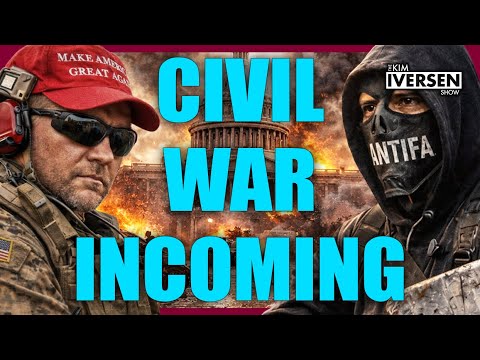
In this interview on the Kim Iverson Show, Xueqin Jiang argues that the United States is heading inevitably toward civil war, driven by elite factional conflict, Trump's authoritarian ambitions, and structural conditions resembling late Republican Rome. He draws an extended analogy between Donald Trump and Julius Caesar, arguing Trump is building paramilitary forces loyal only to himself (ICE, potentially Delta Force), deliberately provoking civil unrest to justify martial law, and pursuing a path toward permanent power. The interview covers deep state factionalism (old guard Wall Street vs. new guard Silicon Valley), the Israel lobby's push for war with Iran, and the oligarchy's supposed interest in civil war as a mechanism to prevent revolution and manage America's $30 trillion debt. The conversation opens with a notable acknowledgment that political discussion is censored in China.

Video thumbnail
youtube.com/watch?v=RXR9Zd4O_hs ↗ Analyzed 2026-03-14 by claude-opus-4-6

Viewer Advisory

  • The 'inevitable civil war' thesis is presented with absolute certainty but no engagement with political science literature on civil war conditions -- experts generally assess the US as at risk of political violence but not organized civil war.
  • The interview relies heavily on conspiratorial reasoning -- 'predictive programming,' deliberate provocation to justify martial law, COVID as a possible planned emergency -- that should be evaluated skeptically.
  • The Trump-Caesar analogy flatters the analysis but is historically weak; American institutional constraints are fundamentally different from late Republican Rome.
  • The opening acknowledgment of Chinese censorship is immediately minimized while American dysfunction is maximized, creating a misleading comparative framework.
  • The sympathetic interviewer provides no pushback, making this more of a monologue than a genuine exchange of ideas.
  • Specific predictions (Chauvin pardon, Delta Force as Praetorian Guard, martial law via National Guard in all 50 states) should be tracked for calibration.
  • The characterization of the Israel lobby's power as something that 'cannot ever be overstated' veers into conspiratorial territory regardless of legitimate concerns about lobbying influence.
Central Thesis

America is heading toward an inevitable civil war deliberately engineered by competing elite factions and by Trump himself, who is following the Julius Caesar playbook of building personal military loyalty, provoking conflict, and exploiting chaos to consolidate permanent authoritarian power.

  • Trump is most analogous to Julius Caesar: both built personal military loyalty through aggressive warfare, created myths of themselves as conquering heroes, and crossed constitutional boundaries when threatened by the political establishment.
  • Trump is deliberately creating paramilitary forces loyal to him personally -- ICE as a proto-secret police, with Delta Force and Green Berets as potential Praetorian Guard -- that will enable assassinations, sabotage, and infiltration of political opponents.
  • The American people's choice is not between democracy and monarchy but between monarchy (Trump) and oligarchy (Democrats), and historically people choose monarchy because monarchs cancel debts.
  • Biden's presidency failed the people through inflation, boomeranging sanctions, and insisting on war in Ukraine, which led to the 'collapse of American empire' -- driving popular discontent that enables Trump.
  • Both parties have paramilitary street gangs (Proud Boys for Republicans, Antifa for Democrats) that can be deployed for political violence.
  • The oligarchy benefits from civil war because it prevents revolution against the true ruling class and provides a mechanism to manage $30 trillion in national debt through destruction.
  • Two deep state factions are in conflict: the old guard (transnational capital, Wall Street, Clinton/Obama establishment) and the new guard (Palantir, Silicon Valley, MAGA).
  • The Israel lobby is pushing Trump toward war with Iran, with Netanyahu's Mar-a-Lago visit directly precipitating the Maduro kidnapping, Iran protests, and other provocations.
  • Movies like 'Civil War' represent 'predictive programming' -- deliberate conditioning of the public to accept civil conflict.
  • Trump will pardon Derek Chauvin and invite the Minnesota ICE shooter to the White House as deliberate provocations.
Qualitative Scorecard 1.4 / 5.0 average across 7 axes
Historical Accuracy ▸ Expand
The Trump-Caesar analogy is superficial and historically misleading. Caesar commanded battle-tested legions through a decade of personal combat leadership in Gaul; Trump has no analogous military power base. ICE agents are not comparable to Roman legionaries personally loyal to a commander. The claim that Biden 'insisted on a full-scale war with Ukraine' mischaracterizes US policy, which provided military aid but did not deploy US combat troops. The claim this led to 'the collapse of American empire throughout the world' is hyperbolic. The assertion that Democrats 'have absolutely no policy ideas' ignores the Inflation Reduction Act, CHIPS Act, and infrastructure legislation. The Proud Boys/Antifa equivalence as symmetrical 'paramilitary street gangs' is historically inaccurate -- Antifa is a decentralized movement, not a party-affiliated militia. The 'predictive programming' claim about movies is a conspiracy theory without historical basis.
2
Argumentative Rigor ▸ Expand
The argument is built almost entirely on assertion, analogy, and conspiracy thinking rather than evidence-based reasoning. The central claim -- civil war is inevitable -- receives no systematic analysis of what conditions produce civil wars or why those conditions are met in the US. The logic frequently takes the form: 'X benefits the oligarchy, therefore the oligarchy will cause X' -- a basic logical fallacy (affirming the consequent via cui bono reasoning). The claim that movies represent 'predictive programming' is unfalsifiable conspiracy theory. The leap from 'ICE conducts immigration enforcement' to 'proto-secret police testing ground for martial law' is enormous and unsupported. The argument that the oligarchy will deliberately start a civil war to 'burn the house down and collect insurance' on $30 trillion in debt makes no economic sense -- civil war would not cancel sovereign debt.
1
Framing & Selectivity ▸ Expand
The framing is extraordinarily selective. Every data point is interpreted through the lens of inevitable civil war and elite conspiracy. The Minnesota ICE shooting is framed not as an isolated incident but as deliberate provocation. Biden's presidency is reduced entirely to failures. Trump's actions are all interpreted as deliberate steps toward dictatorship with no consideration of alternative explanations (incompetence, ideology, normal political behavior). The interview opens with an acknowledgment that China censors political discussion, then immediately pivots to criticizing America -- with no further scrutiny of China's governance. Counter-evidence is systematically excluded: institutional resilience, the 2020 peaceful transfer despite January 6, the military's tradition of political neutrality, court checks on executive power, federalism as a barrier to centralized authoritarianism.
1
Perspective Diversity ▸ Expand
The interview presents a single conspiratorial perspective throughout with no pushback or alternative viewpoints. The interviewer (Kim Iverson) consistently agrees with and amplifies the guest's claims rather than challenging them. No consideration is given to: political scientists who study polarization without predicting civil war; constitutional scholars who analyze institutional resilience; military analysts who could assess whether Trump actually commands personal military loyalty; economists who could evaluate the 'burn the house for insurance' debt theory; historians who could critique the Caesar analogy's many weaknesses. Both participants operate within the same analytical framework of elite conspiracy, making this an echo chamber rather than an interview.
1
Normative Loading ▸ Expand
The language is heavily loaded throughout. Trump is characterized as creating 'havoc,' 'wreaking havoc,' conducting a 'revenge tour,' seeking to become 'king,' and using forces for 'brutality.' Democrats are described as an 'oligarchy' that 'gaslighted people.' Biden 'insisted on a full-scale war.' The entire American political system is reduced to competing criminal factions. The 'burn the house down for insurance money' metaphor frames national governance as fraud. Movies are 'predictive programming.' However, the speaker does occasionally acknowledge nuance (e.g., being 'fond of the United States,' respecting American 'open-mindedness, generosity, tolerance'), which prevents the lowest score.
2
Determinism vs. Contingency ▸ Expand
The title itself declares civil war 'inevitable,' and the speaker reinforces this throughout: 'I don't think there's any way out of the situation.' Every development is presented as part of an inexorable trajectory toward civil war. No contingent factors are acknowledged -- no diplomatic solutions, no institutional resilience, no possibility that polarization could decrease, no chance that elections could provide peaceful resolution. The framing is maximally deterministic, with elite actors portrayed as all-powerful puppet masters executing deliberate plans (including COVID as a possible deliberate emergency). The only variation allowed is the form of collapse (civil war vs. revolution), not whether collapse occurs.
1
Civilizational Framing ▸ Expand
The United States is framed as a declining imperial republic on the verge of collapse, drawing explicit parallels to Rome's fall. The framing is consistently negative: America is corrupt, oligarchic, heading for civil war, and its empire is collapsing. China receives notably gentle treatment -- the speaker acknowledges censorship but frames it as a minor inconvenience for 'the average person,' while America's political dysfunction is presented as existentially threatening. There is an implicit civilizational hierarchy where China's authoritarian stability is preferable to America's chaotic decline, though this is left unstated.
2
Overall Average
1.4
Civilizational Treatment
CHINA

China is mentioned only at the opening, where the interviewer notes that family members in China cannot discuss politics online. Jiang immediately acknowledges this ('Yeah, exactly') but then frames China as 'actually a great place to live' for 'the average person who doesn't really think about politics much.' This remarkably gentle treatment of authoritarian censorship -- presenting it as a non-issue for most people -- contrasts sharply with the apocalyptic framing of American political dysfunction. China's governance model receives no critical analysis whatsoever.

UNITED STATES

The United States is characterized as a corrupt oligarchy masquerading as a democracy, heading inevitably toward civil war. Its political system is reduced to competing criminal factions (old deep state vs. new deep state). Trump is a would-be Caesar installing military dictatorship. Biden enabled 'the collapse of American empire.' Democrats are incompetent oligarchs. The American people are pawns to be sacrificed in elite power struggles. ICE is a proto-secret police. The entire framing presents America as a dying civilization.

THE WEST

Europeans are mentioned only as Trump's antagonists -- he 'hates the Europeans' because he believes they conspired against him in 2020. No broader analysis of Western civilization or institutions.

Named Sources

other
Julius Caesar / Roman Republic history
Extended analogy comparing Trump to Caesar: Gallic Wars as enrichment through imperialism, crossing the Rubicon to avoid prosecution, creating military dictatorship through personal army loyalty. Used as the primary historical framework for understanding Trump's political trajectory.
? Unverified
other
Pete Hegseth / 'Warrior Ethos' doctrine
Referenced as announcing a new military doctrine in September emphasizing 'maximum lethality' and disregard for rules of engagement, presented as evidence Trump is cultivating Special Forces loyalty.
? Unverified
other
Miriam Adelson
Cited as pledging $250 million to Trump for a third term run, presented as evidence of Israel lobby financial power.
? Unverified
other
Elon Musk
Cited as pledging $20 million for midterms, presented as part of the MAGA/new deep state faction alongside Peter Thiel and Palantir.
? Unverified
other
Steve Bannon / Alan Dershowitz
Referenced as saying there are avenues for a third Trump term, presented by the interviewer as evidence of serious planning for permanent power.
? Unverified

Vague Appeals to Authority

  • 'There's talk of... there's plans to deploy the National Guard to all 50 states this year' -- no source cited for these plans.
  • 'Biden insisted on a full-scale war with Ukraine, which has led to basically the collapse of American empire throughout the world' -- presented as established fact with no evidence or sourcing.
  • 'If you just look at movies like Civil War... it's really predictive programming' -- conspiracy theory framework presented without evidence of deliberate intent by filmmakers.
  • 'These deep state agents working among insurrection groups, organizing them, encouraging violence, teaching them how to sabotage' -- unsourced claim about agent provocateurs.
  • 'Under Obama, you had more illegal immigrants deported than under Trump' -- presented without citation, though this is broadly accurate for Obama's deportation numbers.
  • 'We know' and 'it's clear' used repeatedly to frame contested interpretations as established facts.

Notable Omissions

  • No engagement with political science literature on civil war conditions (e.g., Barbara Walter's 'How Civil Wars Start,' which identifies specific measurable preconditions).
  • No discussion of institutional constraints on authoritarianism -- courts, military command structure, federalism, state-level resistance.
  • No analysis of the American military's institutional culture of political neutrality and its historical resistance to being politicized.
  • No mention of historical cases where predicted American civil wars did not materialize (e.g., 1960s, Great Depression, Reconstruction-era tensions that subsided).
  • No acknowledgment of China's own authoritarian governance model despite opening the interview by acknowledging Chinese political censorship -- China is mentioned only as a benign alternative for apolitical people.
  • No discussion of democratic resilience mechanisms, peaceful transfers of power, or the 2020 election's actual successful certification despite January 6.
  • The Trump-Caesar analogy ignores that Caesar commanded 13 battle-hardened legions personally loyal to him through years of combat -- Trump has no equivalent military power base.
  • No engagement with expert assessments of US civil war probability (which generally range from very low to moderate risk of political violence, far short of organized civil war).
Extended historical analogy 00:01:29
Trump is compared at length to Julius Caesar: both enriched themselves through aggressive warfare, built personal military loyalty, were threatened by the establishment, and crossed constitutional boundaries. ICE is compared to Roman legions, Delta Force to the Praetorian Guard.
Makes Trump's authoritarianism seem historically inevitable by associating him with one of history's most famous dictators. The analogy flatters the analysis by implying the speaker has the historical depth to see what others cannot, while obscuring the massive differences between Roman military politics and American institutional democracy.
Conspiratorial framing 00:16:36
Movies like 'Civil War' and 'One Battle After Another' are described as 'predictive programming' -- deliberately conditioning the public to accept civil conflict. COVID is implicitly suggested as a deliberately engineered emergency.
Transforms coincidences and normal cultural production into evidence of elite conspiracy, making the civil war prediction seem supported by converging evidence when in fact no causal mechanism is demonstrated.
Cui bono reasoning as proof 00:16:51
The argument that civil war benefits the oligarchy is used as evidence that the oligarchy will engineer civil war: 'civil war is what benefits the oligarchy... it prevents people from recognizing the true enemies.'
Converts a speculative claim about who might benefit from an outcome into evidence that those actors are deliberately causing that outcome -- a fundamental logical error presented as sophisticated analysis.
False equivalence 00:15:08
The Proud Boys and Antifa are presented as symmetrical 'street gangs' deployed by Republicans and Democrats respectively, implying both parties equally command paramilitary forces.
Creates a sense of balanced criticism while misrepresenting the nature of both groups -- Antifa is a decentralized movement with no party affiliation, while the Proud Boys are an organized group. The equivalence makes civil war seem like a natural escalation of existing symmetric forces.
Escalation cascade 00:16:04
A chain of escalation is presented as inevitable: ICE provocations lead to random shootings of ICE agents, which lead to martial law, which leads to National Guard deployment, which leads to deep state agent provocateurs, which leads to full civil war.
Each step in the cascade is presented as the natural consequence of the previous one, creating a sense of unstoppable momentum. No off-ramps, de-escalation mechanisms, or institutional interventions are considered.
Debt nihilism metaphor 00:17:04
'If your house is worth a million dollars and you owe $10 million to the bank, what you do is you burn the house down and you collect the insurance money. And that's the game plan of the oligarchy.'
Makes a complex macroeconomic situation (sovereign debt) seem simple and conspiratorial through a vivid domestic metaphor. The metaphor is economically nonsensical -- civil war would not 'cancel' sovereign debt or create 'insurance money' -- but its visceral clarity overrides analytical scrutiny.
Minimization through framing 00:00:08
China's political censorship is acknowledged but immediately framed as relevant only to politically engaged people: 'If you don't care about government and politics, if you're just focused on your own life, then it's probably great.'
Neutralizes the most obvious counterpoint to the America-in-decline narrative -- that China's governance is far more repressive -- by framing political freedom as a niche concern rather than a fundamental human right.
Appeal to pattern recognition 00:11:06
Multiple Trump actions (Venezuela, Iran, ICE enforcement, potential Chauvin pardon) are linked as parts of a single deliberate plan rather than separate policy decisions: 'This is not a coincidence... this is all part of a larger scheme.'
Transforms a series of arguably unrelated political actions into evidence of a coherent master plan, making the conspiracy narrative seem well-evidenced rather than post-hoc pattern fitting.
Sympathetic interviewer amplification 00:13:17
The interviewer consistently validates and extends the guest's claims: 'Everything you're saying, it makes me wonder,' 'It makes sense,' 'You might be right.' She even extends the narrative by suggesting COVID was a deliberate plan.
Creates the appearance of independent corroboration when in fact the interviewer is functioning as an amplifier rather than a critical interlocutor. The audience receives reinforcement from two voices rather than one.
Emotional anchoring via specific incidents 00:14:08
The Minnesota ICE shooting is used repeatedly as a concrete anchor for abstract claims about civil war. The shooting of a woman, the polarized reactions, the predicted Chauvin pardon and ICE officer White House invitation are all used to make civil war feel immediate and tangible.
Transforms a single violent incident into evidence of systemic civil war dynamics, exploiting the emotional charge of a real death to lend urgency to speculative claims about national collapse.
⏵ 00:00:09
If you don't care about government and politics, if you're just focused on your own life, then it's probably great. But once you turn towards the government...
A remarkably revealing opening that acknowledges China's political repression while immediately minimizing it as relevant only to the politically engaged. Sets up the interview's implicit framework: China's authoritarianism is manageable, America's dysfunction is existential.
The speaker frames Chinese censorship as a minor inconvenience for apolitical people while spending the entire interview arguing that Americans must be deeply engaged with politics to resist authoritarianism. The implication that political disengagement is acceptable under Chinese authoritarianism but catastrophic under American democracy reveals a profound double standard. Moreover, the very freedom to have this conversation publicly -- impossible in China -- undermines the premise that America is worse off.
⏵ 00:00:56
I think that America is heading towards a civil war. And I don't think there's any way out of the situation.
The thesis statement of the entire interview, delivered with absolute certainty. The phrasing 'no way out' is maximally deterministic, leaving no room for democratic resilience, institutional checks, or peaceful resolution.
⏵ 00:02:23
Trump is creating these paramilitary forces like ICE and possibly the National Guard that are loyal only to him because only he will support their brutality.
Reveals the analytical method: existing government agencies (ICE, National Guard) are recharacterized as personal paramilitary forces based on speculative intent rather than institutional reality. The leap from 'immigration enforcement' to 'personal paramilitary' is presented as self-evident.
China's People's Armed Police, which actually functions as an internal security force loyal to the Communist Party rather than the state, and the PLA's explicit constitutional obligation of loyalty to the CCP rather than the nation, represent a far more literal version of 'paramilitary forces loyal only to' a political leader. The speaker identifies a hypothetical version in America while ignoring the actual version in the country he just described as 'probably great.'
⏵ 00:04:10
The choice for the people is not one between democracy and monarchy. It's really one between monarchy and oligarchy.
A striking claim that democracy has already effectively ended in America. This framing eliminates democratic agency from the analysis entirely, making authoritarian outcomes seem like the only possible futures.
In China, the choice between 'monarchy and oligarchy' is not a hypothetical prediction but a description of existing governance -- one-party rule with factional competition among elites. The speaker presents this dynamic as a horrifying American future while implicitly accepting it as the unremarkable Chinese present.
⏵ 00:03:38
Biden insisted on a full-scale war with Ukraine, which has led to basically the collapse of American empire throughout the world.
A grossly inaccurate characterization of both US Ukraine policy (military aid, not 'full-scale war') and its consequences ('collapse of American empire' is contradicted by NATO expansion, increased allied defense spending, and continued US global military presence). Reveals the speaker's tendency to treat preferred narratives as established facts.
⏵ 00:16:36
If you just look at movies like Civil War... it's really predictive programming. They're really trying to get people in the mindset of civil war.
The clearest example of conspiratorial reasoning in the interview. 'Predictive programming' -- the idea that entertainment media deliberately conditions the public for planned events -- is a well-known conspiracy theory framework. Its casual introduction here reveals the analytical foundation underlying many of the interview's claims.
China's actual state-controlled media and entertainment industry, which explicitly serves propaganda purposes and is subject to censorship by the CCP Propaganda Department, represents real 'programming' of public consciousness. The speaker identifies a conspiracy theory version in American independent filmmaking while the literal version exists in the country he treats favorably.
⏵ 00:17:04
If your house is worth a million dollars and you owe $10 million to the bank, what you do is you burn the house down and you collect the insurance money. And that's the game plan of the oligarchy.
The most vivid metaphor in the interview -- and the most economically nonsensical. Civil war would not cancel sovereign debt or generate 'insurance money.' The metaphor reveals that the argument operates on rhetorical rather than analytical logic: if the image is compelling, the conclusion is accepted.
⏵ 00:02:39
In the future perhaps Delta Force will become the Praetorian Guard for Donald Trump.
An extraordinary claim presented casually. Delta Force is an elite military unit within the US Army's Joint Special Operations Command, subject to chain of command, Congressional oversight, and military law. The suggestion it would become a personal guard for an American president reveals the speaker's willingness to make dramatic claims without institutional analysis.
⏵ 00:07:24
He's really trying to instigate a civil war with his actions. I mean, how else can you explain the fact that you have these ICE agents going around America and besieging average American citizens?
A classic example of the argument's logical structure: a question is posed ('how else can you explain...?') and the answer is assumed to be the most extreme interpretation possible. No alternative explanations (immigration enforcement, political signaling, incompetence) are considered.
⏵ 00:11:37
The resources of the Israel lobby cannot ever be overstated.
A revealing phrasing that literally says the Israel lobby's power is infinite and any characterization, no matter how extreme, is warranted. This kind of absolute framing about a specific ethnic/national lobby echoes tropes that have historically been used to justify antisemitic conspiracy theories, whether or not that is the speaker's intent.
prediction America is heading toward a civil war, and there is no way out of the situation.
00:00:56 · Falsifiable
untested
As of March 2026, no civil war has occurred in the United States. Political polarization continues but has not reached armed conflict.
prediction Trump will pardon Derek Chauvin in the next few weeks.
00:07:11 · Falsifiable
untested
No Chauvin pardon announced as of March 2026.
prediction Trump will create conditions for martial law, including deploying the National Guard to all 50 states.
00:08:04 · Falsifiable
untested
No martial law declared as of March 2026.
prediction The ICE officer involved in the Minnesota shooting will be invited to the White House as a guest of honor.
00:20:25 · Falsifiable
untested
No confirmation of this specific prediction as of March 2026.
prediction Delta Force will become Trump's Praetorian Guard, enabling pocket assassinations, sabotage, and infiltration of political opponents.
00:02:39 · Falsifiable
untested
No evidence of Delta Force being deployed as a personal political enforcement unit as of March 2026.
prediction Trump's trial of Maduro will be used to present evidence that Venezuela participated in 2020 election fraud.
00:06:34 · Falsifiable
untested
As of March 2026, no trial of Maduro has produced evidence of Venezuelan participation in 2020 US election fraud.
prediction Trump will attempt a third term, with Miriam Adelson pledging $250 million and Elon Musk $20 million for midterms to support this.
00:11:28 · Falsifiable
partially confirmed
Trump has publicly stated 'there are methods' for a third term; H.J.Res.29 was introduced; Bannon confirmed 'there is a plan.' However, no constitutional amendment has passed and the third term has not occurred.
prediction There will be random shootings of ICE agents as provocations escalate, leading to martial law and National Guard deployment.
00:16:11 · Falsifiable
untested
No martial law declared as of March 2026.
Verdict

Strengths

The interview correctly identifies several real dynamics in American politics: genuine polarization and information silos, the expanding use of executive power, the role of money in politics (Israel lobby donations, tech billionaire political involvement), elite factional conflict between establishment and populist wings, and legitimate concerns about ICE enforcement tactics. The Trump-Caesar analogy, while overstretched, touches on real parallels regarding populist leaders exploiting elite dysfunction. The acknowledgment that China has political censorship, while minimized, shows more balance than some lectures in the series.

Weaknesses

The analysis is fundamentally built on conspiratorial reasoning rather than evidence-based political science. The civil war prediction ignores the extensive literature on what conditions actually produce civil wars, which generally finds the US far from the threshold. The Trump-Caesar analogy collapses under scrutiny -- Trump has no personal army, no combat veterans loyal to him as individuals, and operates within an institutional framework Caesar never faced. The 'predictive programming' claim about movies is an unsubstantiated conspiracy theory. The debt-as-arson metaphor is economically illiterate. The cui bono reasoning (oligarchy benefits from civil war, therefore they will cause it) is a logical fallacy. The treatment of ICE as a proto-secret police and Delta Force as a future Praetorian Guard shows no understanding of American military institutional culture. The interview format with an uncritical host produces an echo chamber rather than rigorous analysis.

Cross-References

BUILDS ON

  • Geo-Strategy #8: The Iran Trap -- the Israel lobby's push for Iran war, Trump's relationship with Netanyahu, and the Greater Israel project are recurring themes.
  • Previous Predictive History lectures on the Trump-Caesar analogy and American imperial decline, referenced implicitly throughout.
  • Earlier lectures on the deep state, oligarchy, and elite factional conflict in Washington.

CONTRADICTS

  • The opening acknowledgment that China censors political discussion implicitly contradicts the broader corpus's generally favorable treatment of Chinese governance.
  • The framing of America as heading toward civil war contradicts any lectures that predicted US-China rapprochement or a functional American strategic response to geopolitical challenges.
This interview represents the Predictive History framework applied to US domestic politics rather than geopolitics. The same analytical toolkit is visible: historical analogy used deterministically, conspiratorial framing of elite behavior, maximally negative treatment of the US, and absolute certainty in predictions. The interview format with a sympathetic host amplifies the claims without the pedagogical structure of the lecture series. Notably, this is one of the few instances where the speaker acknowledges limitations of Chinese governance (censorship), though this acknowledgment is immediately minimized. The Trump-Caesar analogy and civil war prediction represent the domestic extension of the 'American decline' thesis that runs through the geopolitics lectures.