Predictive History Audit / Systematic Content Analysis
Interview
Posted 2026-04-07

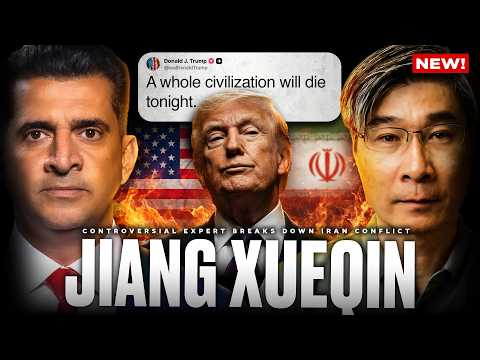
Jiang Xueqin Finally Breaks His Silence With PBD | PBD #772

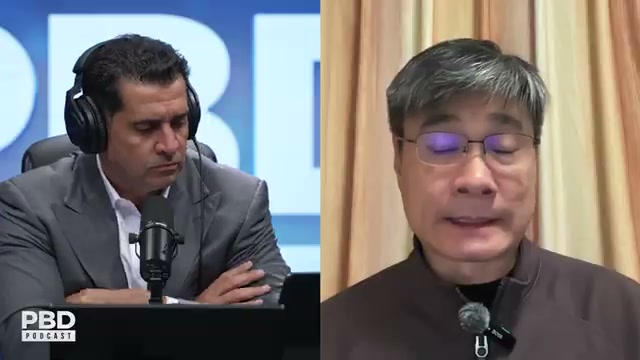
This is a long-form interview on the PBD Podcast (#772) hosted by Patrick Bet-David, recorded and uploaded on April 7, 2026 -- the same day Trump announced a two-week ceasefire in the Iran campaign. Jiang discusses his July 2024 prediction that Trump would win and go to war with Iran, analyzes the ongoing US-Iran conflict in real-time, and offers best-case/worst-case scenario assessments including a 40% probability of a limited ground incursion. The conversation then broadens to cover China's demographic crisis, the 'lie flat' movement, China's AI surveillance state, COVID origins (Jiang endorses the US bioweapon theory), Chinese soft power strategy and elite co-option, the treatment of ethnic minorities, and the comparative value of American free speech versus Chinese authoritarianism. Jiang presents himself as politically neutral but operating in a 'gray zone' in Beijing, acknowledging significant restrictions on what he can discuss about Chinese politics.

Video thumbnail
youtube.com/watch?v=Wio--7_GIOs ↗ Read time: ~10 min
Analyzed 2026-04-08 by claude-opus-4-6 · Views updated 2026-04-08

Viewer Advisory

  • Jiang's broad US-Iran war prediction was correct, which gives him credibility, but the specific form was wrong (air campaign, not ground invasion) and he has not updated his model accordingly.
  • The COVID bioweapon claim aligns with Chinese government propaganda, despite Jiang's insistence on independence.
  • The comparison of Canada as more authoritarian than China, where Jiang admits he cannot discuss Tibet, Taiwan, Xinjiang, or criticize leaders, should be treated with deep skepticism.
  • Jiang's freedom in China is explicitly a function of his foreign citizenship, not Chinese civil liberties.
  • The Isfahan raid conspiracy theory is based on social media speculation, not journalism.
  • The interview was recorded on April 7, 2026, the same day Trump announced a ceasefire -- yet Jiang's analysis emphasized continued escalation.
  • On China, Jiang provides genuinely useful insider observations but viewers should recognize that his 'cannot talk about' admissions represent a significant analytical constraint that colors his entire output.
Central Thesis

The United States is repeating the historical pattern of imperial overreach by going to war with Iran, driven by hubris and advisors who feed Trump's ego rather than provide sound strategic counsel, and this war will ultimately damage American power while empowering Iran's hardliners.

  • Empires decline through hubris -- believing themselves invincible and engaging in unstrategic wars -- a pattern visible from Persia to Athens to Vietnam to the current US.
  • Trump thinks in terms of reality TV and WWE, prioritizing what looks good on camera over genuine strategic calculation.
  • Trump has surrounded himself with 'psychopath' advisors (Kushner, Bannon, Navarro, Rubio) who feed his ego rather than give sound strategic advice.
  • The recent pilot rescue operation was actually a failed attempt to seize enriched uranium from Isfahan, costing $300 million in equipment.
  • JD Vance and Tulsi Gabbard are being sidelined within the administration; Tulsi and Howard Lutnick may be next to be removed.
  • Bombing Iran's infrastructure will only embolden and empower the most extreme religious elements in Iranian society.
  • Iran's Revolutionary Guard wants this war because it allows them to expand control from 50% to potentially 100% of the Iranian economy.
  • China has developed the world's first AI surveillance state with digital ID, digital currency, and comprehensive monitoring of all citizens.
  • There is almost no interest in democracy among Chinese citizens; the ultimate aspiration is to become a bureaucrat.
  • COVID was an American bioweapon funded by Fauci, subcontracted to Wuhan lab for gain-of-function research.
  • China's soft power strategy centers on co-opting foreign elites through bribery and access, not persuading general populations.
  • If America retreats from the Middle East, it will lose the petro-dollar, the economy will collapse, and civil war will emerge.
Qualitative Scorecard 2.4 / 5.0 average across 7 axes
Historical Accuracy ▸ Expand
Basic historical facts are accurately cited: Trump's first-term Israel policies (embassy move, Golan Heights, Soleimani assassination, Abraham Accords), the Athenian Sicilian Expedition, and broad patterns of imperial decline. China's demographic data (fertility rate around 1.0, South Korea at 0.8) is approximately correct. However, several claims are unverified or misleading: the Isfahan failed-uranium-seizure theory is social media speculation presented as 'emerging evidence'; the COVID bioweapon claim goes beyond established evidence; the $300 million equipment loss figure in the rescue is unverified; and the claim about local Chinese governments inflating population statistics, while plausible, is presented without specific documentation. The real-time analysis of the Iran conflict contains reasonable observations but also significant factual gaps.
3
Argumentative Rigor ▸ Expand
The argument relies heavily on pattern recognition ('empires decline through hubris') applied loosely to the current situation without rigorous analysis. The 40% ground incursion probability was wildly off -- no ground troops were deployed, and a ceasefire was announced the same day. The Isfahan uranium seizure conspiracy theory is advanced on the basis of social media speculation. The COVID bioweapon claim is stated as personal belief ('I believe') without engagement with contrary evidence. The probability estimates (1%, 10%, 40%) lend false precision to vague assessments. Jiang's claim to political neutrality is undermined by consistently one-sided analysis of the US while offering China a much gentler treatment. The leap from 'Trump thinks in terms of TV' to predictions about military operations lacks analytical rigor.
2
Framing & Selectivity ▸ Expand
The framing is consistently asymmetric. US actions are characterized through the lens of hubris, psychopathy (advisors), and WWE showmanship, while Iran is presented as rational, civilizationally proud, and justified in its resistance. China receives notably gentler treatment than the US despite Jiang acknowledging surveillance, corruption, and authoritarianism -- these are presented as structural features rather than moral failures, in contrast to the moralized framing of US actions. The COVID bioweapon theory is presented without noting it aligns perfectly with Chinese state propaganda. The interview omits significant context about the actual state of the conflict (no ground invasion, ceasefire emerging) while emphasizing worst-case scenarios.
2
Perspective Diversity ▸ Expand
The interview format inherently provides more perspective diversity than Jiang's solo lectures, as Patrick Bet-David asks probing questions, pushes back on some claims, and introduces alternative framings (Jim Collins book, his own Syrian heritage perspective on empire decline). However, Jiang's analysis remains largely single-perspective on geopolitics. On China, he does present a more nuanced picture -- acknowledging both strengths (frugality, savings rate, stability) and weaknesses (surveillance, corruption, demographic crisis, authoritarianism). The discussion of democracy in China is one-dimensional, with no consideration of dissent movements or the role of surveillance in suppressing democratic expression.
3
Normative Loading ▸ Expand
Heavy normative language pervades the analysis: Trump's advisors are 'psychopaths'; Trump is compared to a WWE performer; American military action is framed through 'hubris' and 'flexing' and 'bullying'; the American approach is characterized as fundamentally irrational. The phrase 'pray to God even though I'm not religious' is used twice for emotional effect. Iran is described in terms of civilizational pride and rational resistance. China's flaws are described in relatively clinical terms (surveillance 'state,' population 'decline') compared to the moralized language applied to the US ('psychopaths,' 'hubris,' 'ego'). The COVID bioweapon claim is delivered with emotional certainty rather than analytical caution.
2
Determinism vs. Contingency ▸ Expand
The interview format forces somewhat more contingency than Jiang's solo lectures. When asked for probabilities, he provides ranges (1% best case, 10% worst case, 40% ground incursion), acknowledging multiple possible outcomes. He also explicitly states 'I'm not saying this is impossible' about the best-case scenario. However, the underlying framework remains deterministic: empires inevitably decline through hubris, the war will inevitably empower hardliners, America is 'basically screwed.' The ceasefire announced the same day complicates his deterministic escalation narrative, but this is not discussed.
3
Civilizational Framing ▸ Expand
The civilizational framing is asymmetric. The US is consistently characterized as a declining empire driven by hubris, ego, and manipulative advisors. Iran is characterized as a proud civilization that will not back down, with legitimate grievances. China receives notably mixed but ultimately sympathetic treatment: Jiang acknowledges surveillance, corruption, demographic crisis, and authoritarianism but frames these as systemic features rather than moral failures, and repeatedly praises Chinese frugality, savings culture, and civilizational endurance ('China has been China for 5,000 years'). His claim to neutrality is undermined by the stark difference in moral vocabulary applied to each civilization.
2
Overall Average
2.4
Civilizational Treatment
CHINA

Receives the most nuanced treatment of any civilization discussed. Jiang acknowledges significant problems: AI surveillance state, demographic crisis, corruption, inequality, youth apathy ('lie flat'), suppression of ethnic minorities, restrictions on free speech, COVID memory-holing. However, these are presented in clinical, structural terms rather than the moralized language applied to the US. Positive features are emphasized: 40% savings rate ('highest in the world'), frugality during COVID, civilizational continuity. The claim 'there is almost no interest in democracy' naturalizes authoritarianism as culturally appropriate rather than imposed. His admission that he cannot discuss Tibet, Taiwan, or Xinjiang, and cannot criticize Chinese leaders, is presented matter-of-factly without apparent concern about what this means for his analytical independence.

UNITED STATES

Consistently negative framing. The US is characterized as a declining empire driven by hubris. Trump is compared to a WWE performer with 'psychopath' advisors. American strategic thinking is reduced to what 'looks good on TV.' The military's professionalism is briefly acknowledged (Special Forces rescue) but immediately undermined by the conspiracy theory that it was actually a failed uranium seizure. America's creative culture and First Amendment are praised ('the best thing about America'), but this praise is contextualized within a narrative of inevitable decline. The US is presented as both threatening (killing Iranian schoolgirls) and impotent (unable to win).

RUSSIA

Minimal treatment. Russia is mentioned as a potential negotiating partner in a four-nation conference (US, Russia, Iran, China). No detailed characterization.

THE WEST

Canada is characterized as having become 'a very authoritarian society' where Jiang could be 'visited by the police' for saying things he freely says from China -- an extraordinary claim that inverts the typical authoritarian comparison. Europe is briefly mentioned as also becoming authoritarian. The West collectively is presented as losing its commitment to free speech while China ironically offers more freedom (for a non-citizen foreigner making English-language content).

Named Sources

book
Jim Collins, 'How the Mighty Fall'
Cited by host Patrick Bet-David as validating Jiang's hubris-of-empire framework. Five stages of decline enumerated: hubris born of success, undisciplined pursuit of more, denial of risk, grasping for salvation, capitulation to irrelevance. Used to legitimize the historical pattern argument.
✓ Accurate
primary_document
Thucydides / Peloponnesian War
Referenced to support the pattern of imperial hubris: Athenian invasion of Sicily in 415 BCE as parallel to American overreach in Iran. Brief mention without detailed analysis.
✓ Accurate
primary_document
Trump's Truth Social post (April 7, 2026)
Read verbatim by the host: 'A whole civilization will die tonight. Never be brought back again.' Jiang interprets it as WWE-style rhetoric designed to instill fear and maximize negotiating leverage.
✓ Accurate
other
Trump's first term policies on Israel
Embassy move to Jerusalem, Abraham Accords, Golan Heights recognition, Soleimani assassination -- cited as evidence Trump was heavily influenced by Israel and would pursue war with Iran in a second term.
✓ Accurate
journalist
Tom Friedman
Cited as an example of a Western media elite co-opted by Chinese soft power strategy -- 'visited China quite a lot and said very nice things about China.' Used to illustrate China's elite co-option approach.
? Unverified
other
Obama administration moratorium on gain-of-function research
Referenced to support the claim that Fauci circumvented US restrictions by subcontracting gain-of-function research to the Wuhan lab.
? Unverified
other
Elizabeth Warren
Anecdote about Trump calling Warren regarding credit card policy, used to illustrate Trump's deal-making instincts.
? Unverified

Vague Appeals to Authority

  • 'On Twitter, on X, on social media, what people are saying is that this was actually not necessarily a successful pilot rescue operation' -- social media speculation presented as emerging evidence for the failed Isfahan uranium seizure theory.
  • 'There are some influencers who were using the same talking points against me' -- vague reference to a 'coordinated smear campaign' without identifying the influencers or talking points.
  • 'Evidence is emerging that this was a failed seizure' -- passive construction that lends authority to unverified social media claims about the Isfahan raid.
  • 'The Chinese government have said on multiple occasions that COVID started off as an American bioweapon' -- Chinese state claims presented as worthy of serious consideration without noting the political motivation behind them.
  • 'We also know that local governments tend to lie all the time' about population statistics -- presented as universal knowledge without specific documentation.
  • 'I can tell you' as a repeated authority claim based on 25 years of residence -- personal observation substituted for systematic evidence throughout the China discussion.

Notable Omissions

  • No engagement with US military analysis or intelligence assessments of the ongoing Iran campaign -- Jiang speaks as if the US has no strategic rationale whatsoever.
  • No mention of the Twelve-Day War (June 2025) or Operation Midnight Hammer as preceding events, despite discussing the timeline of US-Iran conflict.
  • No acknowledgment that his original Geo-Strategy #8 prediction of a ground invasion was fundamentally wrong in form (air campaign, not ground invasion) even while the broad war prediction was correct.
  • No discussion of Iran's own internal power struggles beyond the Revolutionary Guard, including the transition from Khamenei to Mojtaba, which occurred during the timeframe discussed.
  • No engagement with the actual ceasefire terms or Pakistan's mediation role, despite the ceasefire being announced the same day as this interview.
  • No mention of professional military or IR scholarship on the ongoing conflict -- analysis is entirely pattern-based and anecdotal.
  • On China, no mention of the 2022 White Paper protests or other signs of political discontent that complicate his 'no interest in democracy' claim.
  • No acknowledgment that his claim about COVID as a bioweapon directly adopts the Chinese government's narrative, despite positioning himself as independent of state influence.
Historical pattern recognition as deterministic framework 00:03:24
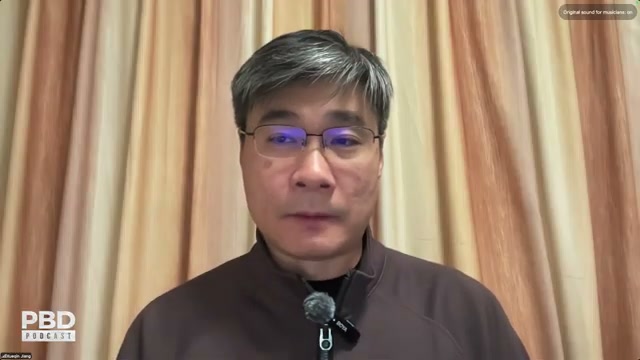
Frame at 00:03:24
Jiang opens with a sweeping 10,000-year history of imperial decline: Persians invaded Greece and were destroyed, Athenians invaded Sicily and lost, Vietnam was a quagmire -- therefore the US will lose in Iran. The pattern is presented as an iron law of history.
Establishes the speaker's analytical authority through breadth of historical knowledge while making the predicted outcome (US defeat) seem historically inevitable. The pattern selects only confirming cases while ignoring successful projections of imperial power.
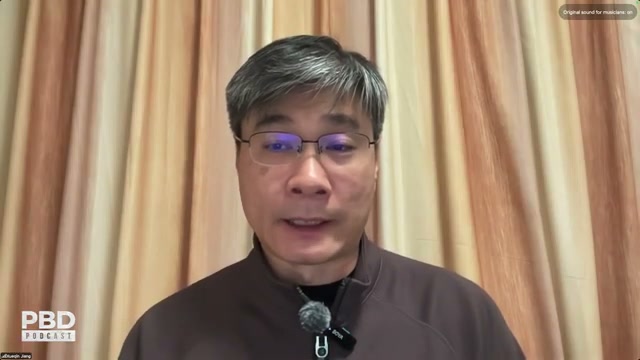
WWE/Reality TV analogy 00:09:25
Frame at 00:09:25
Jiang characterizes Trump's decision-making through the lens of professional wrestling: 'He spent a lot of time in the World Wrestling entertainment with Vince McMahon... that's really how you speak in the WWE. You are rhetorical, you are bombastic, and you try to instill fear and rage in people.'
Delegitimizes Trump's strategic communication by reducing it to entertainment. Makes any Trump statement dismissible as performative rather than substantive, which conveniently allows Jiang to interpret Trump's words however fits his analytical framework.
Conspiracy presented as emerging evidence 00:10:41
Frame at 00:10:41
The Isfahan pilot rescue is recharacterized as a failed uranium seizure: 'On Twitter, on X, on social media, what people are saying is that this was actually not necessarily a successful pilot rescue operation. It seems that evidence is emerging that this was a failed seizure of Iran's enriched uranium.'
Social media speculation is laundered through passive construction ('evidence is emerging,' 'what people are saying') to sound like developing journalism rather than unverified conspiracy theory. This elevates the speaker's insider-knowledge credentials.
False precision with probability estimates 00:14:20
Frame at 00:14:20
When asked for likelihoods, Jiang provides specific percentages: 'best case scenario is 1%, worst case scenario is 10%, and a limited ground incursion would be about 40%.' These numbers add to exactly 51%, leaving 49% unaccounted for.
The specificity of the numbers creates an illusion of rigorous probabilistic analysis. The audience registers the precision as evidence of sophisticated thinking, even though the numbers are arbitrary and the predicted 40% ground incursion never materialized.
Self-framing as politically neutral insider 00:12:00
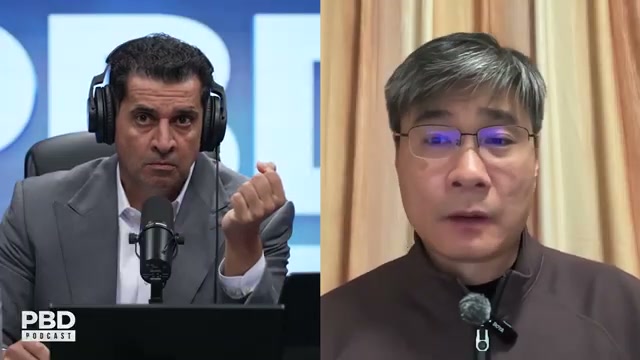
Frame at 00:12:00
Jiang states 'I'm pretty politically neutral' and reveals he would have voted for Trump over Biden, establishing bipartisan credibility. He later describes operating in a 'gray zone' in China, not bound by Chinese surveillance laws.
Pre-empts accusations of partisan bias by establishing Trump-voter credentials while maintaining analytical distance. The 'gray zone' framing suggests privileged access to truth from a uniquely independent vantage point, obscuring the fact that his analysis consistently favors certain civilizational narratives.
Emotional escalation through worst-case scenarios 00:13:22
Frame at 00:13:22
Describes Iranian government calling on young people to form human chains around power plants, then imagines Americans blowing up plants and killing young people, followed by Iran destroying 'the entire economy of the GCC.'
Creates vivid, emotionally charged imagery that makes the worst case feel imminent and visceral. The audience's emotional response to the image of killed young people overwhelms analytical assessment of whether this scenario is actually likely.
Cultural comparison as soft advocacy 00:43:19
Frame at 00:43:19
Jiang contrasts national aspirations: Canadians dream of being hockey players, Americans dream of being entrepreneurs, Chinese dream of becoming bureaucrats. He praises American creativity and the First Amendment as 'the best thing about America.'
By praising American values while criticizing American policy, Jiang insulates himself from accusations of anti-Americanism. The praise of free speech also legitimizes his own commentary, positioning him as someone who values what America values -- even while his analysis undermines American strategic credibility.
Adopting state narrative while claiming independence 00:56:59
Frame at 00:56:59
Jiang states 'I believe that this was American bioweapon funded by Tony Fauci' -- directly aligning with the Chinese government's official position -- while elsewhere insisting he maintains strict independence from Chinese state influence and doesn't have Chinese social media accounts.
The framing of personal belief ('I believe') obscures the fact that this is the Chinese government's official narrative. By presenting it as his own independent conclusion, Jiang gives the state narrative the credibility of an independent Western-educated analyst.
Inverted authoritarian comparison 00:51:01
Frame at 00:51:01
Jiang claims Canada 'has become a very authoritarian society' where he could be 'visited by the police' for things he says freely from China, and that he has 'more freedom to comment about Western society' from China than from the West.
This extraordinary inversion -- China as freer than Canada -- reframes the audience's assumptions about where freedom exists. It implicitly defends his choice to remain in China while undermining Western claims to moral superiority on free speech.
Prayer as analytical punctuation 01:11:20
Frame at 01:11:20
Twice uses 'I pray to God, even though I'm not religious, that we come to a peace settlement' to bracket his analysis of escalation scenarios.
Emotional anchoring that positions the speaker as a concerned humanitarian rather than a detached analyst. The qualifier 'even though I'm not religious' adds a layer of sincerity -- suggesting the situation is so dire it moves even an irreligious person to prayer.
Frame at 00:03:37 ⏵ 00:03:37
Empires believe that they are invincible and that no one can touch them. So they engage in activities that are not very strategic.
Core thesis statement that frames all subsequent analysis. Establishes the hubris-of-empire framework that Jiang applies to the US while exempting other powers from the same analysis.
China's aggressive South China Sea militarization -- constructing artificial islands and military bases in disputed waters claimed by multiple nations -- and its Belt and Road Initiative overextension (with billions in defaulted loans across Africa and Asia) could equally be characterized as an emerging empire engaging in activities 'that are not very strategic' due to belief in invincibility.
Frame at 00:09:55 ⏵ 00:09:55
Trump has surrounded himself with advisors who are psychopaths and they're not actually relaying good strategic advice.
Reveals Jiang's analytical method: reducing complex policy-making to personality psychology. The word 'psychopaths' is doing heavy rhetorical work, transforming policy disagreement into psychiatric diagnosis.
Frame at 00:15:15 ⏵ 00:15:15
If America retreats from the Middle East... America would lose the petro-dollar, the American economy would collapse... you would have a civil war emerge in America.
Catastrophic domino-theory reasoning that mirrors the 'if Vietnam falls' logic Jiang implicitly critiques elsewhere. The leap from Middle East withdrawal to American civil war represents the same deterministic thinking he attributes to American hubris.
Frame at 00:55:52 ⏵ 00:55:52
COVID has been memory holed in China. So no one talks about it. It was a traumatic three or four years for Chinese society and people have just basically forgotten about the experience.
A remarkably candid acknowledgment of how Chinese society processes traumatic history. Jiang presents this matter-of-factly rather than critically.
China has 'memory holed' far more than COVID -- Tiananmen Square (1989), the Cultural Revolution's full death toll (estimated 1-2 million killed), the Great Leap Forward famine (30-45 million deaths), and ongoing erasure of Uyghur cultural history. Jiang's clinical observation about COVID memory-holing carefully avoids these much larger historical suppressions that he admits he 'cannot talk about.'
Frame at 00:59:09 ⏵ 00:59:09
If you want a healthy, creative, resilient society, you need free and open debate... The best thing about America is the First Amendment. The best thing is that anyone can criticize the president.
Jiang eloquently articulates the value of free speech while living in a country that comprehensively suppresses it. The sincerity of this praise makes the contrast with his own circumstances more striking.
In the same interview, Jiang admits he cannot discuss Tibet, Taiwan, Xinjiang, cannot criticize Chinese leaders by name, and cannot question the military's capabilities. He describes China's 'first AI surveillance state.' Yet he does not draw the obvious conclusion that by his own logic, China cannot be a 'healthy, creative, resilient society.' Instead, he claims he has 'more freedom' in China than in Canada.
Frame at 00:42:49 ⏵ 00:42:49
I've been in China for 25 years and I can tell you that there is almost no interest in democracy in China.
A sweeping claim about 1.4 billion people's political aspirations, presented as self-evident from personal observation. This is one of the interview's most significant analytical claims.
Jiang describes in the same interview how China has developed 'the first AI surveillance state' where the government 'knows exactly where you go, what you buy, who you hang out with' and can 'do a micro analysis of your political leanings.' It is impossible to credibly assess democratic interest in a population under such comprehensive surveillance. The 2022 White Paper protests, which Jiang does not mention, demonstrated that anti-government sentiment exists but is rapidly suppressed.
Frame at 00:56:59 ⏵ 00:56:59
I believe that this was American bioweapon funded by Tony Fauci. Fauci subcontracted gain-of-function research to the Wuhan lab which was actually a military installation.
Jiang adopts the Chinese government's official COVID narrative as his own 'belief,' despite claiming independence from Chinese state influence. This is the clearest example of the gap between his self-presentation as independent and his alignment with Chinese state positions.
Jiang earlier criticizes Trump for listening to advisors who tell him what he wants to hear. Here, Jiang himself adopts a narrative that his host country's government aggressively promotes, presenting it as independent analysis. The Chinese government's motivation to blame the US for COVID is at least as strong as any US motivation to blame China.
Frame at 00:51:01 ⏵ 00:51:01
Canada has become a very authoritarian society. If I said certain things that I said in Canada, then it's possible that I get visited by the police.
An extraordinary claim that inverts the standard authoritarian comparison, characterizing Canada as more repressive than China for the kind of commentary Jiang produces.
Jiang lives in a country where he admits he cannot discuss Tibet, Taiwan, Xinjiang, cannot name or criticize leaders, cannot question the military, and which he describes as having built 'the first AI surveillance state.' Citizens are routinely detained for social media posts. Yet Canada -- with its robust free press, independent judiciary, and constitutional protections -- is characterized as the authoritarian society. This inversion strains credulity and serves to normalize living under Chinese authoritarianism.
Frame at 00:50:37 ⏵ 00:50:37
I operate in a gray zone in China where I'm not a Chinese citizen. So I'm not bound by Chinese surveillance laws.
Reveals that Jiang's claimed freedom in China is a function of his foreign citizenship status, not of Chinese respect for civil liberties. This undercuts his broader claims about freedom in China versus the West.
Frame at 01:11:20 ⏵ 01:11:20
I pray to God, even though I'm not religious, that we come to a peace settlement... the settlement that the Iranians have offered so far, to share control of the Strait of Hormuz, has been very fair and it's quite honestly one of the most generous offers that the Americans will get.
Combines emotional appeal with geopolitical analysis. The characterization of Iran's offer as 'generous' reveals Jiang's sympathetic framing of Iran, given that Iran's Hormuz framework selectively allows passage for China, Russia, India, Iraq, and Pakistan while blocking US allies -- effectively handing Iran control over global energy flows.
Iran's 'generous' offer to control Hormuz passage -- allowing 5 favored nations while blocking others -- is functionally an attempt to establish Iranian hegemony over global energy transit. This is precisely the kind of power projection Jiang criticizes the US for pursuing. The IRGC's own declaration of a 'NEW PERSIAN GULF ORDER' where Hormuz 'will never return to former status' is imperial rhetoric indistinguishable from the American hubris Jiang criticizes.
prediction A ground invasion of Iran will begin as early as this weekend (around April 7, 2026), with a multi-vector attack targeting Kharg Island, Qeshm Island, and the Iranian coastline.
00:07:37 · Falsifiable
disconfirmed
No ground invasion occurred. Trump announced a two-week ceasefire on the same day this interview was uploaded (April 7, 2026). The campaign remained air/missile only with no ground troops deployed in Iran. Pentagon drew up ground op plans but none were implemented.
prediction A limited ground incursion has about 40% probability.
00:14:24 · Falsifiable
disconfirmed
No ground troops deployed in Iran as of April 8, 2026. Ground ops probability effectively zero after ceasefire announcement. USS Boxer ARG with 2,500 Marines still 3 weeks from CENTCOM theatre; ceasefire makes amphibious ops moot.
prediction Best case scenario (1% probability): Americans and Iranians compromise to share the Strait of Hormuz with tolls collected in US dollars, sanctions lifted.
00:14:20 · Falsifiable
partially confirmed
A diplomatic path emerged via Pakistan mediation, with ceasefire announced April 7. Iran's settlement offer does center on sharing control of Hormuz. However, Jiang assigned this only 1% probability, suggesting he considered it extremely unlikely -- yet it materialized as the most likely outcome. Iran's framework proposes a 'toll booth' vetting system, which aligns with Jiang's description.
prediction Worst case scenario (10% probability): Trump bombs all of Iran's power plants, killing young people forming human chains, forcing Iran into total war against GCC.
00:14:20 · Falsifiable
partially confirmed
Bushehr nuclear power plant was struck April 4, 2026. South Pars gas field struck March 18. Asaluyeh petrochemical complex struck April 6. However, it was not a comprehensive campaign against ALL power plants, and Iran did not destroy the entire GCC economy though energy disruption has been massive (Brent spot hit all-time record $144.42 on April 7).
prediction The Iranians will not back down and will not give up.
00:07:32 · Falsifiable
confirmed
Iran maintained its Hormuz blockade from Feb 28 through the April 7 ceasefire. IRGC declared 'restraint is over' and threatened to 'deprive US/allies of oil for years.' Iran's ceasefire framework demands formalized post-war control of Hormuz.
prediction If America retreats from the Middle East, it will lose the petro-dollar, the American economy will collapse, and civil war will emerge in America.
00:15:15 · Falsifiable
untested
This is contingent on a full US withdrawal from the Middle East, which has not occurred. The Iran campaign continues with ceasefire, not retreat.
prediction China's fertility rate will become the lowest in the world (below South Korea's 0.8) within 5 years.
00:30:21 · Falsifiable
untested
Prediction targets approximately 2031. China's fertility rate is currently around 1.0. Cannot be assessed yet.
prediction In the next few days, either Trump settles with Iran or there will be a major escalation targeting critical civilian infrastructure, forcing Iran into total war against the GCC.
01:11:58 · Falsifiable
partially confirmed
Trump announced a two-week ceasefire the same day (April 7), aligning with the 'settlement' branch. However, escalation also occurred in the days preceding the interview (Bushehr struck April 4, Asaluyeh struck April 6). Both paths Jiang outlined partially materialized.
prediction It is possible that we lose access to 20% of the world's energy and 30% of the world's fertilizer if the war continues.
01:12:10 · Falsifiable
partially confirmed
Massive energy disruption has occurred: Hormuz blockade reduced tanker traffic to near zero, Brent hit record $144.42, gas reached $4/gallon nationally, IEA warns April 2026 'much worse' than March. However the full 20%/30% figures have not been reached. One-third of world helium supply disrupted.
claim Iran's settlement offer to share control of the Strait of Hormuz is fair and generous.
01:11:43 · Not falsifiable
unfalsifiable
Normative assessment. Iran's framework proposes a 'toll booth' vetting system allowing 5 nations (China, Russia, India, Iraq, Pakistan) while blocking US/Israel/allies -- whether this constitutes 'fair and generous' is a value judgment.
claim The recent pilot rescue was actually a failed attempt to seize enriched uranium from the Isfahan nuclear facility, costing $300 million in equipment.
00:10:41 · Falsifiable
untested
The April 5, 2026 rescue of an F-15E WSO did involve two MC-130J aircraft destroyed and additional equipment lost. However, the claim it was a disguised uranium seizure attempt is unverified and appears to originate from social media speculation rather than confirmed reporting.
claim COVID was an American bioweapon funded by Tony Fauci, who subcontracted gain-of-function research to the Wuhan lab, which was a military installation.
00:56:59 · Falsifiable
untested
This aligns with the Chinese government's official narrative. While NIH-funded gain-of-function research at Wuhan Institute of Virology is documented, the 'deliberate bioweapon' and 'military installation' claims go significantly beyond established evidence. Multiple investigations (including by US intelligence agencies) have produced mixed conclusions, with most assessing low confidence for either natural origin or lab leak, and none concluding deliberate bioweapon.
prediction Tulsi Gabbard and Howard Lutnick may be the next advisors removed from Trump's inner circle after Vance was sidelined.
00:16:00 · Falsifiable
untested
As of April 8, 2026, both remain in their positions.
claim There is almost no interest in democracy in China after 25 years of observation.
00:42:49 · Not falsifiable
unfalsifiable
Difficult to assess democratic sentiment in a surveillance state where expressing such interest carries severe consequences. Jiang himself describes China's comprehensive AI surveillance and admits there are topics he 'cannot talk about.'
prediction Bombing Iran's infrastructure will only embolden and empower the most extreme religious elements in Iranian society.
00:29:18 · Falsifiable
partially confirmed
Mojtaba Khamenei (described by Jiang as not moderate and considered incompetent) succeeded his assassinated father as Supreme Leader. IRGC has declared 'new Persian Gulf order' and 'restraint is over.' However, it's too early to assess long-term radicalization effects.
Verdict

Strengths

The interview demonstrates genuine analytical breadth, covering US-Iran conflict, Chinese demographics, political systems, and civilizational comparison in substantive depth. Jiang's original prediction of US-Iran war has been broadly vindicated by events. His analysis of Trump's communication style as performative has some validity. The discussion of China is notably more nuanced than typical Western commentary -- acknowledging both the surveillance state and the 40% savings rate, both youth apathy and civilizational continuity. Patrick Bet-David's interviewing provides useful pushback and context. Jiang's probability estimates, while inaccurate, represent an attempt at calibrated reasoning rather than pure assertion. His acknowledgment of topics he cannot discuss in China provides rare transparency about the constraints on China-based analysts.

Weaknesses

The analysis suffers from fundamental asymmetry: the US receives moralized criticism (psychopaths, hubris, WWE) while China receives clinical description (surveillance state, demographics). The COVID bioweapon claim directly adopts Chinese state narrative while Jiang claims analytical independence. The Isfahan uranium seizure conspiracy theory is presented on the basis of social media speculation. The 40% ground incursion probability was wrong -- no ground troops deployed and ceasefire announced the same day. The claim that Canada is more authoritarian than China is extraordinary and unsupported. Jiang's model from Geo-Strategy #8 (ground invasion trapping US troops) has been fundamentally disconfirmed in form, yet he continues predicting ground operations without acknowledging the model's failure. The 'no interest in democracy' claim ignores the very surveillance mechanisms Jiang describes that would suppress any such expression.

Cross-References

BUILDS ON

  • Geo-Strategy #8: The Iran Trap (7y_hbz6loEo) -- Jiang's original July 2024 predictions about Trump winning and going to war with Iran, which this interview revisits and updates in light of the ongoing conflict.
  • The Saagar/Crystal (Breaking Points) interview from July 2024 -- referenced as the interview that made Jiang's predictions viral and prompted PBD's interest.
  • Interview with SNEAKO (VucFnjlcyQk) -- another recent interview in the same period discussing similar themes.
  • The broader Civilization and Geo-Strategy lecture series -- Jiang references his teaching of world history and pattern recognition as the basis for his predictive framework.

CONTRADICTS

  • Geo-Strategy #8 predicted a full-scale ground invasion of Iran (~March 2027) with the US troops becoming 'hostages.' This interview still predicts a ground incursion (40% probability) despite the ongoing air-only campaign, suggesting Jiang has not fully updated his model from the original ground-invasion prediction.
  • Geo-Strategy #8 predicted Saudi Arabia would be part of the invasion coalition. In this interview, Jiang acknowledges Saudi Arabia and UAE are pressuring Trump to 'finish the war,' but the calibration record shows Saudi actually refused airspace and condemned strikes on Iran.
  • Jiang's claim of greater freedom in China than Canada contradicts his own admissions in this interview about extensive topics he cannot discuss, the surveillance state, and China's attempts to 'co-opt' and 'compromise' him.
This interview represents a significant data point in Jiang's predictive track record. His broad prediction of US-Iran conflict was confirmed (war began Feb 28, 2026, approximately 1.5 years after his July 2024 prediction). However, the specific form was wrong: air/missile campaign rather than ground invasion. In this interview, conducted during the active conflict, Jiang continues to predict ground operations (40% probability) even as the campaign was trending toward ceasefire. This suggests a pattern of correctly identifying the direction of events while consistently overestimating the extremity of outcomes. The interview also reveals how the interview format -- with host pushback and broader topic range -- produces more nuanced analysis (especially on China) than Jiang's solo lectures, where the deterministic framework goes unchallenged.