Predictive History Audit / Systematic Content Analysis
Interview
Posted 2026-04-01

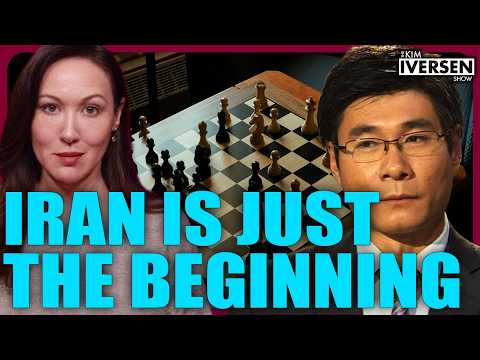
This War Will Not End Quicky | Prof. Jiang Explains

In this interview on the Kim Iverson Show, Prof. Jiang (Xueqin Jiang) discusses his 'Predictive History' methodology, which combines historical pattern analysis with informal game theory to forecast geopolitical events. He compares Trump to Julius Caesar, argues America is heading toward civil war as a means for Trump to consolidate monarchical power, and outlines his 'Pax Judaica' thesis — the claim that transnational capital will migrate from America to Israel, which will become the next global hegemon through AI surveillance technology and Middle Eastern dominance. He predicts a US invasion of Iran in 2027 (contingent on a prior US-China grand bargain), escalating Japan-China conflict over Taiwan, and European remilitarization. The interview is largely uncritical, with host Kim Iverson enthusiastically validating Jiang's frameworks and rarely challenging his claims.

Video thumbnail
youtube.com/watch?v=t5cnf8DqJ_Q ↗ Analyzed 2026-04-02 by claude-opus-4-6

Viewer Advisory

  • The speaker explicitly states that conspiracy theories form his analytical framework — this is not standard academic analysis despite the 'professor' title and Yale credentials.
  • China is treated with systematic favorability while the speaker operates within Chinese censorship constraints — his freedom to criticize the West is itself a product of operating in a system that encourages exactly this.
  • Previous predictions in the Geo-Strategy series that were disconfirmed (Saudi in the coalition, Russia as nuclear guarantor, Nikki Haley as VP) are silently dropped rather than acknowledged.
  • The interviewer provides no pushback, creating an echo chamber.
  • The 'Pax Judaica' thesis involves claims about microchip implants, population replacement, and transhumanist agendas that are unsupported by evidence.
  • The speaker's claim that China is 'one ethnicity' erases 55 minority groups and should alert viewers to significant blind spots in his analysis of China.
Central Thesis

The United States is a declining empire analogous to late-republican Rome, and Trump — acting as a Caesar figure — will pursue wars, civil conflict, and authoritarian consolidation to maintain power, while transnational capital migrates to Israel to establish a new global order ('Pax Judaica') built on AI surveillance and transhumanist technology.

  • Trump is most analogous to Julius Caesar: both used foreign wars to build personal loyalty, both created paramilitary forces loyal only to themselves, and both exploited popular discontent against oligarchic rule.
  • Trump is deliberately instigating civil war conditions through ICE provocations, pardons of controversial figures, and the creation of a 'us vs. them' mentality between left and right.
  • The choice Americans face is between monarchy (Trump) and oligarchy (Democrats), not between democracy and monarchy.
  • Capital historically migrates to the safest location: from the Dutch Republic to England (1688), from England to America (post-WWII), and now from America to Israel.
  • Israel will become the next global hegemon ('Pax Judaica') by combining nuclear weapons, AI surveillance technology, and dominance over a destroyed Middle East.
  • The US will launch a full-scale invasion of Iran in 2027, after first securing a grand bargain with China.
  • China can be 'negotiated away' from Iran, but Russia will never abandon Iran.
  • Japan and China will enter a 'massive conflict' in 2026 driven by competition over Taiwan, trade routes, and rare earth minerals.
  • Conspiracy theorists offer a 'much more coherent understanding of the world' than elite education.
  • AI's true purpose is surveillance technology, digital currency, and emotional manipulation — not consumer applications.
Qualitative Scorecard 1.3 / 5.0 average across 7 axes
Historical Accuracy ▸ Expand
The broad historical references (Caesar crossing the Rubicon, Glorious Revolution of 1688, Bank of England's creation, Napoleon) are superficially accurate but deployed with significant oversimplification. The claim that 'China is just one ethnicity really' is factually wrong — China has 56 officially recognized ethnic groups including Uyghurs, Tibetans, Hui, and Mongols. Blaming WWI entirely on Britain ignores the complex web of alliance obligations, Austro-Hungarian aggression, and German military planning (the Schlieffen Plan). The comparison of ICE to a 'secret police' and 'paramilitary force' is hyperbolic. The claim that Obama deported more immigrants than Trump is broadly accurate for first-term comparison but lacks nuance about policy differences. The characterization of the Bank of England as 'socialized losses, privatized gains' is anachronistic — this describes modern bailout culture more than 17th-century sovereign debt. The shipbuilding ratio claim (250:1) is close to the verified 232:1 figure.
2
Argumentative Rigor ▸ Expand
The argument proceeds almost entirely through assertion, analogy, and conspiracy-theoretic reasoning rather than evidence-based analysis. The core logical chain — (1) capital moved from Netherlands to England to America, therefore (2) it will move to Israel, therefore (3) 'Pax Judaica' is coming — commits a fallacy of false pattern projection. The Caesar-Trump analogy cherry-picks similarities while ignoring fundamental differences (Roman Republic had no constitution, no nuclear weapons, no democratic institutions, no media landscape). The claim that 'there's already an agreement' for Iran invasion is stated without any evidence. The prediction methodology described ('if conspiracy theorists have a point, let's apply their theories') is explicitly anti-empirical. The discussion of AI surveillance collapses into unfounded claims about microchip implants and emotional manipulation. The interviewer provides no pushback, creating an echo chamber that allows each unsubstantiated claim to build on the last without scrutiny.
1
Framing & Selectivity ▸ Expand
The lecture is extraordinarily selective in its evidence. The US is presented as driven entirely by oligarchic interests, Israel lobby manipulation, and Trumpian megalomania — with no consideration of legitimate security concerns, democratic processes, or institutional constraints. Iran is mentioned only as a victim of American/Israeli aggression, with no discussion of Iran's own regional ambitions, proxy networks, or nuclear program. China is presented as a passive, peace-loving nation that 'doesn't want to get involved at all' — ignoring its South China Sea militarization, Taiwan threats, Uyghur repression, and Hong Kong crackdown. The framing of conspiracy theories as more valid than elite education is itself a deeply selective lens that predetermines conclusions. Events are selected to confirm the predetermined narrative (capital migration, imperial decline) while contradictory evidence is systematically excluded.
1
Perspective Diversity ▸ Expand
The interview presents a single conspiratorial worldview without any countervailing perspectives. No alternative interpretations of Trump's behavior are considered (institutional constraints, electoral accountability, bureaucratic resistance). No pro-Israel perspective is engaged with honestly — Israel is presented solely as a manipulative power seeking global domination. No mainstream IR scholars, defense analysts, or economists are cited or engaged with. The interviewer explicitly validates nearly every claim ('it makes sense,' 'you're right,' 'it's frightening because of how accurate it feels') rather than challenging any assertion. Chinese and Russian perspectives are assumed rather than sourced. No Iranian voices or perspectives are included despite Iran being a central subject.
1
Normative Loading ▸ Expand
The language is heavily evaluative throughout. America is described as a 'corrupt oligarchy' with an 'imperial hegemony.' Trump is framed as pursuing 'revenge,' wanting to 'become king,' and creating 'havoc.' The Democrat establishment is described as having 'absolutely no policy ideas.' Israel's ambitions are described through sinister language ('infiltrate our governments,' 'control our governments,' 'microchips in the bloodstreams,' 'slave state'). The British are blamed for 'sowing chaos for hundreds of years.' AI is described as a tool for 'emotional manipulation.' However, some analytical framing is present — the game theory framework, historical analogies, and geopolitical analysis at least attempt an explanatory rather than purely normative approach, even if the execution is heavily biased.
2
Determinism vs. Contingency ▸ Expand
The analysis is rigidly deterministic throughout. 'We've crossed the Rubicon' — there is no going back. Capital 'must' move to Israel. Trump 'will' become king. Civil war 'will' happen. Iran invasion is 'already agreed.' Japan-China conflict is inevitable because 'there's no way around it.' No contingent outcomes are considered: what if Trump faces institutional resistance? What if the economy stabilizes? What if diplomatic solutions emerge? What if voters reject polarization? The only moment of acknowledged uncertainty is when the host asks 'what are the chances none of this happens?' and Jiang dismisses it entirely. Historical patterns are treated as iron laws rather than probabilistic tendencies influenced by specific circumstances.
1
Civilizational Framing ▸ Expand
The civilizational framing is starkly asymmetric. The US/West is portrayed as a declining, corrupt, manipulative imperial system driven by oligarchic greed and lobby manipulation. Israel is portrayed as a cunning, technologically advanced puppet-master engineering global domination. China is portrayed as a peaceful, passive nation that 'doesn't want to get involved at all' and simply engages in 'development and financing.' This framing erases China's own imperial history, current territorial ambitions, authoritarian governance, and active foreign policy. The claim that China is 'just one ethnicity' erases 55 minority ethnic groups. The suggestion that China has less censorship than the US on certain topics conveniently omits that China has the world's most extensive internet censorship system (the Great Firewall).
1
Overall Average
1.3
Civilizational Treatment
CHINA

Portrayed as peaceful, non-interventionist, and a victim of American trade aggression. Described uncritically as a place where you can 'talk about things more openly' (on certain topics). China's authoritarian governance is acknowledged briefly ('red lines,' 'extreme conformity in education') but immediately minimized. China 'doesn't want to get involved at all' in wars. The 55 ethnic minorities are erased with 'China is just one ethnicity.' No mention of South China Sea militarization, Taiwan threats, Uyghur repression, or Hong Kong crackdown.

UNITED STATES

Portrayed as a declining, corrupt empire driven by oligarchic interests, the Israel lobby, and Trumpian megalomania. Described as heading toward civil war, monarchical rule, and imperial collapse. ICE is compared to a secret police. The only positive note is acknowledgment of American resistance to surveillance (COVID mandates). Americans are described as 'soldiers for the oligarchs.'

RUSSIA

Mentioned briefly and treated relatively neutrally as a rational geopolitical actor. Putin's anger at assassination attempts is presented sympathetically. Russia 'will never abandon Iran.' The Ukraine war is framed as a NATO proxy war against Russia, implicitly placing blame on NATO rather than Russian aggression.

THE WEST

The West broadly is portrayed as a declining, censorious civilization where political correctness prevents honest discussion. Europe is described as doomed to conscription and civil war. Britain is blamed for World War I and described as having 'sowed chaos for hundreds of years.' The Western education system is described as having 'failed' Jiang, while conspiracy theories are elevated as superior analytical tools.

Named Sources

primary_document
Thucydides / Peloponnesian War (Athenian Empire analogy)
The Athenian Empire's collapse is invoked as the primary historical analogy for American decline. Used loosely — no specific events, dates, or passages cited.
? Unverified
primary_document
Julius Caesar / Roman Republic
Caesar's Gallic Wars, crossing the Rubicon, and creation of personal loyalty through military campaigns are used as the template for understanding Trump's behavior. Caesar's debt cancellation (jubilee) is cited as a model for Trump's potential populist moves.
✓ Accurate
media
Peter Hegseth ('ethos' doctrine, September)
Referenced as articulating a new military doctrine of 'maximum lethality' and disregarding rules of engagement, used to argue Trump is cultivating special forces loyalty.
? Unverified
media
Miriam Adelson ($250M third-term pledge)
Cited as evidence of Israel lobby resources being deployed to support Trump's potential third term.
? Unverified
media
Elon Musk ($200M midterm pledge)
Cited alongside Adelson as evidence of oligarchic support for Trump's political ambitions.
? Unverified
primary_document
Trump National Security Strategy
Claims to have read the national security strategy and argues it does NOT advocate US retreat to the Western Hemisphere, but rather abandonment of multilateral organizations in favor of pure power politics and divide-and-rule.
? Unverified
data
Pentagon shipbuilding ratio (US vs. China)
Claims 1:250 US-to-China shipbuilding ratio to argue American naval decline. No specific source cited but broadly consistent with ONI assessment of 232:1.
✓ Accurate
media
OpenAI ($1.4 trillion data center investment)
Cited to argue that AI investment is really about surveillance infrastructure, not consumer applications.
? Unverified

Vague Appeals to Authority

  • 'We know exactly what's going to happen because we've seen this playbook before in Libya and Syria' — no specific parallels detailed.
  • 'These past two three years in which I've really engaged with... trying to figure out what happened in 9/11, with the moon landing, with JFK, with COVID' — conspiracy theories invoked as analytical framework without any specific claims or evidence.
  • 'Studies have shown us that ChatGPT has become psychotic where if you're suicidal, it actually encourages you to kill yourself' — no specific study cited.
  • 'There's talk of... plans to deploy the National Guard to all 50 states this year' — no source provided for this claim.
  • 'There was this silly attack against Putin's residence trying to assassinate him a few weeks ago' — no specific details or sourcing.
  • 'The British who caused World War I' — presented as settled fact without any historiographical engagement.

Notable Omissions

  • No engagement with any international relations scholarship (realism, liberalism, constructivism) despite claiming to use analytical frameworks.
  • No mention of Iran's actual military capabilities, order of battle, or the ongoing 2026 Iran war's details despite predicting invasion.
  • No discussion of constitutional constraints on presidential power (separation of powers, Congressional war authority, judicial review) despite predicting Trump will become 'king.'
  • No consideration of American institutional resilience or historical precedent for democratic continuity through crises.
  • No engagement with economic analysis of the US-China relationship beyond simple assertions (trade data, supply chain analyses, USTR reports).
  • No mention of China's own territorial ambitions (South China Sea, Taiwan), authoritarian governance, or human rights record.
  • No discussion of the actual 2026 Iran war already underway at time of upload, despite the upload date being April 1, 2026 — suggesting the interview was recorded weeks or months earlier.
  • No engagement with critics of the 'Israel Lobby' thesis or with Israeli scholars who dispute maximalist interpretations of Israeli strategic ambitions.
  • Complete omission of Saudi Arabia's role as a balancing power — Saudi refused airspace for Iran strikes and condemned them, directly contradicting the narrative of unified anti-Iran coalition.
Historical analogy as proof 00:19:32
Frame at 00:19:32
Extended comparison of Trump to Julius Caesar — both used foreign wars, both created loyal military forces, both faced oligarchic opposition, both crossed the Rubicon.
Makes Trump's alleged monarchical ambitions seem historically inevitable rather than speculative. The analogy selectively matches features while ignoring that the Roman Republic had fundamentally different institutions than the modern US.

Conspiracy validation 00:09:38
Frame at 00:09:38
Jiang states that conspiracy theorists' worldview 'offers a much more coherent understanding of the world than the elite education' he received at Yale.
Elevates conspiracy thinking to a legitimate analytical methodology, inverting the burden of proof. This primes the audience to accept subsequent unfounded claims as 'connecting the dots.'

Appeal to credentials 00:08:22
Frame at 00:08:22
Both Jiang and Iverson repeatedly emphasize his Yale education and the fact that he teaches 'college-level' material to high school students in Beijing.
Creates an implicit authority claim: if a Yale-educated professor finds conspiracy theories more coherent than his education, they must have merit. The credential lends academic respectability to conspiratorial analysis.

False dilemma 00:22:07
Frame at 00:22:07
'The choice for the people is not one between democracy and monarchy. It's really one between monarchy and oligarchy.'
Eliminates democratic alternatives from consideration, making authoritarian outcomes seem inevitable. This framing erases the possibility of reform, institutional resilience, or democratic renewal.

Deterministic escalation chain 00:34:02
Frame at 00:34:02
ICE provocations → pardons → shootings → martial law → National Guard → civil war. Each step is presented as the inevitable consequence of the last.
Creates a sense of inexorable momentum toward catastrophe, making each small event seem like evidence of a grand plan rather than discrete political choices subject to contingency.

Capital migration teleology 00:43:07
Frame at 00:43:07
Dutch Republic → Bank of England (1694) → Federal Reserve → Israel. Capital 'must' move to the safest location, and Israel is presented as the next inevitable destination.
Treats a selective historical pattern as an iron law. By establishing two 'precedents' (to England, then to America), the third step (to Israel) is presented as historically determined rather than as one possible outcome among many.

Sycophantic interview dynamic 00:47:24
Frame at 00:47:24
Host Kim Iverson repeatedly validates claims: 'it makes sense,' 'you're right,' 'it's frightening because of how accurate it feels,' 'amazing,' 'shocking.'
Creates an echo chamber where extraordinary claims receive no scrutiny. The interviewer's enthusiasm functions as social proof for the audience, making unsupported claims seem more credible.

Dystopian extrapolation 00:44:06
Frame at 00:44:06
Israel will 'replace populations with Filipinos, Chinese, Indians, insert microchips into the bloodstreams, and create a perfect surveillance state where emotions are constantly being calibrated.'
Leaps from real Israeli surveillance technology to a science-fiction dystopia without any intermediate evidence. The emotional horror of the scenario substitutes for logical argument.

Insider knowledge claim 01:00:18
Frame at 01:00:18
'There's already an agreement that the United States will go and invade Iran' — stated as settled fact with no source.
Presents speculation as inside information, leveraging the audience's trust in the speaker's claimed analytical framework. The confidence of the assertion discourages questioning.

Selective China exceptionalism 01:04:31
Frame at 01:04:31
'China doesn't want to get involved at all. Maybe financing, but that's it. It will not send in troops anywhere.'
Presents China as uniquely peaceful and non-interventionist, erasing its South China Sea militarization, military threats against Taiwan, border conflicts with India, and deployment of troops to Djibouti. This creates an asymmetric moral framework where only Western nations are imperial.
Frame at 00:04:34 ⏵ 00:04:34
America really much is a falling empire and the way that it behaves is very similar to how the Athenian Empire behaved when it collapsed.
Sets up the core analytical framework — American decline as historically inevitable, compared to Athens. This Thucydidean framing recurs throughout the Predictive History corpus.
Frame at 00:09:23 ⏵ 00:09:23
I started to recognize that maybe the conspiracy theorists have a point... their worldview offers a much more coherent understanding of the world than the elite education.
Explicitly elevates conspiracy thinking over academic analysis. This is the methodological foundation of the entire Predictive History project — a remarkable admission that undermines claims to scholarly rigor.
Frame at 00:16:36 ⏵ 00:16:36
China is just one ethnicity really... it's a homogeneous society and so there just isn't that focus on political correctness.
Factually incorrect — China has 56 officially recognized ethnic groups. This erasure of China's ethnic diversity (including Uyghurs, Tibetans, Hui, Mongols, and others) reveals a deeply uncritical view of China. The claim about 'no political correctness' ignores China's own extensive speech restrictions.
Jiang praises China's lack of 'political correctness' while teaching in a system where 'the red line is you can't say things that offend the communist party.' China's speech restrictions are far more severe than American political correctness — covering Tiananmen Square, Xinjiang, Tibet, Taiwan, and any criticism of CCP leadership. The freedom Jiang enjoys is precisely the freedom to criticize other countries, not his host country.
Frame at 00:11:20 ⏵ 00:11:20
As long as you don't cross certain red lines, you're allowed to teach whatever you want.
A revealing admission about the conditions of Jiang's 'freedom' in China — he can say anything except things that offend the Communist Party. This is presented as a positive 'gray area' rather than as censorship.
Jiang criticizes Western censorship through political correctness while operating within a system where the government dictates textbooks, monitors public schools 'very heavily,' and enforces 'extreme conformity.' The irony is that his 'freedom' to criticize the West is itself a product of Chinese censorship priorities — criticizing America aligns with state interests.
Frame at 01:00:18 ⏵ 01:00:18
There's already an agreement that the United States will go and invade Iran... this is already settled.
States as established fact what is pure speculation. No evidence is provided for this 'agreement.' This represents the most extreme example of Jiang's pattern of presenting conjecture as insider knowledge.
Frame at 00:51:05 ⏵ 00:51:05
You can entirely blame World War I on the British. I mean, I know it's the Germans who got blamed, but it's really the British who caused World War I.
A dramatic oversimplification of WWI causation that ignores a century of historiographical debate. Deployed to support the thesis that small nations (Britain, Israel) maintain power through chaos — a conspiratorial framework applied to complex historical events.
Frame at 00:44:10 ⏵ 00:44:10
You can insert microchips into the bloodstreams and now you have this perfect surveillance state where everyone is monitored, but not only is everyone monitored, but their emotions are constantly being calibrated, being controlled.
Reveals the conspiratorial core of the 'Pax Judaica' thesis — a dystopian vision of microchipped populations with controlled emotions. This is presented as a plausible near-term outcome rather than science fiction.
Jiang describes a dystopian surveillance state where emotions are 'constantly being calibrated' — yet China already operates the world's most extensive surveillance system, including facial recognition, social credit scoring, and mass monitoring of Uyghur populations. The scenario he attributes to a future Israeli project is closer to China's present reality than any other country's.
Frame at 01:04:31 ⏵ 01:04:31
China doesn't want to get involved at all... Maybe financing, but that's it. It will not send in troops anywhere.
Presents China as uniquely peaceful in a world of aggressive powers. This claim erases China's military buildup, South China Sea island-building, threats against Taiwan, border clashes with India, and its military base in Djibouti.
While portraying China as purely peaceful, China has militarized artificial islands in the South China Sea, conducted aggressive military exercises around Taiwan (including simulated blockades), engaged in border conflicts with India at Galwan Valley, and maintains the world's largest standing military. China's 2026 defense budget is up 7% to ~$278B.
Frame at 00:22:07 ⏵ 00:22:07
The choice for the people is not one between democracy and monarchy. It's really one between monarchy and oligarchy. And given this choice, historically people choose to pick monarchy.
Eliminates democracy as a real option from the analysis. This deterministic framing treats democratic institutions as mere facades, making authoritarian outcomes seem inevitable.
Jiang frames America's political choice as 'monarchy vs. oligarchy' while teaching in China — a one-party state that has never offered its citizens any choice between political systems. The 'extreme conformity' he acknowledges in Chinese education extends to political life, where alternatives to CCP rule are not merely unlikely but illegal.
Frame at 00:10:23 ⏵ 00:10:23
What I try to teach students is not facts. What I try to teach students is a certain attitude, a certain framework for understanding the world, which is to question things and try to connect the dots even though connecting the dots may lead you to uncomfortable truths.
Reveals the pedagogical approach — teaching 'attitude' and 'framework' rather than facts. While critical thinking is valuable, 'connecting the dots' in Jiang's usage means finding conspiratorial patterns, not rigorous empirical analysis.
Jiang champions 'questioning things' and 'connecting dots' as his pedagogical philosophy — but this questioning is directed exclusively outward at Western institutions. He acknowledges that questioning the Chinese Communist Party would cross 'red lines.' The critical thinking he teaches is structurally one-directional: criticize the West, accept China's system.
prediction Trump will pardon Derek Chauvin in the next few weeks.
00:25:07 · Falsifiable
untested
No pardon announced as of April 2, 2026. 'Next few weeks' from the apparent recording date (early-mid March 2026) has largely elapsed.
prediction The ICE officer involved in the Minnesota shooting will be invited to the White House as a guest of honor.
00:38:18 · Falsifiable
untested
No such invitation publicly reported as of April 2, 2026.
prediction The National Guard will be deployed to all 50 states this year (2026).
00:26:03 · Falsifiable
untested
No 50-state National Guard deployment announced as of April 2, 2026.
prediction America is heading towards a civil war.
00:18:54 · Falsifiable
untested
No armed civil conflict has materialized. Political polarization is high but no organized factional violence at civil war scale.
prediction The United States will launch a full-scale invasion of Iran in 2027.
00:59:42 · Falsifiable
partially confirmed
US launched massive air/missile campaign against Iran in Feb 2026 — one year ahead of predicted timeline. However, this was air/missile only, not the 'full-scale invasion' with ground troops that Jiang predicted. Pentagon has drawn up ground operation plans (Kharg Island raids) but no ground invasion has occurred. Timeline wrong but direction correct.
prediction Trump will visit Beijing in April 2026 to negotiate a grand bargain with China.
00:54:14 · Falsifiable
disconfirmed
Trump-Xi summit was originally scheduled for Mar 31-Apr 2 but was postponed indefinitely due to the Iran war. Rescheduled to May 14-15 in Beijing. No grand bargain has been reached; US-China tensions continue with 47% tariffs and reciprocal trade investigations.
prediction China and the United States will reach a 'grand bargain' before the US moves against Iran.
01:00:59 · Falsifiable
disconfirmed
The US attacked Iran on Feb 28, 2026, without any prior grand bargain with China. China tariffs remain at 47%, trade investigations continue, and summit was postponed. The entire causal chain (bargain first, then Iran) was wrong.
prediction A massive conflict will arise between Japan and China in 2026 over Taiwan and trade routes.
00:57:17 · Falsifiable
untested
No military confrontation between Japan and China as of April 2, 2026. Japan has record defense budget (9.04T yen) but tensions have not escalated to 'massive conflict.' Both countries' attention is focused on the Iran war and Hormuz blockade.
prediction European nations will move toward conscription, especially Germany.
00:53:50 · Falsifiable
partially confirmed
Germany has massively rearmed (€108B budget, 260K troop target, 3.5% GDP by 2029) but has not reinstated formal conscription. Several European nations are debating or expanding military service, but full conscription has not been enacted.
prediction The remilitarization of Germany will antagonize other European nations.
00:53:55 · Falsifiable
partially confirmed
Germany's €108B defense budget and 650B over 5 years plan is proceeding. Some European unease exists but the dominant reaction has been allied coordination rather than antagonism, driven by shared Russia threat.
claim Russia has basically decided that the Ukraine war can only be decided on the battlefield and negotiations are hopeless.
00:53:38 · Falsifiable
partially confirmed
Trilateral Abu Dhabi peace talks are paused due to Iran war. Russia continues offensive operations including a spring offensive. However, 67% of Russians now support peace negotiations, and bilateral talks continue (Miami Mar 21-22). Russia has not fully abandoned diplomacy.
claim There's already an agreement that the United States will go and invade Iran.
01:00:18 · Falsifiable
partially confirmed
The US did attack Iran on Feb 28, 2026, with massive air/missile strikes. However, characterizing this as a pre-existing 'agreement' for a 'full-scale invasion' is unverified — no evidence of a formal agreement, and the attack was air-only, not a ground invasion.
prediction Maduro's trial will reveal evidence that Venezuela participated in 2020 US election fraud.
00:24:31 · Falsifiable
untested
Maduro's trial has not yet occurred. Judge Hellerstein rejected defense motion to dismiss charges (Mar 26) but trial is unlikely in 2026 per legal experts.
prediction China will finance a Russian blue-water navy to protect Chinese trade interests.
00:58:27 · Falsifiable
untested
No public evidence of Chinese financing for Russian naval expansion as of April 2, 2026.
claim The US can produce one ship for every 250 ships that China produces.
00:58:35 · Falsifiable
confirmed
ONI assessment confirmed a 232:1 ratio (23.25M tons vs <100K tons). The speaker's 250:1 figure is close to the verified number.
claim Trump and Xi are scheduled to meet four times in 2026.
00:54:23 · Falsifiable
disconfirmed
Only one summit has been scheduled (originally Mar 31-Apr 2, postponed to May 14-15). No four-meeting schedule has been announced.
claim Both Democrats and Republicans have paramilitary factions (Proud Boys, Antifa) that can be deployed for political purposes.
00:33:02 · Not falsifiable
unfalsifiable
prediction Israel will become the dominant nation in the Middle East and create a 'Pax Judaica.'
00:43:22 · Falsifiable
untested
Israel is currently engaged in active wars in Lebanon (4 IDF divisions) and Iran (decapitation campaign). Regional dominance is contested, not established.
claim We've been in World War III ever since 2022 when Russia invaded Ukraine.
00:52:21 · Not falsifiable
unfalsifiable
This is a framing claim about how to categorize existing conflicts, not a falsifiable prediction.
claim The real purpose of AI is surveillance technology, digital currency, and emotional manipulation of individuals.
00:39:29 · Not falsifiable
unfalsifiable
Verdict

Strengths

Jiang correctly identified several broad trends: US-Iran conflict (though timeline and form were wrong), German remilitarization, escalating global tensions in 2026, and the approximate US-China shipbuilding disparity. His insistence that the Iran conflict would not end quickly has proven prescient — as of Day 34 the war continues with no resolution. His analysis of Trump's psychology and desire for power consolidation, while overstated, captures real elements of the political dynamic. The historical analogies, while oversimplified, provide accessible frameworks for viewers unfamiliar with geopolitical analysis.

Weaknesses

The analysis is fundamentally conspiratorial rather than empirical. Core predictions about the causal chain (China bargain → Iran invasion) were wrong. The 'Pax Judaica' thesis devolves into microchip-implant dystopia without evidence. Factual errors (China as 'one ethnicity'), silent dropping of disconfirmed predictions, and the explicit elevation of conspiracy theories over academic analysis undermine credibility. The interview format with an uncritical host allows extraordinary claims to pass without scrutiny. China is treated with remarkable credulity — presented as peaceful, non-interventionist, and free of political correctness — while teaching under CCP censorship constraints that structurally incentivize anti-Western criticism. The complete omission of the ongoing 2026 Iran war (despite the April 1 upload date) suggests the interview was recorded well before upload, making some predictions appear more prescient than they were.

Cross-References

BUILDS ON

  • Geo-Strategy #8: The Iran Trap — Jiang repeats the Iran invasion prediction, the Israel lobby thesis, the AIPAC influence argument, the shipbuilding ratio, and the Rome/Athens analogy. The core framework is identical.
  • Secret History series — Referenced directly by host as containing the Pax Judaica thesis and 'Dawn of the Jews' content.
  • Geo-Strategy series — The game theory framework, Trump psychology analysis, and World War III escalation scenarios are consistent with earlier geo-strategy lectures.

CONTRADICTS

  • Geo-Strategy #8: The Iran Trap — In that lecture, Jiang predicted the invasion would happen in 'two to four years' (from May 2024), placing it at 2026-2028. Here he pushes it to 2027, requiring a grand bargain with China first. In reality, the US attacked Iran in Feb 2026 without any China bargain — contradicting the causal chain in this interview.
  • Geo-Strategy #8: The Iran Trap — Previously predicted Saudi Arabia would join the coalition against Iran. Saudi Arabia actually refused airspace and condemned strikes. This interview does not mention Saudi Arabia at all, silently dropping the disconfirmed prediction.
  • Geo-Strategy #8: The Iran Trap — Previously predicted Russia would serve as a 'nuclear guarantor' preventing any party from using nuclear weapons. The Russia-Iran treaty lacks a mutual defense clause, and Russia did not prevent US-Israeli strikes. This interview avoids the nuclear guarantor claim entirely.
This interview follows a consistent pattern across the Predictive History corpus: (1) historical analogies presented as proof rather than illustration, (2) conspiracy theories elevated to analytical frameworks, (3) deterministic predictions stated with absolute confidence, (4) systematically favorable treatment of China and unfavorable treatment of the US/West/Israel, (5) silent dropping of disconfirmed predictions from earlier lectures while highlighting confirmed ones. The interview format reveals something the classroom lectures obscure — when an interviewer asks 'what are the chances none of this happens?', Jiang has no probabilistic framework; he can only assert certainty. The 'game theory' label is deployed for legitimacy but no actual game-theoretic analysis (payoff matrices, equilibrium concepts, strategic interaction modeling) is ever performed.