Predictive History Audit / Systematic Content Analysis
Secret History
Episode 1 · Posted 2025-08-22

How Power Works (4K Re-Upload with Audio Fixed)

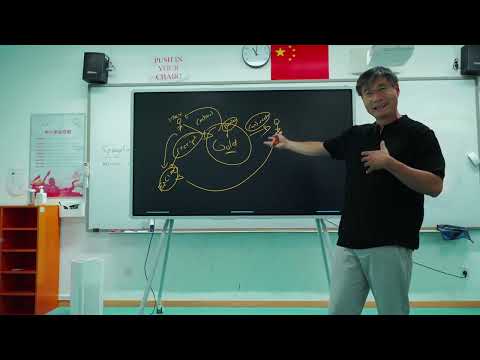
This introductory lecture for the 'Secret History' semester-long course presents a framework for understanding power through three examples: money, individualism, and the nation state. The speaker argues that banks create money from nothing, that poverty exists deliberately to incentivize labor, that the modern scientific/individualist worldview enslaves people by preventing collective action, and that compulsory schooling exists to brainwash citizens into believing in the nation state. The lecture claims all three concepts originate from monotheism, and that 'power' is fundamentally alchemy — the capacity to turn nothing into everything. The course is presented as an attempt to reveal a 'secret history' hidden by those in power, using geopolitical analysis and predictions to validate the analytical model.

Video thumbnail
youtube.com/watch?v=lt8XLz78ZvY ↗ Analyzed 2026-03-14 by claude-opus-4-6

Viewer Advisory

  • The epistemological foundation — Kant's 'reality is what we imagine it to be' — is a serious misrepresentation of Kantian philosophy that the entire course builds upon.
  • The claim that money is 'infinite' and poverty is 'artificial' conflates money creation with real resource availability; mainstream economics has nuanced explanations for both.
  • The anti-psychiatry advice ('the psychiatrist will make it a lot worse') contradicts evidence-based medicine and could harm vulnerable viewers.
  • The argument is structured to be unfalsifiable — disagreement is framed as evidence of brainwashing, which is a hallmark of conspiracy thinking rather than critical analysis.
  • The lecture draws heavily on David Graeber's 'Debt: The First 5000 Years' and Ivan Illich's 'Deschooling Society' without attribution, presenting their arguments as original insights.
  • The lecture is delivered to students in China but does not apply its framework of power, brainwashing, and state control to the Chinese state itself, which represents a significant blind spot.
  • The polytheistic worldview is romanticized while modern science is dismissed as 'basically religion' — viewers should consult actual scholarship on both topics.
Central Thesis

Power operates by making people believe in artificial constructs — money, the individual, and the nation state — all originating from monotheism, which function to extract labor and obedience from populations who have been brainwashed through schooling into accepting these illusions as reality.

  • Banks create money from nothing through fractional reserve lending; money is infinite, not scarce, and the illusion of scarcity is deliberately maintained by the powerful to incentivize labor.
  • Poverty is artificially created and maintained by those in power to make money seem valuable and motivate people to work.
  • Wars and economic crises exist primarily to destroy wealth, thereby reinforcing the illusion that money is scarce.
  • The modern scientific/individualist worldview (neuroscience, psychology, psychiatry) is a system of control that replaces polytheism, making people incapable of collective action by localizing all problems within the individual.
  • The ancient polytheistic worldview, with its concept of eudaimonia (flourishing), was a more accurate reflection of reality than modern scientific materialism.
  • Psychiatry and psychology are designed to make people dependent on authority rather than to cure them.
  • Compulsory schooling was invented by war-making societies (Sparta, Aztecs, Prussia) and exists to separate children from parents in order to brainwash them into believing in the nation state.
  • History as taught in schools is a 'false memory' of the nation state implanted to produce obedient citizens.
  • The concepts of money, individualism, and the nation state all derive from the monotheistic revolution in human thought.
  • Power is 'alchemy' — the ability to turn nothing into everything, making people believe in constructs that don't objectively exist.
Qualitative Scorecard 1.6 / 5.0 average across 7 axes
Historical Accuracy ▸ Expand
The lecture contains multiple factual errors and oversimplifications. Kant's philosophy is seriously misrepresented — he did not argue that 'reality is what we imagine it to be' but maintained that an objective noumenal reality exists even though we cannot access it directly; reducing his transcendental idealism to subjective constructivism is a fundamental distortion. The claim that 'time and space do not exist in reality' is a misreading of Kant's position that time and space are forms of intuition (conditions of experience), not that they don't exist. The history of banking is simplified to the point of inaccuracy — while the basic mechanics of fractional reserve lending are roughly correct, the characterization of banker cartels overthrowing kings and the evolution into central banking skips centuries of complex institutional development. The claim that Sparta, Aztecs, and Prussia were the only three societies with compulsory education is historically dubious — other societies had various forms of compulsory education. The Aztec calmecac system was specifically for nobility, not universal. The characterization of money as historically representing 'debt that could never be repaid' draws on anthropological work (likely Graeber) but presents it without nuance or attribution. The claim that the concept of the individual 'did not exist before' is a dramatic oversimplification of a complex philosophical and historical question.
2
Argumentative Rigor ▸ Expand
The lecture's arguments are internally contradictory and rely heavily on assertion rather than demonstration. The most glaring contradiction: the speaker claims money is infinite and not scarce, then uses this to argue poverty is artificially maintained — but this ignores that money represents claims on real resources, which ARE finite. When students correctly point out that resources like food and land are limited, the speaker dismisses this as 'scarcity mindset' brainwashing, conflating the infinity of nominal money with the finite nature of real goods and services. This is a fundamental economic error. The argument that 'wars exist to destroy wealth' ignores the vast literature on the causes of war and presents a single-cause explanation for one of humanity's most complex phenomena. The comparison between polytheism and modern science as competing worldviews commits a category error — these are not equivalent types of claims about reality. The leap from 'Sparta had compulsory education and was militaristic' to 'all schools exist for brainwashing' is a textbook non sequitur. The argument that children cannot be brainwashed if their parents are present has no empirical support. Throughout, the speaker uses Socratic questioning to guide students toward predetermined conclusions while presenting these as discoveries, creating an illusion of rigorous reasoning.
1
Framing & Selectivity ▸ Expand
The lecture is extraordinarily selective in its evidence. Only examples that support the thesis are presented; counterevidence is systematically excluded. Public education's role in literacy, social mobility, scientific advancement, and democratic participation is never mentioned. The benefits of modern medicine, including psychiatry, are dismissed in a single sentence. The lecture presents three war-making societies with compulsory education while ignoring the many non-militaristic societies that also developed educational systems. The portrayal of ancient societies as uniformly communal and generous ignores slavery, extreme social stratification, and violence that characterized most pre-modern societies. The framing consistently presents modern institutions (banking, science, education, nation states) as pure mechanisms of control with no legitimate functions, while romanticizing pre-modern alternatives. When students raise valid objections (real resource scarcity, the role of parents in education), their points are dismissed as evidence of 'brainwashing' rather than engaged with substantively.
1
Perspective Diversity ▸ Expand
The lecture presents a single perspective throughout — a radical constructivist critique of modernity — with no engagement with alternative viewpoints. When students offer mainstream economic reasoning (scarcity of resources), their perspectives are explicitly labeled as 'brainwashing.' No mainstream economists, historians, education scholars, or philosophers are engaged with. The entire structure is designed to present one framework as the hidden truth, with all alternative views characterized as illusions created by power. There is no acknowledgment that reasonable people might disagree about the nature of money, the value of education, or the role of individualism.
1
Normative Loading ▸ Expand
The lecture is overwhelmingly normatively loaded. Modern civilization is characterized entirely through language of control and oppression: 'brainwashing' (used 15+ times), 'slaves,' 'artificial misery,' 'false memory,' 'illusion.' The modern world is described as making people live 'extremely miserable lives.' Science is called 'basically religion.' Psychiatry is described as designed to 'make it a lot worse.' Schools are described as places that 'brainwash' rather than educate. By contrast, pre-modern polytheistic societies are characterized with exclusively positive language: 'superior,' 'flourishing,' 'the best.' This is not analytical language — it is polemical language designed to provoke emotional responses rather than careful reasoning.
1
Determinism vs. Contingency ▸ Expand
The lecture presents a highly deterministic view of history driven by a single causal mechanism — 'power' operating through constructed illusions. All of modern civilization (money, individualism, nation states, schools, psychiatry) is explained as the product of a unified system of control. This leaves almost no room for contingency, accident, or alternative explanations. The speaker does briefly acknowledge at the end that the current system was 'an accident of the human imagination,' which slightly moderates the determinism, but this acknowledgment sits uneasily alongside the rest of the lecture's framing of power as deliberately and systematically engineering human society.
2
Civilizational Framing ▸ Expand
This lecture is relatively even-handed in its civilizational framing compared to the Geo-Strategy series. The speaker explicitly states 'China is exactly the same as other places' and applies the brainwashing critique to all nation states equally, including China ('mother China'). The critique of school brainwashing is applied to Chinese schools as readily as Western ones. Greek civilization receives the most favorable treatment as possessing a superior worldview. However, the broader series trajectory (as indicated by the course description) suggests this even-handedness may shift in later lectures.
3
Overall Average
1.6
Civilizational Treatment
CHINA

China is treated relatively neutrally in this lecture. Chinese banks are used as examples of money creation without value judgment. The concept of 'mother China' is explicitly critiqued as a brainwashing tool — the speaker says Chinese national identity forces people from Beijing, Yunnan, Tibet, and Guangxi to believe they are the same despite having 'absolutely nothing in common.' Chinese communal feast traditions are referenced positively. Overall, China is subjected to the same critique as all nation states.

UNITED STATES

The United States is mentioned only once in passing as an example of a nation state alongside China and France. No specific critique is directed at the US in this lecture.

THE WEST

The modern West is implicitly criticized as the source of the individualist/scientific worldview that the speaker argues enslaves people. Western philosophy (Kant), Western institutions (banking, modern education), and Western concepts (the individual, the nation state) are all characterized as mechanisms of control. However, ancient Greek civilization (part of the Western tradition) is characterized as 'superior to us' for its polytheistic worldview and concept of eudaimonia.

Named Sources

scholar
Immanuel Kant (noumena/phenomena distinction)
Kant's distinction between noumena ('things in themselves') and phenomena ('things as they appear to us') is used to establish the epistemological foundation that 'reality is what we imagine it to be' and that our perceptions construct rather than reveal truth. This framing then supports the claim that money, individualism, and the nation state are imagined constructs.
✗ Inaccurate
other
Greek polytheistic worldview / Homer / Oedipus / Plato
Greek civilization is referenced as embodying a superior worldview (polytheism with eudaimonia) compared to modern scientific materialism. Homer, Oedipus, and Plato are name-dropped as examples of Greek intellectual achievement but none are specifically quoted or engaged with.
? Unverified
other
Sparta's educational system (agoge)
Cited as one of three societies with compulsory public education, used to argue that schooling originates in militarism and brainwashing rather than learning.
? Unverified
other
Aztec educational system (telpochcalli/calmecac)
Cited alongside Sparta and Prussia as a war society with compulsory education, reinforcing the argument that schooling exists for militaristic indoctrination.
? Unverified
other
Prussian educational system
Cited as the model that 'everyone uses today' for public schooling, presented as originating from a militaristic society dedicated to war-making.
? Unverified
data
Chinese state banks (Bank of China, ICBC, Agricultural Bank of China)
Cited as evidence that banks create money from nothing — their growth to become the world's largest banks is attributed to massive lending for infrastructure rather than organic deposit growth.
? Unverified

Vague Appeals to Authority

  • 'Throughout most of human history, money represented debt that could never be repaid' — presents a specific anthropological thesis (resembling David Graeber's work) as established fact without attribution.
  • 'If you just do the mathematics, what you will discover is there's enough food to feed everyone' — asserts a specific empirical claim without citing any data source.
  • 'The Greeks were superior to us' — sweeping civilizational claim presented as self-evident.
  • 'For most of human history, the dominant religion was polytheism' — broad historical generalization without nuance.
  • 'Throughout every society, if I became rich one day, the first thing I would do is hold a big feast' — presents a contested anthropological claim as universal historical fact.
  • 'What you will learn in this class is it is completely wrong' — regarding the scientific/neuroscientific worldview, asserted without any evidence.

Notable Omissions

  • No engagement with mainstream economics on money creation — while fractional reserve banking is real, the lecture omits the role of central bank regulation, reserve requirements, capital adequacy ratios, and the actual constraints on money creation. Post-2008 scholarship (e.g., Bank of England 2014 paper on money creation) would provide a more nuanced picture.
  • David Graeber's 'Debt: The First 5000 Years' is heavily drawn upon (money as debt that can never be repaid, feast economies, money's origins in social obligation) without any attribution.
  • No engagement with the substantial literature on why public education developed — the Enlightenment project, democratic citizenship, economic development theory, or the complex history of education reform.
  • Kant's philosophy is seriously misrepresented — Kant did not argue that 'reality is what we imagine it to be' but rather that our experience of reality is structured by the categories of understanding. Kant was an epistemological realist who believed in an objective reality, not a radical constructivist.
  • No engagement with the extensive literature on nation-state formation (Benedict Anderson's 'Imagined Communities', Ernest Gellner's 'Nations and Nationalism', Eric Hobsbawm) which would provide far more nuanced accounts of nationalism than simple 'brainwashing.'
  • The claim that psychiatry makes people worse contradicts extensive evidence-based research on the efficacy of psychiatric treatment and psychotherapy (e.g., meta-analyses in The Lancet, JAMA Psychiatry). No anti-psychiatry scholars (Thomas Szasz, Michel Foucault) are cited either.
  • No acknowledgment that the 'polytheistic worldview' coexisted with slavery, extreme social hierarchy, patriarchy, and widespread human suffering in ancient societies.
  • No engagement with the philosophical literature on social constructionism vs. realism — the idea that money, nations, and individualism are 'constructed' is well-explored by scholars like John Searle ('The Construction of Social Reality') but with far more rigor.
Socratic leading questions 00:23:04
Throughout the lecture, the speaker asks questions ('Why do we have poverty?', 'What's the problem with this system?', 'Why do we have schools?') then dismisses student answers that don't match his predetermined conclusions, labeling them as evidence of brainwashing.
Creates the appearance of open inquiry while actually funneling the audience toward a single predetermined conclusion. Students who give mainstream answers are told they are 'stuck in the scarcity mindset' or 'brainwashed,' which discourages genuine critical engagement.
Revelation narrative 00:06:30
'All the history that you learn in school or that history that you think you know — it is false. The history that you believe is a system implanted into your brains by powerful people.'
Establishes the speaker as a revealer of hidden truth, immediately framing all prior education as deception. This makes the audience dependent on the speaker as the sole source of 'real' knowledge and pre-emptively delegitimizes any competing information.
Dismissal of objections as evidence of the thesis 00:30:43
When students correctly note that resources like food and land are finite, the speaker responds: 'You guys are stuck in the scarcity mindset... it's very convincing.' He treats their empirically valid objections as proof that brainwashing has been effective.
Creates an unfalsifiable framework — any disagreement confirms the thesis (you're brainwashed if you disagree). This is a classic feature of conspiracy thinking and prevents genuine intellectual engagement.
False equivalence / category error 00:28:23
Comparing reality to a World of Warcraft game: 'World of Warcraft in our world, there's actually no difference. You just run around pointlessly working hard to obtain credits in order to buy stuff.'
By equating the real economy (where money represents claims on finite physical resources, labor, and services) with a video game (where credits are purely digital abstractions), the speaker makes the infinite-money argument seem intuitive to a young audience familiar with gaming.
Appeal to antiquity 00:49:58
'The Greeks were superior to us. If you read Greek literature, if you read Greek philosophy — Plato, Homer — they were the best. Today we suck.'
Romanticizes ancient civilization to delegitimize modern institutions. The blanket claim of Greek 'superiority' ignores slavery, patriarchy, infanticide, and other features of ancient Greek society that would complicate this idealized picture.
Shock pedagogy 00:52:02
'The correct answer is brainwashing. Everything else is a lie.' — in response to students suggesting schools exist for learning, degrees, and knowledge.
Deliberately provocative statements create emotional arousal and a sense of privileged insight. Students who accept this framing feel they have been let in on a secret, creating in-group loyalty to the speaker's framework.
Emotional manipulation through parental anxiety 00:59:17
Asks parents what their worst fear is (losing a child), then states: 'School is designed to take your child away from you.' Argues that separated children feel 'insecure, anxious, afraid' and therefore accept teacher authority unquestioningly.
Activates primal parental anxiety to make the audience emotionally receptive to the claim that schools are fundamentally exploitative. This bypasses rational analysis by triggering protective instincts.
Anti-authority bootstrapping 01:01:45
When a student asks 'So are you brainwashing us?', the speaker responds by noting his class is pass/fail with no tests, and students can choose to leave — distinguishing himself from the institutional authority he critiques.
Pre-empts the most obvious objection to his framework (that he himself is an authority figure in a school) by positioning himself as uniquely different from the system. This exempts his own authority from the critique he applies to all other authority figures.
Motte-and-bailey argumentation 00:24:19
The speaker oscillates between defensible claims (banks do create money through lending; nations are social constructs; education serves state interests) and extreme claims (poverty is deliberately created to enslave people; all schooling is brainwashing; psychiatry makes people worse).
When challenged, the speaker can retreat to the defensible claims (the 'motte'), but the lecture's actual impact comes from the extreme claims (the 'bailey'). Students leave with the impression that the extreme claims have been demonstrated when only the moderate claims have been supported.
Repetition and insistence 00:24:43
'Money is not scarce. It is infinite.' — repeated multiple times with increasing emphasis. 'You guys can't get out of your head. You think money is scarce.' 'No matter what I say to you, you still believe this.'
Repetition of a half-truth (nominal money can be created infinitely) while ignoring the valid distinction students keep making (real resources are finite) wears down resistance through persistence rather than argument.
⏵ 00:06:30
All the history that you learn in school or that history that you think you know — it is false. The history that you believe is a system implanted into your brains by powerful people.
Establishes the epistemological foundation of the entire course — all conventional knowledge is presented as deliberate deception by elites, positioning the speaker as the sole source of authentic understanding.
The speaker teaches in a Chinese institution where the state controls historical narratives far more directly than in pluralistic democracies — textbooks omit Tiananmen Square, the Great Leap Forward's famine death toll, and Tibetan/Uyghur histories. If history taught in school is 'a system implanted by powerful people,' Chinese state education is the most systematic example of exactly this.
⏵ 00:24:32
Power has brainwashed you into thinking something that is not true. You've been taught from the first day that money is scarce. But it's not scarce. It's infinite.
Encapsulates the lecture's central conflation — between nominal money (which can be created) and real purchasing power (which is constrained by real resources). This error is foundational to the entire argument about artificial poverty.
⏵ 00:27:02
Poverty isn't what you do to yourself, it is what the powerful do to you.
Reduces the complex, multicausal phenomenon of poverty to a single explanation — deliberate elite action. While structural causes of poverty are real and important, this formulation eliminates all other factors (geography, technology, governance quality, path dependence) and implies a conspiracy rather than systemic dynamics.
China's Great Leap Forward (1958-1962) is perhaps history's starkest example of 'what the powerful do to you' — Mao's policies directly caused an estimated 15-55 million famine deaths. Yet the speaker, teaching in China, does not apply this framework to CCP history.
⏵ 00:52:02
The correct answer is brainwashing. Everything else is a lie.
Reveals the lecture's absolutist epistemology — there is one correct answer (the speaker's), and all alternatives are not just wrong but actively deceptive. This is the opposite of critical thinking despite the lecture's stated goal of teaching students 'how to think.'
The speaker claims schools brainwash students into accepting authority — then tells students that the 'correct answer' about why schools exist is his answer, and 'everything else is a lie.' He replaces one authority structure with another while claiming to liberate students from authority.
⏵ 00:45:21
If you're ever feeling sad and you are depressed... I will make you bet that the psychiatrist will make it a lot worse. You will feel worse after talking to psychiatrist.
This is arguably the lecture's most irresponsible claim — discouraging students from seeking psychiatric help. It contradicts extensive evidence on the efficacy of psychotherapy and psychiatric treatment. Delivered to a young audience in a position of institutional authority, this could have real health consequences.
⏵ 00:49:58
The Greeks were superior to us. If you read Greek literature, if you read Greek philosophy — Plato, Homer — they were the best. Today we suck.
Reveals a deeply romanticized view of ancient civilization that ignores slavery, patriarchy, infanticide, constant warfare, and extreme inequality in Greek society. This idealization serves the lecture's narrative that modernity represents decline from an earlier golden age.
⏵ 00:59:26
School is designed to take your child away from you... It's only because you've been taken away from your parent that you are now willing to be brainwashed.
Presents compulsory education as fundamentally an act of violence against the family unit. While valid critiques of institutional education exist, this characterization ignores education's role in empowering children to think beyond their family's worldview — ironically, exactly what the speaker claims to be doing.
China's Cultural Revolution (1966-1976) literally mobilized children against their parents, encouraging them to denounce family members. The speaker's framework about power separating children from parents to control them describes Maoist practice far more accurately than modern schooling.
⏵ 00:22:12
What you will learn in this class is central banking controls the world today.
Presents a conspiratorial view of global finance as a definitive claim. While central banks are powerful institutions, the claim that they 'control the world' is a dramatic oversimplification that echoes longstanding conspiracy theories about banking elites.
China's central bank (PBOC) is directly controlled by the CCP and the State Council, making it perhaps the world's most politically directed central bank. If central banking 'controls the world,' the Chinese system represents the most explicit fusion of state power and monetary control — yet this is not examined.
⏵ 01:06:26
This means that you're all slaves.
The lecture's rhetorical climax — after establishing that money, individualism, and the nation state are artificial constructs maintained through brainwashing, the speaker delivers the ultimate provocation. The use of 'slaves' is maximally emotionally charged and frames modern life as fundamentally unfree.
The speaker delivers this message to students in China, a country with significant restrictions on speech, assembly, internet access, and political participation — restrictions that arguably constitute more tangible unfreedom than the abstract 'slavery' to monetary and national constructs he describes. The irony of declaring students 'slaves' to constructed beliefs while operating within a system that imprisons people for challenging its own constructs is profound.
⏵ 00:03:09
Reality is what we imagine it to be. There is no objective reality.
This misrepresentation of Kant becomes the epistemological foundation for the entire course. Kant actually argued the opposite — that objective reality (noumena) exists but is inaccessible to direct perception. The speaker converts Kant's epistemological humility into radical relativism, which then permits him to dismiss any inconvenient fact as a 'constructed' illusion.
claim The course's geopolitical analytical model will make correct predictions about the future, which will validate its framework for understanding the 'secret history' of the world.
00:05:31 · Not falsifiable
unfalsifiable
This is a meta-claim about the course's methodology rather than a specific testable prediction.
Verdict

Strengths

The lecture succeeds as a provocative introduction that engages students and challenges their assumptions. The basic mechanics of fractional reserve banking are roughly correct. The observation that nations are social constructs draws on legitimate scholarship (Benedict Anderson, Ernest Gellner). The point that education systems serve state interests has a scholarly basis (Foucault, Bourdieu, Illich). The emphasis on questioning authority and thinking critically is laudable in principle. The classroom dynamic shows genuine student engagement and willingness to challenge the speaker.

Weaknesses

The lecture contains serious intellectual and ethical problems. Kant's philosophy is fundamentally misrepresented to serve the argument. The conflation of nominal money creation with real resource availability is an elementary economic error that students correctly identify but are told reflects their 'brainwashing.' The anti-psychiatry advice could genuinely harm students who need mental health support. The argument structure is unfalsifiable — any disagreement is attributed to brainwashing. The historical claims about education (only Sparta, Aztecs, and Prussia had compulsory schooling) are inaccurate. The romanticization of pre-modern societies ignores slavery, extreme inequality, and violence. David Graeber's anthropological work on debt and money is extensively drawn upon without attribution. The lecture's claim to teach 'how to think, not what to think' is contradicted by its practice of dismissing student objections and insisting on single correct answers.

Cross-References
As the first lecture in the Secret History series, this establishes the foundational framework that later lectures will build upon. The speaker explicitly outlines the semester structure: geopolitics (present) → predictions (future) → secret history (past). This suggests the Geo-Strategy lectures on current events and the Secret History lectures on ancient/medieval civilization are designed as complementary parts of an integrated curriculum. The emphasis on monotheism as the origin of modern control systems previews later Secret History episodes on Jewish, Christian, and Islamic history. The anti-establishment, revelation-narrative framing established here will color all subsequent content — students are primed from day one to distrust conventional knowledge and accept the speaker's alternative framework.