Predictive History Audit / Systematic Content Analysis
Secret History
Episode 13 · Posted 2025-10-29

Mandate of Heaven

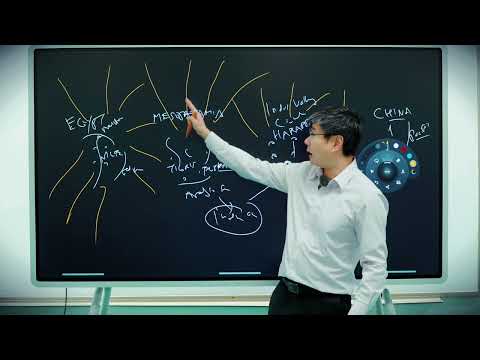
This lecture presents an alternative theory of civilization's origins, arguing against the standard Marxist model (agriculture creates surplus, which enables an elite, which produces civilization). Instead, the speaker proposes that humans were always capable of religion, art, and science, and that 'civilization' was a construct created by elites to legitimize hierarchical control through mythology and writing. The lecture examines Mesopotamian texts — the Enuma Elish and the Epic of Gilgamesh — as examples of how ruling classes used mythology to justify divine hierarchy and human servitude. It also discusses Hesiod's Theogony and the Sumerian 'Debate between Sheep and Grain' as further evidence that myths were crafted as propaganda to control populations and promote sedentary agriculture over pastoral freedom.

Video thumbnail
youtube.com/watch?v=FJF8oD_5c_w ↗ Analyzed 2026-03-14 by claude-opus-4-6

Viewer Advisory

  • The 'Marxist model' presented as the mainstream view is a strawman — modern anthropology is far more nuanced and many scholars have independently challenged the surplus model without adopting the speaker's cynical framework.
  • The claim that writing was invented for propaganda is contradicted by evidence that the earliest writing was administrative.
  • The mother goddess → sky god transition is presented as universal when it is actually debated and does not apply uniformly across all civilizations.
  • The lecture's core thesis is unfalsifiable — if every cultural product is defined as propaganda, no evidence can disprove the claim.
  • Key modern scholars whose ideas closely parallel the speaker's arguments (James C. Scott's 'Against the Grain,' David Graeber and David Wengrow's 'The Dawn of Everything') go unacknowledged.
  • The brief geopolitical aside about US support for Israel being explained by ancient Mesopotamian strategic importance dramatically oversimplifies a complex modern relationship.
  • The romantic framing of pastoral peoples as 'stronger, more free, more independent' reflects noble-savage idealization rather than empirical analysis of pastoral societies.
Central Thesis

Civilization was not a gift from elites enabled by agricultural surplus, but rather a propaganda apparatus — including writing, mythology, and religious institutions — created by ruling classes to legitimize hierarchical control and gaslight populations into accepting servitude as divinely ordained.

  • Humans were always capable of religion, art, and science even as hunter-gatherers, as evidenced by cave paintings and sites like Gobekli Tepe, making the Marxist surplus-then-civilization model inadequate.
  • The earliest civilizations (Egypt, Mesopotamia, Indus Valley, China) emerged at similar latitudes, near major rivers and seas, primarily because of trade rather than agricultural surplus alone.
  • Sumer/Mesopotamia was the first major civilization because it sat at the center of global trade routes connecting Egypt, Anatolia, Central Asia, and the Indus Valley.
  • The Enuma Elish was written as propaganda to justify Babylon's hierarchical order as divinely ordained — Marduk kills the mother goddess Tiamat, creates the world from her body, and creates humans as slaves to serve the gods.
  • Writing was invented primarily for bureaucratic and propaganda purposes — to record trade, rations, and to encode myths in permanent form to make them seem divinely authoritative.
  • Myths evolve through a three-stage process: local legends become exaggerated through oral tradition, then get consolidated into composite epics, then are modified by bureaucrats to embed morality and social control.
  • The Epic of Gilgamesh is a bureaucratic creation that consolidates multiple local hero stories and adds messaging about proper kingship — serving the people rather than acting as a tyrant.
  • The transition from mother goddess worship to sky god worship reflects a historical shift from egalitarian, female-influenced societies to patriarchal, warlike civilizations built on exploitation.
  • The Sumerian 'Debate between Sheep and Grain' was crafted to convince pastoral peoples to abandon their free lifestyle and become sedentary farmers who are easier for kings to control.
  • History follows a pattern of 'inversion' where old orders are constantly overthrown by new ones — mothers by fathers, kings by princes, kings by mercenary generals.
Qualitative Scorecard 2.3 / 5.0 average across 7 axes
Historical Accuracy ▸ Expand
The lecture's treatment of primary texts (Enuma Elish, Gilgamesh, Theogony) is broadly accurate in content, and the basic facts about river civilizations and their geographic characteristics are correct. However, several claims are inaccurate or misleading: attributing the surplus model primarily to Marx rather than V. Gordon Childe and 20th-century archaeology; the overly clean claim that cuneiform was the 'first writing system ever invented' (debatable given Egyptian hieroglyphs' contested dating); the claim that Sumerian was unique because 'the language that Sumerians speak is not the same as the surrounding areas' oversimplifies a complex linguistic question; and the characterization of China as blocked from the rest of the world by the Himalayas ignores extensive archaeological evidence of early East-West contact. The description of clay tablets 'hardening in the sun' is also somewhat inaccurate — many were deliberately baked or survived fires.
3
Argumentative Rigor ▸ Expand
The central argument — that civilization was invented to justify hierarchy — is presented as a sweeping, unfalsifiable thesis applied uniformly across all civilizations without acknowledging exceptions or complications. The reasoning is largely circular: myths are interpreted as propaganda because civilization is defined as a propaganda apparatus, and civilization is defined as a propaganda apparatus because myths serve propagandistic functions. The speaker offers no criteria by which his thesis could be falsified. The university analogy (Ohio State, Connecticut, Middlebury stories combining into a Harvard legend) is entertaining but does not actually demonstrate that ancient myths formed this way — it's an illustration, not evidence. The claim that writing was invented 'for propaganda purposes' ignores that the earliest writing was primarily administrative (accounting, inventories), which the speaker himself acknowledges but then contradicts. The claim that bureaucrats 'took [Chinese classics] and changed them into boring stories to brainwash school children' is asserted without any evidence.
2
Framing & Selectivity ▸ Expand
The lecture is highly selective in its use of evidence. The Enuma Elish is treated as transparently propagandistic without considering that it may have held genuine religious meaning for its adherents. The transition from mother goddess to sky god is presented as a universal pattern, cherry-picking examples that fit while ignoring civilizations where this pattern doesn't apply cleanly (e.g., Hinduism maintained goddess worship alongside male deities). The 'Debate between Sheep and Grain' is interpreted exclusively as state propaganda without considering it might reflect genuine cultural values or literary tradition. The entire framework assumes elite manipulation as the primary driver of cultural production, dismissing the possibility that myths served psychological, social, or explanatory functions independent of power structures. Counter-examples — civilizations with less hierarchical structures, myths that subvert authority, writing used for non-propagandistic purposes — are systematically excluded.
2
Perspective Diversity ▸ Expand
The lecture presents a single interpretive framework — myths as elite propaganda — and applies it uniformly to all examples without engaging alternative interpretations. No mention of functionalist approaches (myths as social glue), psychological approaches (myths as expressions of universal archetypes — Jung/Campbell), literary approaches (myths as art), or even competing materialist interpretations. Student questions are engaged with but the answers consistently funnel back to the speaker's framework. The one student who asks about Pangu and gender in Chinese mythology receives an answer that fits the predetermined model (originally asexual/female, changed to male by patriarchal elites) without acknowledging this is speculative.
2
Normative Loading ▸ Expand
The lecture is heavily normatively loaded despite presenting itself as analytical. Key evaluative terms pervade the argument: civilization is a 'device meant to gaslight' people; myths are 'propaganda'; bureaucrats 'brainwash school children'; writing was invented to 'fool people'; hierarchies are 'not legitimate'; pastoral peoples are 'stronger, more free, more independent' while farmers are 'enslaved.' The sky god is associated with 'rape, exploit, control' while the mother goddess represents 'balance and harmony.' This consistent moral framing — where hierarchy is always illegitimate and pre-civilizational life is always freer — substitutes value judgment for analysis. The word 'gaslight' is particularly loaded, implying deliberate psychological manipulation by ancient elites.
2
Determinism vs. Contingency ▸ Expand
The lecture presents civilization's development as following a rigid, universal pattern: egalitarian society → mother goddess → sky god → hereditary elite → bureaucratic takeover → inversion. This is explicitly called 'a constant process of inversion' and 'a pattern that we see over and over in history.' No room is left for contingency, variation, or civilizations that developed differently. The dynastic cycle is presented as an iron law rather than one possible pattern among many. The speaker acknowledges some uncertainty about cultural influence between civilizations but treats the overall trajectory as deterministic.
2
Civilizational Framing ▸ Expand
The lecture treats civilizations somewhat more evenhandedly than the geopolitical lectures, since it focuses on ancient history. Egypt, Mesopotamia, India, and China are all presented as early civilizations with similar developmental patterns. However, the speaker's framework implicitly privileges pre-civilizational societies as more authentic and free, casting all civilizations as fundamentally exploitative. The inclusion of Egypt, Mesopotamia, and the Indus Valley under 'Western civilization' is an interesting and somewhat idiosyncratic framing that avoids Eurocentrism but may overstate ancient interconnection.
3
Overall Average
2.3
Civilizational Treatment
CHINA

China is treated as a 'special case' isolated by the Himalayas, largely excluded from the lecture's analysis of Western civilization. Chinese literary classics (Romance of Three Kingdoms, Journey to the West, Water Margin) are briefly mentioned as examples of stories bureaucrats 'changed into boring stories to brainwash school children.' Chinese mythology (Pangu, yin and yang) is referenced through a student question and given a speculative answer about original gender fluidity. Overall, China is treated respectfully but peripherally.

UNITED STATES

The United States is mentioned only briefly — America is referenced as supporting Israel because of the Middle East's strategic importance, and American popular culture is used as an analogy for cultural influence. No substantial characterization.

THE WEST

Western civilization is redefined to include Egypt, Mesopotamia, and the Indus Valley — not just Europe and America. The speaker explicitly challenges the conventional narrow definition: 'You may have thought that western civilization is just Europe and America. That's not true.' This is presented as correcting 'Western prejudice' that teaches these civilizations as separate. Modern Western institutions (schools, media, entertainment) are briefly characterized as justifying 'the existing power structure and social order,' continuing the ancient pattern of propaganda.

Named Sources

primary_document
Enuma Elish (Babylonian creation epic)
Quoted extensively in translation to demonstrate how Marduk kills Tiamat (the mother goddess), creates the world from her body, creates humans as slaves, and establishes Babylon as a divine city. Used as the primary evidence that mythology served as propaganda for hierarchical control.
✓ Accurate
primary_document
Epic of Gilgamesh
Summarized as a story of a tyrannical king who befriends Enkidu, embarks on adventures, fails in his quest for immortality, and returns to find meaning in his city. Interpreted as a bureaucratic creation teaching that kingship means serving the people.
✓ Accurate
primary_document
Hesiod's Theogony
Referenced to show the Greek parallel: Gaia and Chaos create gods, Cronus kills Uranus, Zeus kills Cronus — demonstrating the same pattern of mythological inversion (son kills father) across civilizations.
✓ Accurate
primary_document
Debate between Sheep and Grain (Sumerian literary text)
Quoted at length to argue that it was propaganda designed to convince pastoral peoples to become sedentary farmers, since the gods judge grain as superior to sheep despite pastoral peoples being 'stronger, more free, more independent.'
? Unverified
scholar
Karl Marx
Attributed the 'traditional understanding' of civilization as arising from agricultural surplus. This is described as the dominant Marxist framework taught in schools, which the speaker aims to overturn.
✗ Inaccurate
other
Gobekli Tepe
Referenced as evidence that pre-agricultural peoples could build monumental religious structures, undermining the Marxist surplus model. Used to support the claim that religion preceded civilization rather than arising from it.
✓ Accurate

Vague Appeals to Authority

  • 'This is the dominant idea' and 'this is what you've been taught in school' — attributing the surplus model to mainstream academia without citing specific historians or textbooks.
  • 'Scholars are mesmerized by how they were able to do this' — referring to Sumerian irrigation without naming any specific scholars.
  • 'A lot of historians believe that the people in Sumeria came from somewhere else' — no specific historians named.
  • 'There are some people on the internet who believe that aliens came to Sumeria' — dismisses the Anunnaki alien theory without engaging with why it persists or which specific proponents advance it.
  • 'Scholars spend decades trying to figure out what the actual influence of each culture is' — appeals to unnamed scholarly effort.

Notable Omissions

  • No engagement with actual archaeological scholarship on state formation — e.g., V. Gordon Childe's 'Urban Revolution' concept, which the speaker seems to be reacting against without naming.
  • No mention of James C. Scott's 'Against the Grain' (2017), which makes a very similar argument about states, grain agriculture, and control — the speaker's thesis strongly parallels Scott's but goes unacknowledged.
  • No discussion of David Graeber and David Wengrow's 'The Dawn of Everything' (2021), which challenges conventional narratives of civilization's origins in ways that both support and complicate the speaker's argument.
  • No engagement with the extensive scholarly debate about whether Gobekli Tepe actually preceded agriculture or was contemporaneous with early farming.
  • The attribution of the 'surplus model' to Marx is misleading — this model is more accurately associated with V. Gordon Childe and mid-20th-century anthropology. Marx's own views on pre-capitalist formations were more nuanced.
  • No mention of the extensive feminist archaeology and goddess studies literature (Marija Gimbutas, Merlin Stone) that the speaker's mother goddess narrative draws from, nor the significant scholarly critique of that tradition.
  • The claim that China is excluded from Western civilization due to the Himalayas ignores the Silk Road, maritime trade routes, and extensive early contact documented by archaeologists.
  • No discussion of the Indus Valley civilization's distinctive features — notably its apparent lack of monumental royal architecture and possible non-hierarchical organization, which would complicate the speaker's universal hierarchy thesis.
Anachronistic language for emotional impact 00:07:23
The speaker describes civilization as 'a device meant to gaslight or fool people into believing that a hierarchy is legitimate when it is not legitimate.'
Applying the modern psychological concept of 'gaslighting' to ancient civilization frames the entire development of human society as deliberate psychological abuse by elites, creating an immediate emotional reaction that bypasses analytical evaluation.
False dichotomy 00:03:33
The speaker presents only two frameworks for understanding civilization: the 'Marxist' surplus model and his own 'propaganda apparatus' model, with no mention of functionalist, psychological, ecological, or other anthropological theories.
By limiting the field to two options and then demolishing the 'traditional' one, the speaker's alternative appears to be the only viable interpretation, when in fact dozens of scholarly frameworks exist.
Relatable analogy to smuggle in contested claims 00:38:34
The extended university legend analogy (Ohio State, Connecticut, Middlebury stories combining into a Harvard legend about 'Pitbull James') is used to explain how myths like Gilgamesh were constructed.
The entertaining and intuitive analogy makes the process of mythological consolidation seem obvious and natural, obscuring the fact that this specific theory of mythological composition is contested among scholars and the analogy is illustration, not evidence.
Loaded language as description 00:18:42
The sky god's values are described as demanding people 'rape, exploit, control the earth, to take the mother goddess and to control her.'
Using the word 'rape' to describe the sky god mythology's relationship with nature transforms an analytical description of religious transition into a moral indictment, priming the audience to see hierarchical civilization as inherently violent and predatory.
Appeal to common sense via 'obviously' 00:48:51
'Obviously agriculture. Why? Because it's easier to control them.' — when asking which type of people a king would prefer.
The word 'obviously' forecloses debate and makes a complex anthropological question seem self-evident. In reality, many empires successfully incorporated pastoral peoples, and the relationship between sedentary agriculture and state control is far more complex than presented.
Socratic leading questions 00:12:36
Throughout the lecture, the speaker asks questions like 'Where is the most strategically located place?' and 'Do you prefer agricultural people or pastoral people?' where only one answer is acceptable.
Creates the appearance of student-driven discovery while guiding toward predetermined conclusions. Students who give the 'correct' answer are affirmed, reinforcing the speaker's framework as self-evident truth.
Dismissal via ridicule 00:14:36
The Anunnaki alien theory is mentioned and dismissed as 'a really stupid idea' — then used to contrast with the speaker's own framework as the rational alternative.
By placing the alien theory as the only named alternative to his own interpretation, the speaker creates a false spectrum where his theory represents the reasonable middle ground, even though mainstream academic alternatives exist that he does not address.
Presentism 00:32:06
'Why do we have schools? Why do we have media? Why do we have entertainment? It's to justify the existing power structure and social order.'
By drawing a direct line from ancient Babylonian mythology to modern schools, media, and entertainment, the speaker collapses thousands of years of institutional evolution into a single narrative of elite control, making modern institutions seem as nakedly propagandistic as he claims ancient myths were.
Argument from analogy to film 00:24:28
The speaker compares the effect of cuneiform tablets on ancient audiences to the effect of films on modern viewers: 'When you see a film, you're mesmerized. You're hypnotized by the beauty of it. And you must think that this film must be the gods speaking themselves.'
This analogy assumes ancient audiences were passive consumers of written propaganda, unable to critically evaluate texts. It also projects modern media dynamics onto ancient societies with very different literacy rates and cultural contexts.
Circular definition 00:07:23
The speaker defines civilization as a propaganda tool, then interprets all products of civilization (writing, mythology, religion) as propaganda, confirming the initial definition.
The argument becomes unfalsifiable: any cultural production can be reinterpreted as evidence of elite manipulation because the framework has already defined cultural production as elite manipulation.
⏵ 00:07:23
Civilization is a device meant to gaslight or fool people into believing that a hierarchy is legitimate when it is not legitimate.
This is the lecture's core thesis statement, revealing an entirely cynical view of civilization as deliberate psychological manipulation. The use of 'gaslight' — a modern psychological abuse term — applied to the entirety of human civilization reveals the speaker's normative framework.
The speaker uses his own institutional position — lecturing in what appears to be a university classroom — to advance this claim. If all educational institutions exist to 'justify the existing power structure,' as he later claims, this would include the very classroom in which he is teaching. More pointedly, this critique of civilization as elite gaslighting could apply to China's imperial examination system, the CCP's mandatory political education, or China's Great Firewall — all sophisticated systems for ensuring populations accept hierarchical authority as legitimate.
⏵ 00:32:06
Why do we have schools? Why do we have media? Why do we have entertainment? It's to justify the existing power structure and social order.
Extends the ancient propaganda thesis to modern institutions, revealing a totalizing worldview where all cultural institutions are fundamentally instruments of control. This is a remarkably sweeping claim delivered as self-evident truth.
This critique of schools and media as tools of social control is precisely the criticism that dissidents and Western observers make of China's education system, censored media, and state-controlled entertainment industry. China's mandatory 'Xi Jinping Thought' curriculum in schools, its internet censorship apparatus, and its regulation of entertainment for ideological content are arguably among the world's most explicit examples of using these institutions to 'justify the existing power structure.' The speaker does not note this parallel.
⏵ 00:42:55
The bureaucrats took them and changed them into boring stories that they can now teach school children to brainwash them.
Referring to Chinese literary classics (Romance of Three Kingdoms, Journey to the West, Water Margin), this reveals the speaker's view that canonical literature in all traditions has been sanitized for ideological purposes — a provocative claim delivered casually.
This is a strikingly apt description of China's own treatment of its literary and historical canon under CCP rule — the Party has systematically reinterpreted classical texts, censored unfavorable historical narratives, and used education to instill ideological conformity. The Cultural Revolution's destruction of 'old customs, old culture, old habits, old ideas' was the most extreme version of bureaucrats reshaping stories. The speaker treats this as a universal historical pattern rather than noting that modern China provides one of its most vivid contemporary examples.
⏵ 00:00:36
In the beginning we were hunter gatherers and it sucked to be hunter gatherer because you could not find food... and then we discovered agriculture.
The speaker's characterization of the 'Marxist' model is itself a strawman. Modern anthropological scholarship (including the work of Marshall Sahlins on 'the original affluent society') has long challenged the idea that hunter-gatherer life 'sucked,' and the Marxist framework is far more nuanced than presented here.
⏵ 00:20:54
That's why America is so supportive of Israel.
A rare geopolitical aside in an otherwise historical lecture, revealing the speaker's tendency to weave contemporary political commentary into ancient history discussions. The implication that US-Israel relations are explained by Mesopotamia's ancient strategic importance is a dramatic oversimplification.
⏵ 00:24:24
They invented writing... for propaganda purposes.
This contradicts the speaker's own earlier statement that writing was needed 'to record how much food you have... who gets what food, the rations... trade.' The speaker acknowledges the administrative origins of writing but then reframes its purpose as primarily propagandistic, revealing a selective interpretation that prioritizes his thesis over his own evidence.
⏵ 00:21:46
Humans come together for religious purposes, they're capable of doing amazing stuff.
This is actually one of the lecture's more insightful observations, acknowledging human creative capacity as intrinsic rather than elite-dependent. It supports the speaker's argument against the surplus model while also undermining his darker claim that religion is purely a tool of control.
⏵ 00:22:14
Only priests are allowed to go inside it. People can deliver gifts to the gods through the priest. But the people themselves are not allowed to interact with the priest. That's how the priests are able to keep control over the cities.
Describes the ziggurat system as a mechanism of priestly control. While this interpretation has some scholarly support, it reduces a complex religious institution to a simple power play, ignoring evidence of genuine religious devotion and community function.
This description of restricted access to knowledge and power mediated through an unaccountable priestly class parallels the CCP's monopoly on political truth — where only Party officials have access to internal deliberations, and citizens must accept pronouncements from above without direct engagement. The 'behind closed doors' nature of Politburo Standing Committee deliberations mirrors the ziggurat's sacred exclusion zone.
⏵ 00:52:34
Even though people who raise sheep and goats, they're stronger, they're more free, they're more independent, but kings don't want that.
Reveals the speaker's romantic view of pre-civilizational pastoral life as inherently freer and more authentic than settled agricultural existence. This noble-savage framing overlooks the genuine hardships of pastoral life and idealizes pre-state societies.
⏵ 00:17:50
History is a constant process of inversion... where the old order is being dethroned by the new order.
This is presented as a universal historical law — a deterministic framework that the speaker applies to everything from mythology to political succession. While dynastic cycles are a real phenomenon, elevating this to a universal law ignores periods of stability, reform, and gradual evolution.
Verdict

Strengths

The lecture succeeds as a provocative challenge to conventional narratives of civilization's origins. The engagement with primary sources — extensive quotation from the Enuma Elish and the Debate between Sheep and Grain — gives students direct access to ancient texts they might not otherwise encounter. The argument that Gobekli Tepe and cave paintings demonstrate pre-agricultural creative capacity is well-supported by recent archaeology. The observation that myths are composite, layered constructions that encode political and social messaging reflects genuine scholarly consensus. The university legend analogy is pedagogically effective for making abstract concepts accessible. The lecture's emphasis on trade networks connecting Egypt, Mesopotamia, and the Indus Valley reflects modern scholarship's move away from treating ancient civilizations in isolation.

Weaknesses

The lecture suffers from significant oversimplification and unfalsifiable framing. The central thesis — civilization as gaslighting — is applied so broadly that it cannot be disproven: every myth, every text, every institution is reinterpreted as evidence of elite manipulation. The attribution of the surplus model to Marx specifically is inaccurate. The claim that writing was invented for propaganda contradicts the speaker's own acknowledgment of its administrative origins. The treatment of Chinese literary classics as stories 'bureaucrats changed into boring stories to brainwash school children' is asserted without evidence. The romanticization of pastoral life as inherently freer ignores the genuine hardships and power structures within nomadic societies. The lecture does not engage with any named modern scholars whose work it clearly draws from (James C. Scott, David Graeber, Marija Gimbutas), creating the impression that these ideas are the speaker's original insights.

Cross-References

BUILDS ON

  • Earlier Secret History lectures on cave paintings and Gobekli Tepe (referenced as 'the cave paintings that we discussed' and 'these religious settlements, Gobekli Tepe')
  • Previous Secret History lectures on the mother goddess and animism (referenced as 'as we discussed before')
  • Earlier lectures in the series establishing the framework of temple economies and trade-driven urbanization

CONTRADICTS

  • The speaker's own acknowledgment that writing was needed for administrative purposes (recording food, rations, trade) contradicts his claim that writing was invented 'for propaganda purposes'
This lecture represents the Secret History series at its most theoretical and least geopolitical. Unlike the Geo-Strategy series, there are no falsifiable predictions about current events. The speaker's framework — civilization as elite propaganda — is consistent with the broader Predictive History project's tendency to view institutions cynically and to emphasize elite manipulation over organic development. The 'mandate of heaven' concept, while titled to evoke Chinese political philosophy, is actually applied to Mesopotamian and Greek civilization, with China treated as a peripheral 'special case.' The lecture functions as intellectual scaffolding for the speaker's geopolitical analysis elsewhere in the series, providing a deep-historical foundation for claims about modern states using media, education, and mythology to control populations.